
Quito at 2,850 Meters: Air Canada Direct Flights and Andean Ecuador Travel Guide 2026
Air Canada restores nonstop flights to Quito from Montréal and Toronto with Boeing 787-8 Dreamliners, unlocking high-altitude Andean heritage and Galápagos gateways.

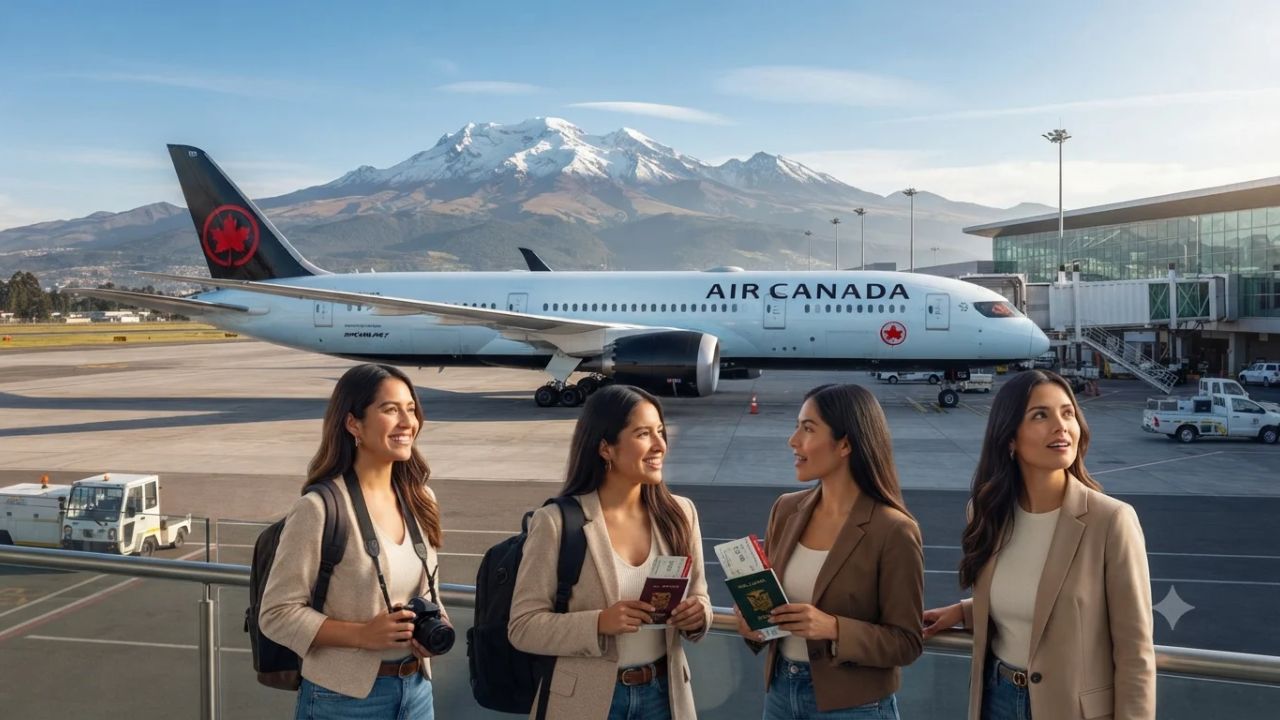
Perched at an elevation of 2,850 meters in a volcanic Andean basin, Quito became the world's very first designated urban UNESCO World Heritage site alongside the Galápagos Islands in 1978—preserving over 320 hectares of colonial convents, Baroque plazas, and gilded cathedrals. Beginning December 4, 2026, reaching Ecuador’s high-altitude capital becomes significantly easier as Air Canada inaugurates four weekly seasonal widebody services linking Quito with Montréal and Toronto through late March 2027.
Deployed with long-range Boeing 787-8 Dreamliner aircraft featuring Signature Class, Premium Economy, and Economy cabins, the new transatlantic-style corridor eliminates lengthy stopovers in Central America. For international travelers, the route revival establishes an immediate gateway to the Avenue of the Volcanoes, indigenous artisan markets in Otavalo, and protected marine wildlife circuits across the Galápagos archipelago.
Aviation Gateway: Air Canada's Winter Flight Schedule to Quito
According to operational filings confirmed by Air Canada and the Quito International Airport (UIO), the seasonal service operates across two Canadian hubs. Three weekly flights connect Montréal–Trudeau (YUL) with Quito between December 4, 2026, and March 26, 2027, with return sectors running through March 27. Simultaneously, a weekly nonstop flight links Toronto Pearson (YYZ) with Quito from December 5, 2026, to March 20, 2027 (returning through March 21).
The Quito resumption forms part of a broader Latin American expansion by the Canadian carrier, which includes accelerated winter restarts on Toronto–Rio de Janeiro and Toronto–Lima, alongside expanded weekly frequencies on Montréal–Lima and Montréal–Santiago routes.
| Flight Sector | Departure Frequency | Seasonal Operating Window | Aircraft Configuration | Onward Travel Synergy |
|---|---|---|---|---|
| Montréal (YUL) to Quito (UIO) | 3 Weekly Flights | Dec 4, 2026 – Mar 26, 2027 | Boeing 787-8 Dreamliner | Connects European & Eastern Canadian travelers |
| Quito (UIO) to Montréal (YUL) | 3 Weekly Flights | Dec 5, 2026 – Mar 27, 2027 | Boeing 787-8 Dreamliner | Direct overnight northbound return corridor |
| Toronto (YYZ) to Quito (UIO) | 1 Weekly Flight | Dec 5, 2026 – Mar 20, 2027 | Boeing 787-8 Dreamliner | Major corporate and transpacific connecting gateway |
| Quito (UIO) to Toronto (YYZ) | 1 Weekly Flight | Dec 6, 2026 – Mar 21, 2027 | Boeing 787-8 Dreamliner | Weekend return schedule for long-haul vacationers |
| Regional Galápagos Shuttles | Multiple Daily | Year-Round Operations | Narrowbody A320 / B737 | Domestic hops to Baltra (GPS) & San Cristóbal (SCY) |
What Makes Quito and the Ecuadorian Andes Distinct
Quito’s urban layout represents one of the best-preserved historic centers in the Americas. At the heart of Old Town, the Iglesia de la Compañía de Jesús features interior stone walls covered in approximately seven tons of gold leaf, showcasing the indigenous-Baroque School of Quito artistic tradition.
Just two hours north of the capital, the Pan-American Highway leads to Otavalo in Imbabura province, where indigenous Kichwa weavers trade alpaca textiles, hand-woven wall hangings, and tagua-nut carvings at the open-air Plaza de los Ponchos. To the south, Cotopaxi National Park protects the active 5,897-meter Cotopaxi volcano and high-altitude páramo grasslands inhabited by wild Andean horses and endangered spectacled bears.
| Regional Andean Hub | Geographic Anchor | Altitude & Atmosphere | Signature Local Culinary Pairing |
|---|---|---|---|
| Quito Historic Centre | Plaza Grande & San Francisco Convent | 2,850m / Preserved 16th-century stone | Locro de papa (creamy potato soup with avocado and fresh cheese) |
| Cotopaxi National Park | Volcán Cotopaxi & Limpiopungo Lagoon | 3,800m–4,800m / Alpine páramo winds | Canelazo (hot spiced aguardiente tea brewed with naranjilla and cinnamon) |
| Otavalo & San Pablo | Plaza de los Ponchos & Imbabura Peak | 2,530m / Indigenous market heritage | Fritada (slow-braised crispy pork with mote corn, llapingachos, and choclo) |
| Mindo Cloud Forest | Western Andean Slopes & River Valleys | 1,250m–1,600m / Subtropical biodiversity | Single-origin dark Ecuadorian chocolate & fresh mountain trout |
| Galápagos Islands | Baltra, Santa Cruz & Isabela Islands | Sea Level / Volcanic marine sanctuary | Fresh ceviche de camarón cured in lime juice and passionfruit |
For naturalists, Quito functions as the primary continental departure base for flights to the Galápagos Islands. Flights departing Mariscal Sucre Airport reach Baltra Island (GPS) or San Cristóbal (SCY) in roughly two hours, connecting travelers directly with expedition yachts and island-hopping itineraries.
Visitor Insider Tips
- Acclimate to High Altitude on Day One: Sitting at 2,850 meters (9,350 feet), Quito's thin air can trigger mild altitude symptoms. Spend your first 24 hours walking slowly, drinking plenty of water or coca tea, and saving steep climbs like the Panecillo hill or Cotopaxi treks for day three.
- Visit the Plaza de San Francisco at Dawn: Arrive at the stone plaza outside the 16th-century San Francisco Convent at 07:00. The low morning Andean sunlight illuminates the volcanic stone facades while local street vendors prepare warm morocho (spiced corn drink).
- Ride the TelefériQo to Cruz Loma on Clear Mornings: Board the Quito cable car at 08:30 before afternoon clouds roll across the peaks. The gondola lifts passengers to 4,050 meters on the slopes of Pichincha volcano for aerial vistas over the entire 40-kilometer-long city basin.
- Take Authorized Taxis or Metro Lines in Old Town: Utilize the underground Quito Metro (Metro de Quito) system, which connects the northern financial district to the historic center in under 15 minutes, avoiding heavy surface traffic along narrow colonial corridors.
- Carry Cash Notes in Small Denominations ($1, $5, $10): Ecuador officially uses the United States Dollar (USD). While credit cards are widely accepted in hotels, street artisans in Otavalo and small bakeries rarely accept $50 or $100 bills due to counterfeit prevention rules.
Cultural and Environmental Context
Managing tourism across high-altitude Andean ecosystems and the delicate Galápagos archipelago requires strict environmental discipline. The Ministry of Tourism, supported by the national platform Ecuador Travel, enforces strict carrying-capacity rules within Cotopaxi National Park to prevent soil erosion on delicate alpine wetlands that provide freshwater to millions of residents downstream.
In the Galápagos, visitors must pay the national park conservation entry fee and travel with certified naturalist guides to protect endemic marine iguanas, giant tortoises, and blue-footed boobies from human disturbance. On the mainland, community-based tourism programs in Otavalo and indigenous villages ensure that revenue directly supports indigenous language schools, agroecological farming, and heritage weaving cooperatives.
FAQ: Visiting Quito and Ecuador 2026–2027
When do Air Canada direct flights operate to Quito?
Air Canada operates direct seasonal flights from Montréal (3x weekly) and Toronto (1x weekly) between December 4, 2026, and late March 2027.
What is the best month to visit Quito and the Andes?
June through September and December through February provide the clearest, driest skies for mountain trekking, volcano photography, and exploring colonial plazas.
Do Canadian and US citizens need a visa to enter Ecuador?
Citizens of Canada, the United States, and the European Union do not require a tourist visa for stays up to 90 days, provided they hold a valid passport with at least six months of validity.
How do travelers get to the Galápagos Islands from Quito?
Domestic carriers operate daily two-hour flights from Quito's Mariscal Sucre International Airport (UIO), often stopping briefly in Guayaquil, to Baltra Island (GPS) or San Cristóbal (SCY).
From the gold-leaf vaults of colonial Quito to the volcanic horizons of Cotopaxi, Ecuador bridges ancient Andean heritage with the boundless wonders of the Pacific.
Related Travel Guides
Disclaimer
This article is for informational and educational purposes only. It does not constitute legal, financial, or professional advice. While we strive to provide accurate and up-to-date information, travel policies, regulations, and conditions change rapidly. Always verify information with official sources before making travel decisions. Nomad Lawyer makes no representations about the accuracy, reliability, completeness, or suitability of the information provided. Readers should consult qualified professionals for advice specific to their circumstances. The views expressed in this article are those of the author and do not necessarily reflect the views of Nomad Lawyer.
Naina Thakur
Contributor & Travel Specialist
Travel enthusiast and legal writer covering visa regulations, responsible tourism, and cultural journeys across global destinations.
Learn more about our team →