
EasyJet Passenger Stranded Four Days in Milan After EU Biometric Border Chaos
More than 100 UK travelers were stranded at Milan Linate Airport in April 2026 after the EU's new Entry/Exit System caused massive delays, leaving an EasyJet Manchester flight severely understaffed and hundreds of passengers facing multi-day delays.

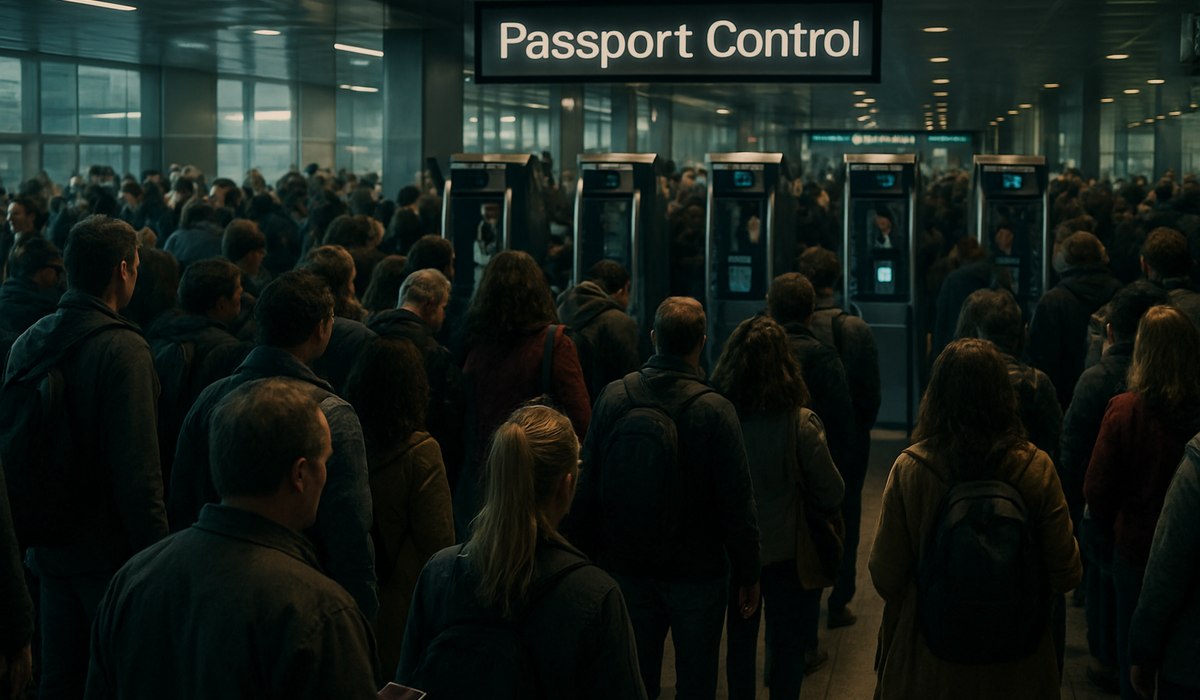
Image generated by AI
When an EasyJet Passenger Stranded in Milan Exposed the EU's Biometric System Crisis
More than 100 UK travelers missed their EasyJet Manchester flight on April 12, 2026, after chaos at Milan Linate Airport's passport control caused an easyjet passenger stranded situation lasting four days. The incident marked one of the first major operational meltdowns directly linked to the European Union's newly implemented Entry/Exit System (EES), which requires all non-EU nationals—including post-Brexit UK citizens—to provide biometric data including fingerprints and facial scans before entering the Schengen zone. When boarding closed, dozens of passengers remained trapped in the biometric processing queue, forcing the aircraft to depart with only a fraction of its scheduled capacity. The resulting disruption left hundreds of travelers stranded, scrambling for rebooking options, and facing unexpected accommodation costs across a four-day period while waiting for available seats.
EES Biometric System Overwhelms Milan Airport Infrastructure
The Entry/Exit System represents one of Europe's most ambitious border security overhauls since the Schengen Agreement. Designed to track third-country nationals entering and exiting the EU, the EES collects fingerprint and facial biometric data from every non-EU passport holder. However, the Milan incident revealed critical infrastructure gaps when passenger volumes exceed system capacity.
On the morning of April 12, passport control queues at Milan Linate extended for hours as overwhelmed biometric stations struggled to process the volume of travelers. Each passenger required individual fingerprint scanning and facial image capture, a process that took considerably longer than traditional stamp-based checks. Industry reports suggest that border staff were also still becoming familiar with the new system, adding further delays.
For an easyjet passenger stranded in this chaos, the experience was chaotic. Flight departure times remained fixed while the biometric queue grew exponentially, leaving no margin for error. Airport authorities acknowledged that infrastructure investment hadn't kept pace with peak travel demand, particularly during school holiday periods when passenger numbers surge across European hubs. The Milan situation exposed vulnerabilities that border agencies across the EU would need to address urgently.
Over 100 UK Passengers Miss EasyJet Manchester Flight
The April 12 EasyJet service from Milan to Manchester was scheduled to accommodate approximately 180 passengers. However, when boarding doors closed at the designated time, over 100 UK travelers remained in the biometric processing area, unable to reach the gate.
Eyewitness accounts shared on social media and travel forums paint a picture of growing anxiety among waiting passengers. Some travelers had arrived at the airport well in advance, believing they'd allocated sufficient time for check-in and security. Instead, they found themselves queued for biometric processing with no clear visibility on how much longer the process would take. As the boarding window narrowed, passengers began requesting information from airport staff about their flight status.
The aircraft ultimately departed with approximately 75 passengers—less than half its capacity. The remaining 100-plus travelers faced an immediate crisis: their flights had departed without them, and rebooking options were severely limited. With school holiday demand driving high fares and limited availability on subsequent Manchester-bound services, many faced waits of three to four days for alternative seats.
For the easyjet passenger stranded for four days specifically documented in passenger accounts, the experience involved not just the initial missed flight, but a cascading series of obstacles in securing rebooking, arranging emergency accommodation in Milan, and managing unexpected expenses that airlines were reluctant to reimburse.
Airline Blames Border Controls, Passengers Face Rights Confusion
EasyJet formally addressed the incident through published statements acknowledging that the biometric border delays fell entirely outside the airline's operational control. The carrier emphasized that EU border police and government immigration authorities were responsible for passport processing times, not the airline itself.
This distinction matters significantly under EU passenger rights law. Under Regulation EC 261/2004, which governs airline compensation for cancellations and long delays, airlines may be exempt from paying compensation when disruptions stem from "extraordinary circumstances" beyond their control. Border security operations typically qualify as external factors under this regulation.
However, the situation creates a challenging legal grey area for passengers. Consumer advocates have argued that while border delays may genuinely fall outside airline control, carriers should nevertheless adjust boarding deadlines and provide advance warnings when they know border processing times are severely stretched. The question becomes: did EasyJet provide adequate notice to passengers about potential EES-related delays? Were boarding cutoff times realistic given known infrastructure constraints?
Separately, airlines do retain obligations to provide care and assistance when passengers are stranded for extended periods—including meals, accommodation, and rebooking on alternative services. Many affected travelers reported receiving minimal support beyond rebooking offers on heavily booked subsequent flights days later. For an easyjet passenger stranded in Milan, pursuing rights claims required navigating multiple regulatory frameworks and proving which party bore responsibility.
What Happened During the Four-Day Stranding
One well-documented account describes a UK holidaymaker's four-day ordeal in Milan after missing the April 12 flight. The traveler arrived at Milan Linate in what they believed was adequate time for a mid-morning departure. After checking in, they proceeded through security without issue. However, at passport control, the biometric queue stretched across the entire border hall.
Initial estimates suggested a 30-minute wait. After 45 minutes in the queue with no visible progress, the passenger requested information from border officers about their flight's status. A staff member indicated the queue would take at least another 20 minutes. By the time biometric processing was complete, approximately 90 minutes had elapsed. Racing to the gate, the passenger arrived to find the boarding doors already closed and the aircraft pushing back from the stand.
What followed was a disorienting process of contacting EasyJet customer service from the Milan terminal. The airline's first rebooking offer was a flight four days later. Direct Manchester flights were heavily booked due to school holidays. Alternative routings via other UK cities (London, Birmingham) required expensive rail or coach connections that would ultimately cost more than the original flight.
The traveler opted for the four-day wait, requiring three nights of emergency accommodation in Milan, restaurant meals, local transportation, and airport transfer costs. When submitting expense claims to EasyJet, the airline indicated that while they sympathized with the border delay situation, reimbursement required proving the airline bore direct responsibility—a threshold most affected passengers couldn't meet.
Impact on Wider EU Travel and Future Border Experience
The Milan incident has prompted urgent discussions among EU travel industry leaders, airport operators, and policymakers about EES implementation timelines and infrastructure readiness. Several factors converge to suggest more incidents could occur as the system reaches full operational maturity.
First, not all European airports have invested equally in biometric processing infrastructure. Major hubs like Frankfurt, Paris, and Amsterdam invested heavily before EES launch. Secondary airports including Milan, Venice, and Barcelona acknowledged they were racing to upgrade systems. During peak travel periods, capacity limitations become acute.
Second, the learning curve for border staff is genuine. Early deployments revealed that officers unfamiliar with biometric systems work more slowly than those with months of training. Milan experienced this dynamic directly, with processing times gradually improving over subsequent weeks as staff gained experience.
Third, passenger awareness about EES requirements remains inconsistent. Many UK travelers didn't realize that as third-country nationals, they'd require biometric processing at EU borders. Some expected the process to take minutes. Educating travelers about realistic processing times could help them plan accordingly.
For anyone considering EU travel in 2026, the Milan case serves as a cautionary tale about arriving extra early when crossing EU borders, particularly during high-demand travel periods.
Key Data Table: Milan Airport Border Chaos—April 12, 2026
| Metric | Details |
|---|---|
| Affected Passengers | 100+ UK |
Disclaimer
This article is for informational and educational purposes only. It does not constitute legal, financial, or professional advice. While we strive to provide accurate and up-to-date information, travel policies, regulations, and conditions change rapidly. Always verify information with official sources before making travel decisions. Nomad Lawyer makes no representations about the accuracy, reliability, completeness, or suitability of the information provided. Readers should consult qualified professionals for advice specific to their circumstances. The views expressed in this article are those of the author and do not necessarily reflect the views of Nomad Lawyer.
Preeti Gunjan
Contributor & Community Manager
A passionate traveller and community builder. Preeti helps grow the Nomad Lawyer community, fostering engagement and bringing the reader experience to life.
Learn more about our team →