
The Realigned Orient: How Currency Shocks, Dual Pricing, and Rail Resurgence Are Rewriting Asian Travel
From Himeji Castle’s 150% non-resident surcharge to South Korea’s blockchain travel vouchers and Vietnam’s luxury coastal rail boom, East and Southeast Asia abandon raw arrival metrics for civic survival.

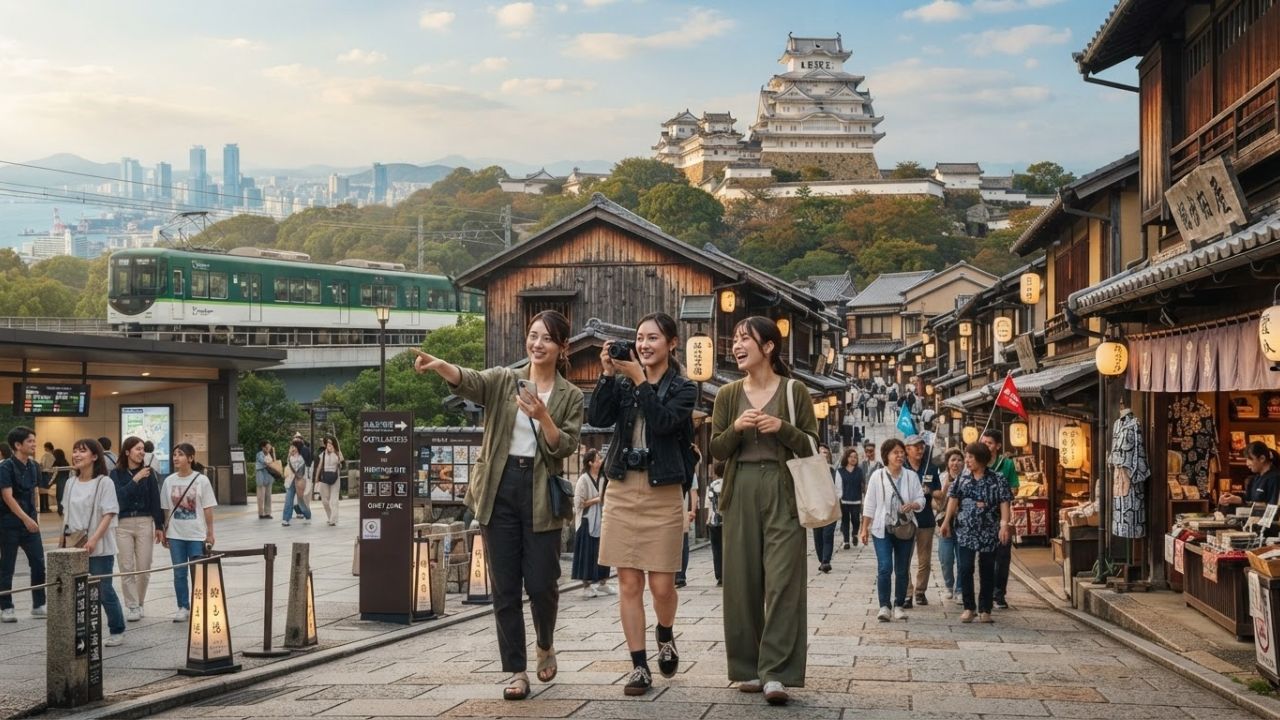
Historic destinations across Asia are deploying residency-based pricing and transit reforms to balance record tourism with local civic preservation
On March 1, 2026, general admission for international travelers visiting Japan's magnificent White Heron fortress at Himeji Castle leapt from ¥1,000 to ¥2,500 ($16.00)—a 150 per cent surge—while registered local residents continue to enter for the baseline fee of ¥1,000 and schoolchildren enter entirely free. This dramatic fiscal recalibration, enacted at western Japan’s celebrated UNESCO World Heritage monument, is the most visible symbol of a profound economic revolution sweeping across East and Southeast Asia. The post-pandemic era of passively pursuing record arrival headcounts has abruptly ended. Faced with historic foreign exchange distortions, severe domestic cost-of-living pressures, and overburdened civic infrastructure, national ministries and municipal councils from Tokyo to Seoul and Hanoi have scrapped outdated tourism models in favor of strict structural interventions: residency-verified tiered pricing, sovereign digital currencies, smart biometric sea gates, and luxury overland railways.
For international travelers navigating the region, this shift fundamentally reshapes the journey. When foreign currencies yield immense purchasing power, local salary earners find themselves priced out of their own neighborhood restaurants, ski resorts, and commuter buses. Rather than allowing foreign exchange imbalances to hollow out local communities, regional authorities are demanding that international visitors directly fund the preservation of heritage assets. Far from discouraging exploration, this realigned economic framework rewards mindful, independent travelers who venture beyond saturated metropolitan centers and respect the living communities they visit.
The Weak Yen and Municipal Defense: Japan's Tiered Pricing Model
Japan’s visitor economy currently operates under the intense pressures of the "Weak Yen Paradox." With the Japanese currency hovering at multi-decade lows against the US Dollar and Euro, foreign inbound spending has reached all-time records. Yet within the domestic economy, the tailwinds have triggered significant civic friction. Japanese salary earners, grappling with static real wages and punitive exchange rates for outbound holidays, increasingly find themselves priced out of domestic leisure centers. In Hokkaido's ski hub of Niseko, luxury hotel suites and dining reservations have escalated to match international wealth, leaving domestic holidaymakers alienated.
The economic rationale deployed at Himeji Castle provides the blueprint for regional fiscal self-defense. To preserve its 17th-century wooden baileys and execute seismic retrofitting across ancient stone ramparts, Himeji City requires approximately ¥28 billion in maintenance capital over the coming decade. Because local municipal taxpayers directly fund municipal upkeep, city authorities reasoned that charging non-residents a higher gate fee prevents unfair double-taxation on local residents while shifting preservation costs directly to visiting beneficiaries. The financial mechanics proved immediate: despite an initial 17 per cent decline in non-resident ticket volume, gross gate receipts more than doubled in the first operating quarter.
This tiered pricing wave is expanding rapidly across the archipelago. At Odawara Castle in Kanagawa Prefecture, non-resident adult admission is set at ¥1,000 compared to ¥500 for local taxpayers (+100%). In Okinawa, the Junglia theme park in the Yanbaru subtropical forest charges non-residents ¥8,800 versus ¥6,930 for verified domestic residents (+27%), while at Nanzoin Temple in Fukuoka, non-local visitors pay a ¥500 entry fee while local parish worshippers enter free. Following consultations on April 27, 2026, the Japan Tourism Agency convened an expert panel to establish standardized national statutory guidelines, ensuring that tiered structures remain legally grounded in verifiable municipal residency rather than nationality.
Kyoto's Transit Segregation and South Korea's Blockchain Defense
In historic Kyoto, overtourism friction reached a boiling point as daily commuters and elderly residents were routinely crowded off public buses by luggage-toting tour groups. In response, the Kyoto City Transportation Bureau instituted physical transit segregation by launching dedicated "Sightseeing Express Bus" lines (Routes EX100 and EX101). Operating non-stop between Kyoto Station and major cultural nodes like Kiyomizu-dera and Ginkaku-ji, these express buses charge a flat fare of ¥500 per ride—more than double the standard municipal transit base fare—actively diverting sightseers away from residential neighborhood routes.
Backing these transit interventions is Kyoto's graduated accommodation levy, revised on March 1, 2026, into a five-tier lodging tax scaling from ¥200 per night for budget rooms up to ¥10,000 per night for luxury suites. Generating over ¥4 billion annually, this dedicated revenue directly funds multilingual signage, city preservation, and Kyoto’s "empty-handed tourism" initiative, which subsidizes same-day luggage forwarding directly from train platforms to hotel lobbies.
Across the Korea Strait, the Republic of Korea is addressing a contrasting economic headache: "Outbound Capital Leakage." Tempted by the weak yen and affordable short-haul flights, over 50.9 per cent of surveyed South Koreans planning holidays chose Japan, while 45.4 per cent opted for Southeast Asia. This domestic capital flight caused severe downturns on Jeju Island, where idle rental cars and empty family resorts pressured the provincial economy.
To reverse this drain, Jeju Special Self-Governing Province expanded Tamnadeun, a sovereign regional digital currency built on telecommunications blockchain ledgers. When domestic travelers recharge digital Tamnadeun balances through mobile apps, they receive an immediate 7 to 10 per cent cashback rebate funded by state and provincial budgets. Strict digital geofencing restricts spending exclusively to verified local merchants with revenues below set municipal caps, deliberately excluding multinational chain supermarkets, department stores, and duty-free outlets. Combined with 15 per cent green rebates on electric rental cars and ₩50,000 K-Culture Dynamic Vouchers for regional theater and heritage admissions outside Seoul, South Korea is successfully recirculating leisure capital back into independent provincial communities.
Simultaneously, the port city of Busan has modernized maritime travel to turn cross-strait transit into high-efficiency two-way commerce. At Busan Port International Passenger Terminal, smart biometric facial-recognition e-gates have slashed passenger boarding times from 45 seconds to under 8 seconds per person. Coupled with dual-view automated CT security scanners that increased terminal throughput by over 140 per cent, travelers boarding international hydrofoils and car ferries to Hakata (Fukuoka), Osaka, and the Japanese island of Tsushima now experience automated, frictionless sea crossings.
Vietnam's Aviation Bottleneck and the Overland Rail Resurgence
While North Asia recalibrates fiscal and maritime borders, Vietnam has engineered a brilliant response to an unexpected infrastructure crisis. The global recall of Pratt & Whitney PW1100 geared turbofan engines grounded dozens of Airbus A320neo and A321neo narrowbody aircraft across Vietnam Airlines and Vietjet Air, requiring up to 300 days of inspection per airframe. The sudden contraction in commercial aviation capacity caused domestic airfares to surge, disrupting fly-in tourism to island resorts like Phu Quoc.
Rather than allowing tourism to stall, transport authorities and private operators executed a rapid capital pivot toward multimodal overland rail and expressway corridors. The crown jewel of this overland revival is The Vietage by Anantara, a luxury carriage service attached directly to daily national trains operated by Vietnam Railways (VNR) on the SE21 line. Originally running between Da Nang and Dieu Tri Station in Quy Nhon, the service added a second bespoke carriage, extending the route south to Nha Trang.
Carrying just 12 passengers per journey in private curtained booths, The Vietage transforms transport time into high-end hospitality. For approximately $420 one-way, passengers savor three-course gourmet menus, sommelier-selected fine wines, and head-and-shoulder massages while gazing at emerald rice fields, coastal fishing inlets, and rural water buffalo. Consistently operating at load factors between 85 and 92 per cent, this six-hour coastal journey provides a dependable, romantic alternative to erratic domestic flights.
In northern Vietnam, heritage sleeper services like the Victoria Express and Sapaly carriages have been upgraded along the Hanoi-to-Lao Cai (Sapa) railway, while modern express highways featuring automated Electronic Toll Collection (ETC) allow luxury nine-seat limousine vans to reach Sapa in five hours and Ha Long in under two and a half hours. In Thailand, a companion diversification policy offers 200 per cent corporate tax deductions for corporate retreats and conferences held across 55 designated secondary provinces, steering commercial revenue directly into rural communities.
Visitor Insider Tips: Navigating Asia’s Modernized Travel Systems
- Carry Physical Passports for Dual-Pricing Verifications: When visiting major heritage sites in Japan like Himeji Castle or Odawara Castle, carry your original physical passport. Ticket kiosks and admission desks verify residential status via Japanese My Number cards or driver's licenses; presenting an overseas passport ensures smooth processing at non-resident rates without administrative confusion.
- Master Kyoto's Express Buses and Luggage Forwarding: Avoid boarding ordinary residential city buses with bulky suitcases. Utilize the Sightseeing Express Buses (EX100 and EX101) directly from Kyoto Station to temple corridors, or send your bags ahead from airport or station counters via Takuhaibin luggage courier services for around ¥2,000 per bag. Consult official transit guides on the Japan National Tourism Organization portal.
- Explore Cross-Strait Sea Crossings from Busan: If traveling between South Korea and western Japan, skip commercial aviation queues. Book the high-speed passenger catamaran or overnight ferry from Busan Port International Passenger Terminal to Hakata (Fukuoka) or Tsushima. Smart biometric gates make embarkation as rapid as boarding a subway train. Review booking guidelines on Visit Korea.
- Book Luxury Rail Legs on The Vietage Well in Advance: With only 12 seats available per daily carriage along the Da Nang–Quy Nhon–Nha Trang coastal run, The Vietage sells out months ahead during peak dry season (February to August). Reserve your carriage compartment online through certified rail portals to enjoy world-class Vietnamese gastronomy while traversing central coast waterways.
- Leverage Regional Digital Wallets in South Korea: When exploring Jeju Island or provincial cities outside Seoul, inquire at local municipal tourist centers about domestic traveler incentive cards and cultural vouchers. Booking certified independent guesthouses and electric rental cars unlocks substantial regional discounts while directly supporting local fishing and farming families.
Cultural and Environmental Context: Sustainable Destination Management
The sweeping policy interventions across Japan, South Korea, Vietnam, and Thailand confirm that destination stewardship can no longer rely on passive market forces. The unchecked flood of foreign tourists spending depreciated currencies risks degrading fragile monument masonry, overwhelming neighborhood transit lines, and alienating local taxpayers. By instituting transparent, residency-verified tiered admissions at monuments inscribed under the UNESCO World Heritage Centre—such as Himeji Castle—municipalities ensure that international travelers contribute directly to the immense capital required for seismic preservation and master-craftsman timber restoration.
Simultaneously, shifting travel demand toward multimodal overland trains and electric transport corridors delivers substantial environmental dividends. The expansion of rail routes like The Vietage and electric highway fleets in Vietnam and South Korea significantly curbs the carbon emissions associated with short-haul commercial aviation. In Jeju, direct green subsidies for electric rental vehicles actively reduce island tailpipe emissions, protecting delicate volcanic soils and coastal UNESCO biosphere reserves.
By embracing tiered pricing with grace, using dedicated tourist transit routes, and spending leisure budgets at independent neighborhood merchants, international voyagers participate in a healthier, more equitable travel culture. True global exploration is measured not by how cheaply one can consume a foreign destination, but by leaving the host community’s civic heritage, environment, and social peace stronger than before.
FAQ: Navigating Asia's New Travel Policies 2026
Why are monuments like Himeji Castle charging non-residents more? Non-resident admission of ¥2,500 funds a 10-year, ¥28 billion seismic and timber restoration project, ensuring that international visitors directly support heritage upkeep while sparing local municipal taxpayers double-taxation.
What is Kyoto's Sightseeing Express Bus system? Routes EX100 and EX101 are dedicated express buses connecting Kyoto Station to major temple districts for a flat ¥500 fare, designed to separate luggage-laden tourists from regular residential commuter transit.
How does South Korea's Tamnadeun digital currency work? Tamnadeun is a blockchain-based local digital currency in Jeju offering 7% to 10% cashback rebates, valid only at small independent merchants to prevent travel capital from leaking into multinational corporate chains.
What is The Vietage luxury train in Vietnam? The Vietage by Anantara is an exclusive 12-seat luxury carriage attached to daily Vietnam Railways trains running between Da Nang, Quy Nhon, and Nha Trang, offering three-course gourmet dining and wellness treatments for approximately $420 one-way.
As Asia replaces the reckless pursuit of visitor numbers with the noble art of civic preservation, travel becomes what it was always meant to be: a conscious, respectful encounter with living heritage.
Related Travel Guides
- The Romantic Bluff Reborn: How The Ocean Cliffs at Dana Point Is Elevating California Coastal Luxury
- Gateway to the Andes: How Quito Airport’s Triple Level 5 Triumph Is Elevating South American Travel
- The New Silk and Steel: The Insider Guide to East Asia's Luxury Trains, Smart Ports, and Dual Pricing
Disclaimer
This article is for informational and educational purposes only. It does not constitute legal, financial, or professional advice. While we strive to provide accurate and up-to-date information, travel policies, regulations, and conditions change rapidly. Always verify information with official sources before making travel decisions. Nomad Lawyer makes no representations about the accuracy, reliability, completeness, or suitability of the information provided. Readers should consult qualified professionals for advice specific to their circumstances. The views expressed in this article are those of the author and do not necessarily reflect the views of Nomad Lawyer.
Raushan Kumar
Founder & Lead Developer
Full-stack developer with 11+ years of experience and a passionate traveller. Raushan built Nomad Lawyer from the ground up with a vision to create the best travel and law experience on the web.
Learn more about our team →