
Dublin Airport First-Time Traveler Guide 2026: Terminals, Transport, and US Preclearance
A comprehensive 2026 guide to navigating Dublin Airport, detailing the differences between Terminal 1 and Terminal 2, transit options to the city center, and essential security tips.
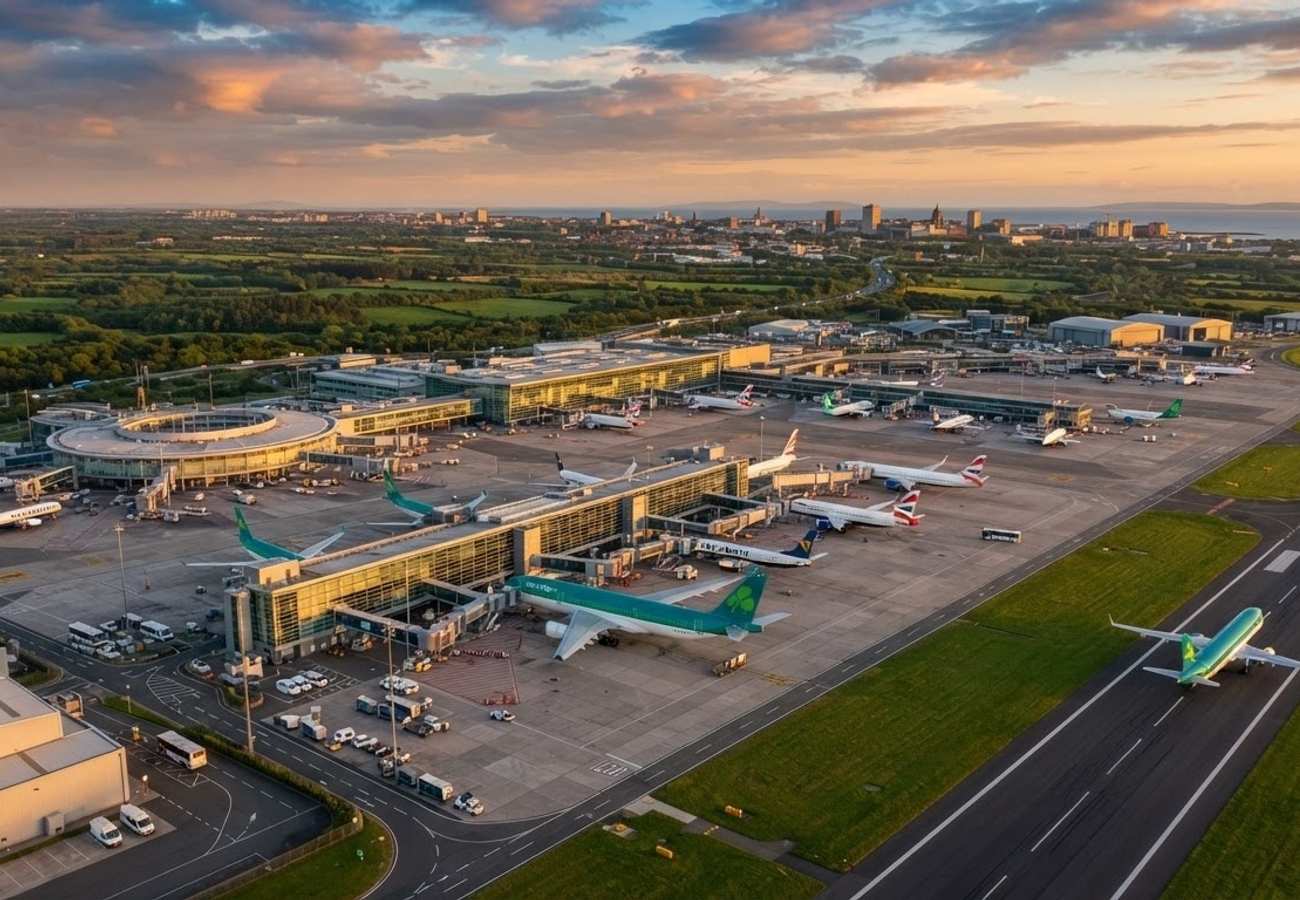
Image generated by AI
Navigating Ireland's primary aviation hub can be daunting for newcomers, but understanding the 10-kilometer gap between the runways and the city center is the first step to a seamless trip.
Located approximately 10 kilometers north of the city center, Dublin Airport serves as the primary international gateway to Ireland. Handling tens of millions of passengers annually, the facility is designed to manage high volumes, though peak holiday seasons often lead to significant congestion. For those landing in Ireland for the first time, the airport operates as a dual-terminal system that shares most ground infrastructure, making the transition between airside and landside operations relatively efficient.
Navigating Terminal 1 and Terminal 2 Layouts
Dublin Airport is divided into two distinct passenger terminals. While they operate independently for flight arrivals and departures, they are connected by a covered walkway. Travelers can move between Terminal 1 and Terminal 2 on foot in roughly 5 to 10 minutes, eliminating the need for shuttle buses.
Terminal 1 is the older facility and functions as the primary hub for a diverse range of carriers. It is most notably used by Ryanair for its extensive European network, as well as Lufthansa, Emirates, and various other low-cost airlines.
Terminal 2 is the more modern installation and serves as the headquarters for Aer Lingus. This terminal is the primary point of departure for transatlantic flights and hosts the US Preclearance facilities, allowing passengers traveling to the United States to complete customs and immigration formalities before leaving Irish soil.
To avoid confusion, industry reports suggest utilizing the airport's interactive digital maps. These tools allow passengers to calculate walking distances from security to specific gates or locate essential services, such as pharmacies, before they disembark. Basic amenities—including free Wi-Fi, ATMs, currency exchange, and multi-faith prayer rooms—are standardized across both terminals.
Arrival Procedures and Immigration Logistics
Upon landing, the workflow is standardized: disembarkation, following "Arrivals" and "Baggage reclaim" signage, and passing through passport control for those arriving from outside the Common Travel Area.
In Terminal 1, the passport control area precedes the baggage reclaim, which then leads into a public arrivals hall characterized by designated meeting points and transit exits. Terminal 2 follows a similar logic but features a more contemporary architectural layout.
Wait times at immigration are highly volatile. Reports indicate that a standard mid-morning arrival from Europe during the winter may only take 10 to 20 minutes. Conversely, bank holiday evenings or clusters of arriving US flights can push wait times beyond 30 minutes. Border authorities strongly recommend that travelers have passports ready and utilize eGates where eligible to minimize delays.
Once in the public area, travelers have access to ATMs and currency exchange desks. While these are convenient for immediate needs, many visitors prefer using ATMs for small euro withdrawals and relying on contactless payments within Dublin city, where digital payment adoption is nearly universal.
Departure Timelines and Security Protocols
To ensure a stress-free departure, aviation guidelines suggest arriving at the airport at least 2 hours before short-haul European flights and 3 hours before long-haul or transatlantic journeys. For example, a passenger with a 09:00 flight to Paris should aim to be at the check-in area by 07:00. Those flying to New York via Aer Lingus from Terminal 2 for a 10:30 departure should plan to arrive by 07:30.
Check-in processes vary by carrier:
- Low-Cost Carriers (e.g., Ryanair): Heavy reliance on app-based check-in and self-service bag drop kiosks in Terminal 1.
- Full-Service Carriers (e.g., Aer Lingus): A combination of self-check-in machines for luggage tags and staffed bag-drop belts in Terminal 2.
Security screening is a frequent bottleneck. Both terminals offer "Fast Track" lanes available for a fee, which can reduce a 30-minute standard queue to under 10 minutes. After clearing security, passengers enter the duty-free zone. It is vital to monitor departure screens for gate walking times; gates in the 100s or 200s can require a 10 to 15 minute walk from the central security hub.
Ground Transportation and City Access
Since Dublin Airport lacks a direct rail link to the city center, travelers must rely on road transport.
| Transport Mode | Estimated Cost (One Way) | Estimated Travel Time | Best For |
|---|---|---|---|
| Express Coach | €8 – €10 | 30–45 Minutes | Budget-conscious travelers heading to O'Connell St |
| Public City Bus | ~€4 – €5 | 45+ Minutes | Local travel and lowest cost |
| Metered Taxi | €30 – €40 | 20–40 Minutes | Door-to-door service to hotels |
| Private Transfer | Variable | 20–40 Minutes | Groups and pre-planned luxury |
Express coaches are the most popular choice for tourists, offering frequent departures to the River Liffey quays and major train stations. Public buses are cheaper and accept Leap Cards or contactless payments but are slower due to frequent stops in north Dublin suburbs. Taxis are available at signed ranks outside both terminals; fares to areas like St Stephen's Green or Temple Bar typically range between €30 and €40, though rush-hour traffic can increase this cost.
Why This Matters: The Traveler's Perspective
For the first-time visitor, the distinction between Terminal 1 and Terminal 2 is the most critical piece of logistics. Arriving at the wrong terminal can result in a stressful 10-minute sprint across the walkway, which, while manageable, can be problematic when hauling heavy luggage.
From a logistical standpoint, the US Preclearance in Terminal 2 is a massive advantage for outbound travelers, as it removes the need to queue for immigration upon landing in the United States. However, this requires an even earlier arrival at the airport to account for the additional processing time.
For the budget-conscious traveler, the "Express Coach vs. City Bus" decision is a trade-off between time and money. While the city bus saves a few euros, the express coach's direct route to the city center is generally worth the premium to avoid navigating suburban stops with luggage.
Prepare for the crowds, check your terminal twice, and always keep a Leap Card handy for the easiest transition into the heart of Dublin.
Related Travel Guides
Disclaimer
This article is for informational and educational purposes only. It does not constitute legal, financial, or professional advice. While we strive to provide accurate and up-to-date information, travel policies, regulations, and conditions change rapidly. Always verify information with official sources before making travel decisions. Nomad Lawyer makes no representations about the accuracy, reliability, completeness, or suitability of the information provided. Readers should consult qualified professionals for advice specific to their circumstances. The views expressed in this article are those of the author and do not necessarily reflect the views of Nomad Lawyer.