
Dubai Airport Chaos: 156 Flights Delayed, 11 Canceled
Dubai and Sharjah airports ground to a halt with 156 flight delays and 11 cancellations, affecting Emirates, Qatar Airways, and major carriers serving London, Mumbai, and Bangkok routes.

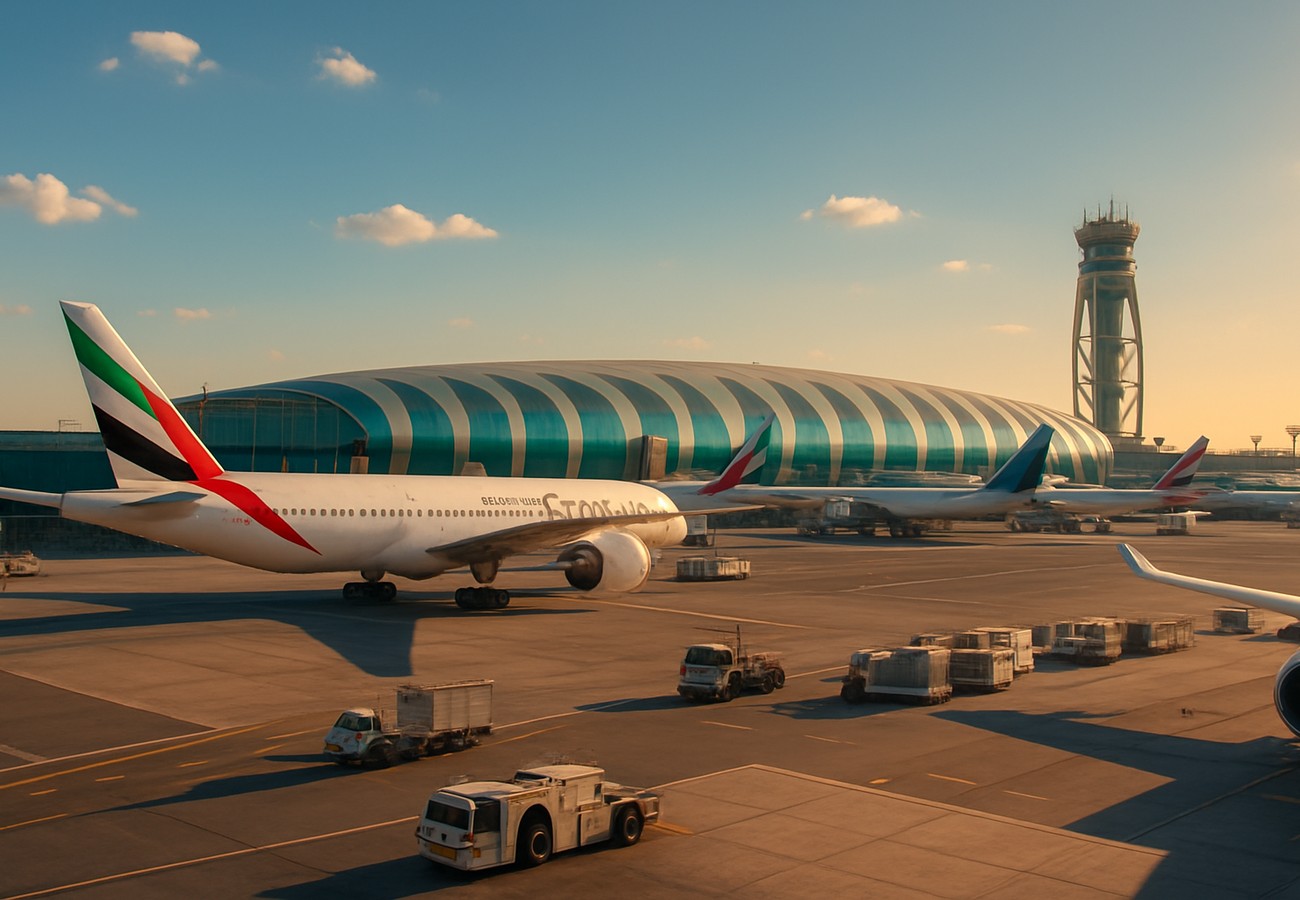
Image generated by AI
A Day of Travel Chaos Across the UAE's Aviation Gateways
Dubai International Airport and Sharjah International Airport became epicenters of travel disruption on May 30, 2026, when operations buckled under a cascading wave of schedule failures. Combined, the two critical Middle East hubs reported a staggering 156 flight delays and 11 cancellations — a disruption that reverberated across global aviation networks and left thousands of passengers scrambling to salvage their plans.
The scale was undeniable. Families missed vacations. Business executives missed meetings. Connecting passengers found themselves stranded in holding patterns across three continents.
The Numbers: Dubai and Sharjah's Operational Breakdown
The operational figures paint a clear picture of the magnitude: Dubai International Airport absorbed 128 delayed flights and four cancellations, while Sharjah International Airport logged 28 delays and seven cancellations.
For context, these weren't minor scheduling hiccups — they were compounding failures affecting the region's most critical aviation infrastructure.
When Hub Airports Stumble, Global Networks Collapse
What happens when one of the world's busiest aviation crossroads experiences disruption? Everything downstream suffers.
Dubai International Airport isn't just another airport. It's a global convergence point connecting Europe, Asia, Africa, and the Americas. Millions of passengers annually depend on its seamless operations for tourism, trade, and business connectivity. When 128 flights delay simultaneously, the consequences ripple across continents within hours.
Reddit: "Watched my connecting flight disappear in real-time because of Dubai delays. Five hours of waiting, then rebooked on a flight 24 hours later." — r/travel
The airport serves as one of the world's leading air transport hubs, with strategic importance that governments and airlines treat as critical infrastructure. Disruptions here aren't contained — they're contagious.
The Cascade Effect: How One Delay Becomes 156
This is what aviation planners dread: the cascade. A single delayed aircraft means:
- Missed crew connections
- Altered baggage handling operations
- Compromised aircraft rotations across multiple countries
- Stranded passengers on downstream flights
- Immigration and customs bottlenecks
Once delays begin accumulating at a hub airport, recovery becomes exponentially harder. Airlines operating on razor-thin scheduling margins have zero slack for disruptions.
Sharjah's Expanding Role in Regional Aviation
Sharjah International Airport has positioned itself as an affordable alternative for regional connectivity. The airport has aggressively expanded passenger operations in recent years, attracting carriers serving Asia, Africa, and the Middle East routes.
When 28 flights delay there, it's not incidental — it signals pressure on secondary hubs forced to absorb overflow from primary hubs like Dubai.
Airlines Affected: Emirates, Qatar Airways, Flydubai, IndiGo, Air Arabia
The disruption touched nearly every major carrier operating from the UAE:
- Emirates — flagship carrier with global networks
- Qatar Airways — regional and international services
- Flydubai — budget carrier with extensive regional reach
- IndiGo — India-bound connectivity
- Air Arabia — low-cost regional operator
Destination networks impacted included London, Mumbai, Riyadh, Istanbul, Cairo, and Bangkok — representing both business and leisure travel corridors.
The Passenger Experience: Uncertainty at Scale
For thousands waiting in terminals, the experience was uniform: anxiety, uncertainty, and frustration.
Families tracking flight statuses on mobile apps. Business travelers calculating meeting reschedules. Residents returning home with departure times that kept shifting. Immigration lines swelled as airport staff struggled to process rebooking requests.
The cardinal rule of disrupted travel: stay informed. Yet real-time information was fragmented across airline channels, airport systems, and digital flight boards. Passengers had to actively monitor multiple sources to understand their situation.
Why Dubai's Connectivity Status Matters
Here's what makes Dubai disruptions particularly consequential: the majority of passengers passing through aren't starting or ending journeys there — they're connecting.
A delay affecting a connecting passenger doesn't just alter one flight. It cascades through their entire itinerary. A missed connection in Dubai means missed connections downstream. A passenger booked through Bangkok with a Dubai connection becomes a problem across three countries when that hub fails.
This interconnectedness is aviation's achilles heel.
Operational Coordination During Crisis
Managing 156 simultaneous delays requires synchronized action across air traffic control systems, airline operations centers, ground handling services, immigration authorities, and airport management. There's no single lever to pull — it's orchestration involving hundreds of personnel across multiple organizations.
Ground staff worked overtime. Customer service teams fielded endless inquiries. Airline representatives negotiated rebooking options while managing passenger frustration.
The Recovery Imperative
Despite operational strain, both airports continued functioning throughout the crisis. Airlines prioritized minimizing passenger impact through rebooking options, alternative routing, and where necessary, hotel accommodations for overnight disruptions.
Yet recovery from 156 concurrent delays isn't swift. Each delayed flight consumes airport infrastructure — gates, ground equipment, crew time — that other operations need. Recovery typically requires 24-48 hours of normalized operations.
UAE's Aviation Infrastructure: Built for Resilience
The UAE has invested billions in aviation infrastructure, positioning itself as a global air transport leader. Government initiatives focus on enhancing capacity, improving passenger experience, and strengthening operational resilience.
Yet even world-class infrastructure has limits when demand surges and disruptions compound.
Growing Demand, Increasing Fragility
Post-pandemic travel demand across the Middle East has surged relentlessly. Airports and airlines are operating near capacity during peak periods. When minor disruptions occur during high-demand windows, they become major disruptions.
The system's efficiency is its vulnerability.
What Passengers Should Know Moving Forward
Travelers departing from Dubai or Sharjah should:
- Monitor airline channels obsessively during disruptions
- Maintain flexibility with tight connections
- Arrive early when system stress appears likely
- Keep contact information for airlines accessible
- Document delays for potential compensation claims
The Broader Aviation Lesson
This May 30 disruption serves as a reminder: global aviation networks are tightly coupled systems. A problem in one location rapidly becomes a problem everywhere. For digital nomads, business travelers, and leisure passengers, resilience means flexibility.
The millions relying on UAE airports annually depend on operational excellence. When systems fail at this scale, the region's reputation as a leading travel destination faces real pressure. The focus now shifts to rapid recovery, transparent communication, and renewed commitment to the operational reliability that built Dubai and Sharjah's aviation reputation.
Disruptions are aviation's inevitable cost — but recovery speed determines traveler trust.
Related Travel Guides
Disclaimer
This article is for informational and educational purposes only. It does not constitute legal, financial, or professional advice. While we strive to provide accurate and up-to-date information, travel policies, regulations, and conditions change rapidly. Always verify information with official sources before making travel decisions. Nomad Lawyer makes no representations about the accuracy, reliability, completeness, or suitability of the information provided. Readers should consult qualified professionals for advice specific to their circumstances. The views expressed in this article are those of the author and do not necessarily reflect the views of Nomad Lawyer.
Preeti Gunjan
Contributor & Community Manager
A passionate traveller and community builder. Preeti helps grow the Nomad Lawyer community, fostering engagement and bringing the reader experience to life.
Learn more about our team →