
Dubai Retail Property Sales Soar 177% to AED3.8bn as Off-Plan Demand Surges in H1 2026
Dubai Retail Property Sales Soar 177% to AED3.8bn as Off-Plan Demand Surges in H1 2026

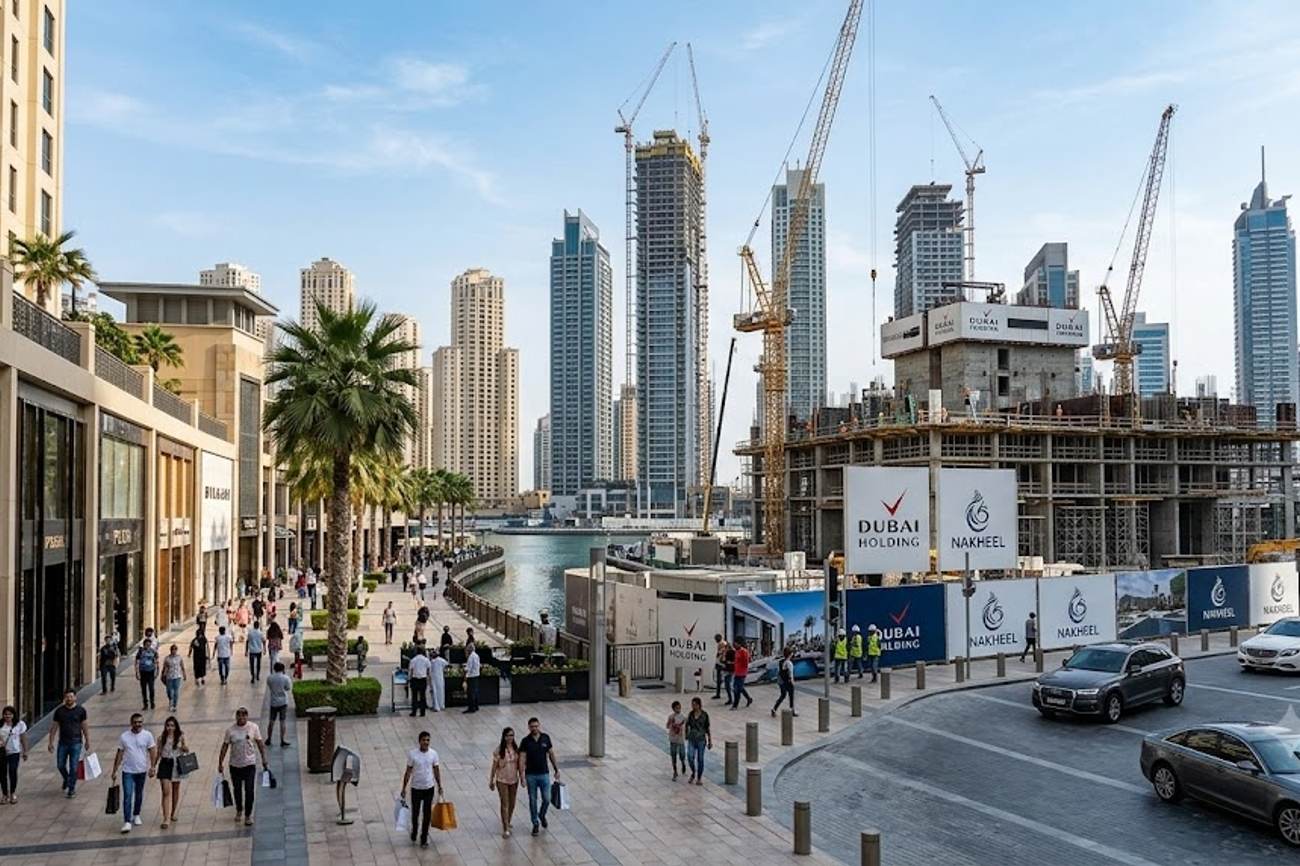
Image generated by AI
[Dubai, July 2026] — Retail real estate sales in Dubai surged 177% to reach AED 3.8 billion during the first half of 2026, according to new market data. This massive spike in value is accompanied by a 56% jump in total transactions, signaling an aggressive appetite among investors despite a simultaneous contraction in new leasing activity.
The growth is primarily fueled by a boom in off-plan developments, which now dominate both transaction volume and total value. However, a stark divergence has emerged between those buying property and those renting it. While investors are pouring capital into future retail spaces, businesses are scaling back on new expansions, leading to a sharp decline in new rental agreements.
Investor Appetite vs. Tenant Caution
The surge in sales is not a uniform rise across all property types. The market is currently operating at two distinct speeds: high-velocity investment in future assets and a decelerating pace of operational expansion.
According to analysis from Cavendish Maxwell, 850 retail property sales transactions were finalized in H1 2026. The average value of these deals climbed to AED 4.4 million, marking a 77% increase compared to the previous year. This indicates that buyers are not only more numerous but are also committing to significantly more expensive assets.
The driving force behind this momentum is the off-plan sector. Properties that are not yet completed now represent nearly 60% of all retail transactions and approximately 70% of the total sales value. This trend suggests a long-term bullish outlook on Dubai's retail infrastructure, with investors betting on future delivery and appreciation.
Conversely, the leasing market tells a story of hesitation. New retail rental contracts plummeted by 26% during the first half of the year. While renewals saw a slight increase of 1.5%, the overall number of contracts fell by nearly 6%. This suggests that while existing businesses are clinging to their current locations, few are willing to risk new capital on fresh expansions.
Who Is Affected
The impact of these market shifts varies significantly depending on the location and the status of the property (ready vs. off-plan).
Off-Plan Hotspots (Future Growth) The following areas dominated the off-plan retail sales market, accounting for nearly 50% of all such transactions:
- Jumeirah Village Circle: 12% share
- Majan: 10% share
- Dubai South: 9.8% share
- Motor City: 8.6% share
- Sobha Central: 7.6% share
Ready-Property Hubs (Immediate Utility) Buyers seeking immediate occupancy concentrated their activity in established commercial districts:
- International City: 22% of sales
- Business Bay: 13.4% of sales
- Azizi Riviera: 10% of sales
- Jumeirah Lakes Towers: 7.4% of sales
- Jumeirah Village Circle: 6.8% of sales
What This Means for Travelers
For the nomadic professional, digital entrepreneur, or business traveler, these statistics translate into a tangible change in the physical retail environment of Dubai.
1. Higher Costs for New Ventures If you are looking to establish a physical presence or pop-up shop in Dubai, be aware that rents have risen nearly 4.5% year-on-year. The cost of entry is increasing, and the scarcity of new contracts suggests a more competitive environment for prime spaces.
2. Stability in Prime Malls Despite the general caution in the leasing market, flagship malls and major community hubs remain incredibly stable. Occupancy rates in these prime locations are averaging 98%. For travelers, this means the high-end shopping and dining experiences in Dubai's major malls will remain consistent and high-quality, as these areas are shielded from the broader leasing slump.
3. Future Retail Shifts The heavy investment in areas like Dubai South and Jumeirah Village Circle indicates that the "center of gravity" for retail is shifting. Travelers should expect a surge of new, modern retail clusters in these outlying areas over the next few years, potentially reducing the need to travel to the city center for high-end services.
Market Moderation and Regional Pressures
The aggressive growth seen in the first quarter of 2026 began to temper as the year progressed. Sales transactions in Q2 dropped by 25% compared to Q1. While these figures are still 60% higher than the second quarter of 2025, the dip indicates a period of moderation.
Several factors are contributing to this cooling effect on the leasing side:
- Rising Overhead: Increased operating costs and higher rents are squeezing profit margins for retail operators.
- Regional Instability: Geopolitical tensions in the surrounding region are prompting business owners to adopt a more conservative approach to expansion.
- Selective Expansion: Companies are no longer expanding for the sake of growth; they are becoming highly selective about which locations offer a guaranteed return on investment.
Despite these headwinds, the outlook remains positive for the immediate future. The upcoming winter tourism peak and the Dubai Department of Economy and Tourism (DET) calendar of events typically drive massive footfall into the city. This seasonal surge is expected to provide a critical boost to retail occupancy and revenue, particularly for established destinations that can leverage the influx of global visitors.
FAQ: Dubai Retail Real Estate 2026
Why are retail sales rising while new leases are falling? Investors are buying properties as long-term assets (especially off-plan) to capitalize on future value. However, business operators are avoiding new leases due to rising rents, higher operating costs, and regional economic uncertainty.
Which areas are the best for new retail investment? For future growth, Jumeirah Village Circle and Dubai South are leading in off-plan sales. For immediate, ready-to-use commercial space, International City and Business Bay remain the most active markets.
Are rents still going up in Dubai? Yes, retail rents increased by nearly 4.5% year-on-year in H1 2026. However, the pace is slowing, with a slight quarter-on-quarter decrease of just under 1% noted recently.
How does this affect the shopping experience for tourists? Prime malls remain nearly full with 98% occupancy. Visitors will find that flagship destinations remain vibrant and fully operational, even as smaller, independent retail expansions slow down elsewhere in the city.
Dubai's retail market is currently a tale of two cities: one of bold investment and one of operational caution.
#DubaiRealEstate2026 #DubaiSouth #BusinessBay #CavendishMaxwell #DubaiRetailMarket #DXBCommercialProperty
Related Travel Guides
Disclaimer
This article is for informational and educational purposes only. It does not constitute legal, financial, or professional advice. While we strive to provide accurate and up-to-date information, travel policies, regulations, and conditions change rapidly. Always verify information with official sources before making travel decisions. Nomad Lawyer makes no representations about the accuracy, reliability, completeness, or suitability of the information provided. Readers should consult qualified professionals for advice specific to their circumstances. The views expressed in this article are those of the author and do not necessarily reflect the views of Nomad Lawyer.
Kunal K Choudhary
Co-Founder & Contributor
A passionate traveller and tech enthusiast. Kunal contributes to the vision and growth of Nomad Lawyer, bringing fresh perspectives and driving the community forward.
Learn more about our team →