
Dubai Fast-Tracks Massive Al Maktoum Airport Expansion to Defeat Severe Travel Chaos and Flight Cancellations Paralyzing Overcrowded Transit Routes: Latest Airline News
As Dubai International buckles under severe airport disruptions and congestion, the massive 2032 Al Maktoum expansion offers a desperate lifeline to save the global East-West transit corridor.

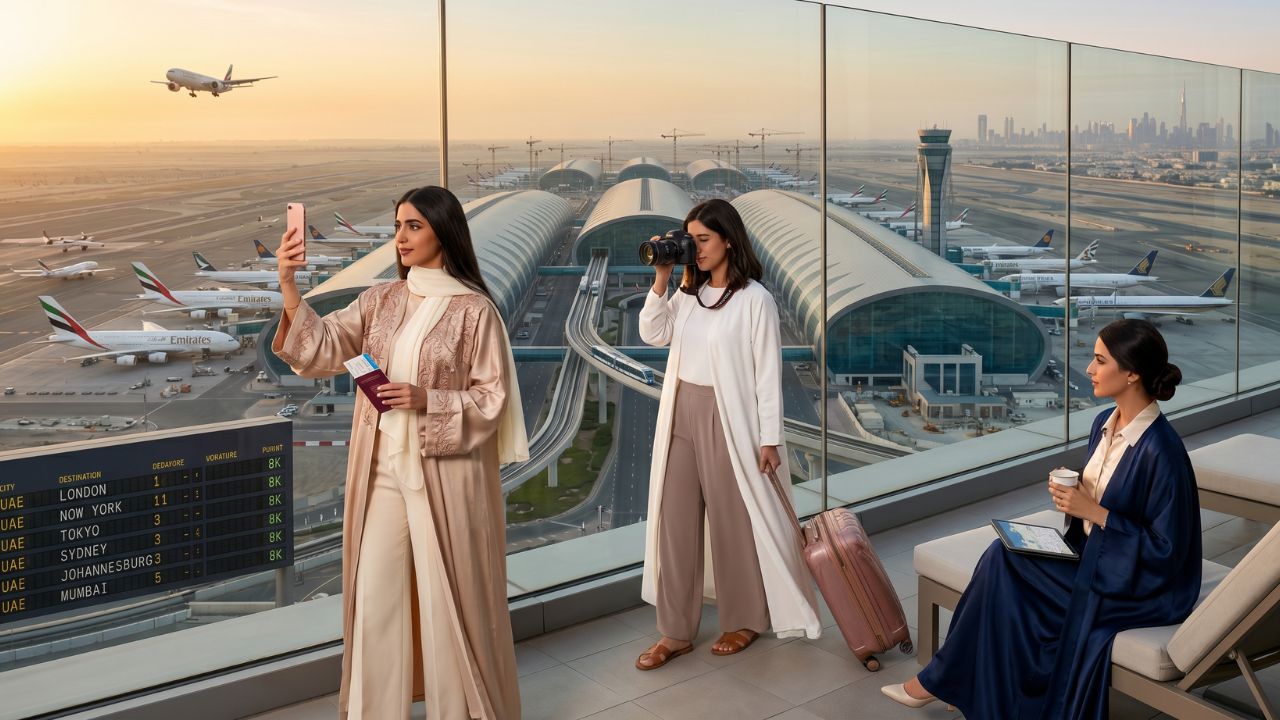
Image generated by AI
In a massive, multi-billion-dollar infrastructure offensive designed to permanently eradicate the severe travel chaos and rolling flight cancellations currently plaguing the Middle East, Dubai has dramatically accelerated the expansion of Al Maktoum International Airport (DWC). With Phase 1 officially on track to become fully operational in 2032, major airlines including Emirates, flydubai, Qatar Airways, Etihad, British Airways, Lufthansa, Air India, IndiGo, and Saudia are desperately anticipating the capacity relief. Currently, the traditional Dubai International Airport (DXB) is buckling under unprecedented passenger volumes, resulting in crippling airport disruptions, terminal gridlock, and missed connections for travelers navigating the critical East-West transit corridor. The relentless construction now covering the entirety of the Dubai South area represents a permanent, structural redistribution of global air traffic. By forcibly relocating international capacity from DXB to DWC, the UAE is attempting to rescue the global aviation network from systemic failure, making this megaproject the premier headline in today's breaking airline news and absolutely vital global aviation updates.
By introducing direct passenger coordination and dynamic scheduling backups, the regional aviation hubs target growing passenger demand across vital commerce sectors. The choice to coordinate flight departures in phases helps to manage gate capacity, supporting the country's broader regional transportation network.
Context: The Breaking Point of Dubai International (DXB)
For the millions of global tourists and corporate executives who rely on Dubai as their primary intercontinental transfer point, the current state of DXB is functionally an operational nightmare.
Historically, Dubai successfully captured the bulk of Asia-to-Europe transit traffic. However, this success has led to its own infrastructural collapse. DXB is operating beyond its maximum capacity limits. The massive influx of travelers from India, the UK, and China means there are zero spare gates and no buffer times. When a single widebody aircraft experiences a minor delay, the cascading effect instantly triggers severe airport disruptions and unannounced flight cancellations, trapping passengers in overcrowded terminals for days. The Al Maktoum International Airport expansion is not just a growth strategy; it is a desperate survival mechanism. The official planning documents confirm that without DWC taking over the bulk of operations by 2032, the entire hub-and-spoke model utilized by Emirates and flydubai will fail. Relocating capacity from DXB to DWC is the only viable method to alleviate the pressure, end the rolling delays, and restore stability to the world's most critical aviation artery.
To view live flight schedules, verify your departure terminal during this massive operational transition, or to track active Middle Eastern airspace restrictions, travelers must consult official aviation directories. For direct booking access into airlines preparing for this massive capacity shift, travelers should check the official portals for carriers like Emirates and Qatar Airways. To explore live flight tracking and monitor the exact severity of the DXB bottlenecks causing the flight cancellations you must now actively avoid, passengers can consult the official FlightAware tracking service.
Section-Wise Breakdown of the Global Aviation Shift
Airline Route Transformation
The 2032 DWC expansion is fundamentally reshaping how major airlines distribute their operations regionally. Legacy carriers connected to Dubai—including Lufthansa, British Airways, and Air India—are preparing to completely overhaul their long-haul routes. By migrating to the massively expanded Al Maktoum facility, these airlines will gain the flexibility required for true hub-and-spoke efficiency, finally escaping the crippling congestion at DXB that currently forces them to cut frequencies and cancel flights.
Dominant Source Markets Fueling the Congestion
The urgency of the DWC expansion is driven by the unstoppable travel flows from key inbound markets. High-volume labor, family, and tourism flows from India, alongside premium business travel from the United Kingdom, are overwhelming current infrastructure. Furthermore, rapidly recovering outbound tourism from China and massive short-haul, high-frequency travel from Saudi Arabia have pushed DXB past its breaking point. DWC is specifically designed to absorb these massive demographic shifts without triggering systemic travel chaos.
The Tourism Infrastructure Integration
Dubai’s tourism strategy is intrinsically linked to this airport expansion. By permanently relieving the pressure on global travelers, DWC allows for massive new tourism growth. The development of Dubai South seamlessly integrates runways with new lodging and logistics infrastructure. This prevents the current scenario where stranded travelers cannot find hotel rooms during airport disruptions, actively increasing the availability of luxury and mid-tier accommodations directly adjacent to the new mega-hub.
Technical Roster: Expansion Logistics and Market Flows
To ensure absolute factual accuracy regarding the specific airlines migrating to DWC, the exact source markets demanding this capacity growth, and the structural route changes required to end the travel chaos, the following tables detail the exact integration data:
Prominent Airlines and Predicted Route Outcomes
| Airline Operator | Predicted Operational Outcome at DWC (2032) |
|---|---|
| Emirates & flydubai | Massive increase in hub-and-spoke flexibility; reduced DXB congestion. |
| British Airways & Lufthansa | Expanded options for reliable, high-frequency long-haul air travel to Europe. |
| Air India & IndiGo | Stabilized operations for high-volume, cost-sensitive South Asian traffic. |
| Qatar Airways & Etihad | Forced to match DWC's massive capacity growth to remain regionally competitive. |
| Saudia | Unrestricted access for high-frequency, short-haul Middle Eastern routes. |
Key Source Markets Driving the Capacity Crisis
| Global Market | Specific Travel Flow and Impact on Dubai Hubs |
|---|---|
| India | Major flows of high-volume labor, family (VFR), and tourism travel. |
| United Kingdom | Major flows of premium tourism and highly lucrative business travel. |
| Saudi Arabia | Major flows of intense, short-haul, high-frequency regional travel. |
| China | Major flows of rapidly recovering, massive outbound tourism. |
| Germany & EU Markets | Major flows of highly stable, long-haul leisure and corporate transit. |
| Russia & CIS Countries | Major flows of seasonal tourism and highly diversified demand. |
Anticipated Transit Route Network Expansion
| Transit Corridor | Structural Change Post-2032 DWC Opening |
|---|---|
| Asia to Europe | Resolves the fastest-growing global travel corridor, ending current DXB bottlenecks. |
| Africa to Asia | Massive expansion of connecting routes routed safely through the Dubai South mega-hub. |
| Europe to Australia | Increased direct travel routing safely through Dubai without triggering terminal gridlock. |
Passenger Survival Logistics During the Transition
| Recommended Adjustment | Passenger Benefit and Chaos Avoidance |
|---|---|
| Verify Departure Airports | Prevents missing flights by confusing DXB operations with new DWC terminal locations. |
| Allow Extra Travel Time | Accounts for the massive geographical difference between Central Dubai and Dubai South. |
| Monitor Airline Terminals | Ensures passengers are not stranded at the wrong hub during the phased relocation. |
| Invest in Flexible Tickets | Protects passengers financially from unannounced route shifts during the transition decade. |
Passenger Impact: Surviving the Dual-Airport Era
For the everyday global tourist and the international business traveler, the road to 2032 will be highly volatile.
The immediate passenger impact is the onset of the confusing "dual-airport era." As operations slowly begin shifting from the congested DXB to the expanding DWC, travelers face severe logistical risks. If a passenger books a multi-leg itinerary without paying strict attention, they may land at DXB but have a connecting flight departing from DWC in Dubai South. Without allowing massive amounts of extra travel time for cross-city ground transport, this will result in guaranteed missed connections and intense travel anxiety. However, once Phase 1 is fully operational in 2032, the ultimate passenger impact will be the total eradication of the DXB congestion nightmare, allowing for seamless, disruption-free transfers between the East and West.
Industry Analysis: The Middle Eastern Transit Monopoly
Aviation industry analysts view the Al Maktoum expansion as Dubai’s definitive move to secure an absolute monopoly over global transit routes.
Analysts note that congested hubs in Asia and Europe are physically unable to expand; they are landlocked by massive cities. Dubai, however, is building an entirely new aviation city in Dubai South. The industry consensus is that by resolving its own capacity issues, Dubai will permanently redistribute global travel. Airlines that currently suffer massive delays flying through congested European hubs will aggressively reroute their Asia-bound traffic through DWC. This expansion guarantees the growing dominance of Middle East hubs in global aviation, forcing competing international airlines to either utilize Dubai's new infrastructure or face obsolescence due to unmanageable traffic congestion at their own legacy airports.
Actionable Advice for Navigating Dubai Transit
If you are a global traveler flying through the UAE between now and 2032, you must execute this strategic planning checklist immediately to survive the current travel chaos and the impending airport transition:
- Meticulously Check Airport Codes: Never assume "Dubai" means DXB. Always check your itinerary for the specific DWC airport code. Arriving at the wrong airport will result in an immediate, non-refundable missed flight.
- Pad Your Layover Times Aggressively: Because DXB is currently operating at absolute maximum capacity, departure delays are virtually guaranteed. Book itineraries with a minimum of a 3-hour layover to absorb the inevitable runway congestion.
- Prepare for Ground Transfers: If your airline forces a connection between DXB and DWC, pre-book private ground transport. Do not rely on finding a taxi during peak hours, as the transit between Central Dubai and Dubai South is significant.
- Monitor Emirates Network Announcements: As the primary operator, Emirates will dictate the pace of the relocation. Watch their scheduling closely; when they shift a route to DWC, it signals that the route is finally safe from DXB terminal gridlock.
FAQ: Dubai Al Maktoum Expansion & Travel Chaos 2026
What is the Al Maktoum International Airport Expansion 2032?
It is a massive infrastructure megaproject in Dubai South designed to massively increase passenger capacity and permanently ease the severe congestion paralyzing Dubai International Airport (DXB).
How will this expansion stop flight cancellations and travel chaos?
DXB is currently operating beyond its limits, causing cascading delays. By relocating operations to the massively expanded DWC, airlines will gain the necessary terminal and runway capacity to operate disruption-free hub-and-spoke networks.
Which airlines will benefit most from the new Dubai airport?
The primary beneficiaries of this massive capacity-driven network shift include Emirates, flydubai, Qatar Airways, Etihad, British Airways, Lufthansa, Air India, IndiGo, and Saudia.
The Supremacy of Aviation Infrastructure
The aggressive acceleration of the Al Maktoum International Airport expansion proves definitively that the only way to defeat systemic travel chaos is through massive, unrelenting infrastructure development. By acknowledging that DXB has reached a critical breaking point, Dubai is executing a multi-billion-dollar bypass to rescue the global East-West transit corridor. As archaic, landlocked European and Asian airports desperately struggle to process crowds—triggering rolling flight cancellations and severe airport disruptions—travelers must accept a critical new reality: avoiding brutal travel anxiety requires actively routing your journeys through mega-hubs that possess the physical runway capacity to handle the modern era of hyper-mobility.
Key Takeaways
- The Ultimate Congestion Cure: Dubai is rapidly expanding Al Maktoum International (DWC) to permanently resolve the severe travel chaos and overcrowding paralyzing DXB.
- 2032 Operational Target: Phase 1 of the massive Dubai South megaproject is officially on track to open in 2032, triggering a global redistribution of air traffic.
- Airline Route Transformation: Emirates, flydubai, British Airways, and Air India will utilize DWC to execute reliable, disruption-free long-haul routes between Asia and Europe.
- The Dual-Airport Danger: During the transition, passengers must meticulously verify if their flights depart from DXB or DWC to avoid missing connections due to massive cross-city ground transfers.
- Global Transit Dominance: This expansion permanently secures the Middle East's dominance over global aviation, offering the only viable solution to the severe airport disruptions plaguing legacy global hubs.
Related Travel Guides
Massive European Infrastructure Collapse Triggers 1,200 Delays
Disclaimer
This article is for informational and educational purposes only. It does not constitute legal, financial, or professional advice. While we strive to provide accurate and up-to-date information, travel policies, regulations, and conditions change rapidly. Always verify information with official sources before making travel decisions. Nomad Lawyer makes no representations about the accuracy, reliability, completeness, or suitability of the information provided. Readers should consult qualified professionals for advice specific to their circumstances. The views expressed in this article are those of the author and do not necessarily reflect the views of Nomad Lawyer.
Kunal K Choudhary
Co-Founder & Contributor
A passionate traveller and tech enthusiast. Kunal contributes to the vision and growth of Nomad Lawyer, bringing fresh perspectives and driving the community forward.
Learn more about our team →