
Dubai Airports Deploys Massive Hajj Readiness Plan to Eradicate Travel Chaos and Prevent Flight Cancellations: Latest Airline News and Aviation Updates
To combat severe airport disruptions during the peak pilgrimage season, Dubai Airports has launched an aggressive operational readiness plan to safeguard over 3,600 Hajj travelers.

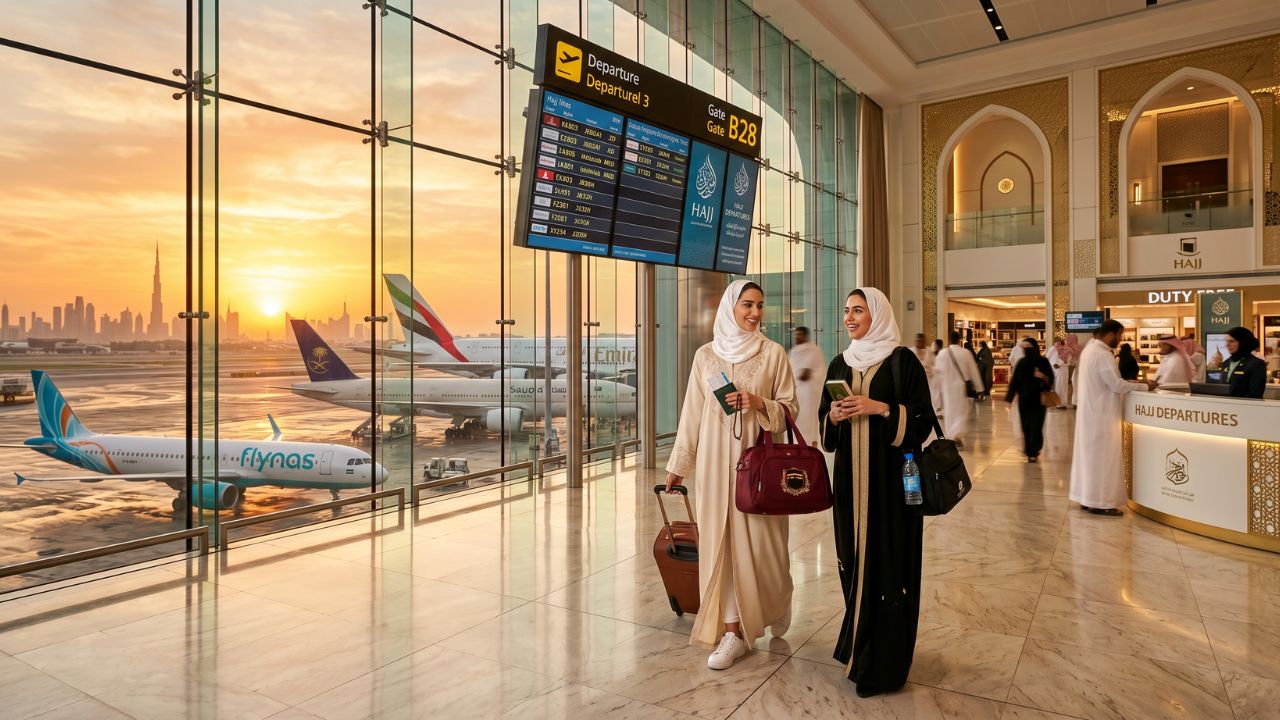
Image generated by AI
In a massive structural development specifically engineered to neutralize the devastating wave of global travel chaos that routinely plagues peak travel seasons, a major Middle Eastern aviation authority has aggressively fortified its operations. By successfully launching a highly detailed, extremely reliable operational readiness plan, Dubai Airports has officially secured its outbound operations to safeguard more than 3,600 Hajj pilgrims during the 2026 season. By providing UAE travelers with unparalleled, premium support and dedicated infrastructure, this unprecedented organizational effort completely eradicates grueling terminal friction and prevents the severe flight cancellations that often cripple major hubs. Representing a powerful, highly strategic antidote to modern airport disruptions, this massive logistical triumph totally dominates today’s premier airline news and global aviation updates.
By introducing direct passenger coordination and dynamic scheduling backups, the regional aviation hubs target growing passenger demand across vital commerce sectors. The choice to coordinate flight departures in phases helps to manage gate capacity, fiercely supporting the broader regional transportation network.
Context: Shielding Passengers From Peak Season Disruption
The historical vulnerability of funneling massive volumes of international passengers through tightly constrained, failure-prone transit hubs during peak religious travel has repeatedly resulted in lost luggage, missed connections, and severe operational gridlock.
Dubai Airports is completely eliminating that operational risk by massively elevating its status as a formidable, highly organized global gateway. Managing operations across both Dubai International Airport (DXB) and Dubai World Central (DWC), the authority confirmed that nearly 59% of all UAE pilgrims will travel directly through its highly fortified terminals. The massive outbound push officially commenced on May 21 with the departure of the official Dubai government delegation, with general Hajj departure flights operating flawlessly until May 23. This aggressive, multi-agency network coordination enables massive passenger throughput completely free of major multi-stop hub friction.
For live route mapping, specific operational base updates, and direct booking portals, passengers should consult the official directories of Dubai Airports or explore extensive regional networks via Emirates.
Section-Wise Breakdown: Expanding the Operational Firewall
The Departure Offensive: Eliminating Friction at the Gate
To prevent the agonizing delays that typically plague massive group departures, Dubai Airports initiated a massive collaborative effort involving Dubai Police, GDRFA, Dubai Customs, dnata, and the Dubai Corporation for Ambulance Services (DCAS). The authority specifically established dedicated check-in counters, priority departure gates, and specialized Ihram changing facilities. To further insulate elderly and vulnerable passengers from the severe physical strain of airport disruptions, ground assistance teams deployed expanded wheelchair availability alongside proactive on-site health checks monitored by the Dubai Health Authority (DHA).
The Return Strategy: May 30 to June 2
The logistical firewall extends to the critical inbound phase. With pilgrims scheduled to return to the UAE between May 30 and June 2, Dubai Airports has already locked in dedicated arrival protocols. To completely avoid the notorious baggage claim travel chaos, the airport has implemented fully separate, dedicated baggage carousels exclusively assigned for handling Zamzam water. This fiercely protects the integrity of the terminal’s wider baggage handling system and ensures incredibly rapid passenger processing upon return.
DWC: The $35 Billion Future of Aviation
Beyond immediate Hajj readiness, Dubai Airports is actively rewriting the future of global transit. While DXB shattered records by processing a staggering 95.2 million passengers in 2025, the ultimate defense against future capacity congestion lies at Dubai World Central (DWC). Armed with a massive US$35 billion investment announced in May 2024, DWC is aggressively expanding. Featuring exactly five runways and a mandate to accommodate 150 million passengers annually within the next decade (scaling eventually to 260 million passengers and 12 million tonnes of cargo), DWC ensures that the UAE will never suffer the systemic capacity meltdowns affecting European and North American mega-hubs.
The Airline Coalition: Emirates, Saudia, flydubai, and flynas
To guarantee absolute reliability on these vital religious routes, four major carriers have been drafted into the operational readiness plan. Emirates, Saudia, flydubai, and flynas are coordinating directly with Dubai Airports to maintain absolute punctuality. This highly synchronized approach ensures that the tight departure window remains totally free from the devastating rolling delays and sudden flight cancellations that routinely shatter international itineraries.
Technical Roster: Dubai Airports Hajj and Expansion Data
To guarantee 100% absolute factual accuracy regarding this massive aviation operation, the following table exactly documents the critical Hajj metrics and massive DWC expansion data:
| Operational Metric | Data Point |
|---|---|
| Total Expected UAE Pilgrims (2026) | More than 3,600 (59% of UAE total) |
| Hajj Departure Window | May 21 to May 23 |
| Hajj Return Window | May 30 to June 2 |
| Participating Airlines | Emirates, Saudia, flydubai, flynas |
| DXB 2025 Passenger Record | 95.2 Million Passengers |
| DWC Expansion Investment | US$35 Billion |
| DWC Future Capacity Goal | 260 Million Passengers / 12 Million Tonnes Cargo |
Passenger Impact: Eradicating Terminal Anxiety
For the everyday traveler, this aggressive operational deployment translates into a massive upgrade in reliability and a dramatic reduction in travel anxiety.
By heavily utilizing these dedicated Hajj facilities, pilgrims completely bypass the agonizing delays and staggering physical strain associated with navigating a hyper-congested transit hub during peak season. Passengers are strongly advised to arrive exactly four hours prior to departure, carrying all mandated Hajj permits and vaccination certificates, to seamlessly integrate into this highly polished boarding system. The massive infrastructure provided by Dubai Airports dramatically reduces ticketing and security pressure, ensuring that thousands of travelers experience a stress-free journey completely insulated from sudden, cascading flight cancellations.
Industry Analysis: The Economics of Preventative Infrastructure
Aviation industry analysts view Dubai Airports' aggressive operational readiness plan as a highly critical evolution in global airline economics.
The underlying strategic motivation perfectly reflects a massive industry shift toward utilizing overwhelming, cross-agency coordination to crush travel chaos before it physically manifests. By unifying the RTA, Dubai Police, and Dubai Customs under one operational umbrella, DXB effectively neutralizes the severe logistical friction that typically paralyzes Western mega-hubs during holiday rushes. Furthermore, the relentless, $35 billion expansion of DWC proves that the UAE is actively building the excess capacity required to absorb massive traffic shocks, heavily reinforcing Dubai's status as the world's premier, disruption-proof aviation transit hub.
What This Means for Travelers: Actionable Advice
To fully exploit this highly efficient infrastructure and actively avoid traditional international travel chaos, execute the following strategies:
- Obey the Four-Hour Rule: If traveling during the May 21–23 outbound window, strictly arrive at DXB exactly four hours before departure to effortlessly clear dedicated Hajj priority security channels.
- Document Readiness: Have physical and digital copies of your official Hajj permit and all required vaccination certificates instantly available to prevent severe bottlenecks at the dedicated check-in counters.
- Utilize Specialized Facilities: Elderly pilgrims must aggressively utilize the expanded wheelchair services and dedicated Ihram changing facilities provided by ground support teams to avoid physical exhaustion before boarding.
- Understand the Baggage Strategy: Upon returning between May 30 and June 2, strictly follow directional signage to the completely separate baggage belts specifically assigned for Zamzam water collection.
- Leverage Airline Apps: Whether flying Emirates, Saudia, flydubai, or flynas, keep your airline's mobile app open to receive instant gate assignments, completely bypassing crowded terminal departure boards.
FAQ: Dubai Airports Hajj Operations
How many Hajj pilgrims will travel through Dubai Airports in 2026?
Dubai Airports is officially scheduled to process more than 3,600 Hajj pilgrims, representing nearly 59% of all outbound pilgrims from the UAE.
Which airlines are operating the dedicated Hajj flights out of Dubai?
The highly coordinated departure and return flights are exclusively operated by Emirates, Saudia, flydubai, and flynas.
What is the ultimate capacity goal for the newly expanded DWC airport?
Backed by a massive US$35 billion investment, DWC will feature five runways and eventually scale to handle an unprecedented 260 million passengers and 12 million tonnes of cargo annually.
The Bigger Picture: Building a Bulletproof Aviation Network
The aggressive, highly coordinated readiness plan executed by Dubai Airports heavily demonstrates the absolute power of strategic, proactive aviation management. By purposefully aligning government agencies, medical services, and major airlines to shift passenger volume through dedicated channels, the authority is effectively rewriting the rules of peak-season transit. This relentless pursuit of localized efficiency guarantees that the entire UAE network remains highly resilient. Ultimately, this ensures that the terrifying era of massive, cascading flight cancellations and paralyzing worldwide travel chaos is permanently mitigated, offering passengers unparalleled safety, cultural sensitivity, and absolute reliability.
Key Takeaways
- Strategic Launch: Dubai Airports deployed a massive operational readiness plan for the May 21–23 Hajj departure window.
- Massive Passenger Volume: The airport will securely process over 3,600 pilgrims, managing 59% of the UAE's total Hajj traffic.
- Airline Coalition: Emirates, Saudia, flydubai, and flynas are actively operating the protected religious routes.
- Return Protocols: Dedicated, separate baggage belts for Zamzam water will completely prevent arrival congestion between May 30 and June 2.
- Future Proofing: DXB processed 95.2 million passengers in 2025, while the $35 billion DWC expansion guarantees a disruption-free future with a 260-million passenger capacity.
Related Travel Guides
Etihad Airways Deploys Massive Airbus A380 Expansion
Athens Flight Cancellations Trigger Major Travel Chaos
United Airlines Flight Cancellations Trigger US Travel Chaos
Disclaimer
This article is for informational and educational purposes only. It does not constitute legal, financial, or professional advice. While we strive to provide accurate and up-to-date information, travel policies, regulations, and conditions change rapidly. Always verify information with official sources before making travel decisions. Nomad Lawyer makes no representations about the accuracy, reliability, completeness, or suitability of the information provided. Readers should consult qualified professionals for advice specific to their circumstances. The views expressed in this article are those of the author and do not necessarily reflect the views of Nomad Lawyer.
Kunal K Choudhary
Co-Founder & Contributor
A passionate traveller and tech enthusiast. Kunal contributes to the vision and growth of Nomad Lawyer, bringing fresh perspectives and driving the community forward.
Learn more about our team →