
Dubai International Airport DXB Deploys Next-Gen Security Scanners and Biometric Corridors in 2026
Dubai International (DXB) is implementing advanced CT scanners and biometric smart corridors to reduce security bottlenecks as passenger volumes exceed 87 million.

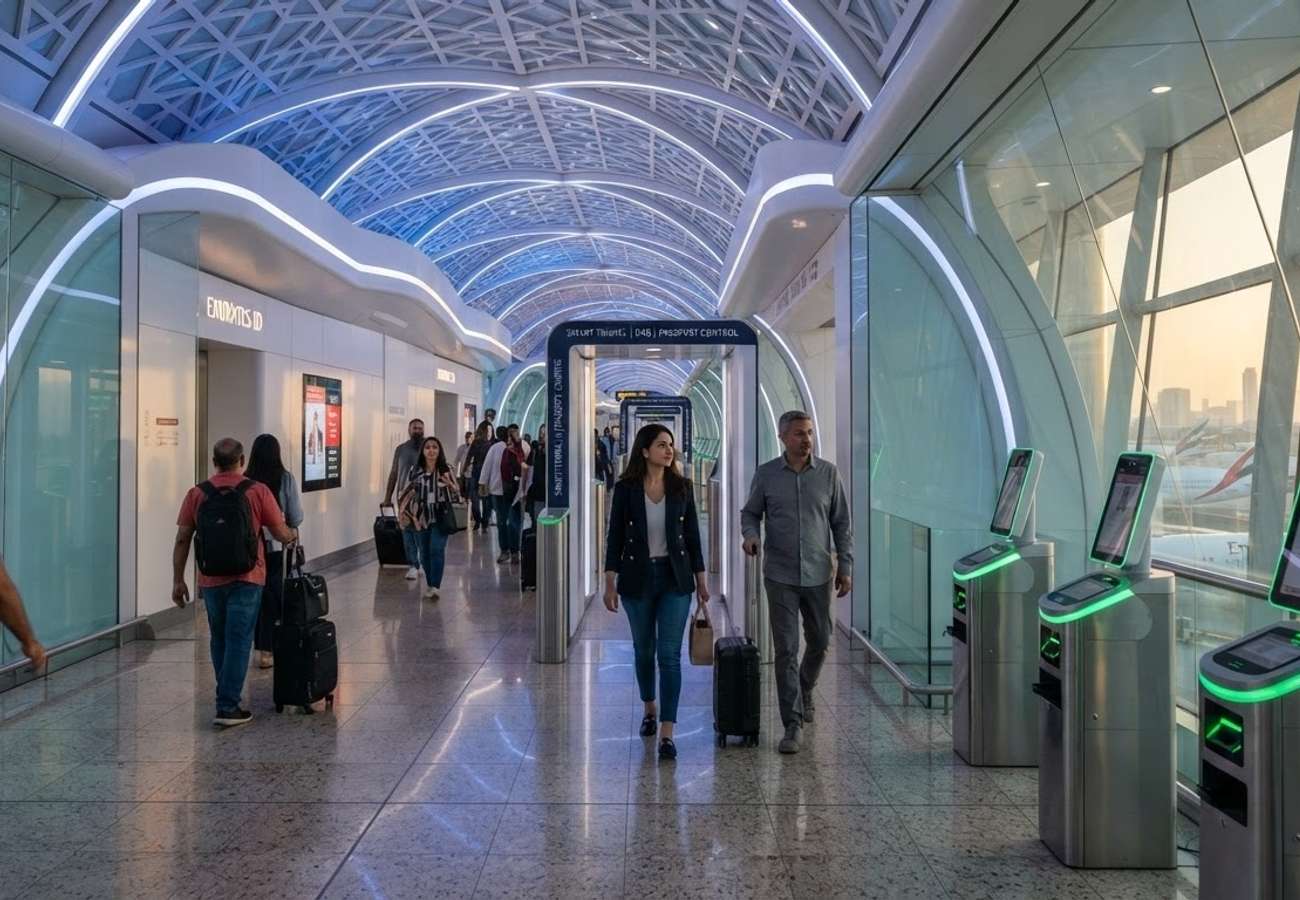
Image generated by AI
Dubai International Airport is deploying next-generation computed tomography (CT) scanners and biometric corridors to mitigate bottlenecks. This infrastructure shift aims to maintain flow as annual traffic surpasses 87 million passengers.
Advanced Screening Infrastructure at DXB
Dubai International (DXB) is aggressively integrating high-resolution screening technology to address critical bottlenecks at security checkpoints. Our analysis indicates that the airport is pivoting toward a "smart security" model to manage the surge in passenger volumes observed since 2023.
The centerpiece of this upgrade is the deployment of CT-style scanners. Unlike traditional X-ray machines, these systems provide three-dimensional imaging of cabin luggage. This capability allows security personnel to identify prohibited items with higher precision, significantly reducing the requirement for manual bag searches and secondary inspections.
Flight tracking and airport flow data suggest these upgrades are essential for maintaining stability during peak departure banks. The objective is to keep security wait times to a few minutes for the vast majority of travelers.
Impact Breakdown: Security and Border Control
The transition to automated processing is visible across several key touchpoints within the terminals:
- Baggage Screening: New 3D scanners allow for the identification of suspicious liquids and electronics without requiring passengers to remove them from bags in many instances.
- Biometric Smart Gates: Over 120 smart gates are now operational, utilizing facial recognition and Emirates ID. In 2023, more than 21 million passengers utilized these gates.
- The Smart Corridor: A tunnel-style facility currently being phased in that integrates identity verification, security inspection, and immigration into a single, continuous walkthrough.
- Customs Processing: More than 70 dedicated screening machines are now used for both checked and cabin baggage to ensure 24-hour coverage.
Passenger Rights & Advisory: Navigating DXB Security
For the affected passenger, the rollout of these technologies changes the pre-flight experience. However, inconsistency across terminals remains a factor.
Practical Guidance for Travelers:
- Electronics and Liquids: While next-gen scanners often allow laptops and liquids to remain inside bags, our analysis of current DXB guidelines suggests passengers should still be prepared to segregate these items. Rules vary based on the specific scanner at the checkpoint and the destination jurisdiction.
- Wait Time Expectations: Official data from early 2024 indicates that 97% of travelers experience security waits of under four minutes, while 95% pass through passport control in under seven minutes.
- Documentation: Eligible travelers using the Smart Corridor or biometric gates should ensure their digital identity profiles are updated to avoid being diverted to manual counters.
Compensation and Rights: Under general aviation guidelines, technology-led delays at security are rarely grounds for airline compensation (such as EU261/2004), as security is managed by the airport authority, not the carrier. However, if security delays result in a missed flight, passengers should immediately seek rebooking assistance. For those traveling to jurisdictions with stricter inbound standards, enhanced screening may still be mandatory regardless of the scanner technology used.
The move by Dubai Airports is a strategic response to the volatility of seasonal peaks. For example, projections for the July 2024 summer peak estimated 3.3 million passengers moving through DXB in just 12 days.
By shifting the burden of verification from human officers to algorithms and sensors, DXB is attempting to decouple passenger growth from queue growth. This digital transformation—including a "digital security screener" licensing system for staff—positions DXB as a blueprint for the "fully smart airport." The integration of AI-driven risk segmentation allows the airport to prioritize resources on high-risk travelers while accelerating the flow of low-risk passengers.
Efficiency is no longer an amenity at DXB; it is a operational necessity for survival.
Related Travel Guides
Disclaimer
This article is for informational and educational purposes only. It does not constitute legal, financial, or professional advice. While we strive to provide accurate and up-to-date information, travel policies, regulations, and conditions change rapidly. Always verify information with official sources before making travel decisions. Nomad Lawyer makes no representations about the accuracy, reliability, completeness, or suitability of the information provided. Readers should consult qualified professionals for advice specific to their circumstances. The views expressed in this article are those of the author and do not necessarily reflect the views of Nomad Lawyer.
Raushan Kumar
Founder & Lead Developer
Full-stack developer with 11+ years of experience and a passionate traveller. Raushan built Nomad Lawyer from the ground up with a vision to create the best travel and law experience on the web.
Learn more about our team →