
Karnataka Hold Workshop in Hampi to Finalise Global Standard Tourist Sites
Karnataka government convenes strategic workshop in Hampi to elevate prime tourist destinations to global standards. The 2026 initiative will shape the state's tourism roadmap for the next decade.

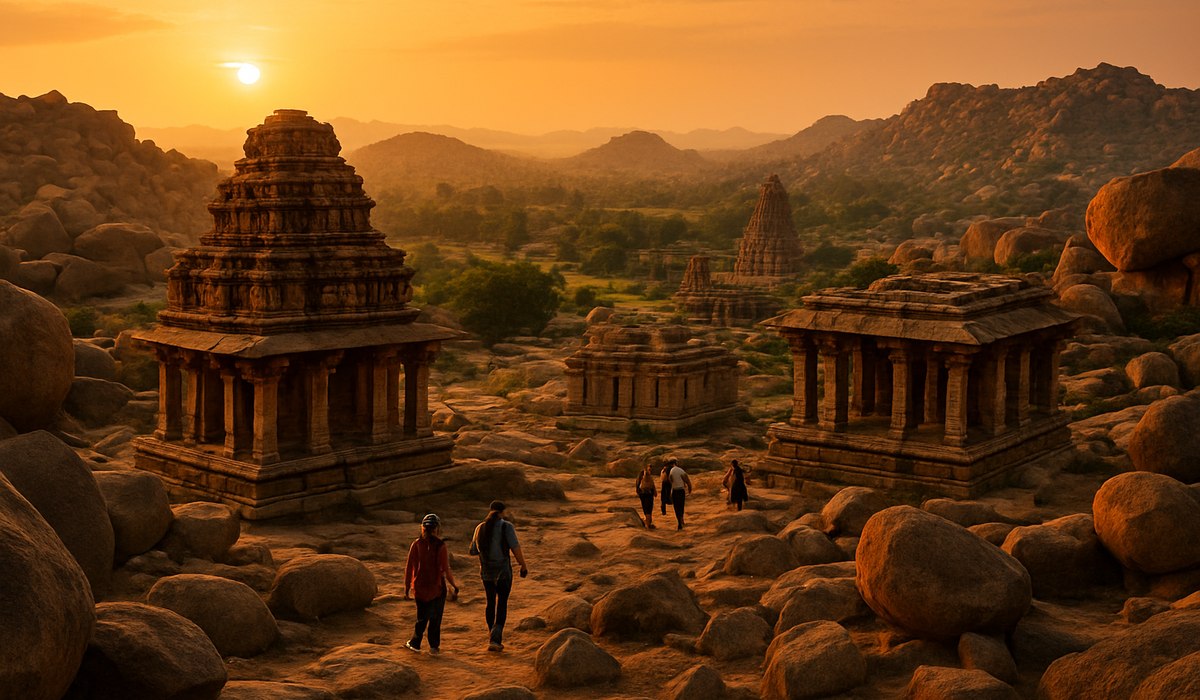
Image generated by AI
A Historic Tourism Summit for Southern India
Karnataka's government is organizing a transformative workshop in Hampi to identify and elevate premier tourist destinations across the state. This strategic initiative, convened in July 2026, brings together government officials and hospitality industry leaders to establish a comprehensive framework for meeting global tourism standards. The collaboration marks a watershed moment for Karnataka's tourism sector, promising infrastructure modernization and sustainable development that will redefine visitor experiences over the coming decade.
Karnataka's Strategic Tourism Initiative
The Karnataka hold workshop represents a coordinated effort to position the state as a world-class tourism destination. Regional officials are leveraging Hampi's iconic status—a UNESCO World Heritage Site drawing hundreds of thousands of international visitors annually—as the venue for this high-level consultation. By selecting Hampi, administrators send a powerful message about their commitment to preserving cultural heritage while advancing contemporary travel infrastructure.
The workshop brings diverse stakeholders into dialogue: state tourism officials, municipal administrators, private hospitality operators, and sustainability consultants. This multidisciplinary approach ensures that tourism development addresses not only economic growth but also environmental protection and community welfare. Participants will examine successful global tourism models and adapt best practices to Karnataka's unique geographical and cultural context.
Hampi Workshop: Goals and Objectives
The primary objective of this Karnataka hold workshop is to finalise a comprehensive strategy for elevating tourist destinations to global standard benchmarks. Officials aim to identify which attractions possess the greatest potential for development while maintaining their authentic character. This selection process considers visitor volume, cultural significance, infrastructure capacity, and accessibility factors.
Beyond mere identification, the workshop will establish measurable standards for accommodation quality, transportation connectivity, and service excellence. Participants will discuss certification frameworks aligned with international tourism bodies and UNESCO guidelines. The finalised recommendations will serve as a blueprint for state government investment and private sector partnerships over the next ten years, ensuring coordinated rather than haphazard development across Karnataka's diverse regions.
Infrastructure, Investment, and Sustainability Focus
A central theme of the Karnataka hold workshop addresses infrastructure modernization within financial and environmental constraints. Discussions will cover road network improvements, airport connectivity expansion, and accommodation capacity building. Priority areas include upgrading transportation links to remote heritage sites and enhancing digital connectivity for tourist information systems.
Investment strategies form another critical discussion point. Officials will evaluate public-private partnership models that leverage government resources with private sector efficiency. Sustainability practices receive particular emphasis, ensuring tourism development does not compromise water resources, air quality, or local ecosystems. The workshop will establish environmental impact assessment requirements for all proposed projects and create monitoring mechanisms to track long-term ecological health alongside visitor statistics.
Ten-Year Tourism Roadmap for the State
The outcomes of this Karnataka hold workshop will culminate in a detailed action plan extending through 2036. This roadmap identifies phased development timelines, funding requirements, and performance indicators for each major destination. The framework acknowledges that global standard tourism infrastructure requires sustained investment and requires coordination across multiple government departments and private enterprises.
Strategic priorities include enhancing digital booking systems, improving airport terminals, upgrading hospitality staff training programs, and establishing world-class medical and safety facilities at major tourist hubs. The roadmap also addresses marketing initiatives to elevate Karnataka's international profile, positioning the state alongside established competitors like Thailand, Indonesia, and Vietnam in attracting high-value international travelers.
Key Data Points from the Initiative
| Metric | Details |
|---|---|
| Workshop Location | Hampi, UNESCO World Heritage Site |
| Workshop Date | July 2026 |
| Primary Focus | Elevating tourist destinations to global standards |
| Planning Horizon | 10-year development roadmap (2026-2036) |
| Stakeholders Involved | Government officials, industry representatives, sustainability consultants |
| Key Development Areas | Infrastructure, investment strategy, environmental sustainability |
| Target Tourism Standards | International benchmarks and UNESCO compliance |
| Expected Outcomes | Finalised destination selection and strategic framework |
Best Time to Visit Hampi
Hampi experiences optimal tourism conditions from October through February, when temperatures range between 18-32°C and rainfall is minimal. During these months, the site's architectural monuments are most accessible, and outdoor exploration remains comfortable. The winter season coincides with peak tourist traffic, offering vibrant cultural events and better accommodation availability.
Summer months (March-May) bring extreme heat exceeding 40°C, making extended sightseeing challenging. Monsoon season (June-September) presents weather obstacles despite the landscape's lush appearance. However, visiting during shoulder seasons—late September or early March—provides manageable climate conditions with fewer crowds and lower accommodation rates. Check current Karnataka Tourism official site for seasonal festivals and workshop-related events that may affect accessibility.
How to Get There
Hampi is accessible via multiple transportation routes, offering flexibility for travelers from different regions. Bangalore International Airport, located 345 kilometers away, serves as the primary air gateway for domestic and international arrivals. From Bangalore, visitors can rent vehicles or use state-operated bus services to reach Hampi (approximately 7-8 hour journey).
The nearest railway station is Hospet, situated just 13 kilometers from Hampi town. Regular trains connect Hospet with major cities including Bangalore, Hyderabad, and Goa, offering budget-friendly travel options. Local taxis and auto-rickshaws provide final-mile connectivity from Hospet to accommodation sites. For detailed journey planning and real-time transportation updates, consult TripAdvisor's Hampi guide before departure.
What This Means for Travelers
The Karnataka hold workshop and resulting tourism upgrades offer significant benefits for both leisure and adventure travelers:
-
Enhanced Infrastructure Quality: Expect improved accommodation standards, modern amenities, and better-maintained heritage sites as investment materializes throughout 2026-2036.
-
Better Transportation Connectivity: Road upgrades and expanded airport capacity will reduce travel friction, cutting journey times and expanding destination accessibility.
-
Professional Service Standards: Staff training initiatives will elevate service quality across hospitality, guiding, and support services, improving overall visitor satisfaction.
-
Sustainable Tourism Practices: New environmental protections ensure iconic sites remain intact for future generations while maintaining their authentic character.
-
Strategic Marketing: Increased international visibility will drive competitive pricing and seasonal promotional offers as Karnataka competes for global tourist markets.
Frequently Asked Questions
Q: How will the workshop outcomes affect travel to Karnataka destinations? A: The finalised tourism framework will guide infrastructure investments, service improvements, and destination marketing over ten years. Travelers will experience modernized facilities, better connectivity, and more professional tourism experiences at major attractions. Construction timelines may temporarily affect site accessibility.
Q: Which destinations will receive priority development? A: The workshop will identify premier attractions meeting global standard criteria. While specific selections will be finalised during the event, historically significant sites like Hampi, combined with growing destinations, are expected to receive substantial investment for infrastructure enhancement and service quality improvement.
Q: When will travelers see tangible improvements? A: Implementation phases occur across 2026-2036. Initial improvements in accommodation quality and transportation connectivity may appear within 12-18 months. Comprehensive infrastructure upgrades spanning airports, roads, and hospitality facilities will develop progressively throughout the decade-long roadmap.
Q: Does global standardization mean loss of authentic cultural experiences? A: The workshop emphasizes balancing global standards with cultural preservation. Development frameworks prioritize maintaining heritage authenticity while providing contemporary amenities. Sustainability guidelines specifically protect cultural practices, local ecosystems, and traditional community involvement in tourism experiences.
Related Travel Guides
- United Express Flight SKW5090 Urgent Diversion: CRJ-200 Rerouted to Billings Triggering Rocky Mountain Travel Chaos and Airport Disruptions: Airline News
- Bypassing Global Travel Chaos: Singapore Changi Airport Unleashes Historic 2026 Network Expansion to Rescue Asian and European Passenger Transit
- Ancient Olympia Roman Monument Restoration: €3.6 Million Investment in Greece Historical Tourism
Disclaimer
This article is for informational and educational purposes only. It does not constitute legal, financial, or professional advice. While we strive to provide accurate and up-to-date information, travel policies, regulations, and conditions change rapidly. Always verify information with official sources before making travel decisions. Nomad Lawyer makes no representations about the accuracy, reliability, completeness, or suitability of the information provided. Readers should consult qualified professionals for advice specific to their circumstances. The views expressed in this article are those of the author and do not necessarily reflect the views of Nomad Lawyer.
Raushan Kumar
Founder & Lead Developer
Full-stack developer with 11+ years of experience and a passionate traveller. Raushan built Nomad Lawyer from the ground up with a vision to create the best travel and law experience on the web.
Learn more about our team →