
Dual Earthquakes Strike Scotia Sea Near South Orkney Islands: Antarctica Travel Safety Analysis 2026
Two powerful earthquakes measuring 5.7 and 6.2 magnitude struck the Scotia Sea near the South Orkney Islands on August 22, 2026, prompting increased monitoring of Antarctic expedition safety.

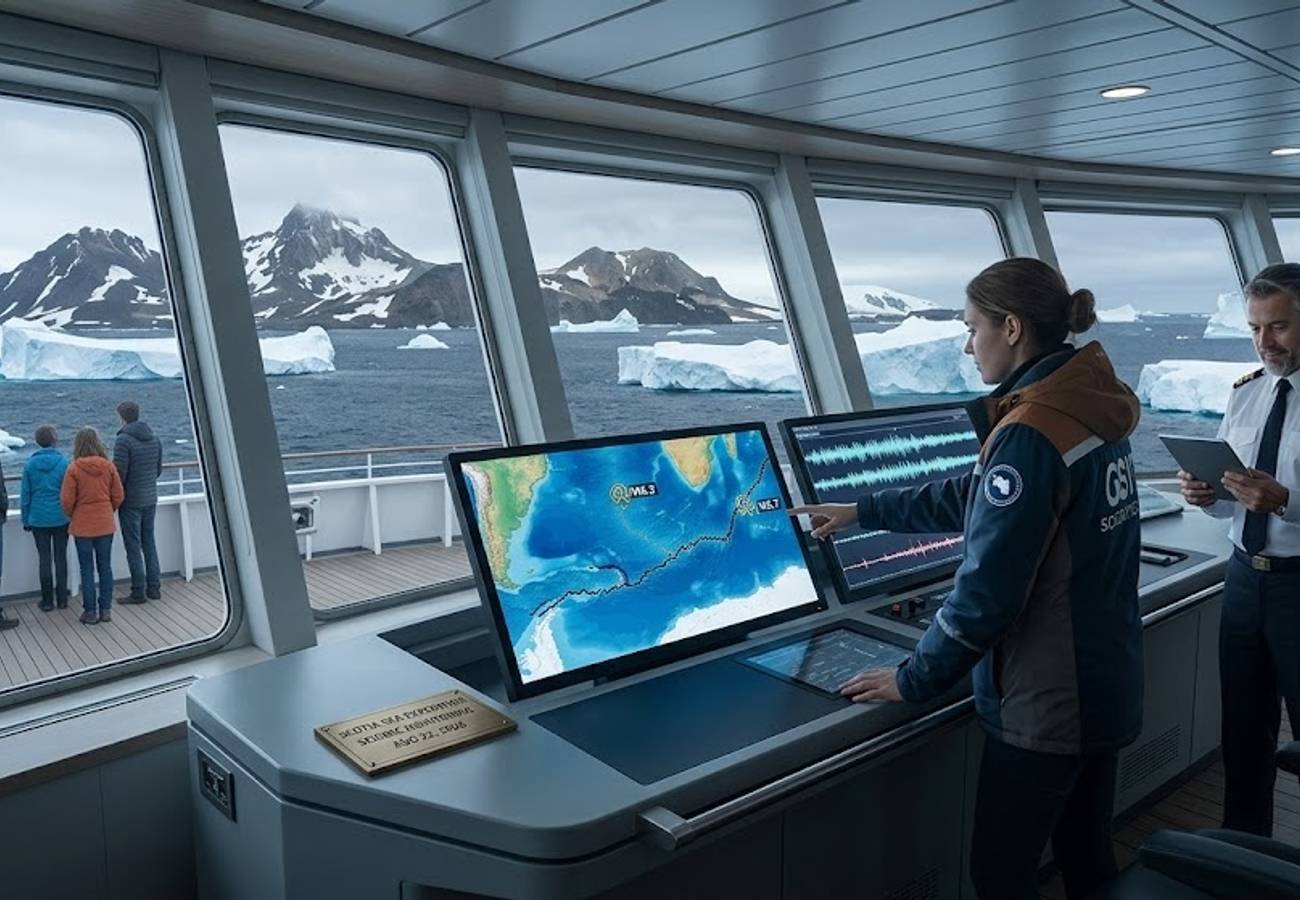
Image generated by AI
Two significant seismic events rocked the Scotia Sea near the South Orkney Islands on August 22, 2026, raising questions about the stability of the region's expedition corridors. While the tremors were powerful, reports indicate that travel safety for tourists and researchers remains intact due to the remote nature of the epicenters.
The South Polar region is no stranger to geological instability, but the timing and sequence of these specific events have drawn intense scrutiny from both the scientific community and polar tour operators. The Scotia Sea is recognized as the most seismically volatile zone in the Antarctic vicinity, making these occurrences a critical point of study for those managing high-risk adventure travel.
Magnitude 6.2 Seismic Sequence Hits South Orkney Islands
The geological activity unfolded in a rapid sequence on August 22, 2026, centered in the remote waters of the Scotia Sea. The first tremor was recorded at a magnitude of 5.7, serving as an initial warning for the region's active fault lines. In a strikingly short interval, a second and more powerful earthquake struck the same general area, measuring 6.2 on the Richter scale.
The gap between these two events was approximately 42 minutes. This tight window suggests a complex release of tectonic pressure, placing the Scotia Sea back under high-priority monitoring. Because the epicenter was located far from urban centers and permanent human settlements, there was no immediate threat to life or infrastructure.
Tectonic Volatility of the Scotia-Antarctic Plate Boundary
The dual earthquakes occurred along the Scotia-Antarctic plate boundary, a notorious fault system characterized by constant movement. This specific geological boundary is one of the most significant seismic zones in the Southern Ocean and has a documented history of producing massive events exceeding magnitude 7.
These latest tremors confirm that Antarctica is not a static landmass but a dynamic environment shaped by powerful subterranean forces. For geologists, the August 22 sequence provides a rare data set to analyze how fault systems behave in isolated, ice-covered polar environments. The interaction of these tectonic plates continues to reshape the ocean floor, occasionally resulting in the type of dual-shock sequence witnessed this week.
Minimal Disruption to Antarctic Tourism and Infrastructure
Despite the intensity of the magnitude 5.7 and 6.2 shocks, the geographical isolation of the South Orkney Islands acted as a natural buffer. Human presence in this sector of Antarctica is limited almost exclusively to seasonal expedition cruises and specialized scientific research stations.
Current data indicates that there has been no widespread disruption to international travel routes or visitor activities. No reports of damage to expedition vessels or research facilities have been confirmed. However, the event serves as a stark reminder to the industry that Antarctic travel occurs in one of the most extreme environments on the planet, where natural conditions can shift without warning.
Safety Protocols for Polar Expedition Travel
The ongoing attraction of adventure travelers and researchers to the frozen continent necessitates rigorous safety planning. Expedition operators must integrate real-time environmental monitoring into their routing to avoid areas of heightened risk.
While there is no evidence that travel has been halted, the August 22 events have reinforced the need for "observation-first" management. Safety protocols for polar tourism rely heavily on the ability to pivot itineraries based on seismic or meteorological alerts. The current status of Antarctic travel remains stable, but the focus has shifted toward heightened awareness of the Scotia Sea's volatility.
Stability of International Travel Regulations and Visas
It is important for travelers to note that these seismic events are purely geological and have no bearing on the legalities of visiting the region. There have been no changes to passport requirements, visa policies, or international border protocols as a result of the earthquakes.
Travelers planning future journeys to the South Pole will continue to follow standard procedures based on their point of departure and the requirements of their specific expedition provider. International aviation systems operating flights into the gateway cities for Antarctica have reported no impacts related to the seismic activity.
Scientific Value of the Scotia Sea Seismic Data
The dual earthquakes provide a critical opportunity for scientific advancement. By studying the 42-minute interval between the 5.7 and 6.2 magnitude events, researchers can better understand the mechanics of the Scotia-Antarctic boundary.
Monitoring technology is the primary line of defense in these remote regions. While a dual-earthquake sequence does not automatically signal a larger impending disaster, the data collected helps scientists build more accurate models of polar tectonic behavior. This knowledge is essential for the long-term safety of the permanent research stations that dot the Antarctic coastline.
Balancing Adventure with Geological Risk
The events of August 22, 2026, underscore the raw power of nature in the Southern Ocean. While the magnitude 5.7 and 6.2 earthquakes did not cause immediate chaos, they highlight the inherent risks associated with extreme destination travel.
For the travel industry, the priority remains a synergy between scientific research and responsible expedition planning. Antarctica continues to offer unparalleled landscapes, but those landscapes are actively being shaped by the same forces that caused the Scotia Sea tremors.
The stability of the polar frontier remains a delicate balance between human curiosity and the unpredictable movements of the Earth.
Related Travel Guides
Disclaimer
This article is for informational and educational purposes only. It does not constitute legal, financial, or professional advice. While we strive to provide accurate and up-to-date information, travel policies, regulations, and conditions change rapidly. Always verify information with official sources before making travel decisions. Nomad Lawyer makes no representations about the accuracy, reliability, completeness, or suitability of the information provided. Readers should consult qualified professionals for advice specific to their circumstances. The views expressed in this article are those of the author and do not necessarily reflect the views of Nomad Lawyer.
Kunal K Choudhary
Co-Founder & Contributor
A passionate traveller and tech enthusiast. Kunal contributes to the vision and growth of Nomad Lawyer, bringing fresh perspectives and driving the community forward.
Learn more about our team →