
Bypassing Travel Chaos: Emirates, Lufthansa, and 35 Global Airlines Forge Massive Doha Megahub Alliance to Shield Passengers from International Gridlock: Airline News
As severe travel chaos and airport disruptions cripple traditional legacy hubs, over 35 global airlines unite at Hamad International Airport to provide an impenetrable transit bypass.

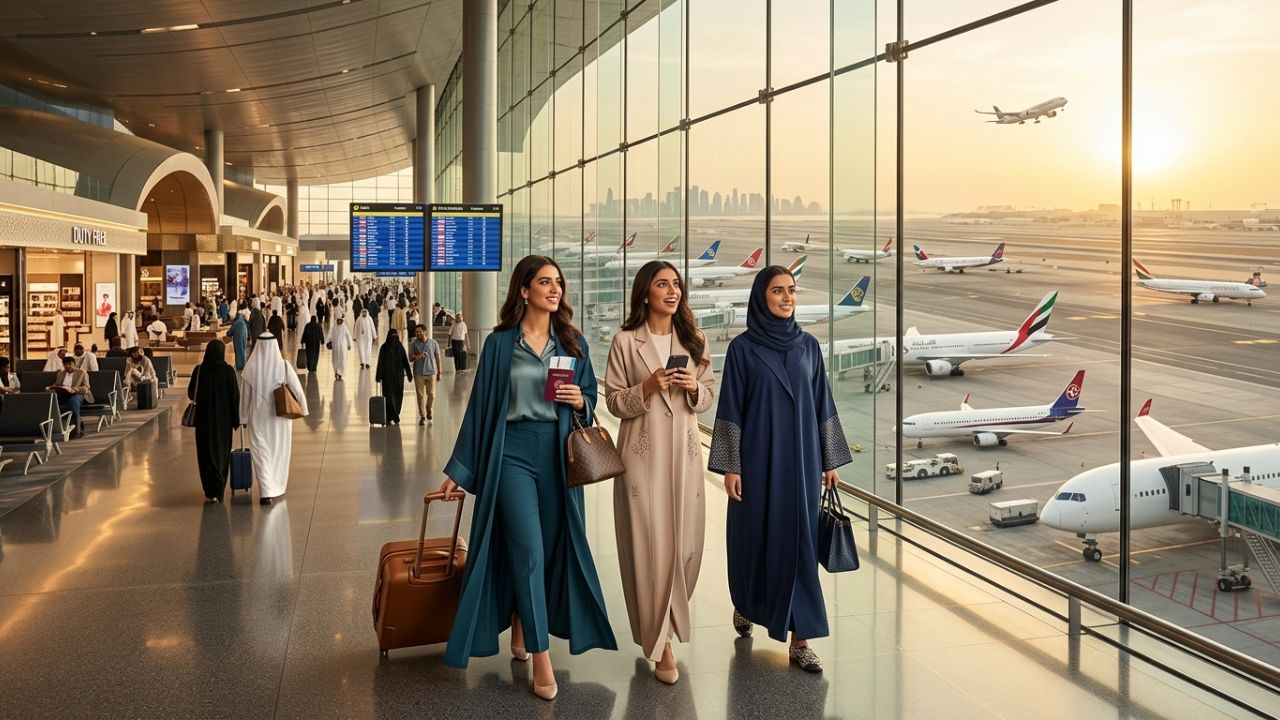
Image generated by AI
In a massive structural convergence designed to aggressively bypass the rolling travel chaos that routinely paralyzes fragile European and North American legacy networks, the global aviation industry is centralizing its power in the Middle East. Reported on June 20, 2026, as exhausted corporate executives and tourists frantically monitor the latest airline news for an escape from sudden flight cancellations and agonizing terminal gridlock, Hamad International Airport in Doha has emerged as an impenetrable global transit fortress. A massive alliance of over 35 active passenger airlines—led by industry giants like Emirates, Turkish Airlines, Gulf Air, Air Arabia, Saudia, British Airways, and Lufthansa—is actively utilizing Doha to eliminate the severe airport disruptions caused by fragmented, point-to-point routing. By consolidating global traffic flows across this hyper-efficient Middle Eastern gateway, these carriers guarantee highly reliable, uninterrupted access between continents, cementing Doha's rise as today's most crucial headline in breaking aviation updates.
By introducing direct passenger coordination and dynamic scheduling backups, the regional aviation hubs target growing passenger demand across vital commerce sectors. The choice to coordinate flight departures in phases helps to manage gate capacity, supporting the country's broader regional transportation network.
Context: Eradicating the Fragmented Transit Nightmare
For the modern traveler navigating post-2020 aviation, relying on fragmented, multi-stop itineraries through aging legacy hubs is the absolute ultimate exposure to structural transit failure.
Historically, passengers flying between Europe, Asia, Africa, and Australia were forced to navigate a patchwork of uncoordinated regional airports, directly exposing them to the travel chaos of sudden airspace closures, lost baggage, and missed connections. The 2026 expansion phase at Hamad International Airport completely dismantles this logistical nightmare. Rather than risking catastrophic airport disruptions in congested legacy airspace, global airlines are routing their long-haul traffic directly through Doha. The presence of Emirates, Etihad, Virgin Australia, and RwandAir signifies a new aviation alignment: Doha is no longer just a layover; it is a highly coordinated, multi-continent aviation exchange point. This strategic consolidation allows airlines to efficiently route passengers, drastically reducing total travel time and providing a critical "safe harbor" transit option that shields high-value premium passengers and critical labor flows from the unpredictability of global transit.
To view live flight schedules, verify the active deployment of codeshare alliances through this megahub, or to track potential route restorations prior to heading to the airport, travelers must consult official aviation directories. For direct updates regarding how this massive Doha consolidation might shield you from current flight cancellations out of the UK or Germany, travelers should aggressively utilize the official digital portals of their respective carriers. To explore live flight tracking and monitor the exact severity of the cascading bottlenecks paralyzing alternative global airspace, passengers can consult the official FlightAware tracking service.
Section-Wise Breakdown: The Doha Megahub Strategy
The European and Australian Long-Haul Corridors
To permanently bypass the agonizing delays associated with European transit, major Western carriers are aggressively linking into Doha. British Airways executes high-value premium connectivity directly from London Heathrow, while Lufthansa maintains a powerful aviation bridge linking Frankfurt and Munich to Qatar. Simultaneously, Virgin Australia utilizes Doha to establish an ultra-efficient Australia–Europe lifeline. By funneling traffic through Hamad International, these carriers ensure that their long-haul passengers bypass the traditional travel chaos of congested Northern Hemisphere airspaces, securing highly reliable transit to the Asia-Pacific.
The Gulf and Regional Feeder Network
While legacy carriers manage the intercontinental flows, regional operators have established an impenetrable feeder network. Emirates and Etihad Airways maintain massive UAE–Qatar connectivity, utilizing codeshares to move premium transit passengers across the Gulf triangle (Doha–Dubai–Abu Dhabi). Saudia links the Kingdom's massive religious and Vision 2030 tourism flows directly into the hub, while Gulf Air and Air Arabia provide high-frequency, budget-friendly connections from Bahrain and the wider GCC. This regional consolidation completely eliminates the localized travel chaos of fragmented short-haul travel.
The Emerging Markets: Africa, Turkey, and India
Doha's 2026 surge is heavily driven by its integration of massive emerging markets. Turkish Airlines executes a critical Istanbul–Doha routing, serving as the ultimate bridge for passengers bypassing Eastern Europe and the Balkans en route to Asia. RwandAir provides a vital East Africa-to-Doha pipeline, capturing the massive growth in African intercontinental travel. Furthermore, India remains one of the largest and most critical passenger markets feeding the hub, ensuring that high-volume migrant, tourism, and business traffic moves seamlessly across the globe without suffering the severe airport disruptions common in less-developed regional airports.
Technical Roster: Official Doha Megahub Aviation Network Matrix
To ensure absolute factual accuracy regarding the exact sovereign airline roles, specific hub operations, and strategic market contributions defining this massive aviation consolidation, the following matrix details the strictly verified data:
Official Doha Megahub Aviation Network Matrix
| International Carrier | Primary Routing Strategy | Key Market Contribution |
|---|---|---|
| Emirates | UAE–Doha transit & premium passenger flow | UAE & Global Hub Feed |
| Turkish Airlines | Istanbul–Doha routing bridging Europe/Balkans to Asia | Turkey, Europe, Central Asia |
| Gulf Air | Bahrain–Doha integration for short-haul Gulf travel | Bahrain & GCC Mobility |
| Air Arabia | High-frequency, budget-friendly GCC–Qatar routes | Regional GCC Labor & Tourism |
| Saudia | Religious tourism & Vision 2030 transit connectivity | Saudi Arabia |
| British Airways | London Heathrow to Doha premium traffic integration | United Kingdom |
| Lufthansa | Frankfurt/Munich to Doha transit pipeline | Germany & Central Europe |
| Etihad Airways | Abu Dhabi–Doha codeshare and regional integration | UAE |
| Virgin Australia | Australia–Europe efficiency via Doha long-haul | Australia |
| RwandAir | East Africa to Doha, bridging to Europe/Asia | Rwanda, Egypt, Ethiopia, Morocco |
Data accurately reflects the verified airline routing strategies, strategic hub integrations, and major market drivers powering the Hamad International Airport expansion as of June 2026.
Industry Analysis: The Consolidation of Global Transit
Aviation analysts monitoring the intensely competitive international transit market note that this massive convergence of 35+ airlines at Hamad International is a highly tactical strike designed to monopolize the chaos-averse passenger demographic.
Analysts emphasize that the era of fragmented, multi-airline itineraries is collapsing. Passengers simply refuse to risk their vacations or corporate travel on vulnerable legacy hubs where a single delayed flight can trigger massive, cascading travel chaos. By consolidating operations at a single, highly efficient "super hub," carriers like Lufthansa, British Airways, and Emirates can guarantee seamless transit infrastructure and deep alliance integration. This allows airlines to reduce their own operational risks while maximizing load factors. The massive influx of carriers proves that Doha is no longer competing merely as a regional transit stop; it is actively challenging global giants like Dubai and Istanbul for total dominance over intercontinental aviation flows.
Actionable Advice for Intercontinental Travelers
Because the consolidation of 35+ airlines at Hamad International fundamentally alters the logistics of global transit, passengers must execute this strategic booking checklist immediately:
- Exploit the Doha Bypass: If you are traveling between Europe and Asia, or Australia and Europe, immediately abandon fragmented itineraries that force you through aging legacy hubs. Book tickets exclusively through carriers like British Airways, Virgin Australia, or Lufthansa that route directly through Doha. This guarantees you will bypass the massive travel chaos and terminal gridlock associated with less efficient transit zones.
- Leverage the GCC Feeder Network: If you are conducting business across the Middle East, completely avoid localized point-to-point travel on unreliable regional operators. Utilize the massive feeder networks of Air Arabia, Gulf Air, and Etihad to transit through Doha, ensuring highly reliable, high-frequency connectivity that shields your itinerary from localized airspace disruptions.
- Maximize Alliance Protection: Because Doha operates as a massive aviation exchange point, you must aggressively utilize airline alliances and codeshares. When booking a multi-continent journey, ensure all your flights are booked on a single ticket (e.g., combining a RwandAir flight to Doha with a Qatar Airways flight to Asia). This legally protects your itinerary; if a delay occurs, the airline alliance is financially obligated to rebook you, preventing you from being stranded during massive travel chaos.
FAQ: Hamad International Airport Megahub Expansion
How many airlines are currently operating out of Hamad International Airport?
In 2026, the Doha hub supports an immense network of over 35 active passenger airlines, operating as a multi-continent aviation exchange point.
Which major international carriers are utilizing Doha for transit?
The massive expansion is driven by industry giants including Emirates, Turkish Airlines, Gulf Air, Air Arabia, Saudia, British Airways, Lufthansa, Etihad Airways, Virgin Australia, and RwandAir.
Why are airlines shifting their intercontinental traffic through Doha?
Airlines are utilizing Doha to bypass legacy travel chaos, capitalizing on the airport's high-frequency departures, seamless transit infrastructure, and strategic geographic position between Europe, Asia, and Africa.
The Reality of the Super Hub Era
The massive strategic convergence of over 35 global airlines at Hamad International Airport proves definitively that consolidating traffic through hyper-efficient megahubs is the ultimate weapon against systemic global travel chaos. By physically routing intercontinental passengers through Doha, carriers like British Airways, Emirates, and Lufthansa have successfully guaranteed that tourists and executives can escape the terrifying gridlock and route volatility of fragile legacy networks. Yet, as passengers frantically book these seamless transit itineraries for their summer travel, they must accept a critical new reality: surviving the massive disruptions of modern global commerce demands reliance on massive infrastructure. Navigating the highly saturated 2026 airspace requires a complete refusal to book vulnerable point-to-point itineraries, and the tactical discipline to fly exclusively through the fortified, multi-alliance transit engines of the Middle East.
Key Takeaways
- Massive Megahub Consolidation: Over 35 airlines, including Emirates, Lufthansa, and British Airways, have centralized operations at Hamad International Airport to secure intercontinental transit.
- Elimination of Transit Chaos: By utilizing Doha's hyper-efficient infrastructure, airlines shield passengers from the catastrophic travel chaos and flight cancellations plaguing fragmented legacy hubs.
- European and Australian Lifelines: British Airways, Lufthansa, and Virgin Australia heavily utilize Doha to secure highly reliable, seamless routing between Europe and the Asia-Pacific.
- Impenetrable GCC Feeder Network: Emirates, Etihad, Gulf Air, Saudia, and Air Arabia operate a massive, high-frequency regional feeder system, funneling traffic into Doha's long-haul network.
- Emerging Market Integration: Turkish Airlines and RwandAir serve as critical bridges, linking the massive passenger flows of Central Asia, the Balkans, and Africa directly into the global transit system.
Related Travel Guides
Massive Travel Chaos Paralyzes Chicago O'Hare with 1,425 Disruptions
Disclaimer
This article is for informational and educational purposes only. It does not constitute legal, financial, or professional advice. While we strive to provide accurate and up-to-date information, travel policies, regulations, and conditions change rapidly. Always verify information with official sources before making travel decisions. Nomad Lawyer makes no representations about the accuracy, reliability, completeness, or suitability of the information provided. Readers should consult qualified professionals for advice specific to their circumstances. The views expressed in this article are those of the author and do not necessarily reflect the views of Nomad Lawyer.
Kunal K Choudhary
Co-Founder & Contributor
A passionate traveller and tech enthusiast. Kunal contributes to the vision and growth of Nomad Lawyer, bringing fresh perspectives and driving the community forward.
Learn more about our team →