Dodekalitten Art Trail Completes 12-Sculpture Monumental Circle in Lolland Denmark 2026

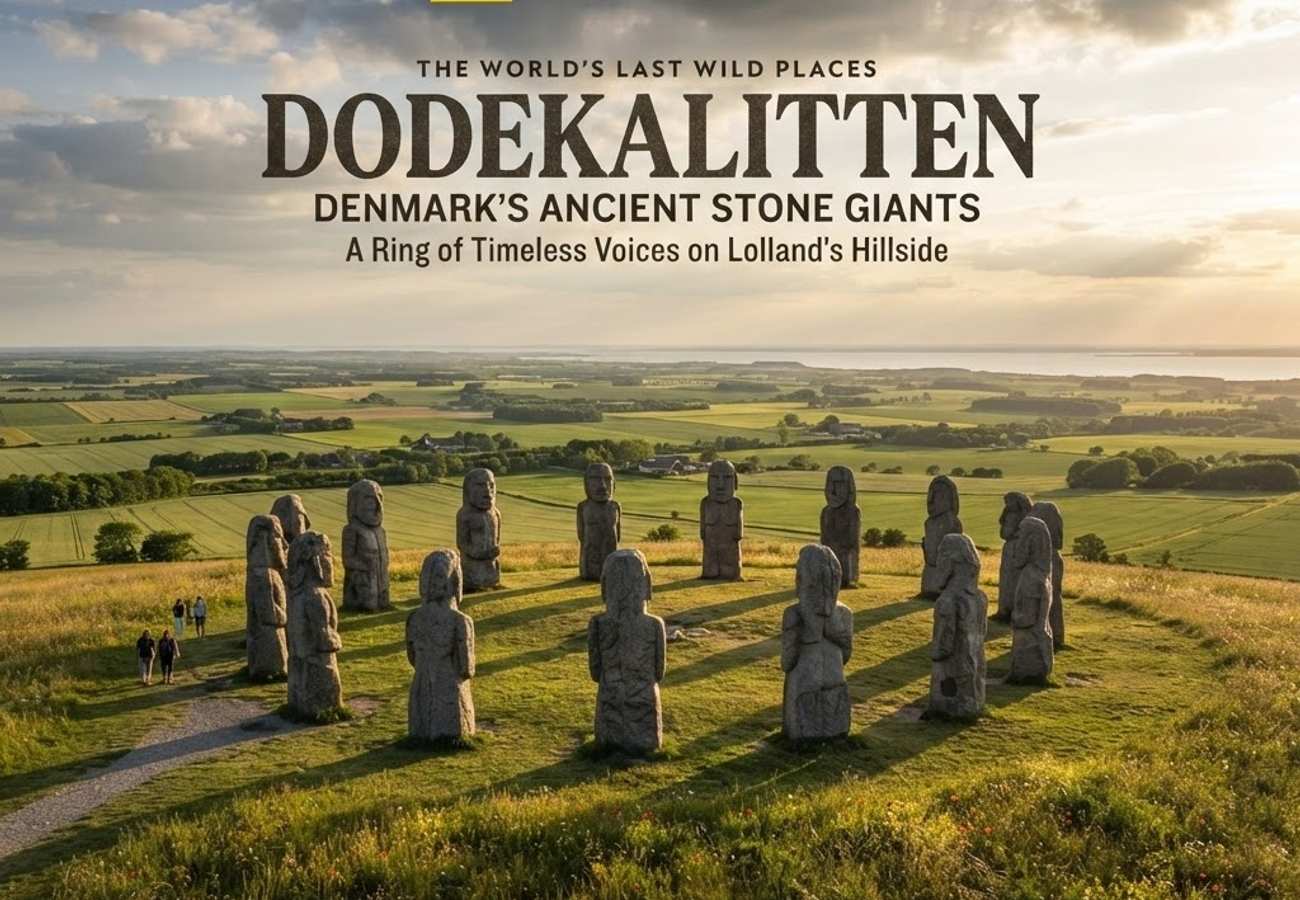
Image generated by AI
The Dodekalitten art installation in Lolland has officially reached completion following the erection of its final sculpture, establishing a permanent 12-figure monumental circle in the Kragenæs region.
This project, which has been under development for over a decade, transforms the rural landscape of northern Lolland into a high-concept cultural hub. By merging prehistoric architectural inspiration with contemporary electro-acoustic sound, the site moves beyond the constraints of a traditional sculpture park to create an immersive environmental experience.
The Architecture of Dodekalitten
The installation consists of 12 massive stone figures arranged in a precise ring around a central area known as the Dodekalit. Created by Danish artist Thomas Kadziola, the sculptures are positioned on a hill in Kragenæs, providing panoramic views of the surrounding countryside.
Unlike gallery-based art, the Dodekalitten project uses the Lolland landscape as a primary medium. The scale and placement of the figures are designed to evoke ancient communal gathering sites, forcing visitors to engage with the art through physical movement and perspective shifts.
Integrated Electro-Acoustic Experience
A critical differentiator for this site is the "Solkreds" sound installation. Developed by composer Jacob Kirkegaard, this electro-acoustic soundscape is integrated directly into the monument's environment.
- Dynamic Audio: The music is designed for outdoor consumption and varies based on the time of day.
- Spatial Interaction: The audio experience shifts as visitors move through the circle, adding a temporal layer to the visual art.
- Engagement: The sound system is engineered to encourage longer dwell times, shifting the visitor behavior from a quick walkthrough to a sustained experience.
Regional Integration and Logistics
Kragenæs serves as the primary gateway for visitors. Because Lolland is characterized by relatively flat terrain, the site is highly accessible via cycling, allowing travelers to integrate the monument into a broader regional itinerary.
The completion of the 12th sculpture provides a new anchor for Lolland's cultural tourism network, complementing existing high-traffic sites.
Lolland Cultural Synergy Map
| Attraction | Focus | Type |
|---|---|---|
| Dodekalitten | Monumental Art & Sound | Outdoor Installation |
| Fuglsang Art Museum | Danish & European Art | Indoor Gallery |
| Maribo Cathedral | Historic Architecture | Heritage Site |
| Knuthenborg Safaripark | Wildlife | Family Attraction |
| Lolland Cycle Routes | Coastal & Rural Scenery | Active Travel |
Why This Matters: Industry Analysis
From a logistical and tourism perspective, the completion of Dodekalitten represents a strategic shift in how Denmark distributes its cultural traffic. Most international visitors remain concentrated in Copenhagen; however, the creation of "destination art" in the south incentivizes "slow travel" and regional dispersion.
For the travel industry, this is a clear example of Information Gain in destination marketing. By combining visual art with a site-specific soundscape (Solkreds), the project creates a "unique selling proposition" (USP) that cannot be replicated in a museum. Our analysis suggests that this will increase the average length of stay in northern Lolland, as the site's dependency on daylight and sound cycles encourages overnight visits rather than day trips.
Furthermore, the integration of cycling infrastructure around Kragenæs aligns with the broader European trend of sustainable, low-impact tourism. Travelers are no longer just visiting a monument; they are consuming a curated landscape.
Forward Outlook
Expect an increase in specialized "art-circuit" itineraries that link Dodekalitten with the Fuglsang Art Museum. As the site is now complete, we anticipate a rise in architectural and acoustic tourism, with the monument becoming a primary case study for the integration of sound in public art. For photographers and content creators, the site's lack of enclosure means its visual appeal will fluctuate with the seasons, ensuring year-round relevance.
A bold fusion of prehistoric scale and futuristic sound in the heart of rural Denmark.
Related Travel Guides
This article is for informational purposes. Flight routes, passenger regulations, visa rules, and transit advisories are subject to change by airlines and aviation authorities. Readers are advised to verify schedules and travel documentation with relevant carriers and border agencies before departure.
Related Stories
Uniworld Unveils Mekong Mystique for 2028: New Luxury Vessel Redefines Cambodia and Vietnam River Cruises

Seattle-Tacoma and US Hubs Revolutionize Terminals: Guest Passes, Craft Dining, and Post-Security Retail Guide 2026