
Djibouti Targets 500,000 Annual Tourists by 2030 via Lake Assal and Gulf of Tadjoura Ecotourism
Djibouti is leveraging its volcanic landscapes and marine biodiversity to diversify its economy, aiming for 500,000 yearly visitors by 2030 under the Vision 2035 framework.
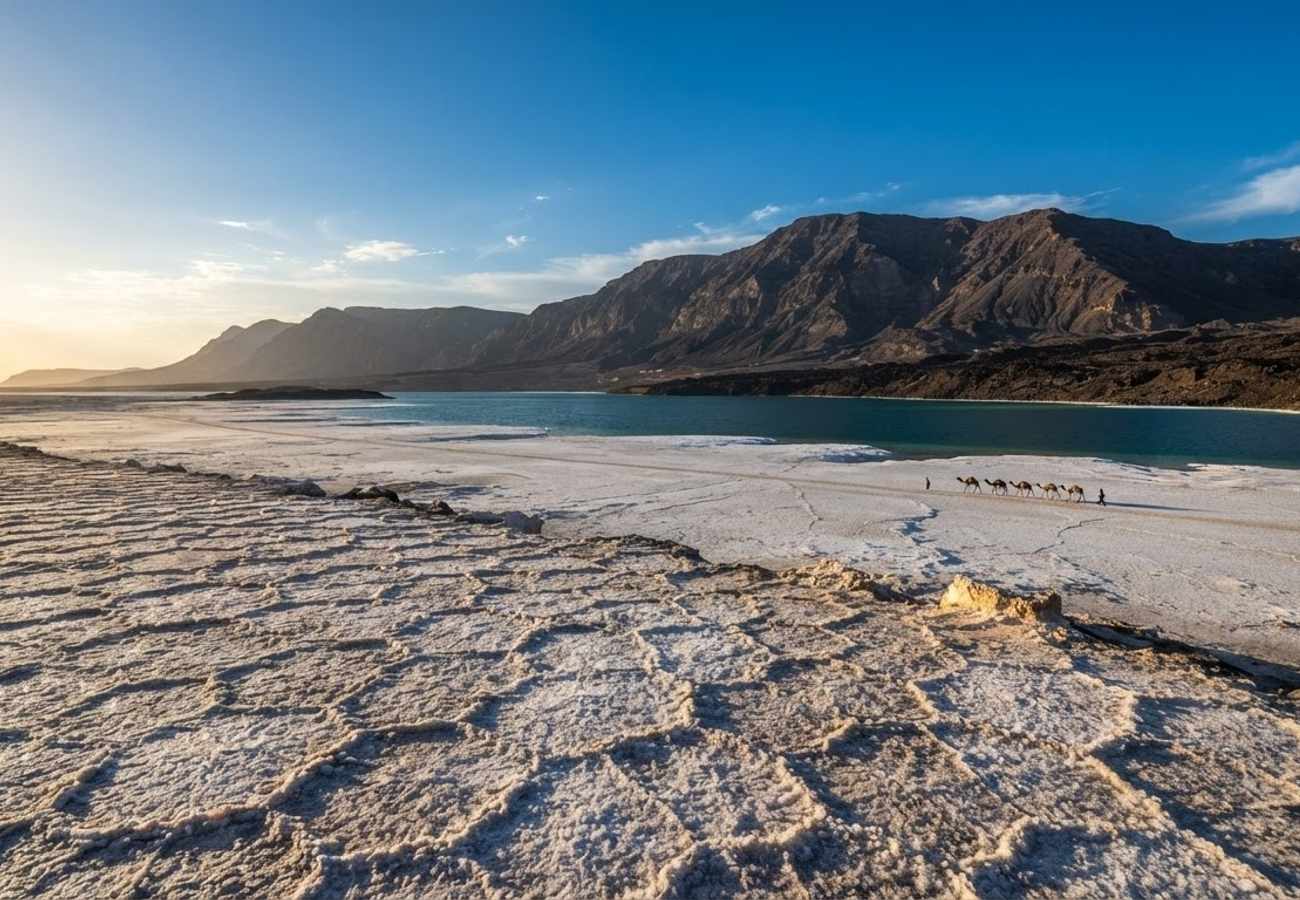
Image generated by AI
Djibouti is aggressively pivoting its economic strategy toward high-value ecotourism, utilizing the stark geological contrasts of Lake Assal and the marine richness of the Gulf of Tadjoura to attract up to 500,000 international visitors annually by 2030. This strategic shift, codified in the national Vision 2035 document, seeks to reduce the country's heavy reliance on port logistics and transport sectors by capitalizing on its unique positioning in the Horn of Africa.
The nation's tourism appeal is rooted in a rare convergence of ecosystems, where salt lakes, active volcanic zones, and coral reefs exist in close proximity. This allows for a diversified travel product that caters to both adventure-seekers and specialist researchers, blending terrestrial desert exploration with deep-sea marine excursions.
Djibouti City Serves as the Strategic Logistics Hub
For any international arrival, Djibouti City functions as the indispensable gateway. Situated on the shores of the Gulf of Tadjoura, the capital provides the necessary urban infrastructure—including hotels, dining, and transport services—required to support expeditions into the more rugged interior.
Because the country's primary attractions are geographically dispersed across extreme environments, the current tourism model favors small-group and specialist travel. Industry observers note that guided excursions are nearly mandatory for visitors, as the terrain requires professional navigation and specialized vehicles to reach remote sites safely.
Volcanic Exploration at Lake Assal and Ardoukoba
Lake Assal stands as one of the most visually arresting sites in Africa, primarily because it is the lowest point on the continent. Encased in a volcanic depression, the lake is famous for its massive salt formations and a landscape that appears almost extraterrestrial.
Beyond the salt flats, the surrounding region features the Ardoukoba volcano, allowing travelers to experience multiple geological phenomena in a single trip. Reports indicate that the World Bank has specifically flagged the Assal area and Ghoubbet El Kharab as prime candidates for ecotourism development due to their combination of coastal geography and volcanic activity. For the modern traveler, a trip to Lake Assal typically constitutes a full-day excursion from the capital, bridging the gap between the city and the deep desert.
Remote Expeditions to Lake Abbé
While Lake Assal is defined by salt, Lake Abbé is defined by its towering limestone chimneys and thermal fumaroles. This remote destination offers a stark, arid environment that connects Djibouti to the wider Afar region, spanning international borders.
Due to the extreme environmental conditions and the sheer isolation of the site, travel to Lake Abbé requires meticulous planning. The area is a primary draw for geological researchers and professional photographers, offering a visual experience that differs fundamentally from the coastal offerings of the Gulf.
Marine Biodiversity in the Gulf of Tadjoura
The Gulf of Tadjoura represents the cornerstone of Djibouti's aquatic tourism. The region is characterized by vibrant coral reefs and a diverse array of marine fauna, positioning the country as a rising destination for scuba diving and underwater photography.
World Bank assessments have underscored that these marine resources are critical national assets. Current itineraries are increasingly incorporating snorkeling, boat-based wildlife observation, and reef exploration to balance the heat-intensive desert tours.
Coastal Retreats at the Moucha Islands and Ghoubbet Bay
For those seeking a slower pace, the Moucha Islands provide a tranquil alternative. Accessible via short boat trips from Djibouti City, these islands offer shallow waters and white beaches, making them ideal for short-stay visitors who may not have the time for lengthy inland treks.
Further along the coast, Ghoubbet Bay serves as a dramatic intersection of sea and stone. Surrounded by steep volcanic mountains, the bay is a hotspot for diving and marine wildlife encounters. The contrast between the deep waters of Ghoubbet Bay and the salt-crusted plains of Lake Assal allows operators to create comprehensive "fire and water" itineraries.
Economic Diversification and the Vision 2035 Framework
The push for tourism is not merely about leisure; it is a calculated move for national economic resilience. Under the Vision 2035 framework, tourism is categorized alongside ICT, fisheries, and logistics as a key pillar for diversifying the GDP.
Financial backing for this transition is already in place. In March 2026, the World Bank approved US$25.75 million for Djibouti’s Economic Diversification Programme. This funding is designed to stimulate private-sector growth and implement reforms within the National Development Plan 2025–2030, specifically targeting the improvement of visitor services and infrastructure.
Navigating Climate Risks in Sustainable Development
The very features that attract tourists—the extreme heat and fragile volcanic soils—also present the greatest risks. The World Bank has identified drought, flooding, and rising sea levels as significant threats to the region's stability.
To ensure the longevity of the tourism sector, the government is focusing on "resilient infrastructure." This includes:
- Implementing small-scale, low-impact accommodation.
- Enforcing strict water-use protocols in arid zones.
- Controlling visitor access to sensitive geological sites to prevent degradation.
Summary of the Djibouti Travel Circuit
The emerging tourism infrastructure allows for a comprehensive circuit that covers the following key entities:
| Destination | Primary Attraction | Travel Type |
|---|---|---|
| Djibouti City | Urban Culture & Logistics | Gateway/Hub |
| Lake Assal | Salt Flats & Volcanic Lowlands | Geological/Adventure |
| Lake Abbé | Limestone Formations & Fumaroles | Remote/Specialist |
| Gulf of Tadjoura | Coral Reefs & Marine Life | Diving/Eco-Marine |
| Moucha Islands | Beaches & Snorkeling | Leisure/Coastal |
| Ghoubbet Bay | Volcanic Coastlines | Marine/Wildlife |
Why This Matters: The Traveler's Perspective
For the global traveler, Djibouti is transitioning from a hidden geopolitical outpost to a legitimate ecotourism destination. Unlike the traditional beach resorts of East Africa, Djibouti offers "Information Gain" for the visitor—providing an education in plate tectonics and marine biology.
From a logistical standpoint, the shift toward guided, small-group travel means that visitors can expect a more curated, high-end experience rather than mass tourism. However, the reliance on specialized guides and the extreme climate means that travelers must prioritize flexibility and physical readiness. The integration of World Bank funding suggests that while the destinations remain raw, the safety and service standards are expected to rise significantly by 2030.
Djibouti is redefining the Horn of Africa's travel appeal by trading traditional luxury for raw, geological wonder.
Related Travel Guides
Disclaimer
This article is for informational and educational purposes only. It does not constitute legal, financial, or professional advice. While we strive to provide accurate and up-to-date information, travel policies, regulations, and conditions change rapidly. Always verify information with official sources before making travel decisions. Nomad Lawyer makes no representations about the accuracy, reliability, completeness, or suitability of the information provided. Readers should consult qualified professionals for advice specific to their circumstances. The views expressed in this article are those of the author and do not necessarily reflect the views of Nomad Lawyer.