
Disney World Monorail Lightning Strike 2026: Guests Stranded 90 Minutes En Route to EPCOT
A sudden lightning strike left Disney World guests stranded on a monorail for 90 minutes, highlighting the volatility of Florida weather on theme park logistics.

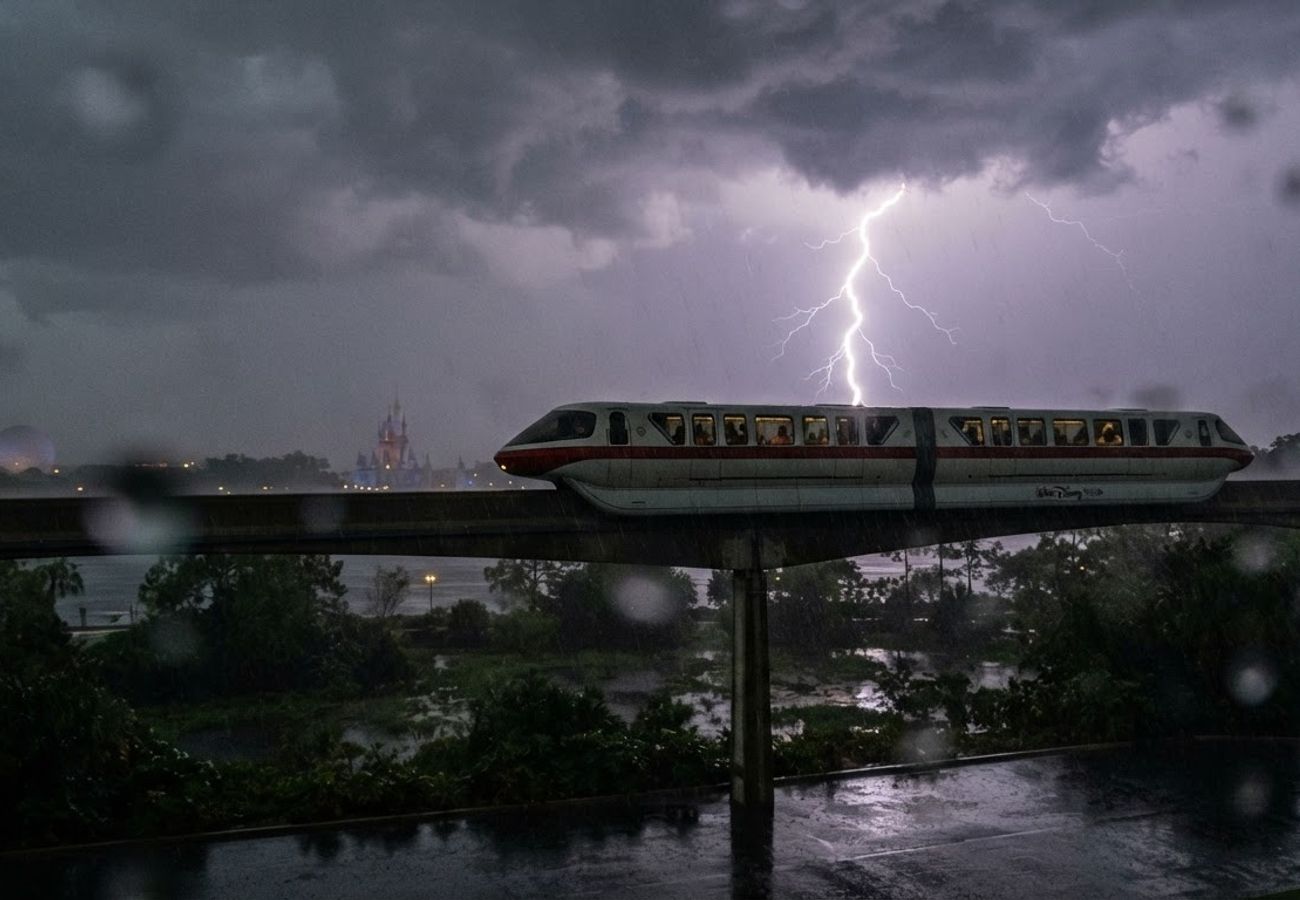
Image generated by AI
Passengers on a Walt Disney World monorail were forced to manually remove the train's windows for ventilation after a lightning strike knocked out power, leaving them stranded for 90 minutes. This unusual incident occurred on September 8, 2026, as guests were traveling toward EPCOT during a period of severe atmospheric instability in Central Florida.
The Logistics of a Mid-Air Stall
While the monorail is often viewed as a whimsical part of the Disney experience, it is a critical piece of infrastructure for navigating the sprawling resort. On the afternoon of September 8, a sudden power surge caused by a lightning strike halted a train mid-journey. For the passengers on board, including Florida resident Tanya Lee, the experience quickly shifted from a scenic commute to a survival exercise in heat management.
Disney officials informed the stranded passengers that they were working to restore power or arrange for a tow to move the vehicle to the nearest station. However, the process took an hour and a half. Because the monorail cars are typically climate-controlled, the loss of power meant that the interior temperatures rapidly climbed, exacerbated by the oppressive humidity and high temperatures characteristic of an Orlando September.
To prevent the cabin from becoming an oven, the monorail driver instructed guests on how to physically remove the windows. This manual ventilation was the only way to circulate air while the train remained motionless on the beam. Despite the anxiety of the situation—particularly for those with a fear of heights—reports indicate that the passengers remained remarkably composed, maintaining a positive atmosphere until the train was eventually moved to a station for disembarkation.
What Makes Disney Transportation Unique
The monorail system is more than just a ride; it is a complex transit network divided into specific routes to manage the massive flow of visitors. Understanding these routes is essential for any visitor attempting to optimize their day.
| Route | Key Stops |
|---|---|
| Route 1 | Magic Kingdom Park, Transportation and Ticket Center, Disney's Contemporary Resort |
| Route 2 | EPCOT, Transportation and Ticket Center, Disney's Polynesian Village Resort, Disney's Grand Floridian Resort & Spa |
For many, the monorail is the preferred method of travel because it avoids the congestion of the bus loops. However, as this incident proves, the system is vulnerable to the same environmental pressures as the park's rides. When lightning is detected within a certain radius, Disney typically suspends outdoor attractions and transportation. According to the National Weather Service, east-central Florida often experiences moisture-heavy weather patterns that lead to sudden, violent thunderstorms, making these disruptions common.
Visitor Insider Tips
Navigating Walt Disney World requires a strategy that accounts for both the crowds and the climate. Based on the events of September 8, here is how to handle the unpredictability of the region:
- The "Storm Window" Strategy: In September and October, expect a heavy downpour almost every afternoon between 2:00 PM and 5:00 PM. Instead of fighting the rain, use this window to book an indoor dining reservation or visit a museum-style attraction in EPCOT.
- Transportation Redundancy: Never rely on a single mode of transport if you have a hard deadline, such as a dining reservation. If the monorail is delayed, check the Walt Disney World official site or the My Disney Experience app for alternative shuttle or bus routes.
- Climate Gear: Carry a high-quality poncho rather than an umbrella. Umbrellas are cumbersome on the monorail and often prohibited or restricted during high-wind warnings.
- The Value of Flexibility: Disney tickets now frequently exceed $100 per day. A 90-minute delay can ruin a tightly packed itinerary. Build "buffer hours" into your day to avoid the stress of missing a window.
Cultural and Environmental Context
The relationship between Disney World and the Florida environment is one of constant negotiation. The resort operates as a city-state within a subtropical zone, meaning its infrastructure must withstand extreme heat and frequent electrical storms. This incident highlights the tension between the "magic" of a seamless guest experience and the raw reality of nature.
When disruptions occur, Disney utilizes a specific recovery protocol to maintain guest satisfaction. In this case, the company provided stranded guests with $50 gift cards, bottled water, and a Lightning Lane pass. The Lightning Lane pass is a particularly strategic piece of compensation; by allowing guests to bypass standard queues, Disney effectively "gives back" the time lost during the monorail stall.
From a heritage and preservation standpoint, the monorail remains an icon of the "Experimental Prototype Community of Tomorrow" (EPCOT) vision. However, maintaining this mid-century modern transit system in a region prone to lightning strikes requires constant upgrades to power grids and safety protocols. The fact that guests were asked to remove windows suggests that while the trains are safe, the lack of passive ventilation in a power-loss scenario remains a challenge for the resort's engineering teams.
FAQ: Visiting Disney World 2026
What is the best time to visit to avoid thunderstorms? While Florida can have rain year-round, the peak of the rainy and hurricane season is June through October. For the lowest chance of severe lightning storms, aim for the drier window between November and March.
How do I get to EPCOT from the Magic Kingdom area? You can use the Monorail Route 2, take a Disney bus, or use the Disney Skyliner if you are staying at a compatible resort. Always check the app for real-time service alerts.
Is it safe for solo travelers to navigate the parks? Yes, Disney World is highly safe for solo travelers. The transportation systems are well-staffed, and the parks have a high security presence. Using the My Disney Experience app helps solo guests manage their own schedules efficiently.
Do I need a visa to visit Orlando? Visitors to the United States generally need a valid passport and, depending on their country of origin, a visa or an ESTA (Electronic System for Travel Authorization). Check the official U.S. Embassy website for current requirements.
When the magic pauses, the only thing that keeps the ride moving is the patience of the passengers.
Related Travel Guides
Disclaimer
This article is for informational and educational purposes only. It does not constitute legal, financial, or professional advice. While we strive to provide accurate and up-to-date information, travel policies, regulations, and conditions change rapidly. Always verify information with official sources before making travel decisions. Nomad Lawyer makes no representations about the accuracy, reliability, completeness, or suitability of the information provided. Readers should consult qualified professionals for advice specific to their circumstances. The views expressed in this article are those of the author and do not necessarily reflect the views of Nomad Lawyer.
Preeti Gunjan
Contributor & Community Manager
A passionate traveller and community builder. Preeti helps grow the Nomad Lawyer community, fostering engagement and bringing the reader experience to life.
Learn more about our team →