
Disney World Bus Fire Shuts Down West Osceola Parkway Exit Ramp Toward Buena Vista Drive in 2026
A vehicle fire involving a Disney resort bus caused significant traffic disruptions on the West Osceola Parkway Exit Ramp, closing access to Buena Vista Drive for nearly two hours.

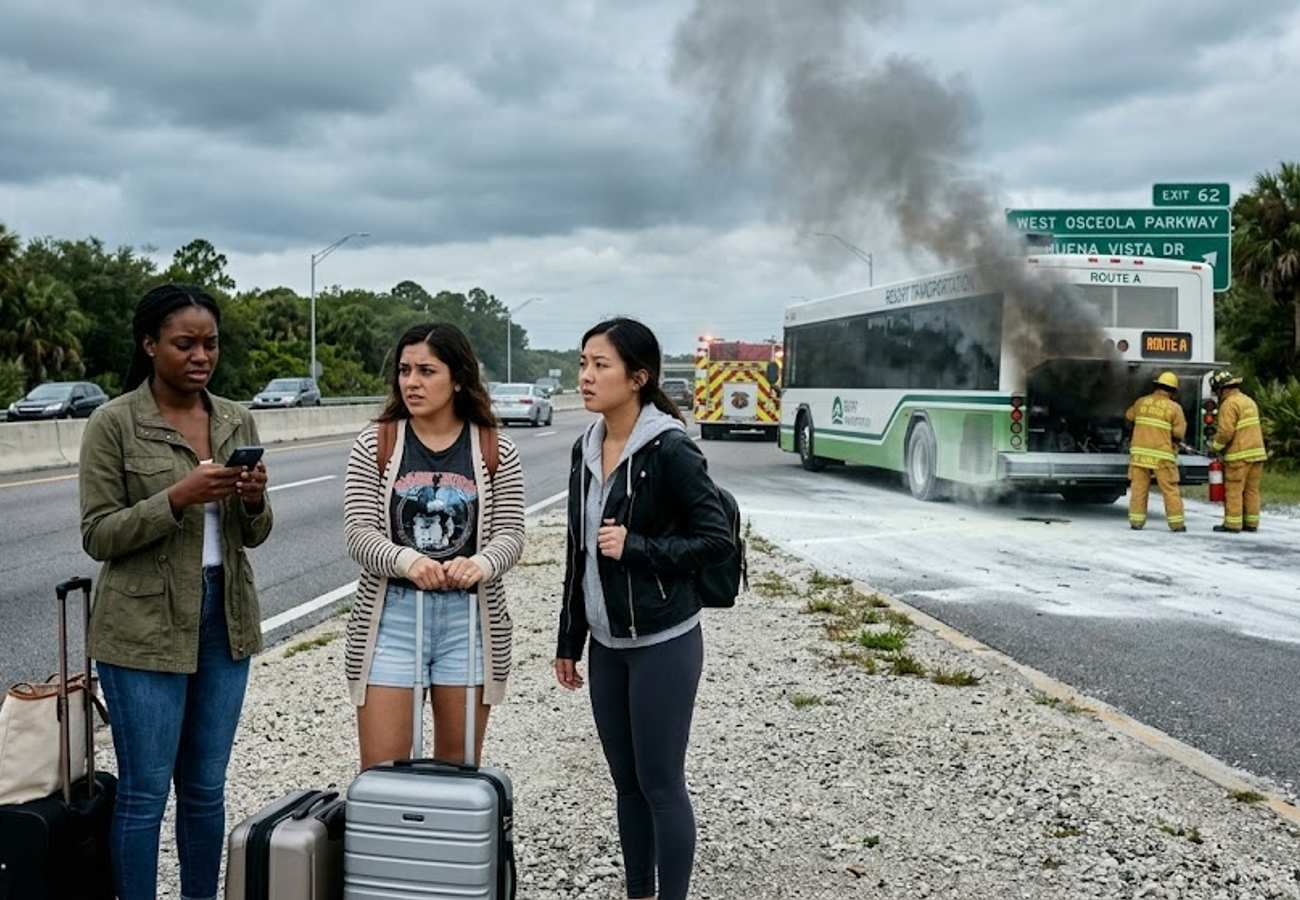
Image generated by AI
[Orlando, July 23, 2026] — A vehicle fire involving a Disney resort bus triggered the closure of the West Osceola Parkway Exit Ramp toward Buena Vista Drive for nearly two hours earlier this week. The incident, which occurred on July 20, caused localized traffic delays for guests attempting to reach the All Star Resorts and nearby commercial hubs.
The disruption began when a bus utilized for the resort's complimentary transportation system experienced a fire, leading to the immediate evacuation of all passengers. According to eyewitness reports and digital documentation shared via Reddit, thick plumes of smoke were visible emanating from the rear of the vehicle. Local authorities managed the scene, ensuring that the right lane remained partially clear, allowing some motorists to navigate around the blockage to reach their destinations.
Passenger Safety and Emergency Response on Osceola Parkway
Reports from the scene indicate that all passengers were evacuated safely and without injury. Motorists who witnessed the event noted that the evacuation appeared orderly, with guests moving quickly to the side of the road as the fire broke out.
Social media activity surrounding the event highlighted the presence of residue on the pavement, which industry observers suggest was the result of an onboard fire suppression system. Some witnesses pointed to the white powder left on the asphalt as evidence that the vehicle's automatic extinguishers had deployed in the engine compartment to mitigate the blaze.
While the closure lasted for several hours, the impact was largely limited to those attempting to turn onto Buena Vista Drive. Despite the seriousness of the vehicle fire, the incident sparked a wave of humor among the Disney community online, with parkgoers making light of the situation through jokes about the resort's strict non-smoking policies and the lack of "pixie dust" to extinguish the flames.
Historical Context of Transportation Incidents at Walt Disney World
This event is not an isolated occurrence in the resort's history. While large-scale vehicle fires are infrequent, the Disney transportation network has faced similar challenges in previous years.
In 2011, a Disney-branded bus caught fire, which resulted in the temporary suspension of all bus traffic serving the main entrance of the Magic Kingdom. Similar to the July 20 incident, no injuries were reported following that event.
Further back, in 2015, a more severe incident occurred involving a third-party charter bus transporting 50 teenagers and four adults from Miami to the resort. That vehicle caught fire on the Port St. Lucie Turnpike; while the bus was deemed a total loss and irreparable, all occupants escaped without harm.
Analysis of Bus Fire Causality and Prevention
The recent incident in Orlando aligns with broader trends in transit safety. Data from the Office of Transport Safety Investigations (OTSI) suggests that thermal incidents and vehicle fires in buses have seen an increase in recent years, often exacerbated by extreme summer temperatures common in Florida.
According to OTSI findings, the majority of bus fires originate in specific high-stress areas of the vehicle. The engine compartment is the most frequent point of origin, accounting for over half of all cases.
Distribution of Bus Fire Origins and Primary Causes
| Fire Origin Location | Percentage of Total Fires | Primary Contributing Causes |
|---|---|---|
| Engine | 54% | 38% Electrical, 31% Mechanical, 15% Fluid, 16% Other |
| Body | 25% | 67% Electrical, 33% Arson |
| Wheel Well | 21% | 100% Brakes |
The OTSI emphasizes that early warning signs, such as smoke emerging from the engine bay or wheel wells, are critical indicators that can prevent a full-scale blaze if addressed immediately. Regular maintenance of the components listed above is the primary method for reducing these risks.
Broader Impact on Disney Transportation Logistics
The timing of this fire coincides with a period of transition and contention regarding Disney's complimentary transit system. Recent policy changes, including the banning of certain guests from using resort buses and water taxis, have led to visible changes in passenger volume. Observers have noted that the Disney Springs bus station has seen a significant decrease in activity, appearing nearly deserted following these restrictions.
The intersection of these policy shifts and mechanical failures may heighten guest scrutiny regarding the reliability and safety of the resort's fleet. However, the successful evacuation and the apparent functioning of the fire suppression system in the July 20 incident suggest that safety protocols remain a priority.
Why This Matters: The Intersection of Infrastructure and Climate
The occurrence of a bus fire during a Florida summer is a textbook example of the strain that extreme heat places on heavy-duty transportation infrastructure. When ambient temperatures soar, engine components and electrical systems are pushed to their limits, increasing the likelihood of mechanical failure or electrical shorts.
For a high-volume operation like Walt Disney World, which moves thousands of guests daily, the reliability of the fleet is not just a matter of convenience but a critical safety requirement. The fact that the fire occurred on a primary exit ramp toward Buena Vista Drive demonstrates how a single mechanical failure can create a ripple effect, disrupting the flow of traffic for thousands of non-involved motorists and guests.
The reliance on automatic fire suppression systems is becoming increasingly vital. As the OTSI data suggests, since 38% of engine fires are electrical, the ability to quench a fire instantly within the engine compartment is the difference between a manageable roadside delay and a catastrophic vehicle loss. For the aviation and travel industry at large, this highlights the necessity of rigorous preventative maintenance schedules that account for regional climate extremes.
Safety remains the paramount priority for resort transportation, even as the Florida heat tests the limits of the fleet.
Related Travel Guides
Disclaimer
This article is for informational and educational purposes only. It does not constitute legal, financial, or professional advice. While we strive to provide accurate and up-to-date information, travel policies, regulations, and conditions change rapidly. Always verify information with official sources before making travel decisions. Nomad Lawyer makes no representations about the accuracy, reliability, completeness, or suitability of the information provided. Readers should consult qualified professionals for advice specific to their circumstances. The views expressed in this article are those of the author and do not necessarily reflect the views of Nomad Lawyer.
Raushan Kumar
Founder & Lead Developer
Full-stack developer with 11+ years of experience and a passionate traveller. Raushan built Nomad Lawyer from the ground up with a vision to create the best travel and law experience on the web.
Learn more about our team →