
Deutsche Bahn Network Crisis: Hannover-Berlin Diversions and Wetterau Closures Hit 2026 Rail Travel
Deutsche Bahn faces a systemic capacity crisis as major Hannover-Berlin corridor works and Wetterau regional closures collide with a dismal 52.4% punctuality rate, threatening national rail resilience.

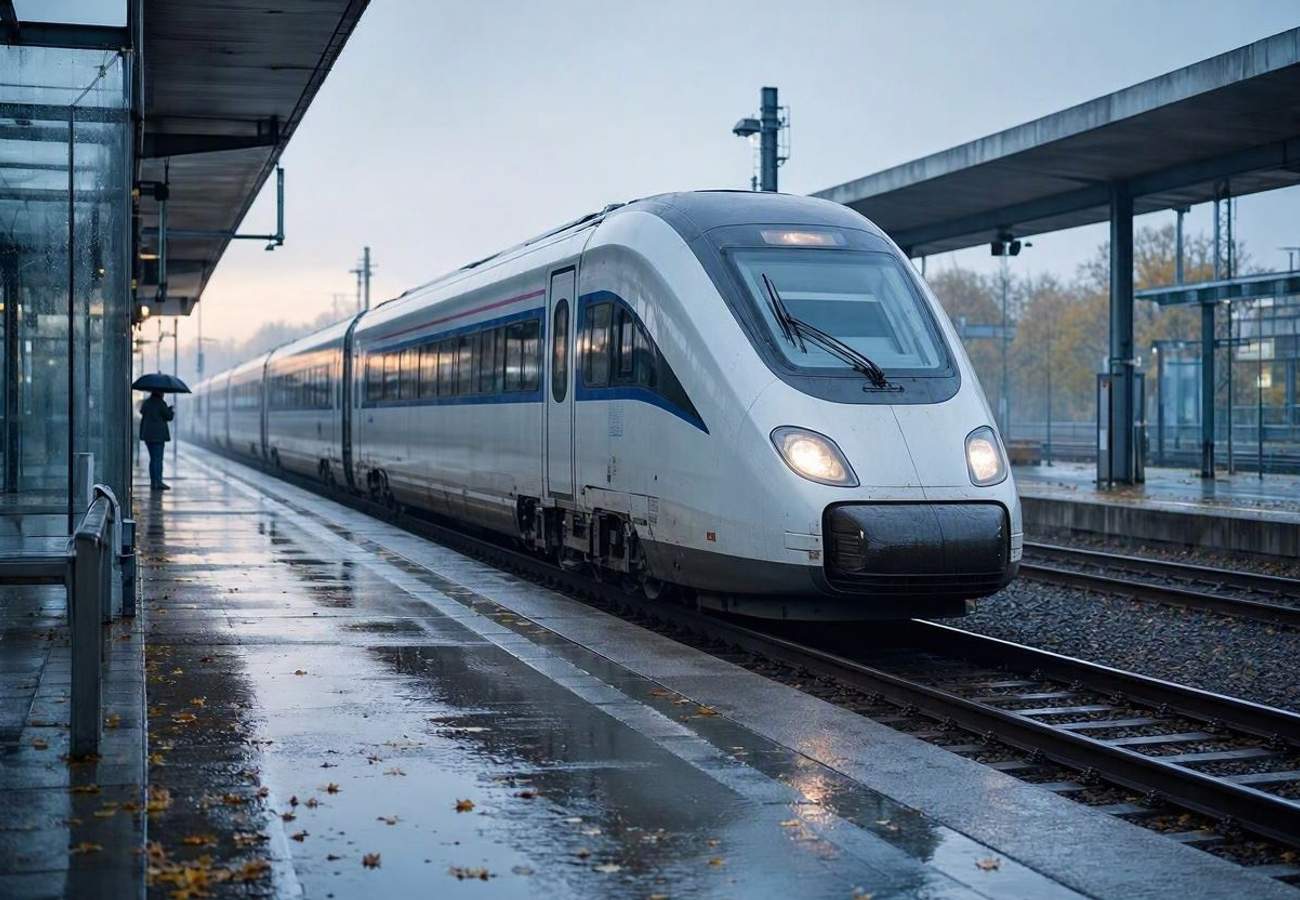
Image generated by AI
A 52.4 per cent long-distance punctuality rate recorded in September serves as a grim baseline for German rail travelers as the network enters a high-risk operational phase. Starting 5 October 2026, the simultaneous execution of regional closures in the Wetterau area and massive infrastructure renewals on the Hannover–Berlin corridor has pushed the national rail system toward a capacity breaking point. This is no longer a matter of isolated construction; it is a systemic stress test of Germany's rail resilience.
The Wetterau Regional Blackout
The disruption began in earnest on 5 October with DB InfraGO initiating aggressive infrastructure renewals across the Wetterau region. These works involve a comprehensive overhaul of trackage around Nidda, the installation of new cabling, and the modernization of three level crossings to accommodate digital railway radio equipment.
For the regional commuter and tourist, the impact is binary: trains have been replaced by buses. However, the logistical friction is significant. The Rhein-Main-Verkehrsverbund (RMV) has explicitly warned that replacement buses cannot accommodate bicycles, and temporary boarding points are often distant from the original station platforms. This creates a "hidden" time penalty for passengers with luggage or mobility constraints.
Hannover–Berlin: A National Capacity Strain
While the Wetterau issues are regional, the works on the 227-kilometre Hannover–Berlin corridor represent a national logistical challenge. Beginning 2 October, this project—the second-largest bundled renewal after the Hamburg–Berlin route—has forced long-distance traffic onto diversionary paths through Braunschweig and Magdeburg.
The scale of the engineering is immense, requiring the installation of 16,000 concrete track slabs, each weighing 10 tonnes. For the passenger, the immediate cost is time; journeys between Hannover and Berlin are now expected to take approximately 80 minutes longer.
Infrastructure Renewal Specifications: Hannover–Berlin Corridor
| Metric | Official Figure |
|---|---|
| Total Corridor Length | 227 km |
| Total Track Renewal | ~357 km |
| Switches Replaced/Installed | 214+ |
| Overhead Line Work | ~100 km |
| Noise Barrier Installation | ~13 km |
| Stations Modernized | 25 |
| Slab Track Renewal | 52 km |
| Investment (Braunschweig–Magdeburg Diversion) | ~€50 Million |
Expert Analysis: The Diversion Trap
The most critical risk for the 2026-2027 travel season is not the construction itself, but the "overload" of the alternative routes. DB InfraGO has formally designated nine specific sections of the Lehrte–Berlin diversion system as temporarily overloaded through 11 December 2027.
For travelers, this creates a dangerous lack of operational redundancy. In a healthy network, if a train breaks down on a diversion route, the dispatcher can shift traffic to a third alternative. However, when the diversion route is already at maximum capacity, a single signal failure or mechanical glitch can trigger a cascading collapse across the entire northern and eastern network.
The activation of a "special dispatching concept" until 12 December 2026 confirms that the railway is operating in a state of emergency management. By establishing predefined operating scenarios for incidents, the railway is admitting that the current traffic volume exceeds the infrastructure's natural ability to absorb shocks. For those booking international connections via Berlin or Hannover, the direct consequence is a significantly higher probability of missed connections that cannot be easily recovered due to the lack of available "slots" on the overloaded diversion tracks.
Key Takeaways
- Extended Journey Times: Expect an additional 80 minutes of travel time for all long-distance trips between Hannover and Berlin.
- Regional Blackouts: RB46, RB47, and RB48 services in the Wetterau region are heavily disrupted or cancelled through December 2026.
- Logistical Friction: Replacement buses in Hesse do not accept bicycles, and stop locations differ from rail platforms.
- Systemic Fragility: Nine diversion sections are officially "overloaded" until December 2027, increasing the risk of total network standstill during minor incidents.
- Punctuality Warning: With September punctuality at 52.4%, travelers should build significant buffers into their itineraries.
FAQ: Germany Rail Disruptions 2026
How much longer will my trip from Hannover to Berlin take? You should budget for an additional 80 minutes of travel time due to diversions through Braunschweig and Magdeburg.
Can I take my bike on the replacement buses in the Wetterau region? No. The RMV has confirmed that bicycles cannot be transported on the replacement bus services for the affected RB lines.
What does "temporarily overloaded" mean for my ticket? It does not change your ticket validity, but it means the route is at maximum capacity. Any minor delay is more likely to cause a significant disruption because there are no alternative tracks available.
Until when will the special dispatching measures be in place? The current emergency dispatching concept for the Lehrte–Berlin corridor is active until 23:59 on 12 December 2026.
The German rail network is currently a construction site disguised as a transport system.
Related Travel Guides
Disclaimer
This article is for informational and educational purposes only. It does not constitute legal, financial, or professional advice. While we strive to provide accurate and up-to-date information, travel policies, regulations, and conditions change rapidly. Always verify information with official sources before making travel decisions. Nomad Lawyer makes no representations about the accuracy, reliability, completeness, or suitability of the information provided. Readers should consult qualified professionals for advice specific to their circumstances. The views expressed in this article are those of the author and do not necessarily reflect the views of Nomad Lawyer.
Kunal K Choudhary
Co-Founder & Contributor
A passionate traveller and tech enthusiast. Kunal contributes to the vision and growth of Nomad Lawyer, bringing fresh perspectives and driving the community forward.
Learn more about our team →