
Belgium and Netherlands Rail Disruptions October 2026: EuroCity and Eurocity Direct Route Changes
Engineering works on October 17-18, 2026, will force EuroCity and Eurocity Direct trains to skip key hubs including Brussels Airport and Antwerpen-Centraal, impacting thousands of cross-border travelers.

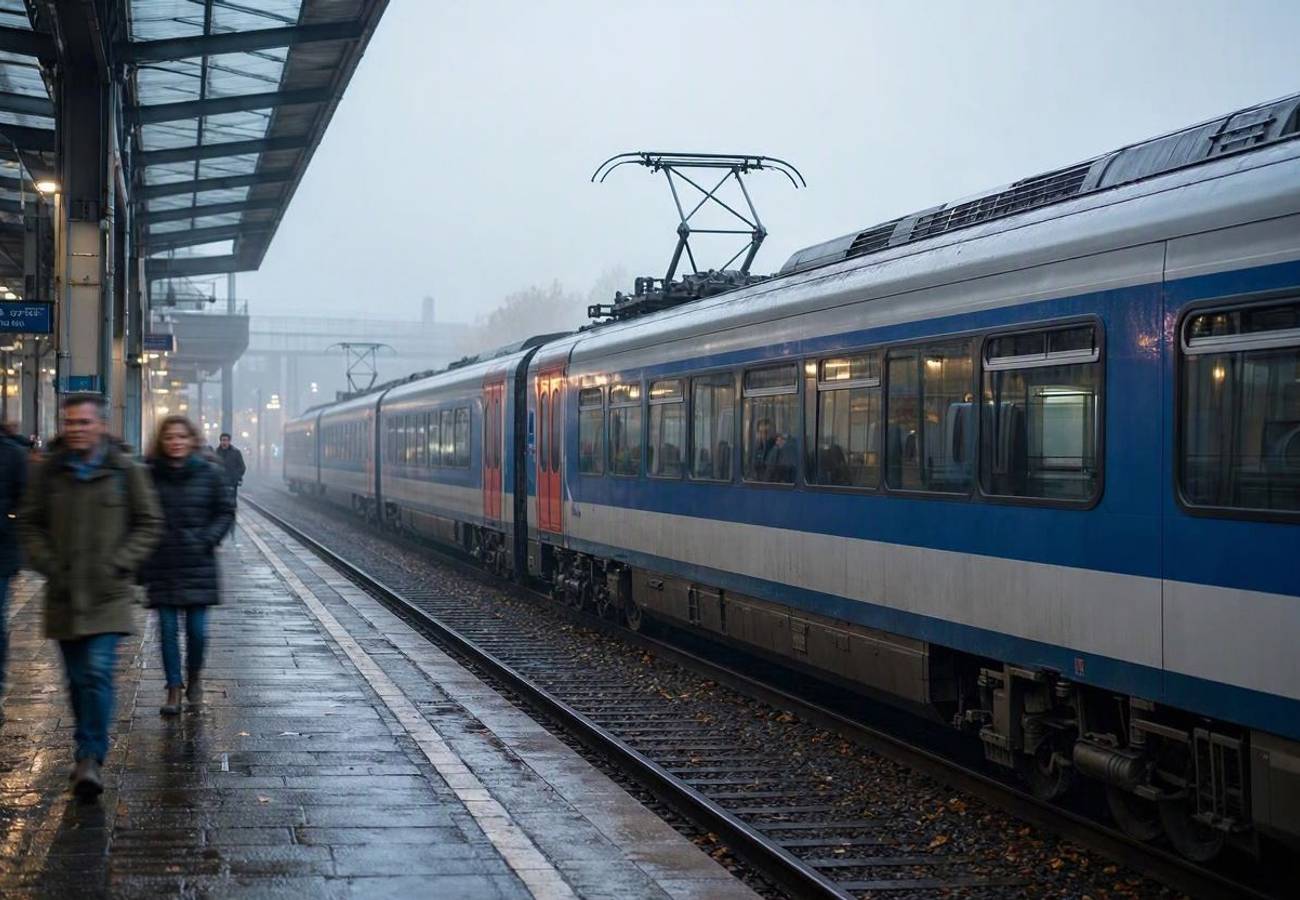
Image generated by AI
International rail traffic in Belgium grew from 16.2 million journeys in 2022 to 18 million in 2023, a trajectory that has placed immense pressure on aging infrastructure. This growth pattern explains why the Belgian and Dutch networks now require aggressive engineering interventions, even at the cost of significant weekend service disruptions. On October 17 and 18, 2026, passengers traversing the corridor between Brussels and Amsterdam will face a fragmented timetable as primary international services bypass critical transit hubs.
The Disruption in Numbers: October 17-18, 2026
The upcoming weekend of engineering works creates a high-friction environment for travelers relying on the SNCB International network. The disruption is not a total shutdown but a strategic removal of specific stops that serve as the primary gateways for air travelers and city tourists.
The most severe impact falls on the EuroCity (Brussels–Rotterdam) and Eurocity Direct services. While the standard timetable typically offers 16 trains daily in each direction for both services, the October 17-18 window will see these frequencies compromised by route alterations. Specifically, all EuroCity trains will bypass Brussels Airport-Zaventem and Antwerpen-Centraal, though they will maintain their stop at Antwerpen-Berchem.
Simultaneously, the Eurocity Direct service—designed for faster capital-to-capital transit—will see most of its trains operate exclusively between Antwerpen-Centraal and Amsterdam Zuid, effectively erasing the Brussels leg for the majority of the weekend. Only two specific exceptions exist: the early Eurocity Direct 9523 (departing Brussels) and the late Eurocity Direct 9572 (arriving in Brussels).
Comparative Corridor Analysis: Capacity vs. Continuity
To understand the scale of this disruption, one must look at the expansion of this corridor. In December 2024, NS International and NMBS doubled the daily service capacity from 16 to 32 trains. While this increased the volume of available seats, it also increased the number of passengers affected when a single "engineering window" occurs.
The following table breaks down the service shifts for the October 17-18 weekend compared to standard operations.
| Service Type | Standard Route Highlights | Oct 17-18 Alteration | Critical Impact |
|---|---|---|---|
| EuroCity | Brussels-Midi $\rightarrow$ Airport $\rightarrow$ Antwerp $\rightarrow$ Rotterdam | Skips Airport & Antwerpen-Centraal | No direct airport access |
| Eurocity Direct | Brussels-Midi $\rightarrow$ Antwerp $\rightarrow$ Rotterdam $\rightarrow$ Amsterdam | Most run Antwerpen-Centraal $\rightarrow$ Amsterdam Zuid | Brussels section removed |
| Domestic SNCB | Standard regional schedules | Adjusted schedules/routes | Increased congestion |
| Airport Rail | Direct links to Leuven, Liège, Hasselt | Reduced frequency (Oct 3-18) | Extended transit times |
This shift highlights a regional trend: as International Union of Railways (UIC) standards push for higher speeds and frequencies, the "maintenance debt" of older tracks leads to these concentrated, high-impact weekend closures.
What This Means for Travelers
If you are traveling between Belgium and the Netherlands during the third weekend of October, your standard booking may no longer be a direct path. The data suggests three immediate action items:
- Verify the Service Name: Do not assume "EuroCity" and "Eurocity Direct" are interchangeable. If your ticket is for a EuroCity train, you cannot simply board a Eurocity Direct to reach the airport, as the routing logic differs.
- The "Airport Gap": Brussels Airport has issued a broader warning spanning October 3 to 18. If you are heading toward Leuven, Hasselt, Tienen, Landen, or Liège, the reduced train frequency means you must account for additional buffer time. For European flights, the recommended 2-hour arrival window should be expanded to 3 hours to account for rail delays.
- Audit Ticket Flexibility: Review your fare class via NS International. "Saver" fares are locked to specific trains; if your train is now skipping your stop, you may need to manually coordinate a replacement. "Full-Flex" fares allow for easier transitions to the domestic SNCB trains that will be filling the gap between Brussels and Antwerp.
Forward Projection: The Cost of Connectivity
The trend of increasing international rail volume—evidenced by the 1.8 million journey increase between 2022 and 2023—suggests that these "engineering weekends" will become more frequent. As the Benelux region integrates its rail networks to compete with short-haul flights, the reliance on a few high-traffic corridors creates a single point of failure.
We expect a shift toward more "modular" travel planning, where passengers are encouraged to use domestic feeder trains (SNCB) to reach a functioning international hub rather than relying on a single through-train. The data indicates that the corridor is moving toward a "hub-and-spoke" model during maintenance windows to maintain at least 50-60% of cross-border capacity.
FAQ: Belgium-Netherlands Rail Oct 2026
Will all trains between Belgium and the Netherlands stop running? No. Cross-border travel continues, but specific stops (Brussels Airport and Antwerpen-Centraal) are bypassed by international services. Domestic trains remain available but operate on adjusted schedules.
Can I still get to Brussels Airport by train on October 17-18? Yes, but not via EuroCity international trains. You must use the SNCB domestic network, which is subject to its own October 3-18 service reductions.
Which trains still serve Brussels during the disruption? Most Eurocity Direct trains will skip Brussels, with the exception of the early service 9523 (departure) and the late service 9572 (arrival).
Should I rebook my ticket now? Check your fare conditions first. If you have a "Saver" fare and your stop is skipped, contact your provider to see if the ticket is valid on the redirected domestic services.
Precision in planning is the only hedge against infrastructure volatility.
Related Travel Guides
Disclaimer
This article is for informational and educational purposes only. It does not constitute legal, financial, or professional advice. While we strive to provide accurate and up-to-date information, travel policies, regulations, and conditions change rapidly. Always verify information with official sources before making travel decisions. Nomad Lawyer makes no representations about the accuracy, reliability, completeness, or suitability of the information provided. Readers should consult qualified professionals for advice specific to their circumstances. The views expressed in this article are those of the author and do not necessarily reflect the views of Nomad Lawyer.
Raushan Kumar
Founder & Lead Developer
Full-stack developer with 11+ years of experience and a passionate traveller. Raushan built Nomad Lawyer from the ground up with a vision to create the best travel and law experience on the web.
Learn more about our team →