
Denmark Rail Network 2026 Upgrade: Faster InterCity Routes and Expanded Copenhagen S-Train Services
Denmark's 2026 rail overhaul slashes InterCity travel times between Aarhus and Aalborg by 11 minutes and introduces direct Copenhagen to Prague links.

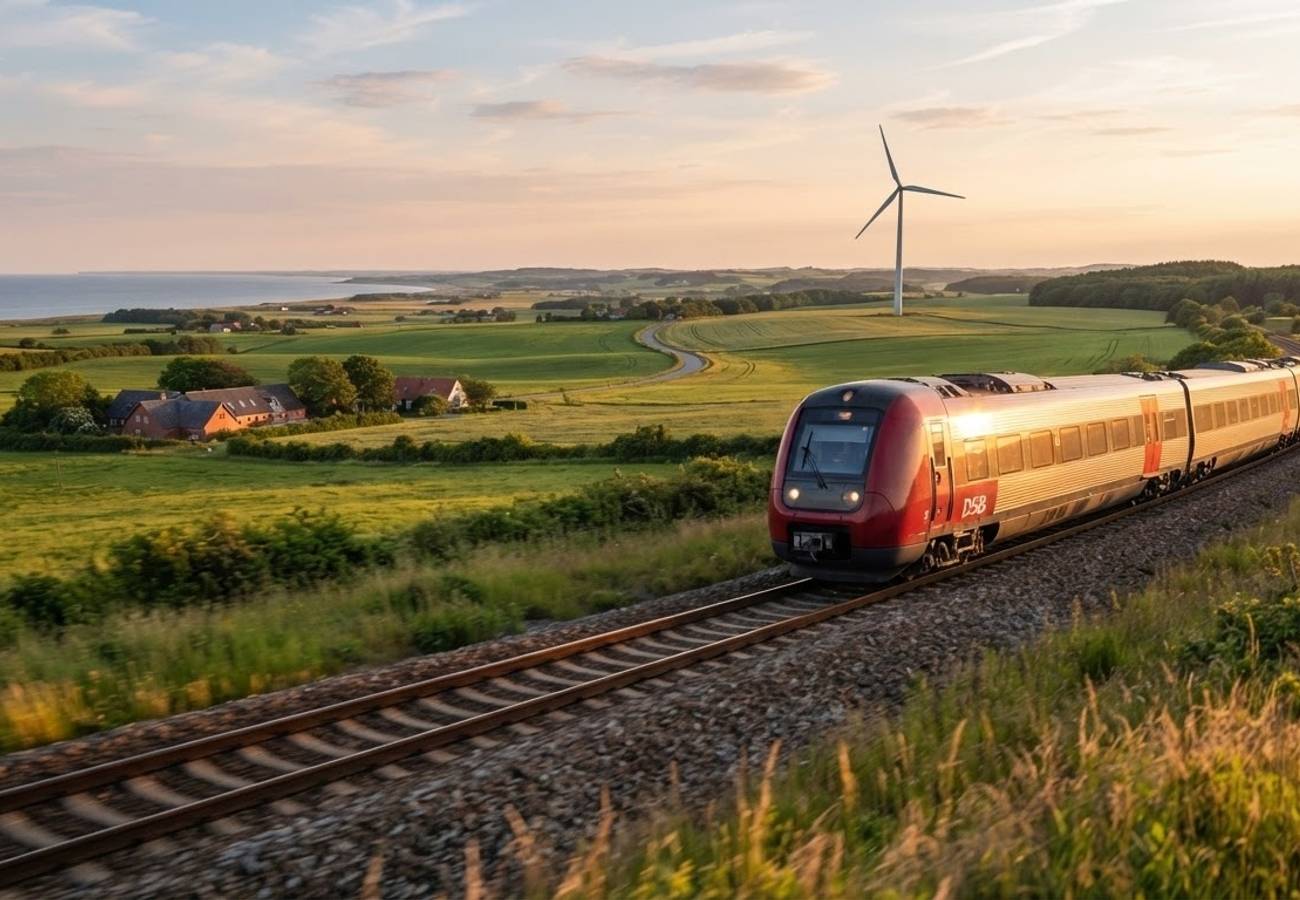
Image generated by AI
InterCity travel between Aarhus and Aalborg is now 11 minutes faster following a strategic timetable overhaul. New direct international links to Prague and expanded airport rail access are redefining mobility across Denmark in 2026.
The Shift Toward High-Efficiency Transit
Denmark is pivoting its rail strategy to prioritize speed on long-haul corridors and flexibility in urban hubs. The most significant shift occurred on 17 January 2026, when the rail network in Northern Jutland was streamlined. By removing standard stops at Arden, Støvring, Svenstrup, and Skalborg for InterCity trains, DSB has successfully reduced the journey time between Aarhus and Aalborg by 11 minutes. To ensure local connectivity remains intact, NT has increased regional trains between Aalborg and Skørping, including hourly extensions to Hobro that continue to serve Arden.
This efficiency drive extends to the main artery between Copenhagen and Fredericia. Starting in April, a higher volume of InterCity trains will proceed directly to Aarhus and Aalborg, eliminating the previous requirement for many passengers to change trains at Fredericia.
Urban Mobility and Airport Integration
In the capital region, the S-train network and airport connections have been recalibrated to better serve both commuters and international arrivals.
Copenhagen Airport and Zealand Access
The connection between Copenhagen Airport and Roskilde has evolved into a more flexible, late-night service. Trains now operate hourly without stopping at Copenhagen Central Station, with the final departures in both directions extending past midnight—a significant jump from the previous weekday cutoff of 20:00. These services now utilize the new platforms at Copenhagen South, allowing travelers to bypass the city center entirely when heading toward western Zealand.
S-Train Optimizations
As of 14 December, the S-train network has implemented targeted frequency increases:
- Line Bx: Now starts 20 minutes earlier in the morning and ends 20 minutes later in the afternoon.
- Weekend Peaks: Lines A, B, and C maintain 10-minute frequencies until midnight on Friday evenings.
- Connectivity: Line E now serves Vallensbæk to facilitate easier transfers to the light rail network, though it has ceased stopping at Sjælør to maintain speed for long-distance commuters.
Cultural and Environmental Value
For the visitor, the real impact of these changes is the reduction of "transit friction." By integrating the rail network more closely with Aalborg Airport and expanding the S-train's late-night capacity, Denmark is encouraging a shift away from rental cars and ride-shares toward a low-carbon public infrastructure.
The expansion of international rail is particularly noteworthy. From May 2026, three direct daily trains in each direction connect Copenhagen to Prague, traversing Hamburg, Berlin, and Dresden. These ComfortJet carriages, featuring dedicated bicycle wagons and bistros, promote a sustainable "slow travel" philosophy, allowing tourists to cross Central Europe without the carbon footprint of short-haul flights.
Visitor Insider Tips
To navigate the 2026 rail landscape effectively, keep these local nuances in mind:
- The "Summer Gap": Be aware that S-train frequencies drop during quiet holiday periods. Specifically, during the weeks of 28 to 31 in the summer and the period before Easter, Lines E, H, and Bx do not operate. Lines A, B, and C shift to a 10-minute daytime frequency with stops at all stations.
- Digital Planning: The official Rejseplanen app is the only reliable source for real-time changes. Given the new stopping patterns (especially in Northern Jutland), do not rely on old printed maps.
- Regional Dining: When taking the new direct route to Prague or the InterCity lines, utilize the onboard bistros to sample local Danish smørrebrød, which is often more authentic and affordable than airport alternatives.
- Airport Shortcut: If your destination is Roskilde or western Zealand, check the "Airport-Roskilde" direct line to avoid the congestion of Copenhagen Central (København H).
Tourism Outlook
The long-term trajectory for Danish tourism is moving toward "seamless regionality." By linking secondary cities like Aalborg and Kalundborg more effectively to the primary hubs, the Danish tourism department and DSB are distributing visitor traffic away from the overcrowded center of Copenhagen. The introduction of direct, high-comfort international rail links positions Denmark as a primary gateway for eco-conscious travelers entering Scandinavia from Central Europe.
Efficient, green, and increasingly fast, the Danish rail network is setting a new standard for Nordic mobility.
Related Travel Guides
Disclaimer
This article is for informational and educational purposes only. It does not constitute legal, financial, or professional advice. While we strive to provide accurate and up-to-date information, travel policies, regulations, and conditions change rapidly. Always verify information with official sources before making travel decisions. Nomad Lawyer makes no representations about the accuracy, reliability, completeness, or suitability of the information provided. Readers should consult qualified professionals for advice specific to their circumstances. The views expressed in this article are those of the author and do not necessarily reflect the views of Nomad Lawyer.
Raushan Kumar
Founder & Lead Developer
Full-stack developer with 11+ years of experience and a passionate traveller. Raushan built Nomad Lawyer from the ground up with a vision to create the best travel and law experience on the web.
Learn more about our team →