
Delta Air Lines Grounds Boeing 737-900 at Atlanta Airport Amid Rising US Flight Cancellation Rates 2026
Delta Air Lines has removed a Boeing 737-900 from service at Hartsfield-Jackson Atlanta International Airport following engine failure, highlighting operational vulnerabilities as the carrier faces increasing flight cancellations.

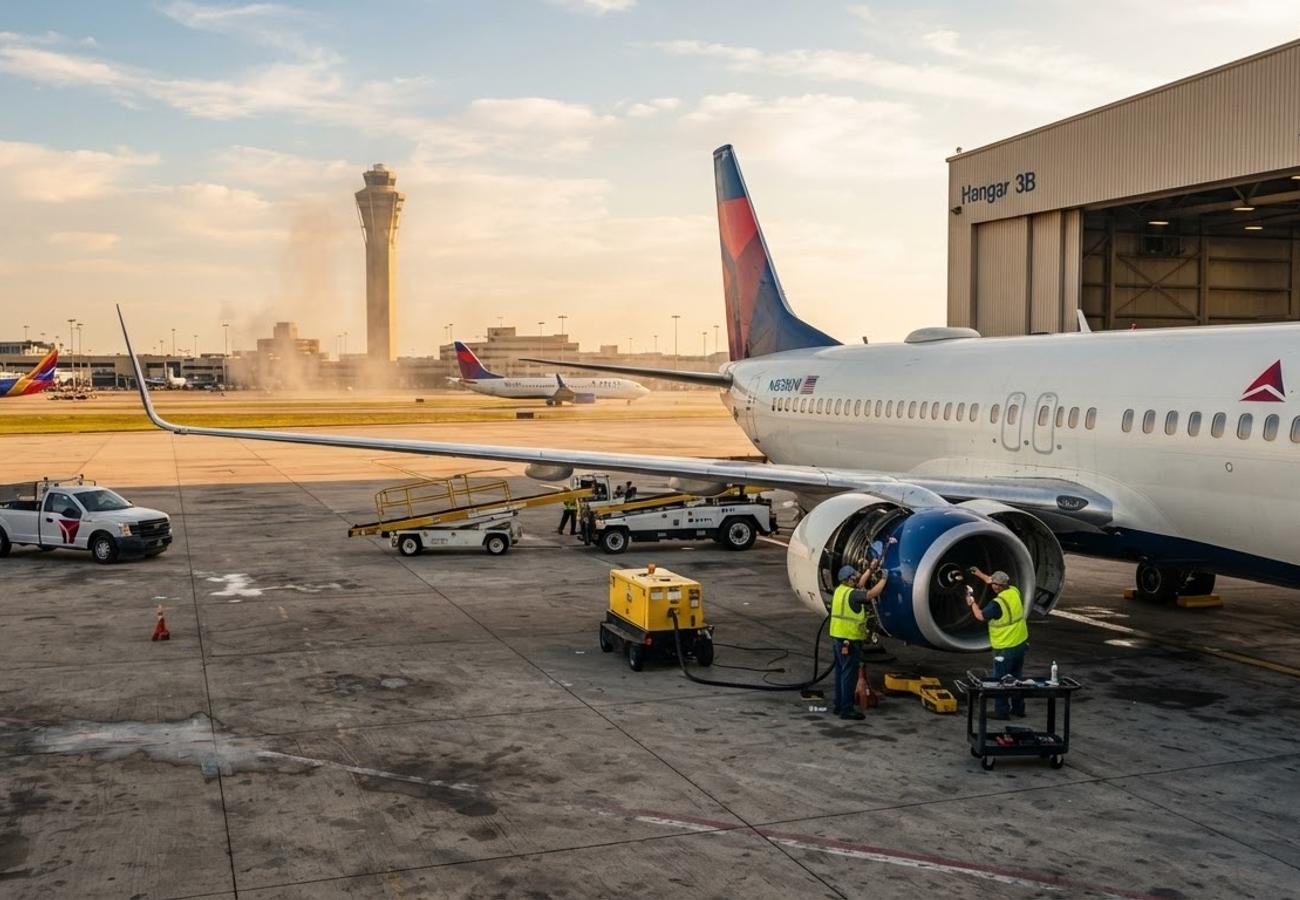
Image generated by AI
A Boeing 737-900 operated by Delta Air Lines has been pulled from service at Hartsfield-Jackson Atlanta International Airport (ATL) following an in-flight engine malfunction, an event that underscores growing operational fragility as the carrier trends toward the top of U.S. airline cancellation rankings.
The incident occurred shortly after takeoff from Atlanta, when flight crews detected abnormal engine performance. Prioritizing safety, the pilots executed a return to the hub, landing the aircraft safely. While passengers were successfully transferred to alternative flights, the aircraft remains grounded for comprehensive technical inspections and maintenance.
Engine Failure Forces Emergency Return to Atlanta
Reports from Atlanta-based media outlets confirm that the Boeing 737-900 was operating a domestic route when the technical failure occurred. The crew's decision to divert back to Hartsfield-Jackson Atlanta International Airport follows standard aviation safety protocols, which mandate an immediate return if engine performance deviates from expected parameters, regardless of whether the aircraft can maintain altitude.
Following the safe landing, Delta technicians immediately took the jet out of active rotation. While no injuries were reported among the passengers or crew, the grounding of the aircraft creates an immediate void in the flight schedule. This is particularly impactful given that Hartsfield-Jackson is not only Delta's primary operational base but also remains the busiest airport globally by passenger volume.
Operational Strain and the Legacy of 2024 Disruptions
This mechanical failure arrives during a period of intense scrutiny regarding Delta's reliability. The airline is still recovering from the systemic shocks of July 2024, when a catastrophic third-party software failure triggered a technology outage that forced the cancellation of over 1,200 flights. That event left thousands of travelers stranded in Atlanta, creating a logistical nightmare as aircraft and flight crews were displaced across the network.
Data from government statistics and industry performance trackers through 2024 and into early 2025 indicate that these disruptions have fundamentally altered Delta's performance metrics. Historically recognized for industry-leading on-time arrivals, the carrier has seen a sharp reversal, climbing the ranks of airlines with the highest volume of canceled flights during peak travel windows.
Current industry analysis suggests that the spike in cancellations is not tied to a single cause but is the result of a "perfect storm" of factors:
- Crew Availability: Persistent staffing gaps continue to hinder the airline's ability to recover from minor delays.
- Weather Volatility: The geographical concentration of operations in Atlanta makes the network hypersensitive to thunderstorms and severe weather.
- Asset Utilization: High aircraft utilization rates leave very little "buffer" in the schedule to absorb unplanned maintenance events.
The Strategic Vulnerability of the Atlanta Hub
The scale of Delta's operations at Hartsfield-Jackson Atlanta International Airport is immense, with the carrier scheduling more than 100,000 departing seats daily from this single location. To put this in perspective, the output of the Atlanta hub is roughly equivalent to the combined operations of several of the airline's next-largest hubs.
While this concentration allows for efficient connectivity, it creates a single point of failure. When a Boeing 737-900 is suddenly removed from service due to engine trouble, the ripple effect is immediate. Schedulers must rapidly reorganize aircraft assignments, which often leads to:
- Capacity Downgrades: Replacing a larger aircraft with a smaller one, leading to overbooked flights.
- Flight Consolidations: Merging two lightly booked flights into one, causing significant delays for a subset of passengers.
- Network Cascades: A delay in Atlanta can trigger a chain reaction of late arrivals and missed connections across the entire North American network.
Fleet Modernization and Route Rationalization
The grounding of the 737-900 occurs amidst a broader transition in Delta's fleet strategy. Aviation databases show the airline is aggressively phasing out older widebody aircraft. Specifically, Boeing 767-300ER jets, some of which served for over three decades, have been moved from Atlanta to storage and dismantling sites.
Simultaneously, Delta is adjusting its route map to optimize resources. This has included the elimination of certain transatlantic and leisure routes, such as the service between Atlanta and Saint Vincent and the Grenadines. These cuts are designed to free up aircraft and crew members to stabilize the core network, though they reduce nonstop options for specific markets.
Financial disclosures indicate heavy capital investment in next-generation aircraft and interior upgrades. However, the transition period between retiring legacy jets and integrating new models often leaves the airline with limited spare capacity. In such an environment, a single mechanical failure can easily tip a balanced schedule into chaos.
Why This Matters: The Impact on the Modern Traveler
For the passenger, this situation highlights a critical shift in the travel experience. The "hub-and-spoke" efficiency that makes Atlanta a convenient connection point is now a liability during periods of operational stress. When a carrier operates at such extreme intensity, the margin for error disappears.
From a logistical standpoint, travelers can no longer rely on "scheduled" times as absolute. The trend of Delta climbing the cancellation rankings suggests that the risk of a "scrubbed" flight is higher during peak periods or weather events than it was five years ago. For the digital nomad or business traveler, this necessitates a shift in strategy: building in longer layovers and maintaining real-time monitoring via mobile apps to anticipate gate changes or aircraft swaps before they are officially announced.
Ultimately, the Boeing 737-900 incident is a microcosm of the broader challenge facing mega-carriers: balancing the drive for maximum asset utilization with the need for operational resilience.
The balance between efficiency and reliability remains the most precarious flight path for the world's largest hub operators.
Related Travel Guides
Disclaimer
This article is for informational and educational purposes only. It does not constitute legal, financial, or professional advice. While we strive to provide accurate and up-to-date information, travel policies, regulations, and conditions change rapidly. Always verify information with official sources before making travel decisions. Nomad Lawyer makes no representations about the accuracy, reliability, completeness, or suitability of the information provided. Readers should consult qualified professionals for advice specific to their circumstances. The views expressed in this article are those of the author and do not necessarily reflect the views of Nomad Lawyer.
Kunal K Choudhary
Co-Founder & Contributor
A passionate traveller and tech enthusiast. Kunal contributes to the vision and growth of Nomad Lawyer, bringing fresh perspectives and driving the community forward.
Learn more about our team →