
Delta Air Lines Faces Reliability Crisis as Lagos to Atlanta Flights Cancelled Twice in August 2026
Repeated cancellations on Delta's Lagos–Atlanta route have stranded passengers at Murtala Muhammed International Airport, highlighting critical crew and maintenance vulnerabilities on the US-Nigeria corridor.

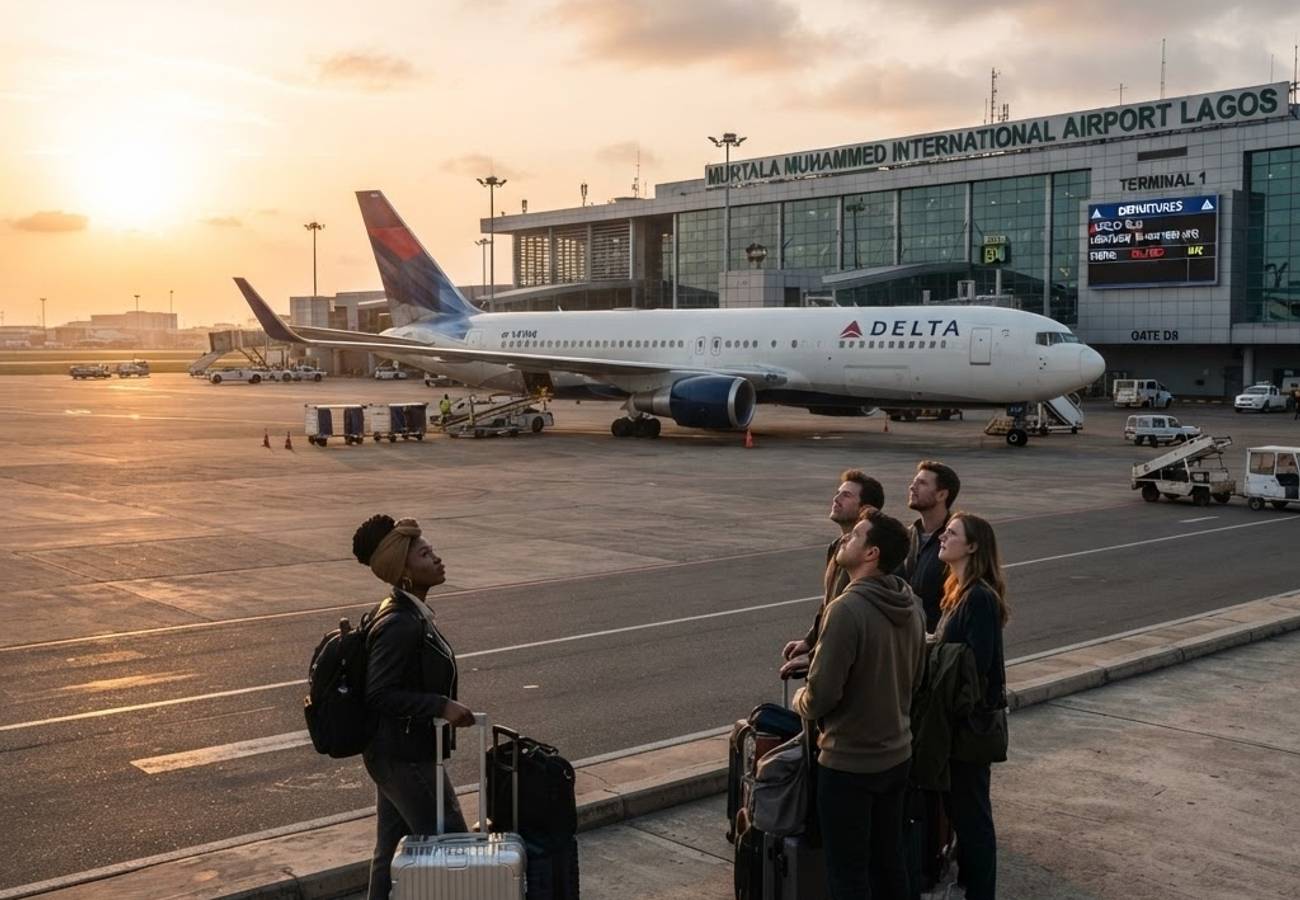
Image generated by AI
Two consecutive cancellations on Delta Air Lines' Lagos–Atlanta route in late August 2026 have left dozens of passengers stranded, exposing the fragility of one of West Africa's most vital transatlantic corridors.
The Reliability Gap in West African Connectivity
The nonstop link between Lagos and Atlanta, a cornerstone of Delta's Africa strategy, has come under intense scrutiny following a series of operational failures. In late August 2026, passengers at Murtala Muhammed International Airport experienced a cascading failure of service that turned a routine journey into a multi-day ordeal.
The disruption began on Sunday, August 23, when flight DL9895 was cancelled. While Delta rebooked many of these passengers for Tuesday, August 25, that service also failed to depart as planned. This back-to-back failure is not an isolated incident; flight-tracking data reveals that a special-service flight, DL9905, was also cancelled on August 3 and subsequently purged from the schedule.
While Delta maintains a schedule of seven weekly nonstop departures connecting Nigeria’s commercial hub to the Atlanta megahub, the recent volatility suggests a struggle to maintain consistency. The inbound rotation, identified as flight DL54, has mirrored these issues with its own set of cancellations and significant delays throughout August.
Operational Friction: Crew and Maintenance
The root causes of these disruptions are a combination of human resource constraints and technical failures. Official notifications sent to passengers cited "an issue that limited crew availability," a standard industry term indicating that the airline could not staff the flight within strict legal duty-time and rest regulations.
Beyond staffing, maintenance has played a significant role. One Lagos departure was delayed extensively while technicians worked to resolve aircraft technical issues. This pattern is not unique to the Nigeria route; frequent flyers have reported similar disruptions across Delta's broader international network, often linked to congested hub operations in Atlanta and tight maintenance windows for widebody aircraft.
For the traveler, the impact is magnified by the "outstation" effect. When a widebody aircraft is grounded in the US or a crew is timed out, passengers in Lagos face significantly longer waits for reaccommodation than those departing from a primary US hub where spare capacity is more readily available.
Cultural and Economic Impact on the Corridor
The Lagos–Atlanta route is more than a flight path; it is a primary gateway for Nigerian students, business executives, and diaspora families. When a nonstop service fails twice in succession, the ripple effects extend beyond the airport terminal.
For students facing strict academic start dates or business travelers with time-sensitive contracts, these delays create genuine crises. Because direct flights from Lagos to the US are limited, the failure of a marquee carrier like Delta forces passengers into expensive, last-minute reroutings through European or Middle Eastern hubs, which often require different visa arrangements and add significant travel time.
Visitor Insider Tips for the Lagos-US Corridor
Navigating the complexities of transatlantic travel from Murtala Muhammed International Airport requires more than just a ticket. To mitigate the risks of operational volatility, travelers should implement the following strategies:
- The 48-Hour Window: Closely monitor flight status via third-party tracking apps 24 to 48 hours before departure. Do not rely solely on email notifications, which can lag during operational crises.
- Documentation for Claims: Keep digital and physical copies of every "Crew Availability" or "Maintenance" notice provided by the airline. These are essential for securing expense reimbursements or successful travel insurance claims.
- Buffer Your Connections: If booking onward travel from Atlanta to secondary US cities, allow a minimum of 6 to 8 hours for the connection. Given the current volatility of the DL54/DL9895 rotations, tight connections are high-risk.
- Local Logistics: When stranded at Murtala Muhammed International Airport, be aware that lounge access may be limited during mass cancellations. Identify nearby reputable hotels in Ikeja for immediate respite rather than waiting in the departure hall.
Long-Term Tourism and Aviation Outlook
The recurring instability on the Lagos–Atlanta route signals a broader challenge for US-Africa connectivity. For Delta to maintain its hold on high-yield corporate and premium-leisure traffic, operational reliability must supersede schedule ambition.
The reliance on a single widebody rotation means that one technical glitch in Atlanta can paralyze the Lagos departure. To build resilience, the industry may need to move toward more flexible aircraft positioning or increased spare capacity at key African gateways. Until then, the route remains a high-reward but high-risk link for those traveling between West Africa and North America.
Reliability is the true currency of long-haul aviation, and for the Lagos-Atlanta route, the balance sheet is currently in the red.
Related Travel Guides
Disclaimer
This article is for informational and educational purposes only. It does not constitute legal, financial, or professional advice. While we strive to provide accurate and up-to-date information, travel policies, regulations, and conditions change rapidly. Always verify information with official sources before making travel decisions. Nomad Lawyer makes no representations about the accuracy, reliability, completeness, or suitability of the information provided. Readers should consult qualified professionals for advice specific to their circumstances. The views expressed in this article are those of the author and do not necessarily reflect the views of Nomad Lawyer.
Kunal K Choudhary
Co-Founder & Contributor
A passionate traveller and tech enthusiast. Kunal contributes to the vision and growth of Nomad Lawyer, bringing fresh perspectives and driving the community forward.
Learn more about our team →