Delta Air Lines Flight DAL9960 Airbus A330-941 Diverts from Atlanta to Detroit on 23 July 2026

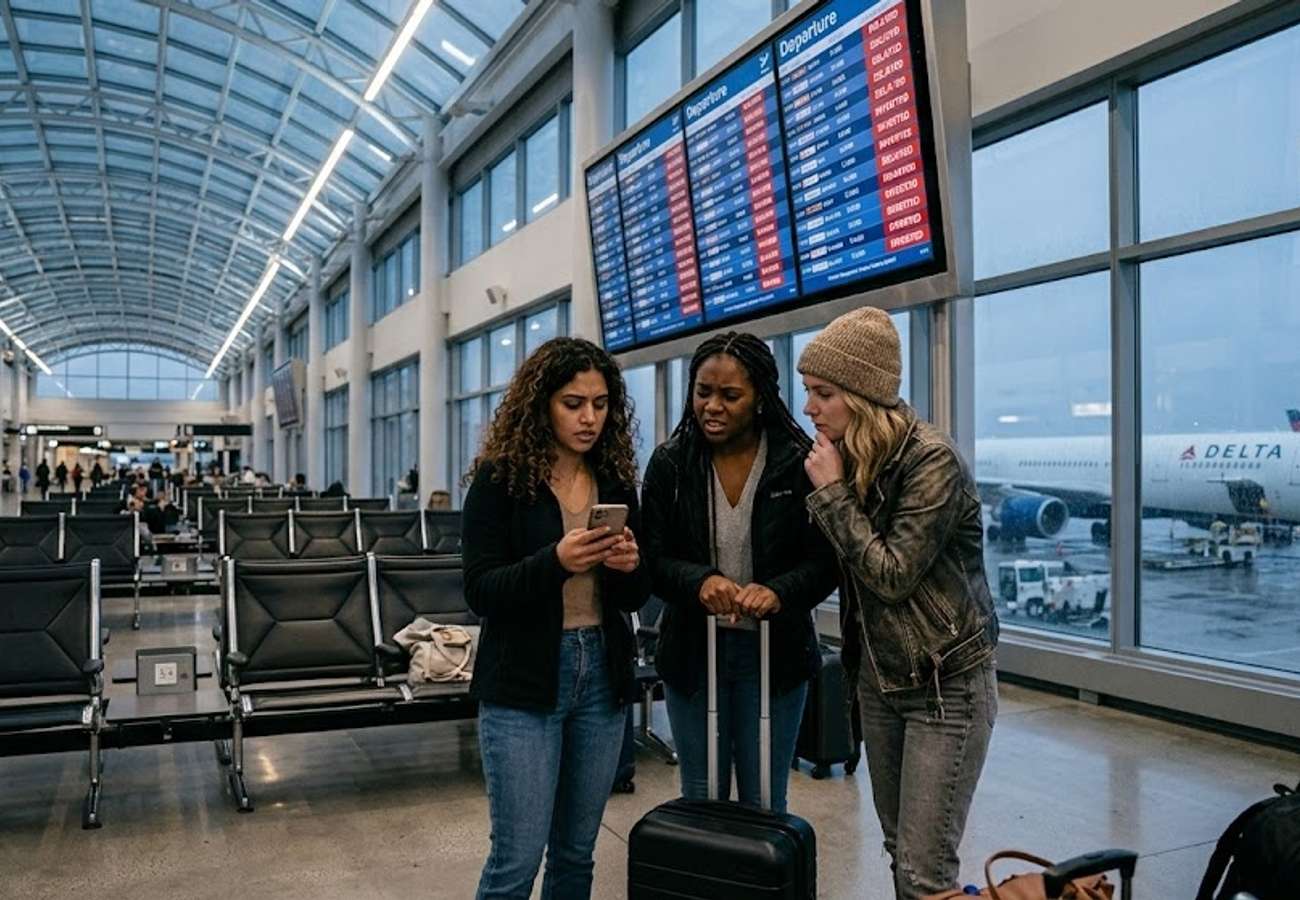
Image generated by AI
Flight DAL9960, a wide-body Airbus A330-941, diverted to Detroit on 23 July 2026, leaving passengers stranded mid-journey between Atlanta and New York.
The Disruption Details
On the evening of 23 July 2026, Delta Air Lines Flight DAL9960 departed Hartsfield–Jackson Atlanta International Airport destined for John F. Kennedy International Airport (JFK) in New York. Mid-flight, the crew executed a diversion, redirecting the aircraft to Detroit Metropolitan Wayne County Airport.
The aircraft involved, an Airbus A330-900 (A339) registered as N424DX, landed safely in Detroit. While Delta Air Lines has not released a specific official cause for the diversion, aviation protocols allow flight crews to redirect aircraft based on real-time safety or operational requirements.
Flight & Airport Impact Breakdown
- Flight Number: DAL9960
- Aircraft Model: Airbus A330-941 (Wide-body)
- Registration: N424DX
- Origin: Hartsfield–Jackson Atlanta International Airport (ATL)
- Intended Destination: John F. Kennedy International Airport (JFK)
- Diversion Point: Detroit Metropolitan Wayne County Airport (DTW)
- Date of Incident: 23 July 2026
Passenger Rights & Advisory
For the affected passengers on DAL9960, a diversion creates immediate legal and operational questions regarding their arrival in New York. Our analysis of U.S. Department of Transportation (DOT) guidelines and general aviation policy suggests the following:
Immediate Duty of Care Once the aircraft landed in Detroit, Delta was required to provide clear communication regarding the nature of the delay. For passengers, this means the airline must offer updates on whether the flight will continue to JFK or if alternative transport (rebooking) is necessary.
Rebooking and Compensation Under DOT guidelines, if a diversion leads to a significant delay or cancellation of the original itinerary, passengers are entitled to be rebooked on the next available flight to their destination. If the diversion was caused by a mechanical failure within the airline's control (rather than weather or air traffic control), passengers may have stronger grounds to request meal vouchers or hotel accommodations during the layover in Detroit.
Wide-Body Logistics Because the A330-941 is a large wide-body aircraft, not all airports can accommodate it. Detroit Metropolitan Airport was selected due to its infrastructure, including long runways and specialized ground support. Passengers should note that "equipment changes" are common after diversions; if the original A330 is grounded for technical checks, Delta may swap the aircraft for a smaller narrow-body jet to complete the leg to New York, which could result in seat assignment changes.
Industry Analyst View
From an operational standpoint, the diversion of DAL9960 underscores the "safety-first" mandate of the Federal Aviation Administration (FAA). Diversions are not viewed as system failures but as proactive risk mitigation.
The choice of Detroit (DTW) as the alternate is strategically sound. Located geographically between the origin (Atlanta) and destination (New York), it minimizes excessive fuel burn while providing the high-capacity infrastructure required for an Airbus A330. Flight tracking systems and FAA NextGen data allow pilots to monitor congestion and weather in real-time, ensuring that a diversion occurs before a situation becomes critical.
While domestic diversions are statistically rare according to U.S. DOT aviation data, the high-traffic corridor between Atlanta and New York is prone to dynamic airspace conditions. This incident demonstrates the efficacy of the layered safety approach used in U.S. airspace to manage wide-body traffic during unforeseen events.
Safe landings are the only metric that matters in aviation safety.
Related Travel Guides
This article is for informational purposes. Flight routes, passenger regulations, visa rules, and transit advisories are subject to change by airlines and aviation authorities. Readers are advised to verify schedules and travel documentation with relevant carriers and border agencies before departure.
Related Stories
Aeroméxico and Delta Expand US Network with 42 Weekly Flights to California, Florida and Oregon in 2027

Sicily, Tuscany and Piedmont: Italy's Luxury Vineyard Escapes Attract US Travelers in 2026