
Delta Air Lines Flight DAL906 Airbus A321-271NX Diverts to Huntsville Airport from Salt Lake City in 2026
Delta Air Lines Flight DAL906, an Airbus A321-271NX, diverted to Huntsville International Airport on July 27, 2026, while en route from Salt Lake City to Atlanta.

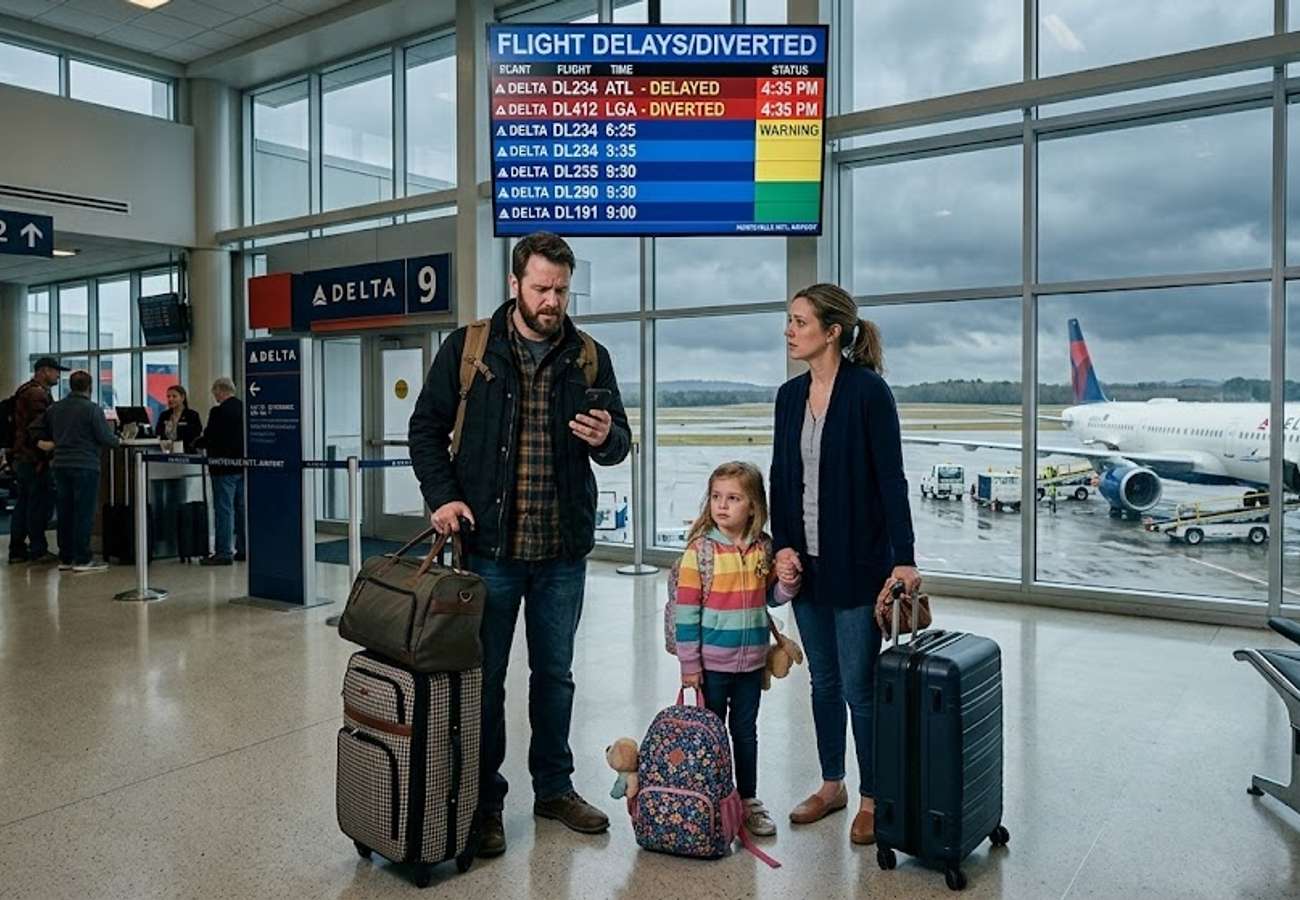
Image generated by AI
Headline Options:
- Factual/News: Delta Air Lines Flight DAL906 Airbus A321-271NX Diverts from Salt Lake City to Huntsville International Airport on July 27
- Curiosity-Gap (Discover): Mid-Air Course Change: Why Delta Flight DAL906 Abruptly Diverted to Huntsville International
- Problem-Solving (Search): Delta Flight DAL906 Diversion: What Passengers Need to Know About Compensation and Rebooking
Standfirst: A routine domestic flight from Salt Lake City to Atlanta was rerouted to Huntsville International Airport on July 27, 2026. All passengers and crew landed safely, though the diversion caused significant itinerary disruptions.
The Disruption Details
On July 27, 2026, Delta Air Lines Flight DAL906 was operating a scheduled service from Salt Lake City International Airport (SLC) to Hartsfield–Jackson Atlanta International Airport (ATL). During the transit, the flight was diverted to Huntsville International Airport (HSV) in the United States.
The aircraft, an Airbus A321-271NX registered as N534DT, landed safely at the alternative destination. While the diversion was unexpected, there were no confirmed reports of mechanical failure, medical emergencies, or security breaches.
Flight & Airport Impact Breakdown
Our analysis of the operational data indicates the following specifics:
- Flight Number: DAL906
- Aircraft Model: Airbus A321-271NX (A321neo family)
- Registration: N534DT
- Origin: Salt Lake City International Airport (SLC)
- Intended Destination: Hartsfield–Jackson Atlanta International Airport (ATL)
- Diversion Point: Huntsville International Airport (HSV)
- Date of Incident: July 27, 2026
Flight tracking systems show the aircraft departed SLC as planned before altering its course toward Huntsville. Diversions of this nature are typically triggered by air traffic control restrictions, weather volatility, or airport capacity issues at the destination hub.
Passenger Rights & Advisory
For the affected passenger, a diversion is a significant disruption to the contract of carriage. Depending on the cause of the diversion and the length of the resulting delay, passengers may be entitled to specific protections.
Duty of Care and Assistance Under standard aviation guidelines and Department of Transportation (DOT) expectations, passengers diverted to an airport not on their itinerary are entitled to:
- Communication: Access to phone calls or emails to notify family or employers.
- Refreshments: Vouchers for food and drinks if the delay exceeds a reasonable window.
- Accommodation: If the flight cannot resume until the following day, the airline must provide or reimburse hotel stays and transportation to the hotel.
Rebooking and Compensation Our analysis of current aviation policy suggests that if the diversion was caused by a "controllable" event (such as a technical fault with the A321-271NX), passengers may have stronger grounds for compensation. However, if the diversion was due to weather or Air Traffic Control (ATC) mandates, it is generally classified as an "extraordinary circumstance," exempting the airline from monetary compensation.
For passengers on DAL906, this means:
- Request a Written Statement: Ask Delta for the official reason for the diversion to determine if it was "controllable" or "uncontrollable."
- Document Expenses: Keep all receipts for meals, water, and transport incurred at Huntsville International Airport.
- Review Rebooking Options: If the onward journey to Atlanta was delayed by more than several hours, check for eligibility for travel vouchers or mileage credits.
Industry Analyst View
The use of the Airbus A321-271NX on this route highlights Delta's strategy to deploy fuel-efficient, narrow-body aircraft for high-demand domestic corridors. The A321neo's extended range and efficiency make it ideal for the SLC-ATL leg.
From an operational standpoint, the choice of Huntsville International Airport (HSV) as a diversion point is strategic. HSV offers the necessary runway capacity and facilities to handle narrow-body aircraft without congesting larger hubs. This incident underscores the critical role of "alternate airports" in maintaining the safety margin of the National Airspace System (NAS).
Safe landings are the priority; the logistics of recovery follow.
Related Travel Guides
Disclaimer
This article is for informational and educational purposes only. It does not constitute legal, financial, or professional advice. While we strive to provide accurate and up-to-date information, travel policies, regulations, and conditions change rapidly. Always verify information with official sources before making travel decisions. Nomad Lawyer makes no representations about the accuracy, reliability, completeness, or suitability of the information provided. Readers should consult qualified professionals for advice specific to their circumstances. The views expressed in this article are those of the author and do not necessarily reflect the views of Nomad Lawyer.
Preeti Gunjan
Contributor & Community Manager
A passionate traveller and community builder. Preeti helps grow the Nomad Lawyer community, fostering engagement and bringing the reader experience to life.
Learn more about our team →