Delhi to Chitrakoot Within Six Hours: Uttar Pradesh Expands Link Expressway to Six Lanes

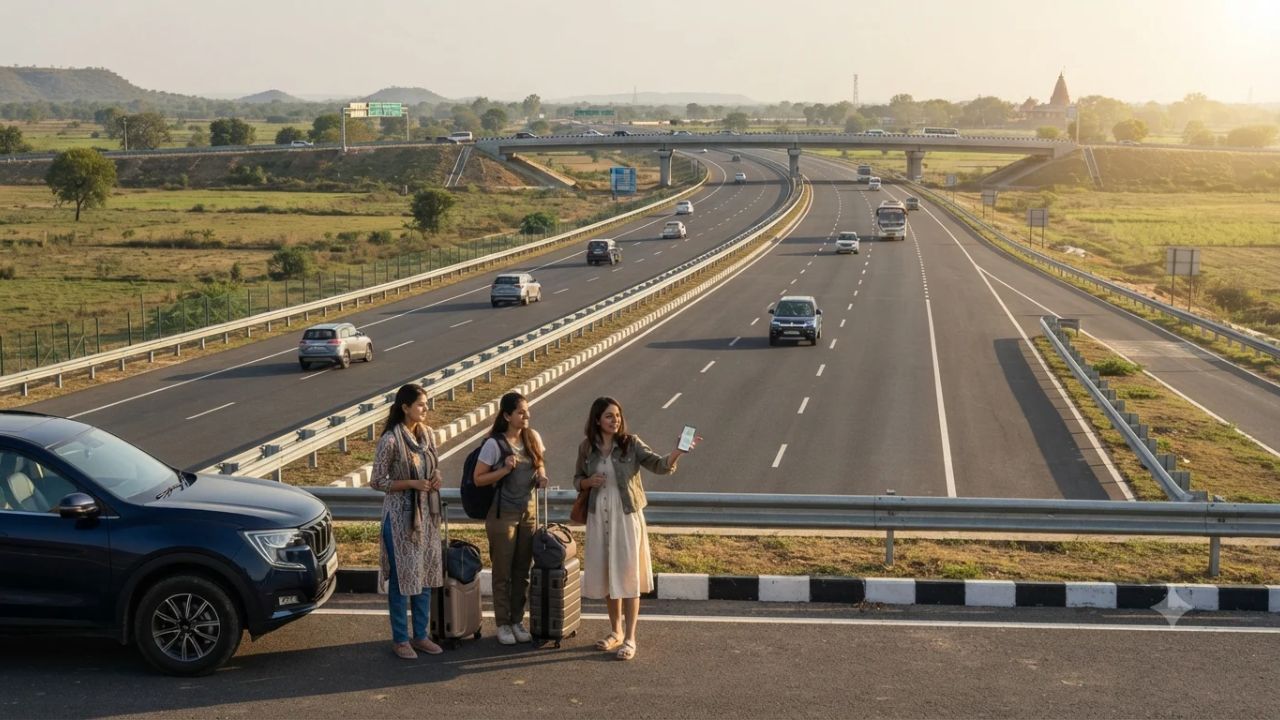
Image generated by AI
Slashing road travel times across a 655-kilometre overland corridor from nine hours down to nearly six, the Uttar Pradesh government’s Rs 1,008.67 crore upgrade of the Chitrakoot Link Expressway into a six-lane greenfield artery marks a major transformation in northern Indian transit. Engineered for vehicular speeds up to 120 kmph, the 15.172-kilometre access-controlled highway establishes a high-velocity connection between Chitrakoot Dham and the main Bundelkhand Expressway, fundamentally upgrading access for pilgrims, cultural tourists, and commercial freight fleets traversing Uttar Pradesh and neighboring Madhya Pradesh.
Bundelkhand Infrastructure Modernization: The Engineering Rationale Behind the Six-Lane Upgrade
The journey between the National Capital Region and Chitrakoot historically required navigating a patchwork of regional state highways following the terminus of the Bundelkhand Expressway, resulting in severe bottlenecks and extended travel times. By formally restructuring the project from an initial four-lane road into an expansive six-lane corridor, the state administration aims to prevent premature saturation and build capacity ahead of anticipated surges in religious tourism.
The project is being developed under the regulatory framework of the Ministry of Road Transport and Highways (MoRTH) and overseen by the Uttar Pradesh Expressways Industrial Development Authority (UPEIDA). Expanding the expressway width to approximately 110 metres across a greenfield alignment ensures complete access control, segregating high-speed intercity traffic from local agricultural tractors and pedestrian crossings.
Financially, the state government has assumed total funding responsibility for the project, increasing the capital allocation from the original estimate of Rs 940 crore up to Rs 1,008.67 crore. The construction process will follow the Engineering, Procurement and Construction (EPC) delivery framework. Under this model, a turnkey infrastructure contractor assumes end-to-end accountability for detailed engineering, raw material procurement, and roadway execution under strict government quality audits, mitigating the chronic timeline slippages that previously affected regional road projects.
Civil Engineering Assets and Interstate Freight Corridors
The physical architecture of the 15.172-kilometre link road incorporates extensive grade-separated civil engineering structures designed to sustain continuous vehicular velocity and maximize roadway safety.
The master plan details an extensive structural inventory: one major river bridge, four minor bridges, one elevated flyover, 17 vehicular and pedestrian underpasses, 23 drainage culverts, and a modernized toll plaza featuring electronic toll collection gantries. The 17 underpasses ensure uninterrupted rural mobility for adjacent agrarian communities, preventing cattle straying and unauthorized localized road cuts that frequently generate fatal collisions on traditional dual-carriageway national highways.
Beyond passenger movement, the six-lane corridor provides an essential logistics conduit connecting the mineral-rich and industrial belts of northern Madhya Pradesh directly to the Yamuna Expressway and Delhi-NCR markets. Commercial freight carriers operating heavy multi-axle trucks toward industrial centers such as Satna, Rewa, and Jabalpur gain a dedicated bypass around crowded municipal bazaars.
The expressway was sanctioned as part of a sweeping industrial package approved by the Uttar Pradesh Cabinet chaired by Chief Minister Yogi Adityanath. The executive meeting greenlit 23 major developmental proposals, including the Uttar Pradesh Toy Manufacturing Promotion Policy-2025 aimed at creating high-volume manufacturing employment, alongside formal approvals to finalize stalled high-tech integrated township developments across regional growth nodes.
| Project Metric | Previous Four-Lane Blueprint | Approved Six-Lane Final Architecture | Operational & Traveler Significance |
|---|---|---|---|
| Total Corridor Length | 15.172 kilometres | 15.172 kilometres | Direct connection from Bundelkhand Expressway to Chitrakoot Dham |
| Right-of-Way Width | ~60 to 70 metres | Approximately 110 metres | Accommodates future lane additions and deep safety clear zones |
| Maximum Design Speed | 100 kmph | Up to 120 kmph | Compresses overall Delhi–Chitrakoot transit from 9 to ~6 hours |
| Project Capital Outlay | Rs 940 crore | Rs 1,008.67 crore (Fully State Funded) | Absorbs high-capacity pavement structures and extensive underpasses |
| Major Civil Structures | Standard grade crossings | 1 major bridge, 4 minor bridges, 1 flyover | Eliminates natural grade chokepoints and seasonal monsoon washouts |
| Safety Underpasses | Limited underpasses | 17 dedicated underpasses & 23 culverts | Prevents pedestrian, livestock, and local farm vehicle interference |
| Toll Infrastructure | Basic toll barriers | 1 modernized electronic toll plaza | High-speed FASTag throughput minimizing queue delays |
Expert Analysis: Spiritual Tourism Economics, Access-Control Safety, and Regional Supply Chains
The strategic upgrade of the Chitrakoot Link Expressway demonstrates how regional transport connectivity functions as a primary economic catalyst for cultural pilgrimage corridors.
For travelers booking this route, the direct consequence is that Chitrakoot transforms from an arduous multi-day expedition into a viable weekend getaway from Delhi, Agra, or Kanpur. Under promotion initiatives coordinated by Uttar Pradesh Tourism, Chitrakoot occupies a sacred position in the Ramayana Circuit, revered as the sanctuary where Lord Rama, Sita, and Lakshmana spent substantial portions of their 14-year exile. Historical transit times of nine to ten hours forced visitors to rely on overnight sleeper trains with limited berth allocations or endure exhausting drives across poorly paved district roads. A predictable six-hour driving window enables families, senior citizen groups, and cultural travelers to complete self-drive pilgrimages with comfort and schedule reliability.
The pricing pressure this creates means hospitality real estate in Chitrakoot, Bharatkoop, and surrounding districts will experience rapid commercial appreciation. National hotel chains, wellness resorts, and spiritual retreat operators are acquiring land parcels along the expressway corridor to serve affluent weekend travelers departing from Delhi-NCR. In parallel, transport operators can reduce per-kilometer vehicle maintenance costs, as smooth, access-controlled concrete pavements significantly reduce tire wear, mechanical breakdowns, and fuel consumption.
On the logistics front, the highway establishes high-speed connectivity toward Bharatkoop, an ancient spiritual and stone-quarrying node, while accelerating regional trade. By funneling agricultural goods, cement, and manufactured products seamlessly from Madhya Pradesh onto the Bundelkhand and Yamuna Expressways, the corridor integrates central India into northern supply chains, proving that targeted link highways unlock massive regional economic value.
Key Takeaways
- Six-Hour Travel Window: The six-lane Chitrakoot Link Expressway reduces the 655-km journey between Delhi and Chitrakoot from nine hours to approximately six hours.
- Enhanced Capacity and Velocity: The highway features an access-controlled 110-metre-wide right-of-way designed for vehicle speeds up to 120 kmph.
- Increased State Funding: The Uttar Pradesh Cabinet raised the project budget from Rs 940 crore to Rs 1,008.67 crore under full state financing.
- Extensive Civil Engineering: The 15.172-km greenfield alignment incorporates one major bridge, four minor bridges, one flyover, 17 underpasses, 23 culverts, and one electronic toll plaza.
- Interstate Freight Connectivity: The expressway facilitates seamless freight transport between Uttar Pradesh and Madhya Pradesh industrial centers, including Satna, Rewa, and Jabalpur.
FAQ: Delhi Chitrakoot Six-Lane Expressway 2026
How much travel time will the Chitrakoot Link Expressway save?
The new six-lane expressway reduces driving time between Delhi and Chitrakoot from nearly nine hours down to approximately six hours across the 655-kilometre route, saving travelers three hours of road transit.
What is the speed limit and length of the Chitrakoot Link Expressway?
The Chitrakoot Link Expressway spans 15.172 kilometres with an approximate right-of-way width of 110 metres, designed for maximum passenger vehicle speeds of up to 120 kmph.
Why did the Uttar Pradesh government upgrade the project to six lanes?
The state government expanded the project from four to six lanes to accommodate growing commercial freight from Madhya Pradesh and absorb heavy traffic surges driven by Ramayana Circuit spiritual tourism.
Which major cities benefit from the new expressway link?
In addition to connecting Delhi and Chitrakoot Dham, the expressway provides direct high-speed access towards Bharatkoop in Uttar Pradesh and major commercial centers in Madhya Pradesh, including Satna, Rewa, and Jabalpur.
[By bridging ancient heritage with modern high-speed engineering, the Chitrakoot Link Expressway places northern India’s spiritual cradle within a swift six-hour journey from the capital.]
Related Travel Guides
This article is for informational purposes. Flight routes, passenger regulations, visa rules, and transit advisories are subject to change by airlines and aviation authorities. Readers are advised to verify schedules and travel documentation with relevant carriers and border agencies before departure.
Related Stories

European Mass Protests Disrupt Travel Across France, Italy, Belgium, and Turkey in 2026

Israel Tourism Recovery 2026: North American Flight Restorations and New ETA-IL Entry Rules