
Deadly Flash Floods Destroy Nepal-China Border Corridor in Rasuwa District August 2026
Catastrophic flash floods in the Bhote Koshi River area have decimated critical transit infrastructure connecting Nepal to Tibet, leaving hundreds of foreign nationals missing.
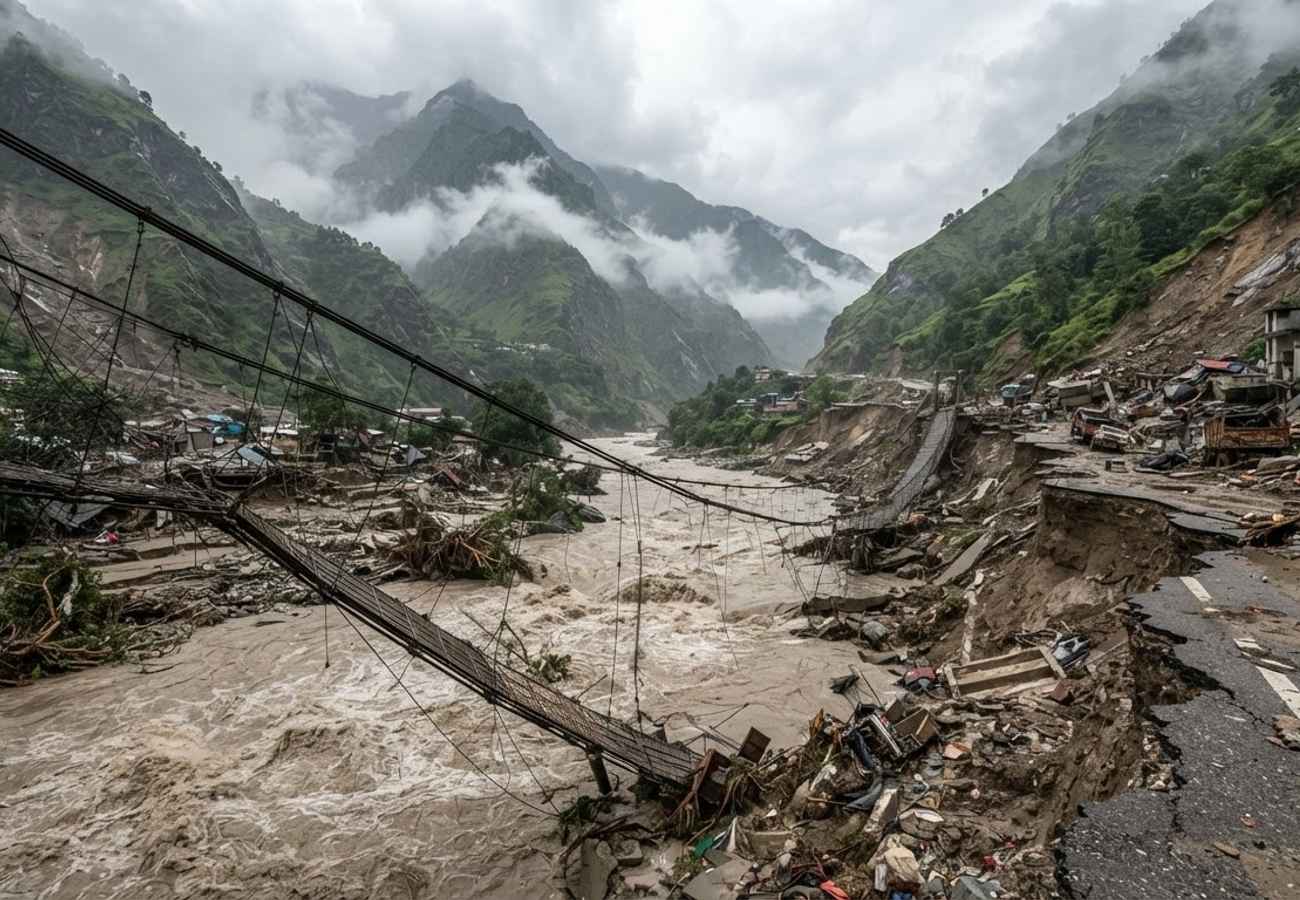
Image generated by AI
Catastrophic flash floods in the Bhote Koshi River area have decimated the primary transit corridor between Nepal and Tibet, leaving 596 foreign nationals from 33 countries missing as of August 27.
Critical Transit Disruption in Rasuwa District
On August 26, 2026, a violent flash flood tore through the Bhote Koshi River region, causing systemic failure of transportation and communication infrastructure. The disaster centered on Rasuwa and Rasuwagadhi, which serve as the primary gateway for travelers, pilgrims, and traders moving between Nepal and Tibet.
According to the Nepal Ministry of Foreign Affairs, 359 bodies have been recovered. The international impact is severe; out of 627 foreign nationals initially reported missing, 31 have been located, leaving 596 still unaccounted for. The missing include citizens from India, China, Malaysia, Ukraine, the United States, the United Kingdom, Australia, and Canada, with Chinese and Indian nationals comprising the largest groups.
The Government of Nepal confirms extensive damage to houses, roads, bridges, and hydropower facilities. Because mountain transit relies on a limited number of singular access points, the destruction of these bridges effectively isolates the region, complicating both rescue efforts and the evacuation of stranded tourists.
Impacted Transit Zones and Route Status
The following table outlines the current status of the affected corridors. Travelers are advised that these parameters are subject to change based on river levels and rescue operations.
| Location/Route | Status | Primary Damage | Transit Availability |
|---|---|---|---|
| Bhote Koshi River Area | Closed | Roads, bridges, and buildings destroyed | None |
| Rasuwa $\rightarrow$ Rasuwagadhi | Closed | Critical infrastructure failure | None |
| Nepal-China Border Crossing | Suspended | Communication and road networks severed | None |
| Chitwan Region | Alert | Variable flooding | Limited / Precarious |
| Other Nepal Highlands | Open | Localized disruptions | Restricted |
Traveler Logistics Guide: Navigating the Crisis
From a ground-level perspective, the best way to navigate this situation is to treat the Rasuwa district and the Nepal-Tibet border corridor as active disaster zones rather than tourist routes.
Route Verification and Navigation Do not rely on Google Maps, Apple Maps, or pre-printed trekking itineraries. In the wake of a flash flood of this magnitude, digital maps often show roads that have physically ceased to exist. Only trust real-time updates from the Nepal Ministry of Foreign Affairs or official embassy bulletins.
Border Crossing Alternatives For those attempting to enter Tibet from Nepal, the Rasuwagadhi crossing is currently non-viable. Travelers should contact their permit providers to determine if alternative entry points are open, though regional instability may affect multiple corridors.
Emergency Protocols for Foreign Nationals If you are tracking a traveler in the region:
- Contact the Emergency Control Room: The Nepal Ministry of Foreign Affairs has established a dedicated control room for foreign nationals.
- Verify via Ministry Databases: Use the official disaster-management system database to check the status of missing persons (categorized as missing, rescued, or found safe).
- Avoid Independent Search Parties: Entering the Bhote Koshi area without official authorization is dangerous due to the risk of secondary flooding.
Infrastructure Impact Assessment
The destruction of the Rasuwa-Rasuwagadhi corridor represents a significant blow to regional connectivity. This route is not merely a trekking path but a strategic economic artery connecting Nepal to the Tibetan Autonomous Region of China. The loss of hydropower facilities and bridges suggests a long-term recovery period, which will likely suppress tourism and cross-border trade in northern Nepal for the remainder of the 2026 season.
While the UK government's travel advisory indicates that other parts of Nepal remain accessible, the fragility of the Himalayan geography means that weather-related disruptions can cascade. Travelers are urged to maintain flexible itineraries and avoid river valleys during the monsoon transition.
The road to Tibet is currently closed; safety must precede the itinerary.
Related Travel Guides
Disclaimer
This article is for informational and educational purposes only. It does not constitute legal, financial, or professional advice. While we strive to provide accurate and up-to-date information, travel policies, regulations, and conditions change rapidly. Always verify information with official sources before making travel decisions. Nomad Lawyer makes no representations about the accuracy, reliability, completeness, or suitability of the information provided. Readers should consult qualified professionals for advice specific to their circumstances. The views expressed in this article are those of the author and do not necessarily reflect the views of Nomad Lawyer.