Amazon Prime Air Boeing 767 Crash at Miami International Airport Triggers Mass Flight Cancellations 2026

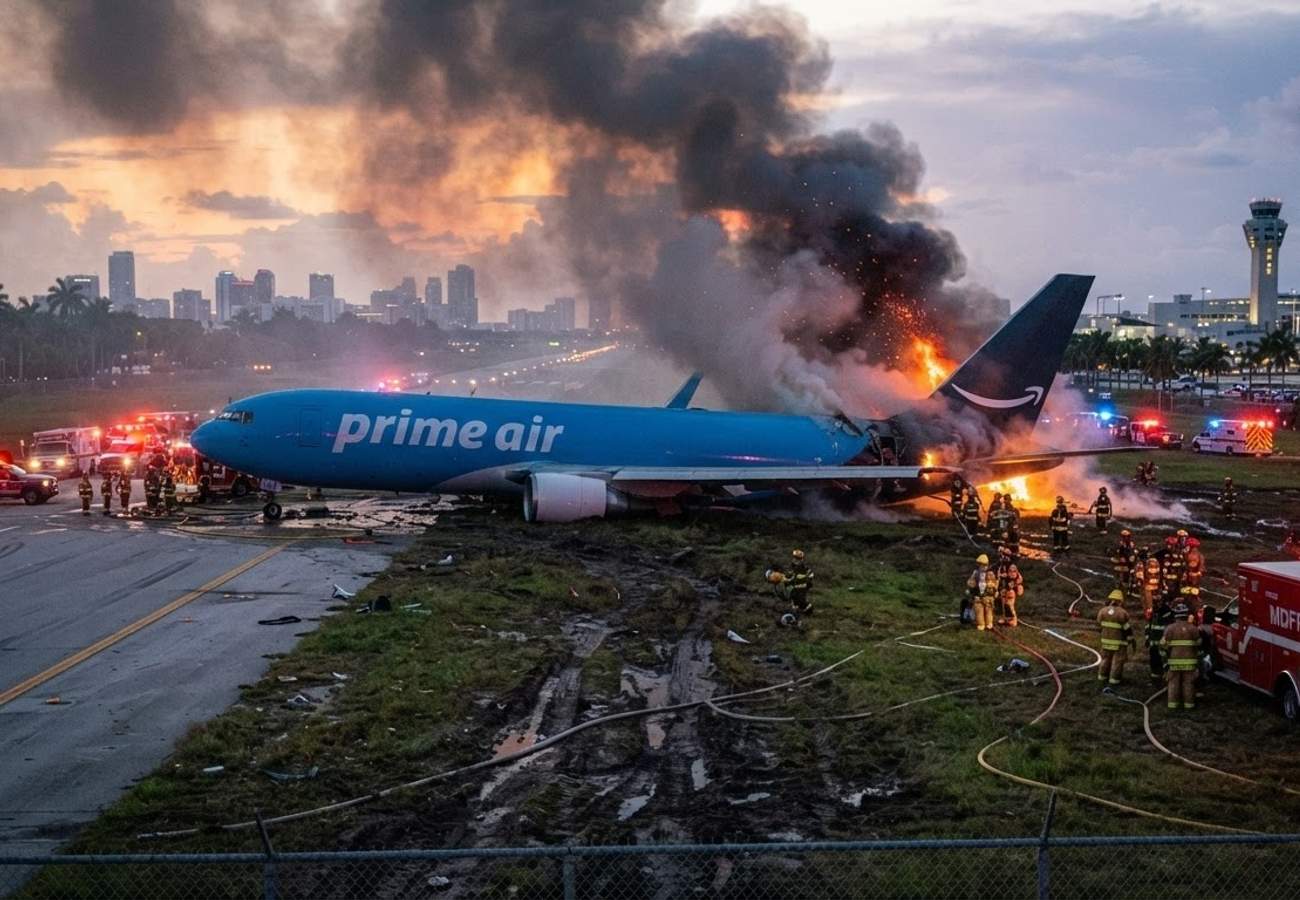
Image generated by AI
Five fatalities and multiple injuries have been confirmed after an Amazon-branded cargo jet overran a runway at Miami International Airport, triggering a full ground stop and cascading cancellations into Monday.
The Operational Crisis at MIA
On Sunday, September 6, 2026, a Prime Air Boeing 767, operated by cargo carrier 21 Air, overshot a runway on the northwest side of Miami International Airport. The aircraft exited the paved surface, crossed the airport perimeter, and collided with several vehicles before bursting into flames. The impact resulted in at least five deaths and approximately five injuries, including individuals in the vehicles struck outside the runway boundary.
The immediate aftermath forced a total ground stop at one of the busiest international gateways in the United States. All runways and the majority of taxiways were closed for several hours as emergency responders and investigators secured the site. This total shutdown forced inbound flights into holding patterns over South Florida or necessitated diversions to other regional hubs.
While some operations resumed Sunday evening, the backlog created a severe ripple effect. By Monday, September 7, flight-tracking data and local reports confirmed dozens of cancellations and significant delays. The disruption was most acute for carriers utilizing Miami as a primary hub for Latin America and Caribbean routes, as aircraft and crews remained out of position or exceeded legal duty limits.
Aviation Safety and Infrastructure Analysis
The National Transportation Safety Board (NTSB) and the Federal Aviation Administration (FAA) have launched formal investigations. Primary focus is centered on the aircraft's touchdown point; preliminary data suggests the Boeing 767 may have landed too late on the runway, leaving insufficient distance for braking and reverse thrust.
For the visitor and the industry, this incident highlights the vulnerability of high-volume hubs. Investigators are currently analyzing:
- Flight Data & Cockpit Voice Recorders: To determine the exact sequence of the landing.
- Environmental Factors: While weather was typical for late-summer Miami—characterized by scattered showers—the role of surface moisture and visibility is under review.
- Perimeter Protection: Because the aircraft struck vehicles beyond the airfield, regulators are evaluating the effectiveness of current runway safety areas and engineered materials arresting systems.
Visitor Insider Tips for Navigating MIA Disruptions
When a major hub experiences a systemic failure, standard travel advice is insufficient. For those currently transiting through South Florida or planning a trip this week, apply these local strategies:
- The "Alternative Hub" Pivot: If MIA is gridlocked, check availability at Fort Lauderdale-Hollywood International (FLL) or Palm Beach International (PBI). While these airports often feel the strain of diversions, they can provide a faster exit from the region.
- Cruise Connection Buffer: Travelers connecting to PortMiami should allow an extra 24-48 hours of buffer. Many passengers have already been forced to switch to Fort Lauderdale ports or reschedule sailings due to missed flights.
- Terminal Survival: In the event of overnight stays, avoid relying on airport-adjacent hotels during a crisis, as airline crews are often prioritized for room blocks. Use ride-share apps to move toward Doral or Coral Gables for more diverse lodging options.
- Baggage Strategy: During operational recoveries, ground handling is often the last service to return to 100% capacity. Stick to carry-on luggage to avoid the risk of bags being stranded at a diversion airport.
Tourism and Regional Outlook
Miami International Airport serves as a critical economic artery for Florida. The timing of this crash—intersecting weekend leisure peaks, cruise departures, and the start of the business week—magnifies the economic impact.
Long-term, this event will likely accelerate the implementation of advanced runway excursion safeguards. While commercial passenger safety at MIA remains statistically strong, the vulnerability of the cargo infrastructure to "overrun" scenarios will likely lead to stricter landing protocols and enhanced perimeter barriers to protect the surrounding community.
Travelers are urged to verify flight status via official airline apps before departing for the airport, as "on time" statuses may be subject to sudden change during the ongoing investigation.
Related Travel Guides
-
Best Places to Visit in India in August for Monsoon Festivals
-
Florida Charming Panhandle Emerald Coast Retirement Gems 2026
-
[Short-Haul Travel Trends: Rise of Four-Day ](/indian-traveler-four-day-short-haul-trends)
This article is for informational purposes. Flight routes, passenger regulations, visa rules, and transit advisories are subject to change by airlines and aviation authorities. Readers are advised to verify schedules and travel documentation with relevant carriers and border agencies before departure.
Related Stories

South Africa's Addo Elephant National Park Welcomes Woman-Owned Epitome Spa to Boost Inclusive Tourism 2026

National Geographic Names Five Must-Visit US Destinations for 2027: Insider Cultural and Travel Guide