
China Travel Chaos: Sudden Flight Delays at Dalian Airport Disrupt Vital Routes to Tokyo and Shanghai Despite Zero Cancellations
As severe operational bottlenecks paralyze Chinese aviation networks, Dalian Zhoushuizi International Airport experiences sudden flight delays, triggering minor but critical travel chaos across vital domestic and international corridors.

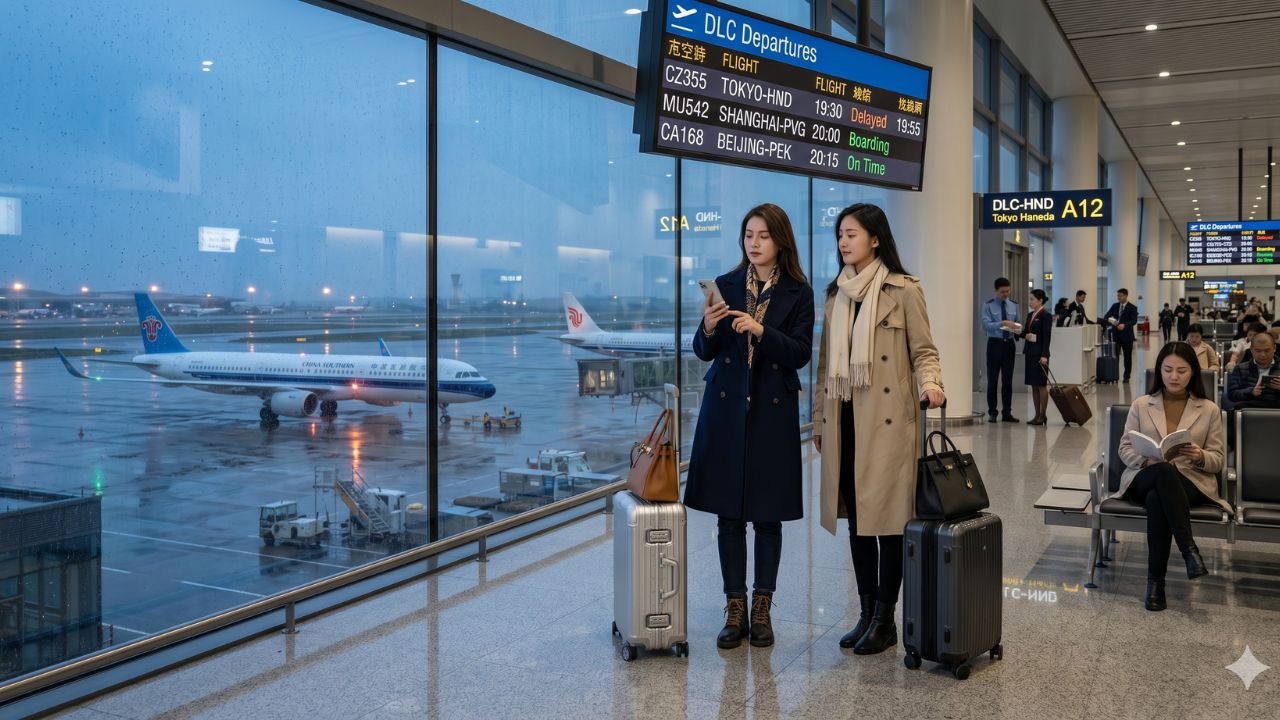
Image generated by AI
A Sudden Schedule Disruption Triggers Regional Gridlock
While massive sectors of the global passenger network frequently battle highly unpredictable weather events, synchronized logistical bottlenecks and horrific fleet management constraints remain the absolute most terrifying catalysts for sudden, unmanageable terminal congestion. Delivering highly urgent, breaking airline news, verified Chinese aviation trackers confirm that a sudden operational schedule adjustment has actively generated minor but highly critical travel chaos across the northern China aviation network. Today, June 2, 2026, sudden travel distress forcefully emerged as Dalian Zhoushuizi International Airport in Liaoning Province abruptly reported a surge in airport disruptions, temporarily delaying highly vulnerable commuters attempting to traverse domestic and international borders.
While desperate travelers usually attempt to navigate sudden, terrifying flight cancellations caused by massive summer volumes across major international hubs, these exclusive aviation updates reveal a highly unique operational scenario. Verified transit data confirms that Dalian Airport actually recorded zero outright cancellations. However, sudden schedule modifications triggered critical delays across the airport's high-demand routes. Although officially only 2 flights were severely delayed—representing an astonishingly low 1% of total daily operations—the resulting ripple effects actively threatened the high-value travel itineraries of passengers flying into massive mega-hubs including Tokyo, Shanghai, and Nanjing, leaving corporate crowds temporarily delayed inside the Liaoning gateway.
Expanded Overview: The Scale of the Aviation Disruptions
The sudden, highly publicized execution of these regional operational delays serves as an undeniable example of how rapidly a province's critical transit networks can suffer sudden schedule friction under extreme air traffic pressure. Even with a 1% delay rate, the disruption heavily impacts elite corporate travel, essential regional connectivity, and highly sensitive international tourism corridors. The latest Dalian Airport flight delays highlight exactly how even minor schedule disruptions on northern China’s busiest air routes can violently affect passenger movement connecting to the nation's absolute largest metropolitan centers.
Despite the incredibly low volume of severe delays (just 2 flights out of the entire daily schedule), airline tracking systems flagged multiple critical departures that underwent sudden operational adjustments. These adjustments primarily impacted the highly lucrative domestic routes to Shanghai Pudong and Nanjing Lukou, as well as the vital international corridor to Tokyo Haneda. This highly sensitive disruption instantly threatens crucial business meetings and tight international transits, triggering a travel chain reaction that demands extreme vigilance from passengers relying on Dalian for regional reach.
Section-Wise Breakdown of the Connectivity Disruptions
International Corridors Face Friction
One of the most heavily monitored routes during this operational adjustment involved the vital international link to Japan. Flight JAL24, operated by Japan Airlines utilizing a massive Boeing 787-8 widebody aircraft, was caught in the scheduling friction en route to Tokyo Haneda International Airport (RJTT). Because international connections are incredibly time-sensitive, even a minor delay on this widebody service instantly threatens onward global connectivity, forcing international tourists and corporate executives to frantically verify their connecting itineraries across the East China Sea.
Domestic Mega-Hubs Experience Schedule Shifts
Simultaneously, the vital domestic routes to China's absolute largest financial powerhouses experienced sudden scheduling scrutiny. Massive flights bound for Shanghai Pudong International Airport (ZSPD) and Nanjing Lukou International Airport (ZSNJ) were heavily featured in the disruption logs. High-capacity Airbus A320, A321neo (A21N), and Boeing 737-800 aircraft, operated by various domestic carriers, were forced into operational adjustments.
Regional Routes Face Cascading Adjustments
The scheduling friction violently extended beyond Tier-1 cities, affecting essential regional travel. High-demand routes to Zhengzhou Xinzheng International Airport (ZHCC), Changzhi (ZBCZ), Hefei Xinqiao Airport (ZSOF), and Penglai International Airport (ZSYT) were included in the disrupted departure sequences.
The primary catalysts for these minor but critical delays include intense air traffic coordination requirements across multiple regional hubs, necessary operational adjustments regarding aircraft rotations and crew availability, and restrictive airspace management protocols combined with minor weather considerations such as fog or light rain.
Verified Dalian Network Disruption Data
To fully comprehend the operational scale and the specific aircraft involved in this highly monitored regional scheduling friction, the following table explicitly details the exact flight metrics officially recorded during the Dalian Airport network disruption. (Note: While multiple flights were logged for schedule adjustments, only 2 flights ultimately suffered severe delays, resulting in a 1% delay rate).
| Flight Ident | Aircraft Type | Destination Airport | Scheduled Departure (CST) |
|---|---|---|---|
| JAL24 | Boeing 787-8 (B788) | Tokyo Int’l (Haneda) (HND / RJTT) | Wed 01:00 PM |
| DKH1166 | Airbus A320 | Shanghai Pudong Int’l (PVG / ZSPD) | Wed 09:35 PM |
| DKH1728 | Airbus A320 | Nanjing Lukou Int’l (NKG / ZSNJ) | Wed 09:10 PM |
| CES5696 | Airbus A320neo (A20N) | Shanghai Pudong Int’l (PVG / ZSPD) | Wed 05:55 PM |
| CCD8911 | Boeing 737-800 (B738) | Shanghai Pudong Int’l (PVG / ZSPD) | Wed 03:55 PM |
| CXA8046 | Boeing 737-800 (B738) | Zhengzhou Xinzheng Int’l (CGO / ZHCC) | Wed 01:20 PM |
| HXA4936 | Airbus A320 | Changzhi (CIH / ZBCZ) | Wed 12:55 PM |
| CHH7643 | Boeing 737-800 (B738) | Hefei Xinqiao Airport (HFE / ZSOF) | Wed 09:40 AM |
| CES5674 | Airbus A320neo (A20N) | Shanghai Pudong Int’l (PVG / ZSPD) | Wed 09:00 AM |
| DKH1166 | Airbus A321neo (A21N) | Shanghai Pudong Int’l (PVG / ZSPD) | Tue 09:35 PM |
| GCR6411 | Embraer E190 (E190) | Penglai International (YNT / ZSYT) | Tue 08:20 PM |
| DKH1719 | Airbus A320 | Nanjing Lukou Int’l (NKG / ZSNJ) | Tue 08:50 AM |
Passenger Impact: Navigating the Regional Delays
For the modern commuter attempting to navigate this highly efficient but incredibly tight Chinese network, the passenger impact of even minor Dalian delays is highly stressful. While Dalian miraculously avoided outright cancellations, the schedule shifts on elite corporate routes to Shanghai and Tokyo are incredibly frustrating, leaving business travelers incredibly anxious regarding their tight onward connections.
- Anticipate Sudden Gate Changes: Because airport authorities are rapidly adjusting departure sequences to maintain efficiency, passengers must furiously monitor terminal departure boards for sudden gate changes or revised boarding times.
- Arrive Early Despite Delays: Even if a flight is officially logged as delayed, travelers must aggressively arrive at the airport early. Security screening and baggage check-in procedures will not be extended, and missing these cutoffs guarantees the total destruction of an itinerary.
- Verify Downstream Connectivity: Passengers delayed en route to massive hubs like Tokyo Haneda or Shanghai Pudong must desperately check their onward domestic or international connections, as missing these massive feeder flights due to a minor 30-minute delay in Dalian guarantees an incredibly exhausting travel disaster.
Conclusion: A Highly Efficient Transit Response
The sudden, highly publicized schedule adjustments across Dalian Zhoushuizi International Airport represent a critical test for the northern Chinese travel sector. By successfully maintaining a 0% cancellation rate and only a 1% delay rate despite intense operational pressure across vital domestic and international corridors, the airport authorities have miraculously prevented catastrophic travel chaos. As the operational teams actively manage this minor air traffic friction, passengers are heavily urged to aggressively monitor their bookings, remain highly flexible, and fully expect minor flight schedule shifts amidst the complexities of modern Chinese aviation.
Key Takeaways
- Massive Operational Efficiency: Dalian Airport officially reported an incredibly low disruption rate: 0 cancelled flights (0%) and only 2 severe delays (1%).
- International Links Monitored: A critical flight to Tokyo Haneda (JAL24, Boeing 787-8) was heavily monitored for schedule friction, threatening international connections.
- Tier-1 Hubs Adjusted: High-capacity flights to Shanghai Pudong and Nanjing Lukou were forced into operational adjustments to maintain systemic safety.
- High-Capacity Aircraft Involved: Massive narrowbody and widebody aircraft, including Airbus A321neos and Boeing 787s, were entangled in the schedule adjustments.
- Passenger Survival Tactics: Travelers are aggressively urged to strictly arrive at the airport early and heavily monitor real-time gate information, as operational adjustments can violently shift boarding sequences without warning.
Disclaimer: The specific delay metrics, adjusted flight timelines, and airline operational data presented in this report are based on verified transit tracking data from FlightAware regarding the Dalian Airport network adjustments on June 2, 2026. Official airline routing, terminal congestion levels, and final departure sequences are highly volatile and subject to continuous, real-time update based on active carrier operational directives, complex airspace management, and sudden air traffic constraints. Prospective passengers are urgently advised to fiercely monitor their specific booking status and verify active flight schedules directly via the airline's official portal prior to airport arrival.
Disclaimer
This article is for informational and educational purposes only. It does not constitute legal, financial, or professional advice. While we strive to provide accurate and up-to-date information, travel policies, regulations, and conditions change rapidly. Always verify information with official sources before making travel decisions. Nomad Lawyer makes no representations about the accuracy, reliability, completeness, or suitability of the information provided. Readers should consult qualified professionals for advice specific to their circumstances. The views expressed in this article are those of the author and do not necessarily reflect the views of Nomad Lawyer.
Kunal K Choudhary
Co-Founder & Contributor
A passionate traveller and tech enthusiast. Kunal contributes to the vision and growth of Nomad Lawyer, bringing fresh perspectives and driving the community forward.
Learn more about our team →