
Cusco Airport to Machu Picchu Route Faces Delays in 2026: Timings, Costs, and Train Risks
Travelers heading from Alejandro Velasco Astete Airport to Machu Picchu face altitude, tight train schedules, and road delays; here is the current breakdown of routes, costs, and risks.

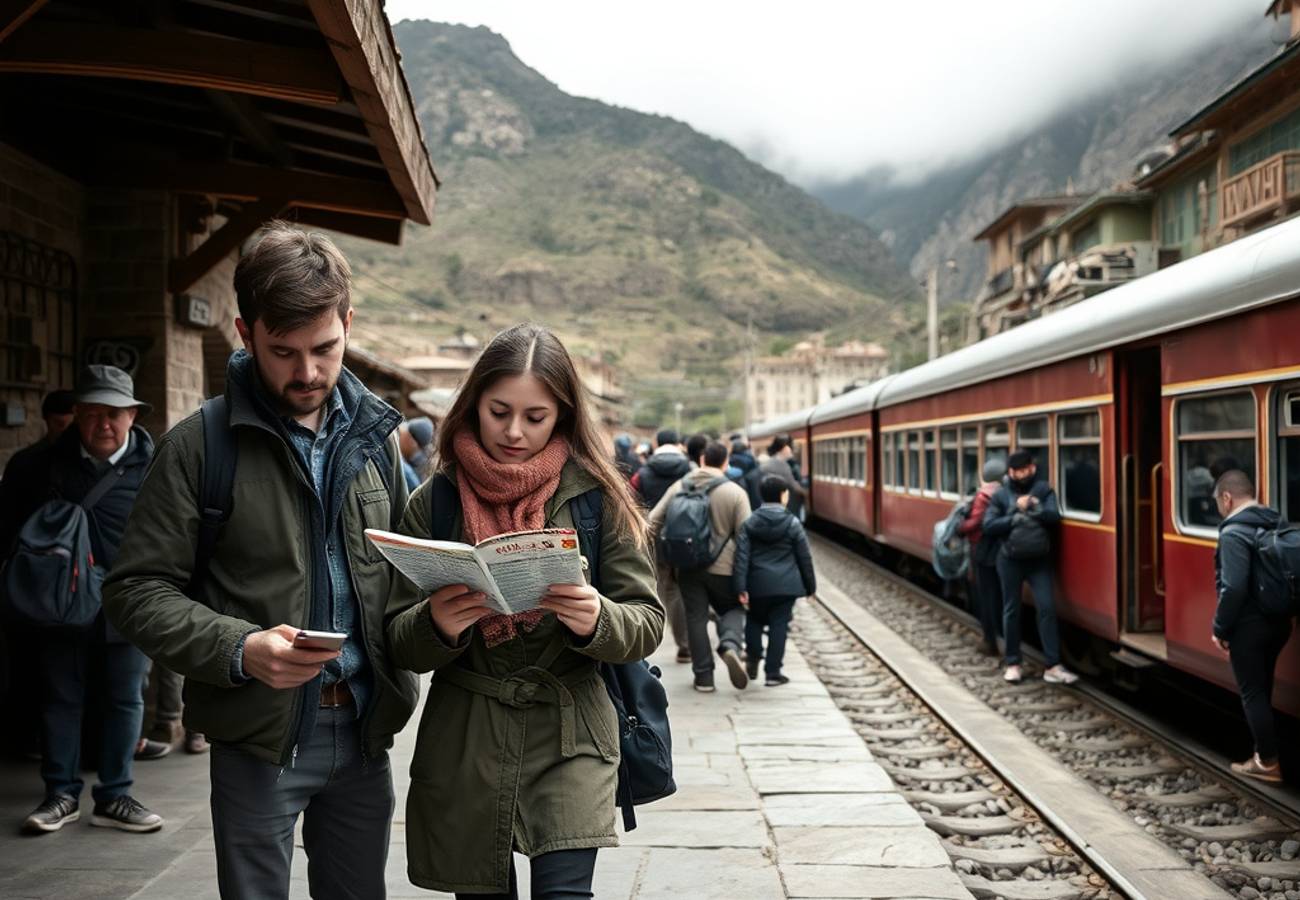
Image generated by AI
[Cusco, Peru — July 30, 2026] — Landing at Alejandro Velasco Astete International Airport (CUZ) and reaching the iconic ruins of Machu Picchu sounds like a simple map exercise, but altitude, roadworks, and strict train schedules are catching travelers off guard. A journey that can take as little as 3.5 hours in pure travel time often demands 6 to 8 hours in reality, forcing many to rethink same-day transit attempts.
The journey from Cusco to Machu Picchu is a multi-stage logistical challenge that tests even seasoned travelers. Alejandro Velasco Astete International Airport sits on the edge of Cusco city at about 3,300 meters above sea level. As the main air gateway for visitors heading to Machu Picchu and the Sacred Valley, it handles a constant flow of domestic and international flights. However, there is no direct train or bus from the airport to the citadel. Every standard route involves a road segment to the Sacred Valley, usually to Ollantaytambo, and then a train to Aguas Calientes, also called Machu Picchu Pueblo. From there, a shuttle bus climbs the switchback road to the Machu Picchu entrance.
In pure travel time, the classic route can take as little as 3.5 hours: a taxi or shuttle from Cusco airport to Ollantaytambo (roughly 1.5 to 2.5 hours depending on traffic and roadworks), a train from Ollantaytambo to Aguas Calientes (about 1.5 hours on PeruRail or Inca Rail), and finally a shuttle bus up the mountain (25 to 35 minutes). Yet, this theoretical minimum does not account for ticket checks, check-in cutoffs, baggage handling, and inevitable delays. In practice, most travelers should budget at least 6 to 8 hours from flight landing to Aguas Calientes, and significantly more if they intend to actually enter Machu Picchu the same day.
Because the site has timed entry tickets and strict capacity controls, you must plan your arrival in Aguas Calientes around your Machu Picchu ticket time, not the other way around. As of mid-2026, entrance tickets are sold in specific circuits and slots, and last-minute availability is unpredictable. Many travelers now build in at least one night in Aguas Calientes or the Sacred Valley before their visit so they are not at the mercy of a delayed flight or a blocked road between Cusco and Ollantaytambo.
Alejandro Velasco Astete Airport to Ollantaytambo: Road Conditions and Fares
The first logistical hurdle after clearing baggage claim is reaching the Sacred Valley. Most visitors head to Ollantaytambo, where the primary train stations for Machu Picchu services are located. The drive covers about 60 to 65 kilometers. Under clear road conditions, a private car can complete the trip in roughly 1 hour and 40 minutes. However, current reports from transfer operators indicate that 2 hours is typical, and 2.5 to 3 hours is not unusual when roadworks, landslides, or evening traffic occur.
A private taxi or prebooked transfer is the most straightforward option. In 2026, travelers report paying between 150 and 200 soles (about 40 to 55 US dollars) when hailing a cab at the airport. Prebooking a private van online with English-speaking drivers and door-to-door service costs around 70 to 80 US dollars each way. For instance, a couple arriving on a domestic afternoon flight in March 2026 paid 150 soles for a direct ride and arrived in just under two hours. Conversely, a group landing in the early evening during roadworks experienced a three-hour journey and received airport taxi quotes of 65 to 80 US dollars. Private transfers can usually be scheduled from early morning until late night, and are the most realistic option if your flight lands after about 3 pm and you still hope to catch an evening train.
Budget travelers can utilize colectivos, or shared vans, from Cusco to Ollantaytambo. These depart from specific streets or small terminals in the city, requiring a preliminary city taxi from the airport. Recent fares hover around 15 soles per person. While cheaper, shared vans are less predictable; it can take 20 to 40 minutes for a vehicle to fill and depart, and comfort standards vary widely. If you are carrying large luggage or arriving after dark, a direct private transfer is usually worth the extra cost for safety, space, and timing.
Travelers must build a realistic buffer between flight arrival and train departure. If a flight is scheduled to land at 10:00, aiming for a 15:30 or 16:00 train from Ollantaytambo is reasonable. Booking a 13:00 train leaves almost no margin for delayed baggage, taxi negotiations, or slow traffic.
PeruRail and Inca Rail Schedules from Ollantaytambo to Aguas Calientes
From Ollantaytambo, passengers board trains operated by either PeruRail or Inca Rail to reach Aguas Calientes. Both companies operate multiple daily departures, especially during the peak May to September season. According to PeruRail’s May to December 2026 timetable, an Expedition service leaves Ollantaytambo at 05:05 and arrives in Machu Picchu Pueblo around 06:37. Inca Rail quotes a similar journey duration of about 1.5 hours.
Both operators offer several service classes. PeruRail’s Expedition provides standard seating with large windows and basic snacks for purchase, while the Vistadome and Vistadome Observatory feature larger panoramic windows and additional onboard entertainment at a premium. Inca Rail offers categories like The Voyager and The 360, varying in panoramic glass and service levels. Recent traveler comments suggest that Inca Rail’s standard cars can feel a bit tighter in legroom than PeruRail’s equivalent, while others appreciate Inca Rail’s large side windows. Fares fluctuate based on season and departure time, but one-way tickets for standard classes typically range from 60 to 120 US dollars per person during high season, with premium services costing more.
Luggage limits frequently surprise travelers. Both operators restrict passengers to one small bag—roughly 5 to 8 kilograms—plus a personal item. One major Peruvian hotel group reminds guests heading by train that large suitcases must be stored in Cusco or the Sacred Valley, as narrow platforms and limited luggage racks cannot accommodate them. Enforcement can vary, but a large hard-shell suitcase will likely be turned away. The best approach is to leave large bags at a Cusco or Sacred Valley hotel and travel with a small backpack or soft overnight duffel. If you plan to fly out soon after returning from Aguas Calientes, speak with your Cusco hotel in advance; many will store luggage for returning guests at no charge or for a modest fee.
Train operators typically request passengers to be at the station at least 30 minutes before departure to allow for ticket checks and boarding. In busy months the station area can be congested, especially given temporary traffic modifications announced for access roads into Ollantaytambo. In April 2026, PeruRail advised that alternative access routes and adjusted schedules would be in place for several months, which means transfer times from the highway into the station can stretch unexpectedly. Travelers should aim to arrive at the station at least 45 minutes before their train to account for queues, road detours, or a slow line at the ticket office.
Aguas Calientes to Machu Picchu: Shuttle Buses and Final Timing
The train arrives in Aguas Calientes, a compact town squeezed along the river valley below the citadel. From here, a separate shuttle bus navigates the steep, zigzag road to the Machu Picchu entrance. These green buses, operated under a concession, run from early morning until late afternoon, generally aligning with the site's operating hours. The ride itself takes roughly 25 to 35 minutes, depending on traffic and road conditions.
As of mid-2026, bus tickets are commonly purchased at a small ticket office in Aguas Calientes. Travelers should factor in potential queues for these buses, especially during peak morning hours when everyone is trying to reach the citadel for early entry slots. Having exact change and your passport ready can speed up the process. Because the buses run continuously to match the site's hours, the wait is usually manageable, but early morning departures see the highest demand as travelers rush to meet their timed entry circuits.
Impact on Travel Itineraries and Logistics
The cumulative effect of these transit segments creates a very narrow margin for error. A delayed flight into Cusco, an unexpected roadblock between the city and Ollantaytambo, or a missed train connection can quickly cascade into a missed entry slot at Machu Picchu. Because timed tickets are strictly enforced and capacity is heavily controlled, a single delay can result in losing access to the site entirely for that day. This logistical reality is pushing more tour operators and independent travelers to abandon same-day airport-to-citadel attempts in favor of building overnight stays into their itineraries. The cost of a missed connection goes beyond time; it often means forfeiting non-refundable train tickets and paying premium rates for last-minute alternative arrangements.
Why This Matters: Real-World Travel Experience
For the traveler, this means a same-day dash from Cusco Airport to Machu Picchu is a high-stakes gamble. From a logistical standpoint, arriving at an elevation of 3,300 meters and immediately embarking on a 6 to 8 hour multi-modal transit is physically demanding and highly susceptible to disruption. Anyone planning this route must secure timed Machu Picchu tickets well in advance, book train tickets with a wide buffer from their flight arrival time, and arrange private transfers to minimize delays. Assuming you can wing it upon arrival is the fastest way to forfeit an expensive and highly anticipated trip to one of the world's most visited archaeological sites. Planning an overnight stop in the Sacred Valley or Aguas Calientes not only reduces stress but allows the body to acclimate to the altitude, drastically improving the overall experience.
[Plan your transfers and train tickets months ahead, or risk watching your Machu Picchu entry slot vanish from the platform in Ollantaytambo.]
Related Travel Guides
Disclaimer
This article is for informational and educational purposes only. It does not constitute legal, financial, or professional advice. While we strive to provide accurate and up-to-date information, travel policies, regulations, and conditions change rapidly. Always verify information with official sources before making travel decisions. Nomad Lawyer makes no representations about the accuracy, reliability, completeness, or suitability of the information provided. Readers should consult qualified professionals for advice specific to their circumstances. The views expressed in this article are those of the author and do not necessarily reflect the views of Nomad Lawyer.
Raushan Kumar
Founder & Lead Developer
Full-stack developer with 11+ years of experience and a passionate traveller. Raushan built Nomad Lawyer from the ground up with a vision to create the best travel and law experience on the web.
Learn more about our team →