
Valencia Declares War on Overtourism: City Violently Caps Tourist Flats with Massive License Freeze
Joining a massive, continent-wide European rebellion against short-term rentals, Valencia has officially executed a total freeze on tourist flat licenses, severely limiting heavy Airbnb saturation.

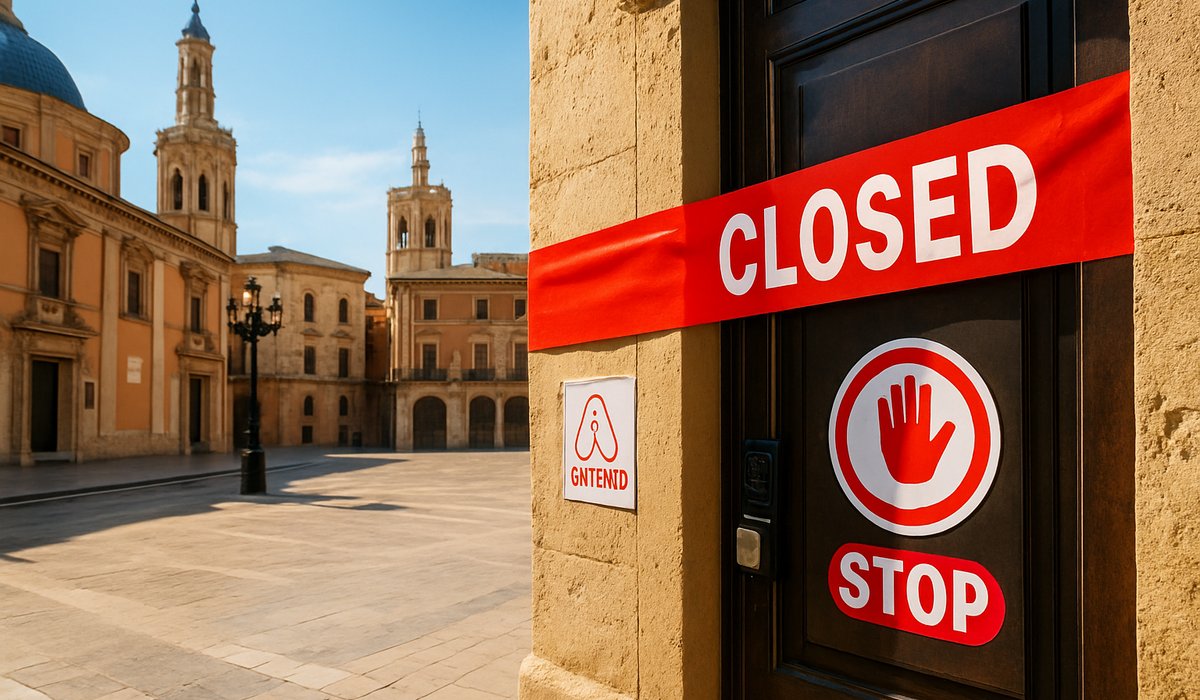
Image generated by AI
Spain's Coastal Gem Fights Back Against the Digital Landlord
Executing a deeply aggressive legislative maneuver designed to reclaim the city from the grip of digital nomadism and unregulated weekend partying, Valencia has officially joined the fiercely mounting European rebellion against overtourism by slamming a total, absolute freeze on new tourist flat licenses. Acting in direct, unified solidarity with massive capitals like Barcelona, Amsterdam, Paris, and Lisbon, the Valencian government has unilaterally decreed that the unchecked explosion of short-term rentals (like Airbnb and VRBO) is mathematically destroying the local housing market and violently displacing actual Spanish taxpayers.
The era of unrestricted, hyper-cheap European city breaks is officially crashing to a halt. As global tourism volumes explode past pre-pandemic levels in 2026, the sheer influx of digital capital into local residential neighborhoods has generated a terrifying phenomenon economists refer to as "touristflation." Investors massively buy up historic Valencian apartments, evict the local Spanish renters, and flip the units into highly lucrative, nightly holiday flats. The subsequent housing shortage has triggered massive municipal protests, forcing the government to deploy brutal legal enforcement and severe usage restrictions.
The Continental Alliance Against Overtourism
Valencia is not acting in isolation; it is deeply integrating into a wider European regulatory shockwave.
Across the continent, iconic destinations are pulling the emergency brake. Barcelona recently announced plans to formally eradicate all 10,000+ of its legal tourist flat licenses by the end of 2028. Amsterdam heavily physically limits the maximum number of nights a property can be rented out, while Florence has absolutely banned the creation of any new short-term units within its historic UNESCO perimeter. The message is completely uncompromising: Europe demands tourism, but it refuses to physically sacrifice its residential soul to accommodate it.
The Legal Reality of European Short-Term Rentals
| European Entity | Legislative Weapon Deployed | The Operational Reality for Tourists |
|---|---|---|
| Valencia / Barcelona | Absolute License Caps / Eradication | Radical reduction in total booking inventory |
| Paris / Amsterdam | Strict Annual Usage Limits | Forces owners to rent to locals for 9 months of the year |
| Florence / Lisbon | Zonal Freezes | Zero new tourist flats permitted in historic downtowns |
What Guests Get
- Exposing the dark side of cheap travel — understanding that an incredibly cheap $40 Airbnb in Spain often effectively guarantees that a local Spanish family can no longer afford to live in their own city.
- Regulatory enforcement awareness — realizing that European police forces are now actively raiding buildings to shut down illegal, unlicensed tourist flats.
- The future of accommodation — grasping that to legally survive, the global travel industry is being violently forced back toward traditional hotel infrastructure rather than decentralized residential housing.
What This Means for Travelers
If you are planning to book an Airbnb or VRBO in Europe in 2026: You must proceed with intense caution. Do not blindly book a remarkably cheap residential apartment without verifying its legal status. In cities like Valencia, Barcelona, or Paris, the listing must feature an official municipal license number in the description. If you book an illegal, unlicensed flat, the municipal police can (and will) physically shut off the water to the unit or evict you mid-vacation, and your travel insurance will absolutely refuse to reimburse you for participating in an illegal sub-let.
Pivot Back to Traditional Hotels: The absolute safest, most guaranteed way to secure accommodation in Europe moving forward is to revert specifically to highly regulated, traditional hotels or legally zoned "Aparthotels." While frequently slightly more expensive than a private flat, hotels are entirely immune to municipal eviction sweeps and guarantee absolute legal stability.
FAQ: Navigating European Tourist Flat Restrictions
Why does Valencia hate tourists? Valencia absolutely relies on tourism fundamentally; they do not hate tourists. They fundamentally despise the unregulated investors who purchase entire apartment blocks solely to rent to tourists, which completely destroys the residential housing market and drives up basic rent for local workers.
Will Airbnb eventually be banned everywhere in Europe? Total bans are unlikely, but strict regulation is the new permanent reality. The end-game for capitals like Paris and Barcelona is to heavily restrict short-term rentals strictly to primary homeowners casually renting out a spare bedroom, completely destroying the multi-unit commercial "ghost hotel" model.
What happens if I rent a banned apartment? If municipal inspectors catch the landlord operating an unlicensed flat, the landlord receives a massive fine (frequently exceeding €60,000). While the tourist is rarely fined directly, you will be forcefully evicted from the premises immediately with zero alternative accommodation provided by the police.
Related Travel Guides
The Fall of Airbnb: Why European Hotels are the Safest Bet
Understanding 'Touristflation': How Local Prices Jump in Summer
Responsible Travel in 2026: How to Support Local European Economies
Disclaimer
This article is for informational and educational purposes only. It does not constitute legal, financial, or professional advice. While we strive to provide accurate and up-to-date information, travel policies, regulations, and conditions change rapidly. Always verify information with official sources before making travel decisions. Nomad Lawyer makes no representations about the accuracy, reliability, completeness, or suitability of the information provided. Readers should consult qualified professionals for advice specific to their circumstances. The views expressed in this article are those of the author and do not necessarily reflect the views of Nomad Lawyer.
Raushan Kumar
Founder & Lead Developer
Full-stack developer with 11+ years of experience and a passionate traveller. Raushan built Nomad Lawyer from the ground up with a vision to create the best travel and law experience on the web.
Learn more about our team →