
Curaçao Teams with Aruba and More Dutch Caribbean Territories in Witnessing Disproportionate Travel Trends During the First Eight Months of 2026
Curaçao Teams with Aruba and More Dutch Caribbean Territories in Witnessing Disproportionate Travel Trends During the First Eight Months of 2026

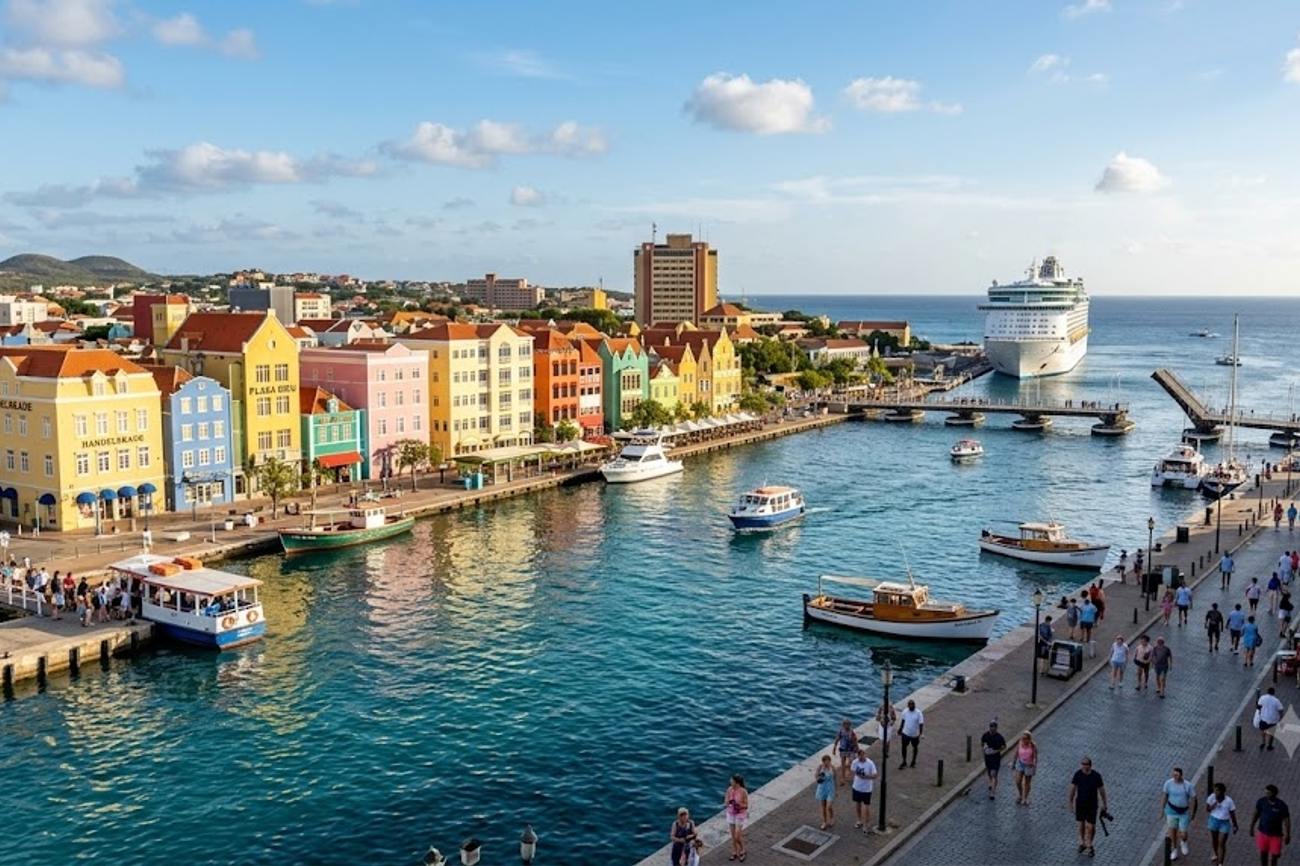
Image generated by AI
437,086 stayover visitors entered Curaçao during the first six months of 2026, marking the first time in the island's history that arrivals exceeded the 400,000 threshold within a single half-year window. This 9 per cent increase over the 399,967 visitors recorded in the same period of 2025 signals a fundamental shift in the Southern Caribbean's economic engine, moving away from erratic recovery and toward a structured, high-growth expansion phase.
The Structural Evolution of the Dutch Caribbean
The tourism architecture of the Dutch Caribbean—comprising Aruba, Curaçao, and Sint Maarten, alongside the BES islands of Bonaire, Sint Eustatius, and Saba—has historically operated on divergent models. Aruba established itself as a high-volume resort hub for North American travelers, while Curaçao balanced its economy between maritime logistics, European tourism, and international finance. Bonaire carved out a specialized niche in marine conservation and eco-tourism.
However, the period between 2024 and 2026 has seen a convergence of these strategies. National development plans across Willemstad, Oranjestad, and Philipsburg have shifted from pursuing raw volume to optimizing "high-yield" tourism. By prioritizing average daily spend and extending the length of stay, regional policymakers are attempting to decouple economic growth from environmental degradation. This regulatory pivot is designed to prevent the inflation of local housing costs and the collapse of marine ecosystems that typically accompany unmanaged mass tourism.
To support this transition, the region has aggressively expanded its aviation connectivity. By incentivizing carriers to establish direct links with Latin American hubs such as Bogotá, São Paulo, Panama City, and Buenos Aires, the [Aruba Tourism Authority (A.T.A.)](https://www.aruba tourism.com) and the Curaçao Tourist Board (CTB) have successfully diluted their dependence on the United States and the Netherlands. This diversification creates a hedge against macroeconomic volatility in any single origin market.
Quantifying the 2026 Growth Surge
The data from 2026 reveals a region operating at peak capacity, with Aruba and Curaçao acting as the primary growth drivers. Aruba continues to lead in absolute volume, while Curaçao is demonstrating the fastest rate of structural growth in stayover metrics.
In Aruba, the momentum established in 2024—with 1,421,616 stayover visitors (+13 per cent)—and 2025—with 1,515,102 stopover tourists (+6.6 per cent)—has carried into 2026. The island saw a massive surge in early 2026, with January recording 136,578 stayover visitors and 1,064,432 total visitor nights. This peaked in March 2026, which set an all-time monthly record of 156,773 visitors.
Curaçao's growth is characterized by an increase in the "depth" of the visit. In June 2026, while stayover arrivals grew by 9 per cent to 62,867 (up from 57,413 in June 2025), visitor nights surged by 12 per cent to 497,426. This indicates that visitors are staying longer, effectively increasing the revenue per capita without requiring a proportional increase in airport throughput.
Dutch Caribbean Stayover Performance Metrics (2026)
| Period/Month | Stayover Arrivals | YoY Growth | Total Visitor Nights | Avg. Length of Stay |
|---|---|---|---|---|
| Curaçao (Jan 2026) | 79,387 | +8% | ~746,238 | 9.4 nights |
| Curaçao (Jun 2026) | 62,867 | +9% | 497,426 | 7.9 nights |
| Curaçao (H1 2026 Total) | 437,086 | +9% | ~3,802,000 | 8.7 nights |
| Aruba (Jan 2026) | 136,578 | N/A | 1,064,432 | N/A |
| Aruba (Mar 2026) | 156,773 | Record High | N/A | N/A |
| Aruba (May 2026) | 133,680 | N/A | N/A | N/A |
Expert Analysis: The Shift to High-Yield Resilience
For the modern traveler and the regional investor, the data reveals a critical transition: the Dutch Caribbean is no longer competing on price, but on value. The increase in the average length of stay in Curaçao—reaching 9.4 nights in January 2026—is a direct result of the "high-value, low-impact" policy implemented between 2024 and 2026.
The pricing pressure this creates is twofold. First, as the region pivots toward boutique luxury and green-certified developments, the "entry-level" cost of a Caribbean vacation in these territories is likely to rise. The move away from mass-market resort models means that budget-conscious travelers may find fewer options, while high-net-worth individuals will find a more curated, sustainable experience.
Second, the aggressive expansion into Latin American markets (Bogotá, São Paulo, Buenos Aires) changes the seasonal dynamics of the region. Historically, these islands faced a "shoulder season" dip. By diversifying source markets, the International Air Transport Association (IATA) likely sees more stabilized load factors year-round. For travelers, this means that while peak winter demand (as seen in Aruba's March 2026 record) remains intense, the "off-peak" months like May (133,680 arrivals in Aruba) are becoming more robust, potentially leading to higher baseline prices throughout the year.
The most significant risk moving forward is infrastructure saturation. When Aruba records over 1.5 million visitors annually, the strain on local utilities and transport becomes a bottleneck. The shift toward "spatial distribution"—encouraging visitors to move beyond the main tourist strips—is not just an environmental choice, but a logistical necessity to prevent systemic failure of island infrastructure.
Key Takeaways
- Historic Milestones: Curaçao surpassed 400,000 stayover visitors in the first half of 2026, a 9 per cent increase over 2025.
- Aruba's Volume Lead: Aruba maintains global dominance in tourism intensity, peaking in March 2026 with 156,773 stayover visitors.
- Market Diversification: A strategic pivot toward South American hubs (São Paulo, Bogotá) has reduced reliance on US and Dutch markets.
- Value over Volume: Regional policy has shifted toward increasing "visitor nights" (e.g., Curaçao's 12 per cent surge in June 2026) rather than just arrival counts.
- Sustainability Mandates: New regulatory frameworks (2024-2026) prioritize boutique luxury and green building to protect marine ecosystems.
FAQ: Dutch Caribbean Travel 2026
Is it more expensive to visit Aruba and Curaçao in 2026? Yes, likely. The shift toward "high-yield" tourism and boutique luxury developments means a move away from mass-market budget options in favor of higher-spending, low-impact visitors.
When is the best time to avoid crowds in Aruba? Avoid March, which hit an all-time monthly high of 156,773 visitors in 2026. May remains a steadier option, though it still maintains high momentum with over 133,000 arrivals.
How has flight access changed for South Americans? There are now expanded direct connections from major hubs including Bogotá, São Paulo, Panama City, and Buenos Aires, making the islands more accessible than in previous decades.
What is the average length of stay in Curaçao? As of 2026, the average stay is approximately 8.7 nights for the first half of the year, peaking at 9.4 nights in January.
The Southern Caribbean is no longer just a destination for North American winter escapes; it is becoming a diversified, high-value economic powerhouse.
Tags: Aruba Tourism Authority, Curaçao Tourist Board, Dutch Caribbean 2026, Southern Caribbean Aviation, High-Yield Tourism Policy, Aruba Stayover Statistics
Related Travel Guides
- Johannesburg Overtakes Nairobi and Others as the Only Major African Airport to Record British Tourist Arrival Growth for Eight Consecutive Months in 2026
- Edinburgh Steps Up with Venice and More Places to Counter Nearly 7% Europe Tourism Decline in July with Discounts and Incentives
- United States Travel Boost: Visa Waiver Program Expands Access Through ESTA Approval
Disclaimer
This article is for informational and educational purposes only. It does not constitute legal, financial, or professional advice. While we strive to provide accurate and up-to-date information, travel policies, regulations, and conditions change rapidly. Always verify information with official sources before making travel decisions. Nomad Lawyer makes no representations about the accuracy, reliability, completeness, or suitability of the information provided. Readers should consult qualified professionals for advice specific to their circumstances. The views expressed in this article are those of the author and do not necessarily reflect the views of Nomad Lawyer.
Kunal K Choudhary
Co-Founder & Contributor
A passionate traveller and tech enthusiast. Kunal contributes to the vision and growth of Nomad Lawyer, bringing fresh perspectives and driving the community forward.
Learn more about our team →