
Cruise Guests Watch Dramatic Gulf of Mexico Rescue Operation
Carnival Legend passengers witnessed a dramatic midnight rescue as crew saved a stranded sailor and his cat from a disabled sailboat in the Gulf of Mexico on April 14, 2026.

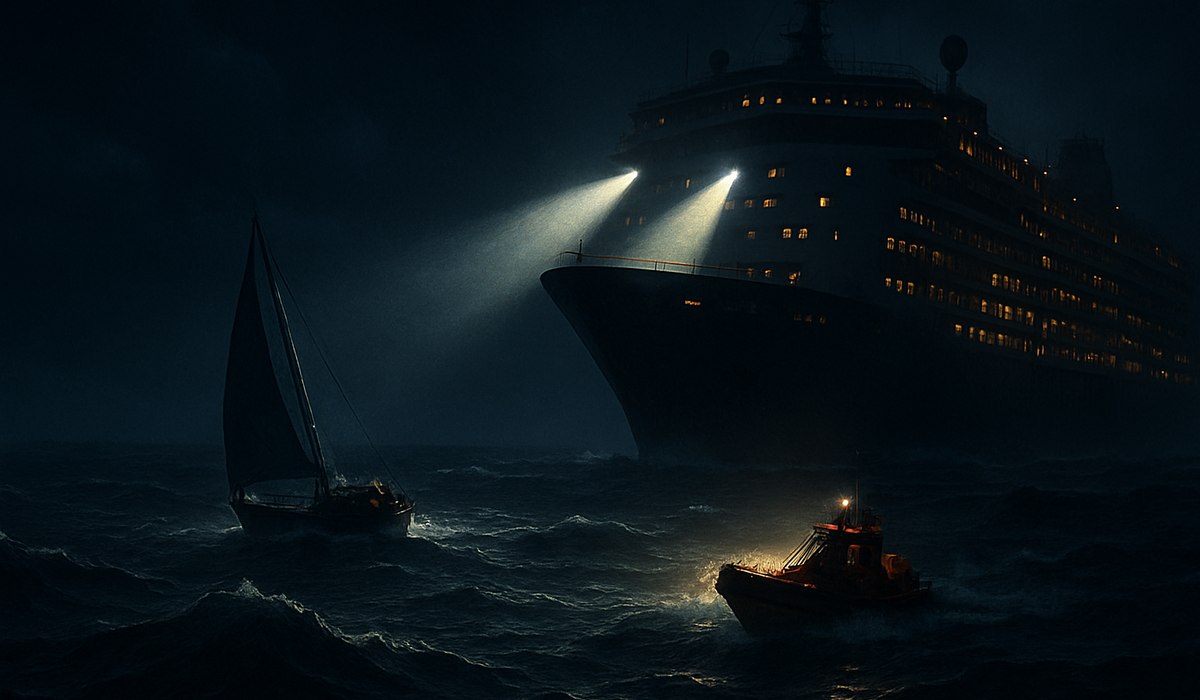
Image generated by AI
Cruise Guests Watch Unforgettable Rescue at Sea
Carnival Legend passengers witnessed an extraordinary maritime rescue when the cruise ship diverted to save a stranded sailor and his cat from a disabled sailboat in the Gulf of Mexico on April 14, 2026. The incident unfolded during a 10-day voyage from Galveston, Texas, transforming an ordinary evening into a memorable humanitarian moment. The sailor and his black cat, named Dahlia, had drifted without propulsion for approximately four days before emergency flares caught the attention of the cruise ship's bridge team near the Mexican coast.
Cruise Itinerary at a Glance
| Itinerary Detail | Information |
|---|---|
| Ship Name | Carnival Legend |
| Cruise Line | Carnival Cruise Line |
| Departure Port | Galveston, Texas |
| Voyage Length | 10 days |
| Primary Destination | Cozumel, Mexico |
| Incident Date | April 14, 2026 |
| Rescued Passengers | 1 sailor, 1 cat |
| Rescue Method | Ship's rescue boat |
| Visibility Condition | Evening/nighttime |
| Distance from Coast | Gulf of Mexico waters near Mexican coast |
Emergency Flares Turn Quiet Night at Sea Into High Drama
The dramatic rescue began when the Carnival Legend's crew spotted distress flares emanating from a struggling sailboat adrift in the Gulf of Mexico. The vessel had suffered mechanical failure, leaving its solo sailor without propulsion or navigation capability. International maritime law requires commercial ships to respond to distress signals, and the Carnival Legend immediately altered course to investigate.
Passengers lining the open decks witnessed a surreal scene as the cruise ship's powerful searchlights swept across the dark waters. The glow of emergency flares created an eerie atmosphere as word spread throughout the vessel that a rescue operation was underway. Social media accounts from cruise guests describe the moment as initially confusing but quickly clarifying as crew announcements explained the situation. The contrast between the massive cruise ship and the tiny disabled sailboat created an unforgettable visual experience for hundreds of onlookers gathered along railings and balconies.
Crew Launch Rescue Boat to Reach Disabled Sailboat
Launching a rescue operation from a cruise ship requires precision, coordination, and expertise, particularly in nighttime conditions. The Carnival Legend's crew lowered a small rescue boat from the vessel's side as passengers captured the operation on video and photographs. Timing the approach to the disabled sailboat proved crucial, as both vessels moved independently through the ocean swell.
Rescue personnel demonstrated remarkable skill in maneuvering the small craft alongside the struggling sailboat despite challenging sea conditions. The operation showcased how modern cruise ships maintain emergency response capabilities rivaling coast guard standards. Once the rescue boat secured position, crew members assisted the sailor aboard before carefully retrieving Dahlia, his feline companion. The entire operation unfolded under the watchful eyes of hundreds of cruise guests who had gathered topside to witness the extraordinary event.
Sailor and Cat Safe Aboard Cruise Ship
The moment the sailor stepped onto the Carnival Legend's deck holding his cat drew cheers and applause from assembled passengers. Both the mariner and Dahlia reached safety without injury, concluding a harrowing four-day ordeal adrift in the Gulf of Mexico. The sailor's quick thinking in using emergency flares proved instrumental in attracting the cruise ship's attention during fading daylight hours.
Coast Guard and maritime industry records indicate that commercial ships like Carnival Legend vessels frequently respond to distress calls in heavily trafficked cruising regions. The Gulf of Mexico sees regular vessel traffic, yet solo sailors remain vulnerable when mechanical failures occur far from established shipping lanes. This rescue exemplifies how cruise ship operations contribute to maritime safety beyond passenger entertainment and hospitality services. The incident highlighted the importance of functional communication equipment and distress signaling devices for sailors operating independently.
Passenger Accounts Capture Rare Maritime Event
Several travelers aboard the Carnival Legend described the rescue as surreal and unforgettable, with social media posts characterizing the scene as a once-in-a-lifetime experience. One couple celebrating their 25th wedding anniversary remained on deck throughout the operation, later describing how the dramatic rescue had become their most memorable cruise moment. The incident transcended typical vacation entertainment, offering passengers genuine human drama and the satisfaction of witnessing successful humanitarian efforts.
Cruise enthusiasts monitor platforms like Cruise Critic for authentic passenger reviews and unusual voyage incidents. Posts regarding the April 2026 rescue operation circulated widely, with travelers sharing video footage and personal accounts of the event. The viral nature of the rescue documentation demonstrated how modern cruise guests immediately document and share extraordinary maritime moments. Travel journalists and cruise industry observers noted that such incidents, while dramatic, underscore the responsibility cruise operators maintain within international maritime regulations. For booking information and vessel details, visit the official Carnival Cruise Line website.
Key Data on Maritime Safety and Cruise Ship Rescues
Solo sailors operating in the Gulf of Mexico face heightened risks during mechanical failures or equipment malfunctions. The four-day drift period illustrated how quickly dangerous situations develop when propulsion systems fail and communication equipment becomes compromised. Cruise ships regularly maintain rescue capabilities and trained personnel specifically for such emergencies. The Carnival Legend incident represents one of numerous documented cases annually where commercial vessels assist disabled sailboats and smaller craft. Maritime authorities emphasize that proper safety equipment, including functional flares and communication devices, remains critical for independent sailors. Recent years have seen increasing documentation of cruise ship-assisted rescues in Caribbean and Gulf of Mexico waters, where vessel traffic concentration creates both risk and opportunity for assistance.
What This Means for Travelers
The April 2026 rescue operation aboard the Carnival Legend offers several important considerations for cruise passengers and independent sailors:
-
Cruise ships serve dual purposes as humanitarian vessels operating within strict maritime protocols requiring assistance to vessels in distress, regardless of passenger convenience.
-
Modern cruise experiences may include unexpected dramatic moments that transcend scheduled entertainment, creating memorable experiences that define voyages for participating guests.
-
Safety equipment matters profoundly for anyone operating independent watercraft; proper flares and communication devices directly correlate with rescue success rates.
-
Cruise lines maintain professional rescue capabilities with trained personnel and equipped boats ready for emergency response operations during regular sailing operations.
-
Documentation practices by passengers now capture maritime incidents in real-time, creating viral records of humanitarian efforts and maritime history.
FAQ: Cruise Guests Watch and Maritime Rescue Operations
What should cruise passengers do if they observe maritime distress during a voyage?
Alert crew members immediately through cabin phones or notify officers directly. Cruise ships monitor distress frequencies continuously, and passenger reports may provide additional confirmation of incidents. Follow crew instructions regarding deck restrictions during active rescue operations.
How do cruise ships detect distress signals from smaller vessels?
Modern cruise ships maintain 24/7 bridge operations with navigation systems capable of detecting visual flares, radio distress calls, and electronic locator beacons. Radar systems track vessel movements across hundreds of nautical miles, enabling early identification of vessels in potential distress situations.
Can passengers remain on deck during official rescue operations?
Policies vary by cruise line, though most restrict passengers from working areas where rescue boats launch. Many cruise operators now encourage passenger viewing from designated safe locations, recognizing the extraordinary educational value of maritime rescue operations.
What happened to the sailor and cat after reaching the Carnival Legend?
Specific details regarding the sailor's subsequent care and disembarkation remain limited in published reports, though both the mariner and Dahlia were reported safe and uninjured upon reaching the cruise ship.
Related Travel Guides
- Vertical Aerospace Transforms Air Travel: Valo eVTOL Aircraft Achieves Major Flight Milestones
- Cruise Port Dover Celebrates 30 Years as Viking Vela Launches 2026 Season
- Travel Nightmare Unfolds: Over 500 Flights Delayed Across Miami, Delhi, and London, Leaving Thousands of Passengers Stranded Amidst Airport Chaos
Disclaimer
This article is for informational and educational purposes only. It does not constitute legal, financial, or professional advice. While we strive to provide accurate and up-to-date information, travel policies, regulations, and conditions change rapidly. Always verify information with official sources before making travel decisions. Nomad Lawyer makes no representations about the accuracy, reliability, completeness, or suitability of the information provided. Readers should consult qualified professionals for advice specific to their circumstances. The views expressed in this article are those of the author and do not necessarily reflect the views of Nomad Lawyer.
Raushan Kumar
Founder & Lead Developer
Full-stack developer with 11+ years of experience and a passionate traveller. Raushan built Nomad Lawyer from the ground up with a vision to create the best travel and law experience on the web.
Learn more about our team →