
The Pilot Shortage Paradox: Why Cadets Face Airline Hiring Hurdles
Boeing forecasts a demand for 674,000 new pilots, yet low-hour cadets struggle to secure first officer jobs due to aircraft delivery delays.

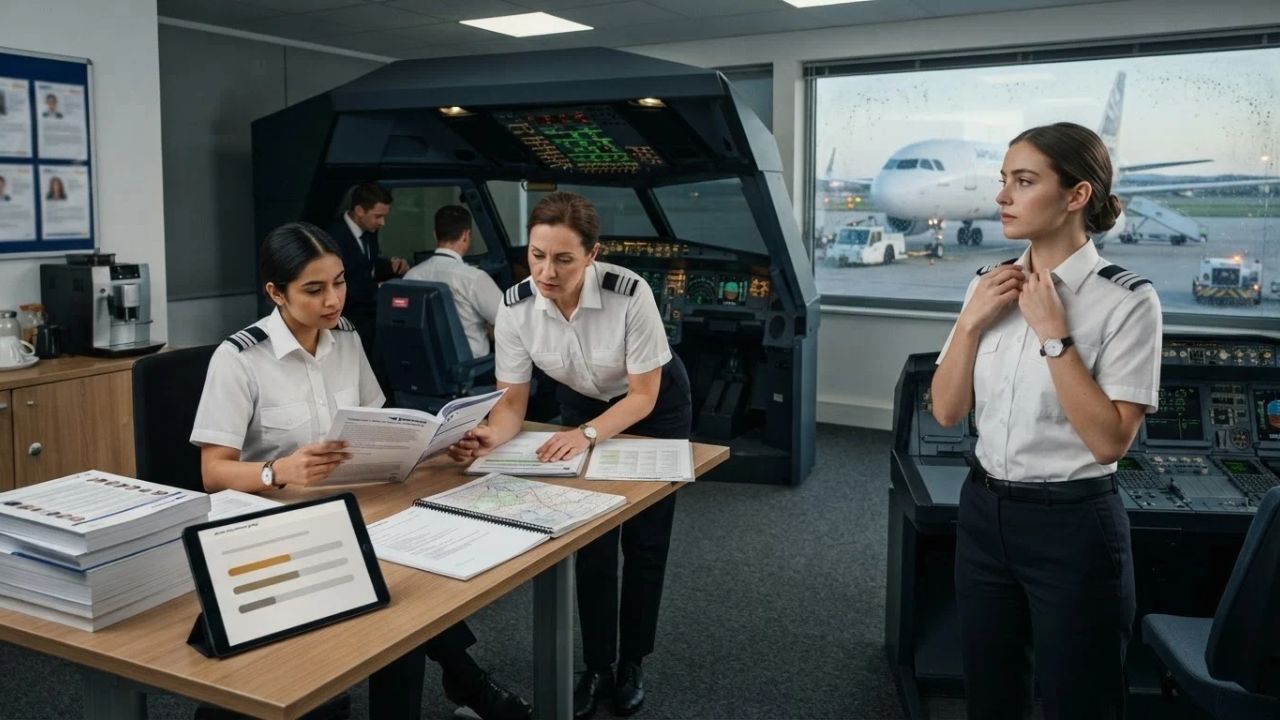
Image generated by AI
Boeing forecasts that commercial aviation will require 674,000 new pilots over the next two decades to support fleet expansions and retirements. Despite this long-term demand, newly qualified Commercial Pilot Licence holders face intense competition as aircraft deliveries run 5,600 units below the pre-pandemic trend, slowing immediate hiring.
The Divergence in Aviation Labor Demand
A significant trend in global commercial aviation is the gap between long-term workforce forecasts and short-term hiring realities. While industry analyses highlight the need for hundreds of thousands of new flight crew members over the coming decades, low-hour candidates often face restricted job markets. This mismatch is driven by supply-chain issues, aircraft delivery delays, and airline preferences for experienced crew members.
Because training a new pilot is time-intensive and operationally complex, airlines prioritize candidates who already hold specific aircraft type ratings or multi-crew experience. This strategy helps operators reduce training costs but creates hurdles for newly qualified flight school graduates.
Supply Chain Constraints and the IATA Outlook
The current pilot hiring environment is shaped by global aircraft supply challenges:
- Delivery Deficit: The International Air Transport Association (IATA) June 2026 outlook indicated that aircraft deliveries were running approximately 5,600 units below the pre-pandemic trend.
- Order Backlog: The global order backlog reached 18,100 aircraft in May 2026.
- Operational Impact: When manufacturers delay aircraft deliveries, airlines must postpone their fleet expansion plans, which leads to delayed training programs and pilot intakes.
- Fleet Preferences: Demand is concentrated around popular narrowbody types like the Airbus A320 family and the Boeing 737. However, the most severe staffing pressure is in the widebody market, where airlines operating the Boeing 787 Dreamliner and Boeing 777 require highly experienced long-haul captains.
Julius Norkunas, CEO of aviation recruitment platform AviationCV, noted that flight academies continue to produce cadets, but airline hiring rates vary significantly by region and fleet capacity.
The Role of Advanced Multi-Crew Training
For commercial pilots, holding a basic Commercial Pilot Licence (CPL) is no longer a guarantee of employment:
- Beyond the Licence: Airlines assess technical flying skills alongside multi-crew competence, decision-making, and communication.
- APS MCC Standard: Aspiring First Officers are pursuing the Airline Pilot Standards Multi-Crew Cooperation (APS MCC) course. This advanced training helps prepare candidates for the operational requirements of a multi-pilot flight deck.
- Airline Preferences: Carriers like Ryanair give preference to applicants who have completed APS MCC training. Similarly, British Airways has incorporated the qualification into its Speedbird Self-Sponsored Pathway.
- Selection Criteria: Stian Skaar, Head of Training at BAA Training, emphasized that carriers look for candidates with multi-crew decision-making skills and situational awareness during simulator and behavioral assessments.
These factors make advanced pre-hiring preparation essential for candidates entering the commercial aviation job market.
Aviation Fleet and Training Indicators
The table below breaks down the key fleet backlogs, long-term pilot forecasts, and airline training standards shaping the sector:
| Industry Indicator | Metric or Standard | Operational Impact | Sponsoring Organization |
|---|---|---|---|
| Long-Term Pilot Demand | 674,000 new pilots | Projected requirement over 20 years | Boeing Commercial Forecast |
| Delivery Deficit | ~5,600 units below trend | Delayed fleet expansion and pilot intakes | IATA June 2026 Outlook |
| Global Backlog | 18,100 aircraft in queue | Slowed transition to newer fleets | May 2026 Industry Report |
| Advanced Training | APS MCC Certificate | Preferred standard for cadet selection | Ryanair & British Airways |
These statistics outline the structural challenges that cadets must navigate when transitioning from flight school to commercial airline operations.
Environmental Benefits and Regional Training Footprints
For the industry, the real impact of using advanced simulator training like the APS MCC is the reduction in carbon emissions. Simulating flight scenarios in modern, motion-based simulators allows cadets to gain multi-crew experience without burning jet fuel, helping reduce the environmental footprint of airline training programs.
Additionally, regional pilot training facilities reduce the need for cadets to travel long distances for certification, keeping education spending within local economies. Optimizing flight crew planning also helps airlines minimize empty repositioning flights, supporting international conservation goals.
For example, you can explore the changing dynamics of Bilateral Corridor: Vietjet Launches Direct Flights Connecting Colombo and Ho Chi Minh City to see how regional aviation networks are expanding. For budget-conscious travelers, aligning slow city travel with municipal transit options mirrors similar regional initiatives, such as the Free Admission at Select US State Parks programs. This trend is similar to the tourism growth seen in other destinations, as detailed in our guide on how Utica, New York Emerges as an Affordable Northeast Tourism Hub.
Visitor and Cadet Insider Tips: Accessing the Cockpit
If you are a flight school graduate preparing for airline assessments, keep these practical tips in mind:
- Complete the APS MCC Qualification: If applying to European carriers like Ryanair or British Airways, obtain the APS MCC certificate to improve your selection chances.
- Track Fleet Delivery Backlogs: Research target airlines' order books and delivery schedules to identify which carriers are receiving new aircraft and may need to recruit.
- Prepare for Behavioral Assessments: Technical flying is only one part of the check; focus on crew resource management (CRM) and communication skills.
- Consider Regional Turboprop Carriers: Regional airlines operating turboprops can offer low-hour cadets a way to build flight hours and multi-crew experience.
- Visit Training Hubs Locally: If training at European centers like BAA Training in Vilnius or regional centers in Asia, explore local cultural sites and independent businesses during your off-hours.
Long-Term Outlook for Global Pilot Recruitment
The long-term outlook for global pilot recruitment is focused on the development of cadet sponsorship programs and the integration of automated crew planning tools. As airlines continue to expand their fleets, resolving supply-chain bottlenecks and updating training pipelines will remain key to meeting future workforce demands.
By developing targeted training pathways, the aviation sector aims to build a reliable and sustainable pipeline of professional flight crews.
FAQ
Why is there a pilot shortage paradox?
The paradox exists because airlines forecast a long-term demand for 674,000 pilots, yet newly licensed cadets struggle to find jobs due to delayed aircraft deliveries.
What is the aircraft delivery deficit mentioned by IATA?
According to the IATA June 2026 outlook, commercial aircraft deliveries were running approximately 5,600 units below the pre-pandemic trend.
What is the APS MCC and why is it important?
The Airline Pilot Standards Multi-Crew Cooperation (APS MCC) course is an advanced training certificate that Ryanair and other carriers prefer during cadet selection.
Which aircraft types have the highest demand for pilots?
The Airbus A320 and Boeing 737 families see consistent demand, while the widebody market (Boeing 787 and Boeing 777) faces staffing pressure for experienced captains.
Stay updated on the airline recruitment trends and fleet developments shaping global aviation.
Related Travel Guides
Disclaimer
This article is for informational and educational purposes only. It does not constitute legal, financial, or professional advice. While we strive to provide accurate and up-to-date information, travel policies, regulations, and conditions change rapidly. Always verify information with official sources before making travel decisions. Nomad Lawyer makes no representations about the accuracy, reliability, completeness, or suitability of the information provided. Readers should consult qualified professionals for advice specific to their circumstances. The views expressed in this article are those of the author and do not necessarily reflect the views of Nomad Lawyer.
Raushan Kumar
Founder & Lead Developer
Full-stack developer with 11+ years of experience and a passionate traveller. Raushan built Nomad Lawyer from the ground up with a vision to create the best travel and law experience on the web.
Learn more about our team →