
Sri Lanka Revamps Colombo Fort into World Bank-Backed Heritage Tourism Zone
Sri Lanka has unveiled a World Bank-assisted urban redevelopment plan to transform the historic Colombo Fort district into a major heritage tourism zone.

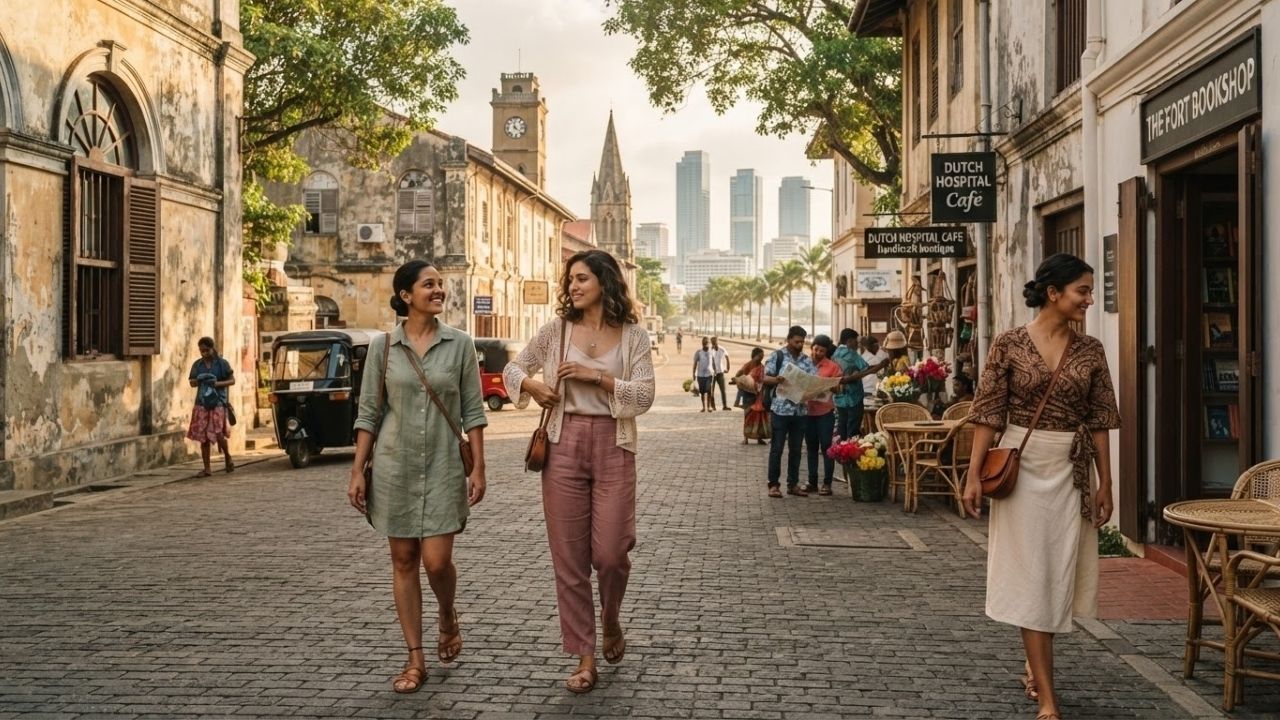
Image generated by AI
Sri Lanka has launched a major urban redevelopment initiative to convert the historic Colombo Fort district into a World Bank-assisted heritage tourism zone. President Anura Kumara Dissanayake reviewed the comprehensive master plan on August 19, 2026, directing authorities to integrate historic preservation with modernized transit, waterway restoration, and Port City connectivity.
World Bank-Assisted Blueprint for Colombo Fort Redevelopment
[COLOMBO, Sri Lanka] — President Anura Kumara Dissanayake reviewed preliminary engineering and urban planning blueprints for the Colombo Fort Tourism Zone. The multi-agency initiative brings together the Urban Development Authority (UDA), the Colombo Municipal Council (CMC), the Road Development Authority (RDA), and the Western Provincial Council to transform the capital's historic financial district into a world-class urban tourist destination.
The project receives financial and technical assistance from the World Bank Group under its broader three-year, $1 billion-plus private-sector development program for Sri Lanka. The redevelopment aims to enhance pedestrian accessibility, preserve centuries-old colonial architecture, and establish direct transit links between the Fort precinct, Port City Colombo, and the Port of Colombo cruise terminal.
Rather than executing cosmetic street repairs, municipal authorities are conducting comprehensive traffic and canal studies. The objective is to establish an integrated heritage circuit that reduces vehicular congestion, restores historic waterways, and encourages international travelers to extend their stays in the capital.
Sri Lanka Tourism Metrics: 2025 Benchmarks and 2026 Performance
The Colombo Fort initiative comes at a vital juncture for Sri Lanka’s tourism economy. In 2025, the island nation recorded a strong post-pandemic recovery, welcoming 2,362,521 international visitors—a 15.1 percent increase over the 2,053,465 arrivals documented in 2024. Total annual tourism receipts reached approximately $3.2 billion.
However, performance data for 2026 highlights market volatility. Between January and July 2026, Sri Lanka recorded 1,343,418 international arrivals, representing a 1.8 percent decline compared to the 1,368,288 visitors recorded during the same seven-month period in 2025. While January and February saw strong growth, sharp contractions occurred in March (-19.8 percent) and April (-22.3 percent).
Furthermore, Central Bank data indicates that tourism earnings for January through April 2026 reached $1.11 billion, reflecting a 19.4 percent drop from the corresponding 2025 period. Additionally, economic assessments indicate that around $1 billion in potential tourism revenue leaks out of Sri Lanka annually due to imported supply inputs and offshore booking channels. Transforming Colombo Fort into an active urban spending hub aims to capture more visitor expenditure within the local economy.
The table below presents official Sri Lanka tourist arrival indicators for 2025 and 2026:
| Monthly Arrival Period | 2025 Tourist Arrivals | 2026 Tourist Arrivals | Year-over-Year Percentage Change |
|---|---|---|---|
| January | 252,761 | 277,327 | +9.7% |
| February | 240,217 | 279,328 | +16.2% |
| March | 229,298 | 183,979 | -19.8% |
| April | 174,608 | 135,643 | -22.3% |
| May | 132,919 | 145,745 | +9.6% |
| June | 138,241 | 124,551 | -9.9% |
| July | 200,244 | 196,845 | -1.7% |
| January–July Cumulative Total | 1,368,288 | 1,343,418 | -1.8% |
Colonial Architecture, Railway Upgrades, and Waterway Canals
Colombo Fort derives its appeal from layers of colonial history spanning Portuguese, Dutch, and British administrative eras. The redevelopment project builds upon successful heritage adaptive-reuse models, such as the Old Dutch Hospital precinct, which houses boutique restaurants and craft shops inside restored 17th-century courtyard structures.
A cornerstone property in the redevelopment is the historic Grand Oriental Hotel, which dates back to 1837. Tourism Minister Vijitha Herath confirmed that Cabinet approval was granted in June 2026 to execute a comprehensive property upgrade while retaining its architectural heritage.
To resolve traffic bottlenecks, authorities are coordinating major rail and transit upgrades:
- Colombo Fort Railway Station Improvements: Installation of accessible pedestrian footbridges, integrated ticketing halls, and a new three-story passenger service building.
- Suburban Electric Rail Deployment: Proposed introduction of zero-emission electric commuter trains connecting Colombo Fort to Ragama and Panadura, targeted for early 2027.
- Waterway and Canal Restoration: President Dissanayake instructed planners to clean and restore urban canal networks, creating water-taxi routes that link inland heritage sites directly to coastal areas.
Seamless Connectivity with Port City Colombo and Cruise Terminals
A key commercial driver for the project is creating seamless pedestrian and transit links between Colombo Fort, Port City Colombo, and the passenger cruise terminal at the Port of Colombo.
Cruise passengers arriving in Sri Lanka frequently operate under tight shore-excursion schedules. Establishing a clean, walkable heritage district adjacent to the port allows cruise travelers to explore historical landmarks, shop for authentic local crafts, and dine at heritage restaurants without navigating city traffic jams.
The capital already possesses a strong accommodation foundation to support increased urban tourism. Official Sri Lanka Tourism Development Authority (SLTDA) data shows that classified hotel rooms in Colombo expanded from 6,129 rooms in 2024 to 6,503 rooms in 2025—an addition of 374 rooms.
The table below outlines key tourism infrastructure metrics and macroeconomic indicators for Sri Lanka:
| Tourism & Infrastructure Indicator | Latest Verified Performance Metric |
|---|---|
| Annual Tourist Arrivals (2025) | 2,362,521 international visitors |
| Annual Tourism Receipts (2025) | Approximately $3.2 billion |
| January–July 2026 Tourist Arrivals | 1,343,418 international visitors |
| January–April 2026 Tourism Earnings | $1.11 billion (down 19.4% year-over-year) |
| Estimated Annual Revenue Leakage | Approximately $1.00 billion |
| Total Classified Hotel Rooms in Colombo (2025) | 6,503 classified rooms |
| Net Addition to Colombo Room Supply (2024–2025) | 374 new hotel rooms added |
The table below illustrates the projected benefits of the Colombo Fort redevelopment across different traveler segments:
| Traveler Target Segment | Primary Strategic Benefit from Colombo Fort Revamp |
|---|---|
| First-Time Leisure Visitors | Streamlined pedestrian access to capital heritage attractions |
| Cruise Ship Passengers | Concentrated, walkable historical sightseeing near port berths |
| Corporate & Business Travelers | High-quality heritage dining & leisure options near financial district |
| Heritage & Cultural Tourists | Enhanced historical interpretation & restored colonial landmarks |
| Transit & Rail Passengers | Direct integration between Fort Railway Station and urban attractions |
Why This Matters for Passengers and International Travellers
For travelers visiting Sri Lanka, the transformation of Colombo Fort turns a busy commercial transit hub into a walkable, historic urban destination. Passengers arriving via cruise ships or intercity trains will soon be able to step directly into pedestrianized heritage streets, exploring 19th-century landmarks like the Grand Oriental Hotel and the Dutch Hospital without fighting city traffic. By connecting Fort directly with Port City Colombo and restoring scenic canal waterways, the project provides travelers with a compelling reason to spend extra days exploring the rich history and dining scene of Sri Lanka's capital.
Frequently Asked Questions
What is the Colombo Fort tourism redevelopment project?
The project is a major urban planning initiative led by the Sri Lankan government and supported by the World Bank to transform Colombo Fort into an integrated, walkable heritage tourism district featuring restored colonial architecture, traffic management, and canal waterways.
How did Sri Lanka’s tourism arrivals perform in 2026 compared to 2025?
Between January and July 2026, Sri Lanka welcomed 1,343,418 international visitors, representing a slight 1.8 percent decline compared to the 1,368,288 arrivals recorded during the same period in 2025.
How will the Fort project integrate with cruise ships and Port City Colombo?
The master plan creates direct pedestrian and transit corridors linking the Colombo Fort heritage district to cruise ship berths at the Port of Colombo and the adjacent Port City development, allowing cruise passengers to access city attractions quickly during short shore stops.
Related Travel Guides
Sri Lanka Travel Advisory and Cultural Heritage Sightseeing Guide
Port City Colombo and Urban Luxury Waterfront Developments
10 Best Historic Hotels and Colonial Landmarks in Sri Lanka, According to Reddit
Disclaimer
This article is for informational and educational purposes only. It does not constitute legal, financial, or professional advice. While we strive to provide accurate and up-to-date information, travel policies, regulations, and conditions change rapidly. Always verify information with official sources before making travel decisions. Nomad Lawyer makes no representations about the accuracy, reliability, completeness, or suitability of the information provided. Readers should consult qualified professionals for advice specific to their circumstances. The views expressed in this article are those of the author and do not necessarily reflect the views of Nomad Lawyer.
Raushan Kumar
Founder & Lead Developer
Full-stack developer with 11+ years of experience and a passionate traveller. Raushan built Nomad Lawyer from the ground up with a vision to create the best travel and law experience on the web.
Learn more about our team →