
Colombia Lays Groundwork for Inírida River Expedition Cruising in Guainía
Colombia’s COP 210 million Empretur funding and Inírida river jetty consultations signal a shift toward community-led micro-expedition cruising.

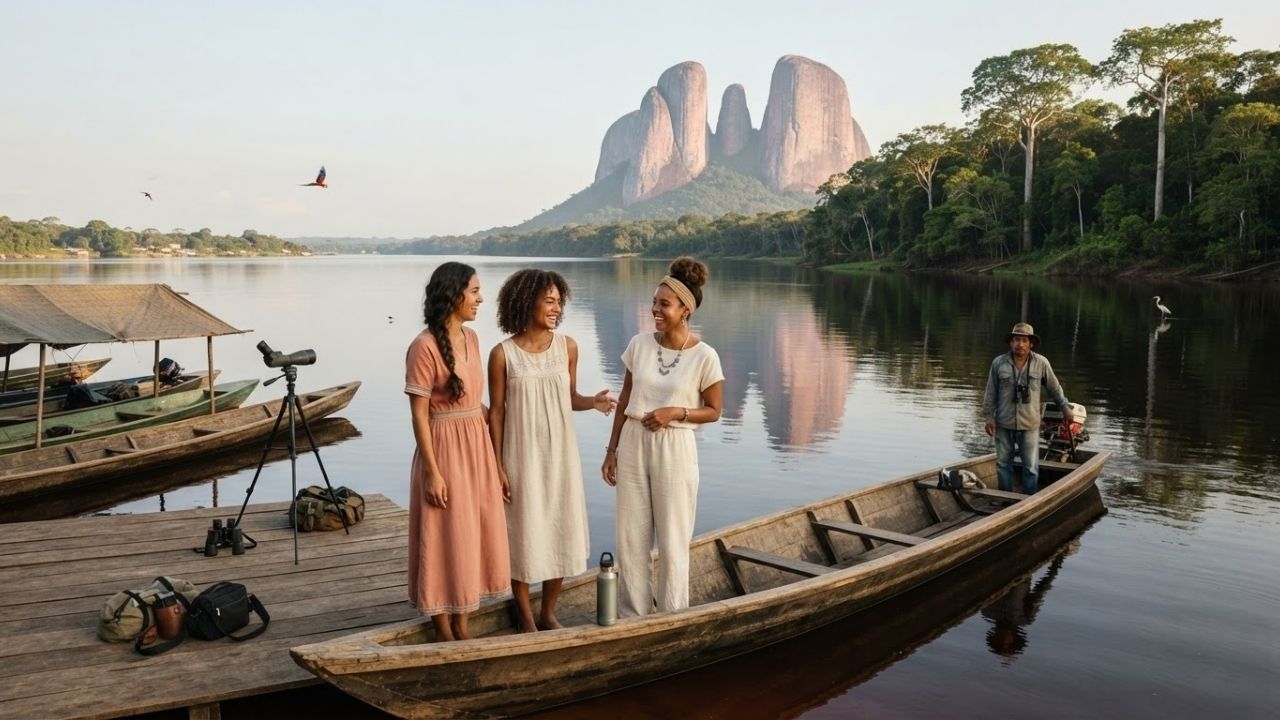
Image generated by AI
A COP 210 million investment from Colombia’s Empretur program is quietly transforming the remote Guainía department into a micro-expedition cruise frontier, paving the way for sustainable river journeys through Indigenous territories.
Colombian Funding Drives Local Marine Service Capabilities
In May 2026, Colombia's Ministry of Commerce, Industry and Tourism (MinCIT) backed 22 tourism productive units in Guainía with COP 210 million. Under this program, five units belonging to two community-based organizations received capacity development and technical assistance. Meanwhile, 14 participants forming the Guainía Tourism Cluster received productive assets, and three departmental MSMEs entered a tourism productivity and sustainability program.
The delivered assets include radios, professional binoculars, telescopes, cameras, adventure equipment, and first-aid kits. These assets support essential nature excursion functions, including emergency preparedness, wildlife observation, and communication.
On a national level, nearly COP 30 billion was invested across the Empretur program between 2023 and 2025, reaching more than 1,300 tourism actors. Rural areas accounted for 52 percent of beneficiaries, while 89.8 percent of participating companies were microenterprises. Guainía is now one of nine emerging territories with established tourism clusters.
| Guainía Tourism Indicator | Official Position by August 2026 | Expedition Cruise Significance |
|---|---|---|
| Empretur Investment | COP 210 million | Builds local service capability rather than cruise ships |
| Tourism Productive Units | 22 | Potential supplier base for shore programmes |
| Community Component | 5 units across 2 organisations | Opens scope for locally operated visitor experiences |
| Guainía Tourism Cluster | 14 participating end users | Creates potential for packaging multiple suppliers |
| MSMEs in Productivity Programme | 3 | Relevant to formal commercial readiness |
| Assets Supplied | Radios, optics, cameras, first aid and adventure equipment | Useful for nature-led expedition excursions |
Navigating the Waters of Mavecure: A Community-Led Model
Accessing the Cerros de Mavecure formations requires river navigation, as no road connections exist. The municipality of Inírida states that the El Remanso and Mavecure area sits within Indigenous reserve territory and lacks telephone service. Colombia's official tourism promotion describes a 90-minute fast-boat journey south from Inírida, while local craft take an average of two hours.
For a cruise operator, the opportunity lies in converting this existing network of boat transfers, Indigenous hosting, and nature interpretation into a scheduled, insured expedition product. However, seasonal river conditions present challenges. The municipal authority notes that river rapids near Mavecure can become unnavigable during the summer dry season due to hazardous flow conditions.
Infrastructure Expansion: Jetties and Environmental Permits
On April 15, 2026, MinCIT recorded a prior-consultation process for the development of embarkation facilities in the Indigenous reserves of El Remanso and El Venado in Puerto Inírida. These facilities are part of a national floating-jetty program covering 88 embarkation structures across the country. The national project represents an investment of COP 66 billion, reported in a February 2026 project update.
By February 6, 2026, studies and designs for the nationwide program were 89.7 percent advanced. Environmental and port operating permits had reached 81 percent, and fabrication of all 88 structures was secured. Only 15 facilities had been delivered, with another two being installed, and no Guainía facility was listed among those 17 active sites. While the April prior-consultation indicates progress, a passenger jetty has not officially entered service in Guainía as of late August 2026.
Border Waterway Regulations: Crossing to San Fernando de Atabapo
Travelers can reach the Estrella Fluvial area from Inírida by river in around 40 minutes. This region lies on the frontier between Colombia and Venezuela, near the convergence of the Orinoco, Atabapo, and Guaviare rivers. The town of San Fernando de Atabapo in Venezuela can be seen during this river journey.
In February 2025, the Colombian maritime authority, Dirección General Marítima (DIMAR), carried out navigation inspections in the frontier sector between Amanavén in Colombia and San Fernando de Atabapo in Venezuela. Authorities checked smaller vessels for departure authorizations, insurance, operator licensing, safety equipment, and navigation documentation.
DIMAR's Resolution 1159 of October 2025 covers international navigation on the Orinoco and Guainía rivers. International operators must comply with customs, health, and migration requirements, and passengers cannot land in Venezuela without authority approval.
| Cross-Border Requirement | Official Regulatory Evidence | Implication for Cruise Trade |
|---|---|---|
| International Operating Authority | Required under DIMAR framework | Domestic sightseeing permission is insufficient for international service |
| Customs and Migration | Applicable to international transit | Cross-border itineraries require formal processing |
| Passenger Disembarkation | Authority approval required | San Fernando cannot be sold as a landing solely because it is visible from the route |
| Vessel Inspection | Passenger suitability must be demonstrated | Local craft must satisfy applicable commercial passenger requirements |
| Civil Liability | Cover required for passengers and tourists | Insurance becomes part of product contracting |
| Radio and Lifesaving Equipment | Included in inspection criteria | Critical in areas where terrestrial telecommunications are weak |
| Routes and Passenger Capacity | Must be identified | Expedition operations require defined rather than informal movements |
Lessons from the Magdalena River: Cruise Operations Precedent
Colombia's river cruise potential is demonstrated by the Magdalena River cruise corridor. Through 83 projects, the Colombian government invested COP 37.549 billion in destinations associated with its first luxury Magdalena River cruise. These interventions covered tourism infrastructure, promotion, competitiveness, responsible tourism, and destination development.
The first Magdalena vessel was designed for 60 passengers, with a 64-passenger vessel forming part of the expansion. In Guainía, the environment supports a smaller, low-volume micro-expedition model rather than mass-market cruising.
Colombia's wider cruise market is expanding. During the first quarter of 2026, the country recorded 174,371 cruise visitors and 103 cruise calls, representing increases of 4.8 percent and 8.4 percent year-on-year. Twenty-five cruise lines and 39 vessels operated during this period. In the Amazon, an expedition vessel carrying 204 passengers reached Leticia in March 2026, showing international appetite for remote river environments.
| Factor | Magdalena Model | Guainía Position by August 29, 2026 |
|---|---|---|
| Cruise Operation | Operational river-cruise model | No official cruise launch identified |
| Public Tourism Intervention | COP 37.549 billion across 83 projects | COP 210 million Empretur support for 22 units |
| Dedicated Cruise Vessels | 60-passenger vessel plus 64-passenger expansion | No dedicated cruise vessel announced |
| Local Experience Development | Integrated with cruise destinations | Community and cluster capability being strengthened |
| Passenger Infrastructure | Part of developed tourism corridor | Indigenous embarkation facilities remain a key development issue |
| Likely Product Form | Luxury multi-destination river cruise | Small-vessel expedition model appears more rational |
Port Governance and Safety Standards in Puerto Inírida
DIMAR identified safety deficiencies during inspections in Inírida in 2024, including missing safety equipment and expired navigation documents. Authorities are developing a dock-management structure separating passenger, cargo, and hydrocarbon activities, with the passenger sector reserved for tourists and smaller vessels. In June 2025, DIMAR inspected safety conditions at Inírida’s principal dock, enforcing hygiene, waste management, and port health measures.
Aviation is essential for high-value itineraries, as Puerto Inírida has no road connections. Colombia’s state-owned carrier, SATENA, operates flights connecting Puerto Inírida with Bogotá, Villavicencio, and Puerto Carreño. The Municipality of Inírida has outlined airport work involving runway and apron markings, perimeter improvements, and visual aids for night operations, associated with the 2026 period.
Ecological Constraints: Ramsar Site Safeguards and Ecotourism Limits
The Convention on Wetlands records the Estrella Fluvial Inírida Ramsar Site at 250,158 hectares. This wetland supports 476 fish species, 200 mammal species, 903 plant species, and 324 bird species, and holds cultural importance for local Indigenous communities.
Planners must distinguish between visitor areas and protected reserves. Colombia's National Natural Parks authority lists the 1,098,410-hectare Puinawai National Natural Reserve as closed and without an ecotourism vocation. A low-volume model featuring controlled landings, strict waste management, and pre-established carrying capacities fits the environmental conditions better than high-frequency vessel traffic.
Local Insider Guide: Practical Travel Advice for Guainía
Navigating this remote region requires careful planning around seasons, customs, and local tastes.
- Best Time to Visit: The high-water season (May to October) is ideal for river navigation, allowing boats to reach the base of Cerros de Mavecure. The dry season (December to March) reveals white sand beaches along the Atabapo and Inírida rivers, but rapids become unnavigable.
- Cultural Protocols: Entering the Indigenous reserves of El Remanso and El Venado requires a local community guide. Always ask for permission before taking photographs of community members, particularly children and elders.
- Local Culinary Specialties: Try ajicero, a traditional spicy fish broth prepared with yellow chili peppers and served with mañoco (cassava flour) or casabe (cassava bread). Local communities also serve grilled pirarucú, a giant freshwater fish.
- Hidden Gems: Take a boat excursion to swim near the white sand beaches of Flor de Inírida. This area is a prime spot for observing freshwater pink river dolphins surfacing near the convergence of the rivers.
Guainía Expedition Cruise Readiness Matrix
| Readiness Layer | Verified Official Evidence | Present Assessment | Principal B2B Risk |
|---|---|---|---|
| Community Supply | 22 tourism units receiving Empretur support | Developing | Inconsistent contracting capacity |
| Local Cluster | 14 Guainía Tourism Cluster participants | Developing | Product integration remains unproven |
| Mavecure Access | River-only journey through Indigenous territory | Existing | Seasonal navigation and communications |
| Embarkation Infrastructure | April consultation for El Remanso and El Venado facilities | Development stage | Commissioning date not established |
| Inírida Dock System | Passenger and tourist functions recognised in dock planning | Existing but regulated | Safety and mixed-use management |
| International Navigation | DIMAR framework covers Orinoco and Guainía waterways | Regulatory mechanism exists | Permits, immigration, customs and insurance |
| Frontier Attraction | San Fernando de Atabapo visible on official Inírida excursion route | Existing geographical link | Visibility does not create landing rights |
| Fly-Cruise Feed | SATENA markets Inírida links with major domestic gateways | Available | Frequency and disruption resilience |
| Environmental Asset | 250,158-hectare Ramsar wetland | Exceptional | Carrying capacity and ecological impacts |
| Protected-Area Access | Puinawai has no ecotourism vocation | Restricted | Incorrect itinerary marketing |
Critical Takeaways for Travel Agents and Tour Operators
- Vessel Safety Checks: Verify every passenger vessel and crew before contracting, confirming operator licensing, safety equipment, civil-liability insurance, and capacity limits.
- Border Clearance Rules: Do not market San Fernando de Atabapo as a landing unless international-navigation, customs, and immigration clearances are confirmed by both Colombian and Venezuelan authorities.
- Hydrological Planning: Build itineraries around seasonal water levels, as summer rapids make Mavecure waterways unnavigable.
- Infrastructure Monitoring: Confirm the operational status of the El Remanso and El Venado embarkation facilities rather than assuming the structures are ready for passenger use.
- Communication Contingencies: Create emergency satellite communication and medical evacuation protocols, as key visitor locations lack telephone coverage.
- Transparent Contracting: Contract community experiences transparently, establishing confirmed capacity, pricing, and revenue sharing.
- Environmental Boundaries: Protect environmental boundaries around the Ramsar wetland and do not package Puinawai for ecotourism.
FAQ: Guainía River Cruises and Mavecure Travel (2026)
Q: What is the current status of river cruises in Guainía?
A: As of August 2026, there are no scheduled commercial cruise operations in Guainía. Colombia is developing river infrastructure and local service capabilities to prepare for future micro-expedition cruising.
Q: Can tourists visit the Mavecure Hills?
A: Yes, Mavecure is accessible by river from Inírida. Visitors can take a 90-minute fast-boat or a two-hour journey on local craft to reach the Indigenous territories of El Remanso and El Venado.
Q: Is a visa required to visit San Fernando de Atabapo from Colombia?
A: Yes. Under DIMAR Resolution 1159, international travelers crossing the frontier waterway to San Fernando de Atabapo in Venezuela must clear formal customs, migration, and port health controls.
Q: What is the Estrella Fluvial Inírida?
A: It is a 250,158-hectare Ramsar site at the convergence of the Orinoco, Atabapo, and Guaviare rivers, supporting hundreds of fish, bird, and mammal species under strict environmental protection.
The Outlook: Shaping Guainía's Low-Impact Travel Future
Guainía sits at a transition point. The government has put capital and equipment into community tourism businesses, while a nationwide river-infrastructure program has reached the consultation stage in Indigenous territories. Colombia has implemented an international river-navigation framework, and authorities are policing the Inírida-San Fernando de Atabapo frontier environment. At the national level, Magdalena River cruises and Leticia operations prove that international cruise demand is no longer confined to the Caribbean.
Puerto Inírida should be regarded as an emerging micro-expedition cruise opportunity rather than a scheduled cruise destination. If development remains small-scale, Indigenous-led, and ecologically sensitive, Guainía can offer a unique frontier expedition product built around local communities and small craft.
This travel intelligence update was compiled by the editorial team.
Related Travel Guides
Disclaimer
This article is for informational and educational purposes only. It does not constitute legal, financial, or professional advice. While we strive to provide accurate and up-to-date information, travel policies, regulations, and conditions change rapidly. Always verify information with official sources before making travel decisions. Nomad Lawyer makes no representations about the accuracy, reliability, completeness, or suitability of the information provided. Readers should consult qualified professionals for advice specific to their circumstances. The views expressed in this article are those of the author and do not necessarily reflect the views of Nomad Lawyer.
Kunal K Choudhary
Co-Founder & Contributor
A passionate traveller and tech enthusiast. Kunal contributes to the vision and growth of Nomad Lawyer, bringing fresh perspectives and driving the community forward.
Learn more about our team →