
Travel Hotels Trillion Wealth Cushion Tested by Economic Shock 2026
The travel industry's $30 trillion post-pandemic wealth cushion shields premium strategies, but prolonged economic turbulence could expose fragile business models in 2026.

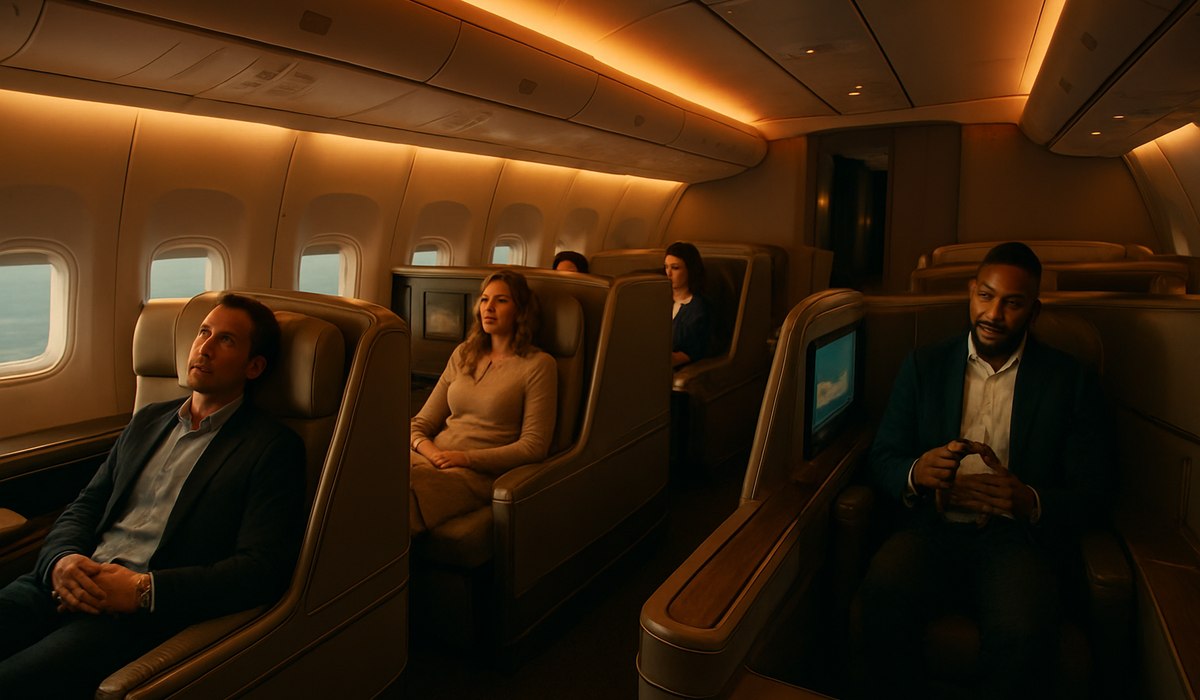
Image generated by AI
The $30 Trillion Wealth Tailwind Propping Up Premium Travel
The global travel and hospitality sector is riding a $30 trillion post-pandemic wealth surge, creating unprecedented demand for luxury accommodations, premium airline experiences, and high-end vacation packages. This exceptional financial tailwind has allowed travel companies to reinvest aggressively in premium offerings, expanding boutique hotels, first-class services, and exclusive destinations across major hubs worldwide.
However, this wealth accumulation represents a temporary economic phenomenon rather than a structural permanent shift. Travel industry executives have increasingly built strategic plans assuming continued prosperity, with investments in luxury infrastructure and upscale customer experiences expanding rapidly. Airlines have added premium cabin capacity. Hotel chains have launched ultra-luxury collections. Tour operators have developed exclusive experiences targeting affluent demographics.
The assumption underlying these strategies: wealthy travelers will maintain spending patterns indefinitely. Yet this premise faces significant testing. Economic uncertainty, geopolitical tensions, and shifting consumer priorities could rapidly diminish discretionary travel budgets among high-net-worth individuals.
Can the Travel Industry Weather an Economic Downturn?
The durability of premium travel strategies depends entirely on economic resilience among affluent travelers. Unlike essential travel (business trips, family visits), luxury travel represents discretionary spending vulnerable to market corrections. When wealth decreases or confidence declines, premium segment revenue evaporates quickly.
Economic downturns historically trigger immediate pullbacks in first-class airfare sales and five-star hotel bookings. Corporate travel budgets shrink. Leisure travelers downgrade from suites to standard rooms. Groups cancel destination weddings and celebrations. Airlines experience fastest revenue declines in premium cabins during recessions.
The travel industry's shock absorber effectiveness depends on economic duration and severity. A brief disruption poses manageable challenges. A protracted recession lasting 18-24 months could fundamentally alter premium strategies. Companies relying on continuous wealth growth face particular vulnerability. Those maintaining diversified offerings across multiple price points navigate downturns more successfully.
Major airlines, hotel chains, and tourism boards face difficult decisions: maintain aggressive premium expansion despite uncertain demand, or adopt conservative approaches protecting profitability. FlightAware data increasingly shows premium cabin load factors fluctuating based on economic sentiment, signaling investor caution.
Premium Strategies Under Stress: What Companies Risk Most
Airlines have invested billions in premium cabin refurbishment, believing affluent passengers will sustain demand indefinitely. However, premium cabin revenue proved exceptionally volatile during past economic downturns. Many carriers added premium capacity just before market contractions, resulting in empty premium seats and depressed yields.
Hotel chains pursuing luxury expansion face similar risks. Ultra-luxury properties require massive capital investment and operate on thin margins until occupancy reaches 70%+ levels. Economic weakness could leave premium properties significantly underbooked, straining balance sheets and limiting dividend payments to investors.
Tour operators specializing in exclusive experiences face demand destruction. Experiential travel—adventure cruises, private jet charters, bespoke itineraries—ranks among first discretionary spending reductions during uncertainty. Premium segment cancellation rates spike during economic stress.
Regional carriers particularly vulnerable to premium strategy collapse lack financial reserves of major legacy carriers. Boutique hotel operators without corporate backing face refinancing challenges if occupancy deteriorates. Luxury travel agencies depending on high-margin bookings face commission compression.
The travel industry's shock absorber—accumulated wealth—absorbs initial impacts but cannot indefinitely sustain premium expansion during protracted downturns. Strategic resilience requires flexibility, cost management, and diversified revenue streams.
Building Resilience Beyond the Wealth Boom
Forward-thinking travel companies recognize the $30 trillion tailwind represents temporary advantage, not permanent condition. Sustainable strategies emphasize flexibility, cost discipline, and diversified customer segments rather than betting exclusively on premium segment growth.
Airlines maintaining regional routes, budget offerings, and flexible capacity management weather downturns more successfully than carriers betting entirely on premium expansion. Hybrid business models—combining premium and economy offerings—provide revenue stability across economic cycles.
Hotel companies developing tiered portfolios addressing luxury, midscale, and budget segments capture demand across income brackets. Portfolio diversification ensures revenue streams persist regardless of affluent traveler behavior. Asset-light models reducing capital intensity enhance financial flexibility.
Tourism boards and destinations should avoid overbuilding luxury infrastructure assuming perpetual wealth growth. Instead, sustainable tourism strategies balance premium development with accessible, diverse offerings attracting varied traveler demographics. Resilient destinations serve everyone, not exclusively the wealthy.
Technology investments improving operational efficiency provide lasting competitive advantages beyond the wealth boom. AI-powered revenue management, dynamic pricing, personalized customer experiences, and automation reduce costs while improving margins. These advantages persist regardless of economic conditions.
Companies building employee-centric cultures and training programs develop staff capabilities generating service excellence. Talent retention through downturns preserves institutional knowledge and customer relationships—intangible assets weathering economic turbulence better than physical infrastructure alone.
What This Means for Travelers
The travel industry's potential vulnerability to economic stress creates both risks and opportunities for savvy travelers planning 2026 trips.
Numbered Actionable Takeaways:
-
Book premium travel strategically. Reserve luxury experiences sooner rather than later if economic uncertainty increases. First-class upgrades, premium hotels, and exclusive experiences might face availability challenges if wealthy demand remains strong, or significant discounting if demand softens. Timing decisions based on current bookings and airline load factor data helps optimize pricing.
-
Monitor airline premium cabin pricing. Track business-class and first-class fares closely through FlightAware partner tools. Dramatic price drops signal premium demand weakness, creating booking windows. Rising prices indicate sustained strong demand justifying immediate premium purchases.
-
Diversify accommodation choices. Avoid betting exclusively on single hotel property experiences. Maintain flexibility across properties, price points, and locations. This approach provides backup options if preferred luxury hotels face availability challenges or unexpected closures.
-
Understand travel insurance implications. Economic downturns increase airline bankruptcies and hotel chain restructurings. Comprehensive travel insurance protecting against supplier insolvency provides essential protection. Verify coverage for operational disruptions before booking premium packages.
-
Consider destination value shifts. Economic weakness affects different destinations differently. Understand which destinations maintain premium appeal versus which face weakened demand. This knowledge identifies undervalued premium experiences and emerging travel opportunities.
-
Verify cancellation policies. Premium packages often include restrictive cancellation terms. Negotiate flexible policies allowing modifications as economic conditions evolve. Premium pricing justifies premium flexibility.
FAQ
Q: How does economic uncertainty affect international travel costs? Economic downturns typically reduce demand for expensive international flights and hotels, creating discounting opportunities for flexible travelers. However, currency fluctuations simultaneously increase costs for travelers from weakening currency nations. Monitor exchange rates alongside pricing changes for comprehensive cost assessment.
Q: Will premium airline cabins disappear during economic downturns? No. Airlines maintain premium cabins through all economic cycles but reduce premium capacity and discount heavily when demand weakens. Premium offerings adapt rather than disappear, focusing on business travelers and affluent leisure passengers willing to pay maintained fares.
Q: Which travel segments prove most recession-resistant? Domestic leisure travel and visiting family/friends remain relatively stable during downturns. International luxury travel, adventure expeditions, and destination celebrations face dramatic demand reductions. Business travel drops significantly but recovers faster than leisure premium segments.
Q: Should I lock travel dates now or wait for potential discounts? Early booking provides certainty and current pricing. Late booking offers flexibility but sacrifices choice. Balance these factors based on your economic outlook confidence and travel preferences. Flexible dates enable maximum bargaining power.
Related Travel Guides
- Strategic Guide to Premium Airline Bookings During Market Volatility
- Hotel Selection Strategies for Economic Uncertainty in 2026
- Maximizing Travel Insurance Protection Against Industry Disruption
Disclaimer
This article analyzes publicly available travel industry trends, economic data, and strategic implications as of April 2026.
Disclaimer
This article is for informational and educational purposes only. It does not constitute legal, financial, or professional advice. While we strive to provide accurate and up-to-date information, travel policies, regulations, and conditions change rapidly. Always verify information with official sources before making travel decisions. Nomad Lawyer makes no representations about the accuracy, reliability, completeness, or suitability of the information provided. Readers should consult qualified professionals for advice specific to their circumstances. The views expressed in this article are those of the author and do not necessarily reflect the views of Nomad Lawyer.
Raushan Kumar
Founder & Lead Developer
Full-stack developer with 11+ years of experience and a passionate traveller. Raushan built Nomad Lawyer from the ground up with a vision to create the best travel and law experience on the web.
Learn more about our team →