
World's First Cross-Border Cable Car Links China and Russia
The first cross-border passenger cable car connecting Heihe, China, and Blagoveshchensk, Russia, is set to open by late 2026.
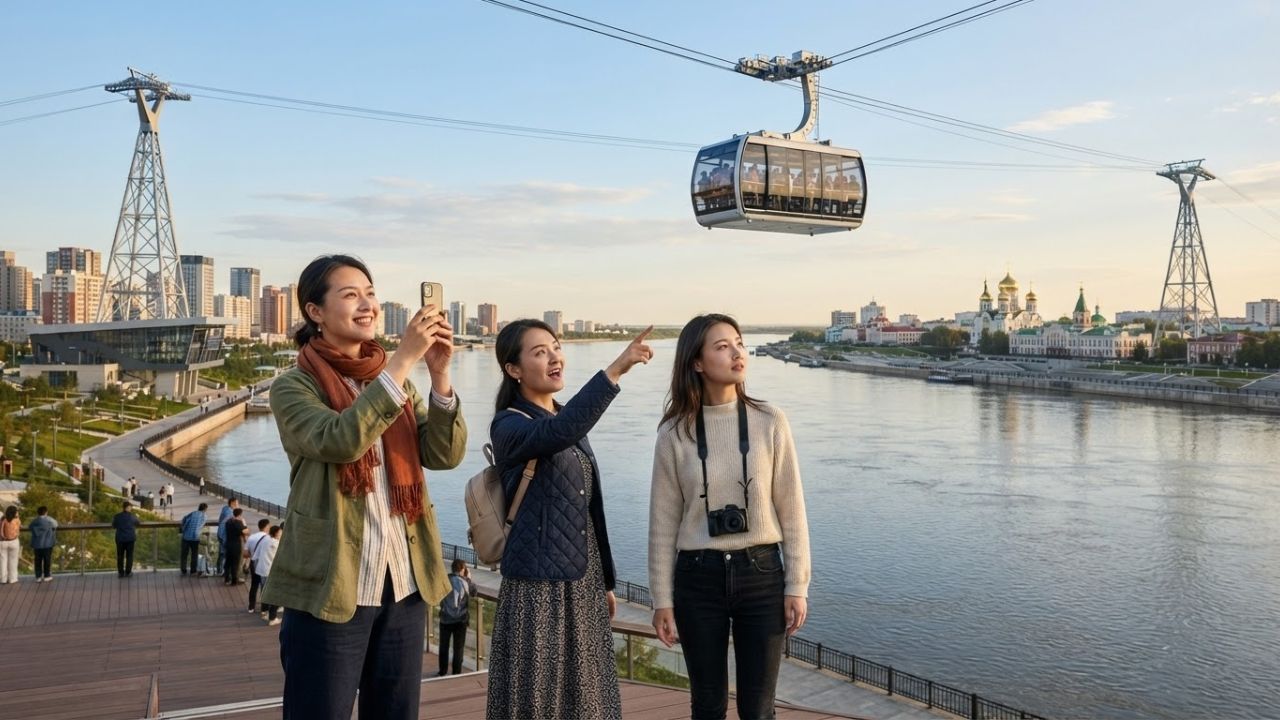
Image generated by AI
Connecting Heihe in China with Blagoveshchensk in Russia over the Heilongjiang River in just six to eight minutes, the world's first cross-border passenger cable car is scheduled to launch by late 2026.
The Core Transit Update
Bilateral border infrastructure and passenger transit networks in Northeast Asia are achieving a major milestone. First started in 2019, the cross-border ropeway project is entering its final testing phase.
Spanning a length of 970 meters and suspended 70 meters above the Heilongjiang River (referred to as the Amur River in Russia), the system connects the twin border cities of Heihe (China) and Blagoveshchensk (Russia), which sit just 750 meters apart. Operating with two large cabins that carry 110 passengers each, the cable car will remove seasonal transport disruptions, offering a year-round transit alternative to traditional river ferries and the highway bridge opened in 2022.
Technical Specifications & Border Transit Modes
Planning a journey across the China-Russia border requires tracking terminal parameters and evaluating transport alternatives. The following tables outline the cable car's technical specifications and compare the active border transit modes.
| Cable Car Technical Metric | Value / Stated Parameter | Strategic Border Transit Role |
|---|---|---|
| Total Ropeway Length | 970 meters | Spans the Heilongjiang (Amur) River |
| Cabin Passenger Capacity | 110 passengers per cabin | 2 large cabins operate concurrently |
| Average Crossing Speed | 6 to 8 minutes transit | Replaces slower seasonal ferry crossings |
| System Height Above Water | 70 meters high | High-altitude passenger ropeway |
| Annual Transit Capacity | 2.6 million passengers | Handles high-frequency tourist crossings |
Technical specifications of the Heihe-Blagoveshchensk cross-border cable car.
| Border Transit Mode | Operational Launch Date | Stated Traveler Convenience | Primary Environmental Constraint |
|---|---|---|---|
| Cross-Border Cable Car | Late 2026 (Expected) | High-frequency passenger link (6–8 mins) | Finalizing safety system tests |
| China-Russia Highway Bridge | 2022 | Year-round vehicular access & logistics | Stated road transit regulations |
| River Ferry Services | Historic transit method | Traditional water route | Highly restricted by ice & weather |
Heihe-Blagoveshchensk border crossing transport options comparison.
Traveler Logistics Guide
From a ground-level perspective, the best way to navigate this is to confirm your eligibility under the current mutual visa-free travel policies before booking your cable car ticket, as security checkposts and border control authorities at both terminals will enforce standard immigration protocols strictly. Checking terminal guidelines is recommended.
To plan your cross-border journey:
- Allow Safe Transit Windows: Heihe Port recorded a 60 per cent rise in passenger traffic in early 2026. Allow at least two hours to clear immigration customs during peak morning slots.
- Coordinate Local Connections: Terminals are integrated with municipal public transport networks in both Heihe and Blagoveshchensk. Locate local bus stops directly outside the terminal exit doors.
- Explore Regional Museums: The cable car makes it easy to combine cultural sights. Visit the Aihui History Museum in Heihe, then cross the river to explore the Amur Regional Local Lore Museum in Blagoveshchensk.
- Prepare for Winter Winds: Cable cabins glide 70 meters above the water. High-altitude winter winds can affect operation schedules; verify real-time status updates before heading to the terminals.
Infrastructure Impact Assessment
The completion of the cross-border ropeway and the expansion of high-capacity passenger terminals protect border economies from seasonal trade slowdowns.
By directing traveler spending to local transport services, hospitality businesses, and cultural museums in Heihe and Amur Oblast, the cable car system—designed to handle 2.6 million passengers annually—supports regional employment, strengthens cross-border partnerships, and establishes a model for waterway border transit.
Related Travel Guides
Disclaimer
This article is for informational and educational purposes only. It does not constitute legal, financial, or professional advice. While we strive to provide accurate and up-to-date information, travel policies, regulations, and conditions change rapidly. Always verify information with official sources before making travel decisions. Nomad Lawyer makes no representations about the accuracy, reliability, completeness, or suitability of the information provided. Readers should consult qualified professionals for advice specific to their circumstances. The views expressed in this article are those of the author and do not necessarily reflect the views of Nomad Lawyer.