
The Mediterranean Price Divide: Why Flight Costs Surged 16.3% in Greece and 5% in Cyprus While European Airfares Dropped
Eurostat data reveals an Eastern Mediterranean travel divide: flight costs rose 16.3% in Greece and 5% in Cyprus, while overall European airfares declined by 0.4%.

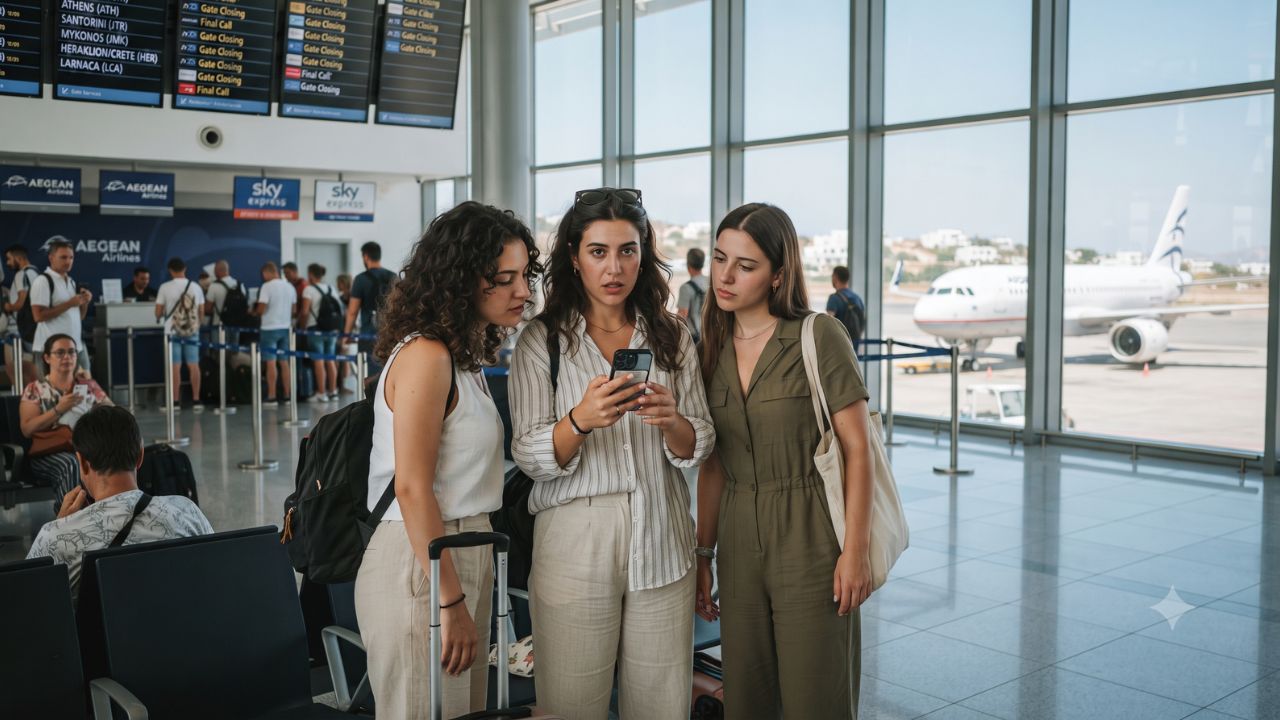
Image generated by AI
While average passenger airfares across the European Union dropped by 0.4 percent this August, flight costs into Greece surged by 16.3 percent—the steepest annual aviation price hike across all 27 EU member states. Official Harmonised Index of Consumer Prices (HICP) data from Eurostat reveals a fragmented European tourism economy, where Eastern Mediterranean holiday destinations command unprecedented pricing power while competitor markets in Spain and Central Europe experience steep airfare deflation.
The Eastern Mediterranean Aviation Inflation Surge
The European aviation market in 2026 has diverged along geographical lines. While overall EU headline inflation settled at 3.2 percent and overall flight prices saw modest contractions, Greece and Cyprus faced compounding price pressures. Alongside Greece's 16.3 percent airfare surge, Cyprus documented a 5.0 percent increase in flight prices, accompanied by a 3.7 percent rise in package holiday rates.
Domestic statistical releases corroborate these European figures. Data from the Hellenic Statistical Authority (ELSTAT) indicates that Greece's national inflation accelerated to 3.8 percent in August, driven by a 7.7 percent rise in overall transport expenses. ELSTAT recorded a 17.4 percent annual jump in domestic air tickets, alongside an 11.3 percent month-on-month surge between July and August alone. Concurrently, Greek hotel and accommodation rates escalated by 14.1 percent year-on-year, pushing the overall cost of traditional high-season island holidays to historic highs.
Comparative European Airfare and Package Trends
The inflationary surge across the Aegean contrasts sharply with pricing trends across Western and Central Europe:
- The Spain Divergence: While Greek flight costs jumped over 16 percent, airfares into Spain fell by 15.8 percent, with Spanish package holidays dropping 5.2 percent as low-cost carrier capacity expanded across mainland regional hubs.
- Sharp Contractions in Slovakia and Estonia: Slovakia recorded an extraordinary 61.2 percent collapse in passenger air transport prices, while package holidays in Estonia dropped by 21.1 percent due to aggressive off-peak discounting.
- Package Holiday Spikes: Across the EU, package holiday costs rose by exactly 3.2 percent, matching baseline inflation. However, outbound package prices surged dramatically in Belgium (16.2 percent), Portugal (14.3 percent), Sweden (12.8 percent), and Lithuania (12.3 percent).
- Other Outliers: Ireland recorded a 14.4 percent rise in airfares alongside Greece, while Italian package holiday rates fell by 4.8 percent.
What Drives the Greece and Cyprus Price Premium
Several structural constraints explain why airlines and hoteliers in Greece and Cyprus maintain immense pricing power:
Constrained Runway Slots and High Island Demand
Major island gateways in Crete, Rhodes, Mykonos, and Santorini operate near peak tarmac capacity during July and August. With airlines facing global aircraft delivery delays and engine maintenance groundings, carriers have focused limited fleet capacity on their highest-yielding Mediterranean routes, allowing dynamic revenue algorithms to maximize ticket yields. Comprehensive travel planning and regional dispersion itineraries are outlined by the Greek National Tourism Organization.
Aviation Fuel and Environmental Compliance
ELSTAT figures show that domestic Greek transport fuel costs jumped significantly, with diesel rising 30.6 percent and petrol up 15.3 percent. Additionally, the phased reduction of free emissions allowances under the EU Emissions Trading System (ETS) and mandatory Sustainable Aviation Fuel (SAF) blending mandates under ReFuelEU aviation rules have increased baseline operating expenses for longer-haul routes into peripheral islands like Cyprus. Strategic tourism initiatives are managed by the Cyprus Deputy Ministry of Tourism.
Visitor Insider Tips for Beating Peak Mediterranean Prices
- Shift to Late Shoulder Season: Postpone Aegean and Cypriot travel to late September, October, or early November. Sea temperatures remain warm (around 22°C to 24°C), while flight prices and boutique hotel rates drop by 30 to 50 percent compared to August peaks.
- Book Flights 10 to 12 Months Ahead: For non-negotiable summer travel to Santorini, Mykonos, or Larnaca, secure flight inventory the moment airline schedules open 11 months in advance to bypass peak algorithmic summer surges.
- Fly Into Mainland Gateways: Book direct flights into Athens (ATH), Thessaloniki (SKG), or Paphos (PFO) and utilize modern ferry networks or regional buses to reach coastal towns rather than booking expensive direct island flights.
- Explore Alternative Regions: Consider mainland destinations such as the Peloponnese, Epirus, and the Pelion Peninsula in Greece, or the Troodos Mountain wine villages in Cyprus, where dining and lodging rates remain grounded in local economy pricing.
Policy Context and Sustainable Tourism Futures
In response to extreme seasonal price spikes and infrastructure strain, tourism authorities in Athens and Nicosia are shifting policy away from high-volume summer arrivals toward year-round, value-focused tourism models.
By promoting agrotourism, hiking networks, cultural heritage sites, and winter travel, Greece and Cyprus aim to distribute visitor spending evenly across all twelve months, safeguarding regional ecosystems while offering travelers an authentic cultural experience without peak-season financial strain.
FAQ: Visiting Greece and Cyprus in 2026
Why did flight tickets to Greece increase so much in August 2026?
Greek airfares rose 16.3 percent due to record international visitor demand, constrained regional airport capacity, elevated aviation fuel expenses, and limited aircraft seat inventory.
Which European destinations became cheaper to fly to in 2026?
Airfares fell by 15.8 percent in Spain and 61.2 percent in Slovakia, while overall package holiday prices dropped in Italy (-4.8%) and Estonia (-21.1%).
When is the most cost-effective time to visit Cyprus and the Greek islands?
Mid-September through early November and April through May offer pleasant weather, calm waters, and significantly lower flight and accommodation rates compared to July and August.
How much did hotel rates rise in Greece during 2026?
According to official ELSTAT statistics, Greek hotel and motel accommodation prices increased by 14.1 percent year-on-year in August 2026.
Strategic shoulder-season timing allows travelers to experience the timeless beauty of the Aegean and Cyprus without paying the exorbitant premium of peak summer inflation.
Disclaimer
This article is for informational and educational purposes only. It does not constitute legal, financial, or professional advice. While we strive to provide accurate and up-to-date information, travel policies, regulations, and conditions change rapidly. Always verify information with official sources before making travel decisions. Nomad Lawyer makes no representations about the accuracy, reliability, completeness, or suitability of the information provided. Readers should consult qualified professionals for advice specific to their circumstances. The views expressed in this article are those of the author and do not necessarily reflect the views of Nomad Lawyer.
Preeti Gunjan
Contributor & Community Manager
A passionate traveller and community builder. Preeti helps grow the Nomad Lawyer community, fostering engagement and bringing the reader experience to life.
Learn more about our team →