
China Railway Boom Reaches New Peak in 2026 as Over Three Billion Passengers Drive Tourism, Connectivity and Border Travel Growth
China Railway Boom Reaches New Peak in 2026 as Over Three Billion Passengers Drive Tourism, Connectivity and Border Travel Growth

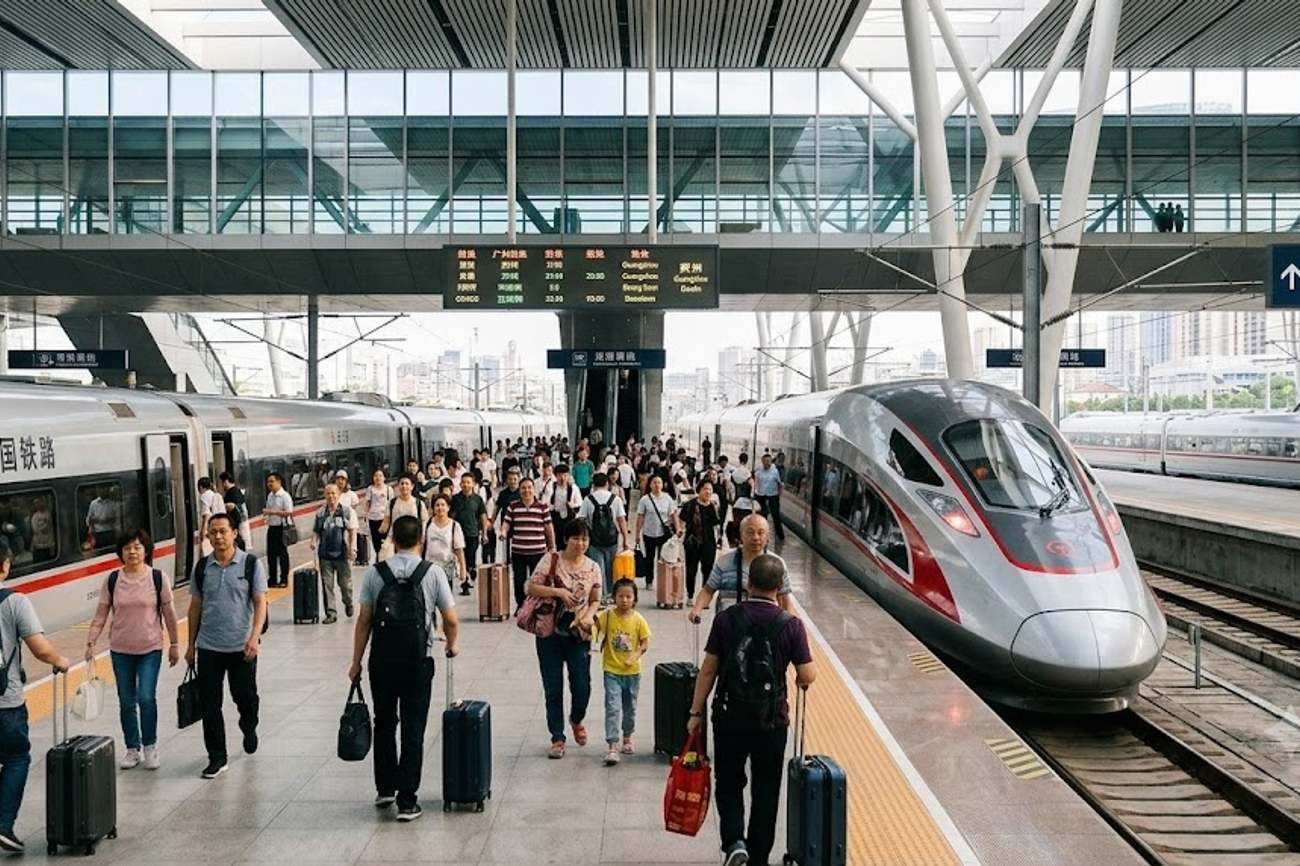
Image generated by AI
[Beijing, September 2026] — China’s railway network has reached a historic milestone, recording 3.32 billion passenger trips during the first eight months of 2026, marking a 3.9% increase over the same period in 2025.
The surge in volume is driven by a combination of expanded high-speed rail capacity, a strategic push toward tourism-centric rail services, and a significant rebound in international arrivals. To accommodate this demand, the China State Railway Group has increased its operational scale, deploying an average of 11,508 passenger trains daily, which represents a 5% year-on-year growth in service frequency.
Infrastructure Expansion and Capacity Gains
The record-breaking figures are the direct result of aggressive infrastructure scaling and operational efficiency. By increasing the daily train count, the railway system has reduced bottlenecks between primary urban hubs and emerging tourist destinations. This expansion allows for more reliable scheduling and faster transit times, making rail the preferred mode of transport for both short-haul business trips and long-distance leisure travel.
The high-speed rail (HSR) network remains the backbone of this growth. By linking major economic centers with previously isolated regional attractions, the network has decentralized tourism, pushing visitors away from traditional gateway cities and into the interior of the country. This shift is supported by upgraded station facilities and a more streamlined booking process designed to handle the massive throughput of the 2026 travel season.
International Growth and Visa Liberalization
A primary catalyst for the 2026 spike is the return of foreign travelers. International passenger trips on the railway network exceeded 16.68 million in the first eight months of the year, a sharp 33.3% increase compared to 2025. This growth is intrinsically linked to the Ministry of Foreign Affairs of the People's Republic of China and its expanded transit visa-free policies.
The 240-hour visa-free transit program now encompasses 57 different countries. This policy shift has removed significant bureaucratic friction for short-term visitors, allowing them to transition seamlessly from airports to the rail network. The impact is visible in the broader border data, which shows 499 million inbound and outbound passenger movements during the same eight-month window—an 8.7% increase year-on-year.
Cross-Border Rail Performance
Regional connectivity has seen a parallel surge, with land-based international corridors becoming vital arteries for tourism and trade.
- China-Laos Railway: This corridor recorded 245,000 cross-border passenger trips, reflecting a 39.1% increase over the previous year. The route is now a primary driver for tourism between the two nations.
- Guangzhou-Shenzhen-Hong Kong HSR: This high-traffic link handled more than 23.4 million cross-border trips, a 10.7% rise. It remains the critical link for daily commuters and business travelers moving between the mainland and the Hong Kong Special Administrative Region.
These figures suggest a growing preference for rail over air travel for regional international journeys, cited as a result of modernized border checkpoints and more competitive pricing.
The Rise of Specialized Tourism Rail
China Railway is pivoting from purely functional transport to "experience-based" travel. In the first eight months of 2026, operators launched 2,501 specialized tourist trains in collaboration with regional cultural and tourism bureaus. These trains are not merely transport vehicles but are designed as sightseeing platforms that connect passengers with remote landscapes and cultural heritage sites.
A flagship example of this strategy is the Xining-Lhasa route. By traversing the Qinghai-Tibet Plateau, this service caters to a growing demographic of international tourists seeking high-altitude experiences and scenic vistas that are inaccessible via standard transport. This shift toward "slow travel" and cultural immersion is a key component of the national strategy to diversify the tourism economy.
Practical Traveler Advisory and Strategic Insights
For the individual traveler, these statistics translate into several practical changes in how China is navigated in 2026:
1. Increased Availability but Higher Peak Demand While there are 5% more trains running daily, the 3.9% increase in passengers means that peak travel windows remain highly competitive. Travelers should expect "sell-out" conditions during national holidays, despite the increased capacity.
2. Easier Entry for Transit Visitors If you are a citizen of one of the 57 countries eligible for the 240-hour visa-free transit, the railway is now the most efficient way to leave your arrival city. The integration between airports and HSR stations has been optimized to allow transit passengers to visit multiple cities without a formal visa.
3. New Destination Access The 2,501 new tourist trains mean that destinations previously requiring complex private charters or long bus rides are now accessible via scheduled rail. Travelers can now plan itineraries around specific "scenic trains" rather than just the fastest route between two cities.
4. Streamlined Cross-Border Transit For those traveling to Laos or Hong Kong, the increase in trip volume indicates more frequent departures and more efficient customs processing. Rail is now a viable, often faster, alternative to flying for these specific cross-border routes.
Preparing for the Q4 Travel Surge
The railway authority is now shifting focus toward the final quarter of 2026. With the Mid-Autumn Festival and the National Day holiday approaching, the system is bracing for a massive influx of passengers.
Preparations include the deployment of additional temporary tourism trains and the implementation of enhanced crowd-control measures at major terminals. Railway authorities are prioritizing onboard facility upgrades and intensified station management to prevent the bottlenecks typically associated with "Golden Week" travel. The goal is to maintain the growth momentum established in the first eight months while ensuring safety and operational stability during the highest-demand period of the year.
FAQ: China Rail Travel 2026
Do I need a visa to use the rail network if I am just transiting? If you are a citizen of one of the 57 eligible countries, you can utilize the 240-hour visa-free transit program. This allows you to travel via rail to other cities before exiting the country.
How do I book the specialized tourist trains? These 2,501 specialized services are often coordinated through regional tourism bureaus and the official railway booking system. Availability is typically more limited than standard high-speed rail.
Is the China-Laos railway a viable alternative to flying? Yes. With a 39.1% increase in passengers in 2026, the route is increasingly popular for its scenic value and streamlined border crossings compared to regional flights.
Which route is best for scenic landscapes? The Xining-Lhasa route is highly recommended for travelers wanting to experience the Qinghai-Tibet Plateau, though passengers should be aware of the high altitude.
The rails are moving faster than the bureaucracy, turning China into a seamless land-bridge for the global nomad.
Related Travel Guides
- Switzerland Steps Up as France and Others Capture Europe’s Luxury Winter Travel Attention With High-End Ski Resorts and Elite Experiences
- UK Grasmere Showcases New Autumn Travel Experience With Golden Landscapes and Historic Charm
- Laos Teams Up With Sri Lanka and More as New Visa Rules Transform Indian Travel Plans in 2026
Disclaimer
This article is for informational and educational purposes only. It does not constitute legal, financial, or professional advice. While we strive to provide accurate and up-to-date information, travel policies, regulations, and conditions change rapidly. Always verify information with official sources before making travel decisions. Nomad Lawyer makes no representations about the accuracy, reliability, completeness, or suitability of the information provided. Readers should consult qualified professionals for advice specific to their circumstances. The views expressed in this article are those of the author and do not necessarily reflect the views of Nomad Lawyer.
Kunal K Choudhary
Co-Founder & Contributor
A passionate traveller and tech enthusiast. Kunal contributes to the vision and growth of Nomad Lawyer, bringing fresh perspectives and driving the community forward.
Learn more about our team →