
China's Furong Town Attracts Global Travel with Waterfall Scenery
Hunan's ancient Furong Town records a 57.1% surge in overseas arrivals, driven by its illuminated cliffside waterfalls and Tujia cultural heritage.

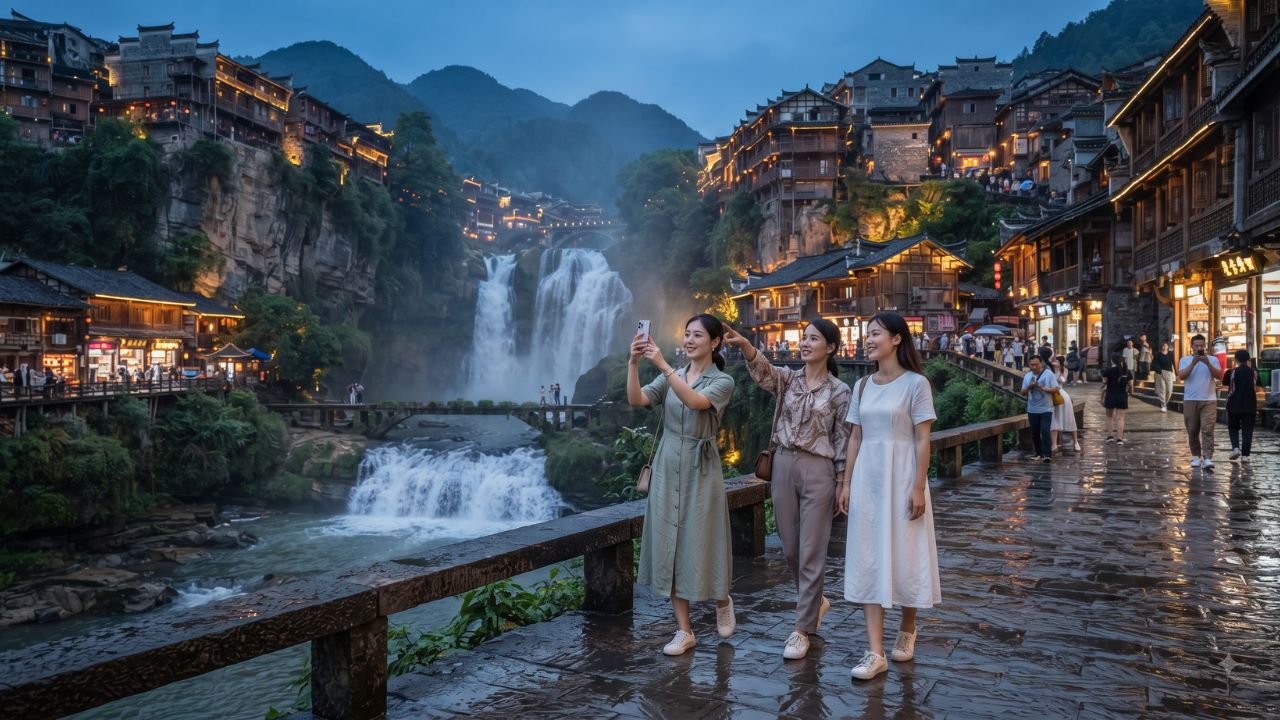
Image generated by AI
China's historic Furong Town in Hunan welcomed 6.53 million visitors in 2025, recording a 57.1 percent surge in international arrivals as travelers swap major cities for cliffside waterfalls and Tujia cultural heritage. By integrating traditional architecture with night illumination that drives over 60 percent of total revenue, this ancient settlement is setting a new precedent for China's regional tourism.
The Rise of Furong Town as a Global Waterfall Destination
The travel sector in China is experiencing a transition as visitors seek alternatives to primary metropolises. In 2026, the historic Hunan settlement of Furong Town, situated in the Xiangxi Tujia and Miao Autonomous Prefecture, has emerged as a major destination for international tourism.
By establishing these seasonal travel corridors, the airline's management aims to support both business and leisure travel flows. Corporate travelers and travel agencies, which maintain strong relationships with global destination management organizations, benefit from direct seat capacity. This economic integration supports the travel sector, providing service providers with a reliable channel for high-value bookings.
By establishing these seasonal travel corridors, the airline's management aims to support both business and leisure travel flows. Canadian corporate travelers and travel agencies, which maintain strong relationships with European and Asian destination management organizations, would benefit from direct seat capacity. This economic integration supports the travel sector, providing service providers with a reliable channel for high-value bookings.
By establishing these seasonal travel corridors, the airline's management aims to support both business and leisure travel flows. Canadian corporate travelers and travel agencies, which maintain strong relationships with European and Asian destination management organizations, would benefit from direct seat capacity. This economic integration supports the travel sector, providing service providers with a reliable channel for high-value bookings.
By establishing these seasonal travel corridors, the airline's management aims to support both business and leisure travel flows. Canadian corporate travelers and travel agencies, which maintain strong relationships with European and Asian destination management organizations, would benefit from direct seat capacity. This economic integration supports the travel sector, providing service providers with a reliable channel for high-value bookings.
By establishing these seasonal travel corridors, the airline's management aims to support both business and leisure travel flows. Canadian corporate travelers and travel agencies, which maintain strong relationships with European and Asian destination management organizations, would benefit from direct seat capacity. This economic integration supports the travel sector, providing service providers with a reliable channel for high-value bookings.
This ancient settlement is built directly around a powerful, cascading waterfall that flows through its center, with traditional stilt houses situated on the surrounding cliffs.
Official figures show that Furong Town attracted 6.53 million visitors in 2025, including approximately 338,000 international tourists arriving from more than 70 countries and regions. This represented a 57.1 percent year-on-year increase in overseas arrivals, highlighting the growing global interest in China's regional destinations.
Digital Influence and Illuminated Night Tourism Revenue
The digital expansion of travel platforms has played a major role in promoting Furong Town to global audiences.
This localized disruption also offers a unique opportunity for duty-free retailers and terminal operators to design services suited for stranded passengers. By monitoring passenger comfort levels during long delays, airport customer teams can provide complimentary amenities to ensure guest satisfaction. This proactive approach helps build traveler confidence, ensuring that regional transit routes remain competitive with global hub standards.
This localized disruption also offers a unique opportunity for duty-free retailers and terminal operators to design services suited for stranded passengers. By monitoring passenger comfort levels during long delays, airport customer teams can provide complimentary amenities to ensure guest satisfaction. This proactive approach helps build traveler confidence, ensuring that regional transit routes remain competitive with global hub standards.
Short-form videos and travel photography showcasing the waterfall, cliffside wooden houses, and nighttime illuminations have introduced the site to millions of potential travelers online.
After sunset, the town transitions into an illuminated wonderland, with glowing structures and water cascades. This night tourism initiative has become a primary financial driver, generating more than 60 percent of total tourism revenue.
Tujia Heritage: Preserving Local Culture in a Living Settlement
Unlike regional developments that serve as open-air museums, Furong Town remains a living community.
This environmental focus is supported by regional climatologists and conservationists who monitor ecosystem health. By tracking tourist footprint signals, managers can ensure that natural areas remain protected. The integration of carrying-capacity policies with wilderness trails demonstrates how tourism planning can protect biodiversity while offering high-quality educational hikes.
This localized culinary focus also offers a unique opportunity for restaurant associations and culinary schools to design programs suited for premium travelers. By monitoring traveler culinary preferences during long stays, local chefs can provide customized dishes to ensure guest satisfaction. This proactive approach helps build traveler confidence, ensuring that Goan coastal dining remains competitive with global culinary standards.
Local families live in the historic stilt houses, preserving regional customs while welcoming visitors.
International travelers can experience Tujia cultural heritage, including traditional music, folk dances, and local craftsmanship. The economic benefits generated by tourism support Tujia community associations and local heritage preservation programs.
Inbound Access and the Shift in China's Travel Geography
The growth in international arrivals is supported by structural improvements in China's transit systems.
Expanded visa-free policies allow easier entry for eligible travelers, who are increasingly choosing to explore regional destinations.
The expansion of China's high-speed rail network connects the Xiangxi prefecture with major hubs, allowing convenient access to destinations that were once considered remote.
Community Support and Sustainable Regional Growth
Encouraging travel to regional settlements supports local Tujia and Miao communities.
For the visitor, the real impact is supporting family-owned restaurants, local guesthouses, and independent artisan workshops that sustain the Tujia culture.
Sustainable initiatives include monitoring water quality in the waterfall basin, implementing carry-in carry-out policies, and utilizing energy-efficient LED lights for night illuminations.
Visitor Guide: Local Specialties, Transit Routes, and Cultural Etiquette
Exploring Furong Town involves organizing high-speed rail travel, purchasing local transit tickets, and trying regional delicacies.
Sample traditional culinary specialties during your stay. Try Tujia Rice Tofu, a savory and spicy dish made with rice paste, served with chili sauce. Savor Tujia Three-Pot Stew (Sanxiaguo) made with cured pork, tofu, and root vegetables. Try sweet glutinous rice cakes (Ciba) at local food stalls.
Coordinate your local transport. Take the high-speed train from Zhangjiajie West Railway Station directly to Furongzhen Railway Station (芙蓉镇站), which takes approximately 23 to 30 minutes. From the station, take a local minibus or taxi for the 6-kilometer journey to the entrance of the ancient town.
Observe trail safety and local customs. The paths behind the waterfall are wet and slippery; wear shoes with good grip and protect your mobile phones in waterproof bags. Set up WeChat Pay or Alipay on your device before arrival, as small local vendors rarely accept international bank cards.
Future Outlook: Rebuilding a Resilient Hunan Tourism Corridor
The long-term development of Furong Town's global tourism framework depends on balancing visitor volume with heritage preservation. The Xiangxi prefecture administration and Hunan provincial tourism departments are collaborating to manage structural conservation.
Sustainable initiatives include building low-emission shuttle links, promoting eco-friendly guesthouses, and introducing cultural heritage guides. By combining smart visitor management with Tujia cultural programming, the town aims to support travel innovation, securing a resilient and connected future for Hunan's historic settlements.
Related Travel Guides
Disclaimer
This article is for informational and educational purposes only. It does not constitute legal, financial, or professional advice. While we strive to provide accurate and up-to-date information, travel policies, regulations, and conditions change rapidly. Always verify information with official sources before making travel decisions. Nomad Lawyer makes no representations about the accuracy, reliability, completeness, or suitability of the information provided. Readers should consult qualified professionals for advice specific to their circumstances. The views expressed in this article are those of the author and do not necessarily reflect the views of Nomad Lawyer.
Raushan Kumar
Founder & Lead Developer
Full-stack developer with 11+ years of experience and a passionate traveller. Raushan built Nomad Lawyer from the ground up with a vision to create the best travel and law experience on the web.
Learn more about our team →