
China Completes First High-Speed Railway Tunnel Under Yangtze River for Chongqing-Xiamen Line in 2026
China has finalized the Caiyuanba Yangtze River Railway Tunnel, a critical 11.9-kilometre link designed to accelerate connectivity between Chongqing and Xiamen via the national high-speed rail network.

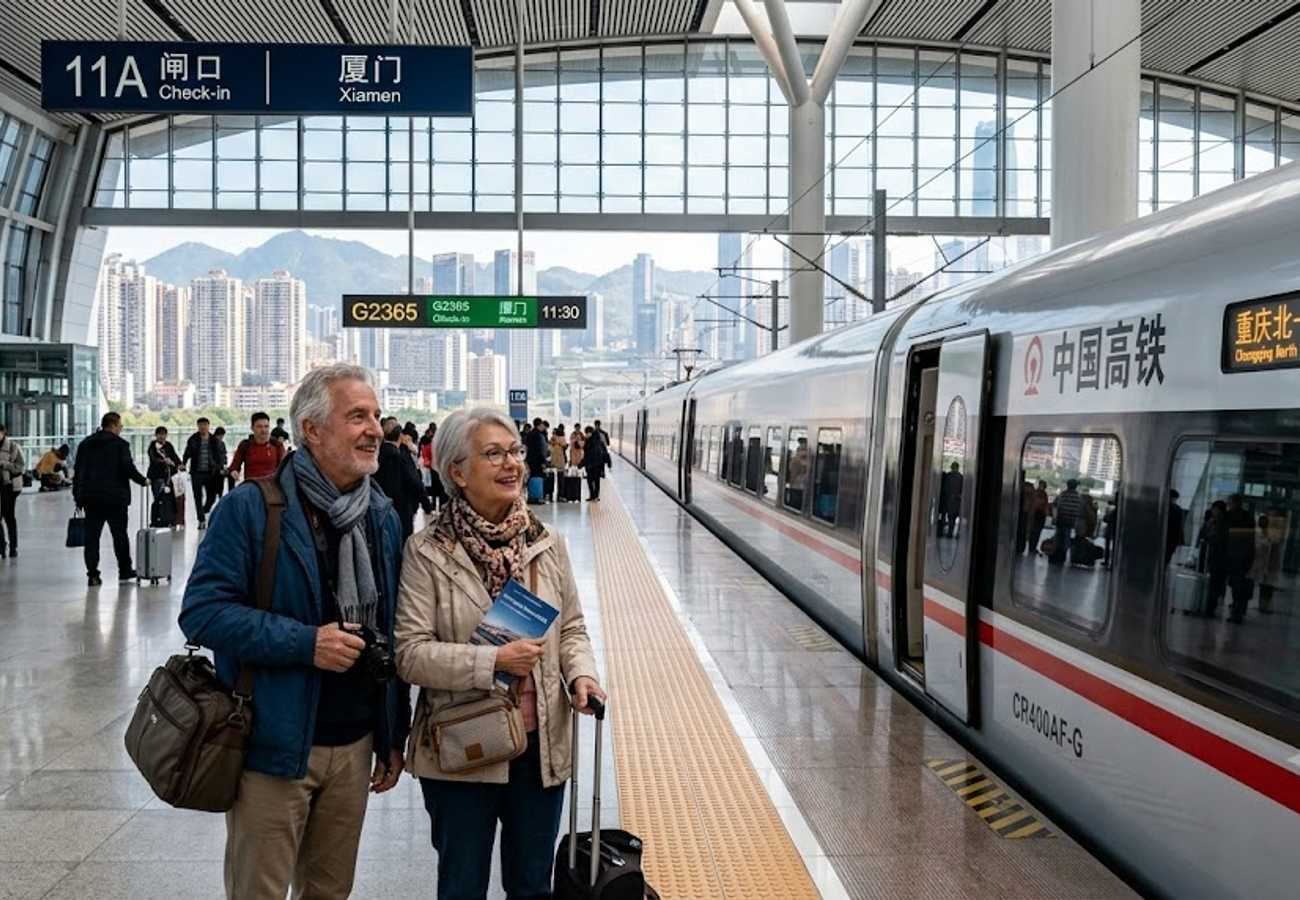
Image generated by AI
[Chongqing, July 26, 2026] — China has successfully finished the construction of its first-ever high-speed railway tunnel beneath the Yangtze River, a move that drastically improves the logistical link between the nation's inland regions and its eastern coast. The project serves as a cornerstone for the upcoming Chongqing–Xiamen high-speed railway, bridging a critical gap in the country's strategic transport corridor.
This engineering milestone involves the completion of the 11.9-kilometre Caiyuanba Yangtze River Railway Tunnel, which now provides a subterranean passage under one of the most heavily trafficked waterways on earth. By connecting two key districts within the Chongqing municipality, the tunnel facilitates a more direct path toward Xiamen in Fujian Province. Once the entire route is operational, millions of travelers will benefit from significantly reduced transit times between the southwestern interior and the southeastern coastline.
Overcoming Geological Hurdles in Chongqing
The construction of the Caiyuanba Tunnel was not a standard excavation project; it required navigating some of the most volatile terrain in the region. Engineers were forced to plot a course that dipped beneath rugged mountain ranges, densely packed residential zones, and existing urban infrastructure, all while diving deep under the riverbed.
Maintaining structural integrity while boring through these diverse environments required extreme precision. The primary objective for officials was to ensure that the tunnel's stability remained intact despite shifting geological conditions, ensuring that the surface-level communities and the river's navigation remained undisturbed.
Advanced Boring Technology and Water Pressure Management
To tackle the immense pressure of the Yangtze River, construction teams utilized a specialized tunnel boring machine (TBM) engineered specifically for these extreme conditions. Standard equipment would have been insufficient to handle the crushing water pressure and the unpredictable alternation between hard rock and soft soil deep beneath the river.
The customized TBM allowed for a continuous excavation process, which minimized the risk of collapse and ensured that the tunnel's trajectory remained mathematically accurate. This technological investment was essential for maintaining operational safety and efficiency throughout the project's duration.
Integration into the National "Eight Vertical and Eight Horizontal" Grid
The Caiyuanba Tunnel is more than a local achievement; it is a vital piece of the Chongqing–Xiamen high-speed railway, which is one of 16 strategic corridors defined in China's long-term transportation blueprint. This broader initiative, known as the "eight vertical and eight horizontal" network, aims to synchronize the movement of people and goods between major economic hubs.
This massive grid is designed to create a seamless web of connectivity across the continent, stretching from the northwestern reaches of Gansu Province to the southern coastal hubs of Hong Kong and Shenzhen, and extending as far northeast as Harbin. The goal is to foster regional economic integration by making travel between distant metropolitan areas faster and more reliable.
Current Progress and Future Rail Expansion
Industry reports indicate that the national high-speed rail framework is nearing completion. As of March 2026, approximately 84 percent of the planned national grid had been finished. This rapid pace of development suggests that the remaining gaps in the network are being closed with urgency.
Beyond the current grid, officials are planning further capacity increases to handle growing passenger volumes. These future efforts will focus on:
- Expanding total rail capacity to meet rising demand.
- Strengthening links between primary economic zones.
- Enhancing commuter rail services within high-density urban clusters.
Scaling the World's Largest Rail Network
China's commitment to rail infrastructure has already resulted in the largest high-speed network globally. By the conclusion of last year, the total length of operational high-speed lines had surpassed 50,000 kilometres.
The government intends to push this figure even further, with targets to reach approximately 60,000 kilometres within the next five years. This expansion is not merely about length, but about accessibility, bringing high-speed options to smaller cities and improving the overall efficiency of national logistics.
New Frontiers in Underwater Engineering
The success of the Caiyuanba project has paved the way for a new era of underwater transit. Engineers are now applying these lessons to other geographically challenging areas, including estuaries and coastal waterways.
Two notable projects currently underway include:
- The Shanghai-Jiangsu Link: A railway crossing connecting Chongming Island in Shanghai with Taicang in Jiangsu Province.
- The Pearl River Estuary Tunnel: Part of the Shenzhen–Jiangmen high-speed railway in Guangdong Province, this project is slated to become the world’s deepest underwater high-speed rail tunnel, reaching depths of roughly 116 metres.
Why This Matters for the Global Traveler
For the international traveler or business professional, the completion of the Caiyuanba Tunnel signifies a shift in how southwestern China is accessed. Historically, the rugged terrain of Chongqing and the barrier of the Yangtze River made inland travel cumbersome. The transition to a fully operational Chongqing–Xiamen line means that the "interior" of China is effectively becoming a suburb of the coast in terms of travel time.
From a logistical standpoint, this reduces the reliance on domestic air travel for mid-distance trips, offering a more sustainable and often more punctual alternative. For those navigating the region for business, the integration of these hubs means that the economic ripple effects—lower transport costs and faster movement of labor—will likely make these cities more attractive for foreign investment.
The era of geographical barriers in Chinese transit is rapidly ending, replaced by a subterranean network of unprecedented scale.
Related Travel Guides
Disclaimer
This article is for informational and educational purposes only. It does not constitute legal, financial, or professional advice. While we strive to provide accurate and up-to-date information, travel policies, regulations, and conditions change rapidly. Always verify information with official sources before making travel decisions. Nomad Lawyer makes no representations about the accuracy, reliability, completeness, or suitability of the information provided. Readers should consult qualified professionals for advice specific to their circumstances. The views expressed in this article are those of the author and do not necessarily reflect the views of Nomad Lawyer.
Preeti Gunjan
Contributor & Community Manager
A passionate traveller and community builder. Preeti helps grow the Nomad Lawyer community, fostering engagement and bringing the reader experience to life.
Learn more about our team →