
China Aviation Chaos: Air China, Hainan, Eastern Cancel 85+ Flights, 600+ Delays Hit Beijing, Guangzhou, Chengdu in 2026
Over 85 flight cancellations and 600+ delays paralyze China's major airports as Air China, Hainan Airlines, and China Eastern struggle with operational disruptions affecting Beijing, Guangzhou, and beyond.

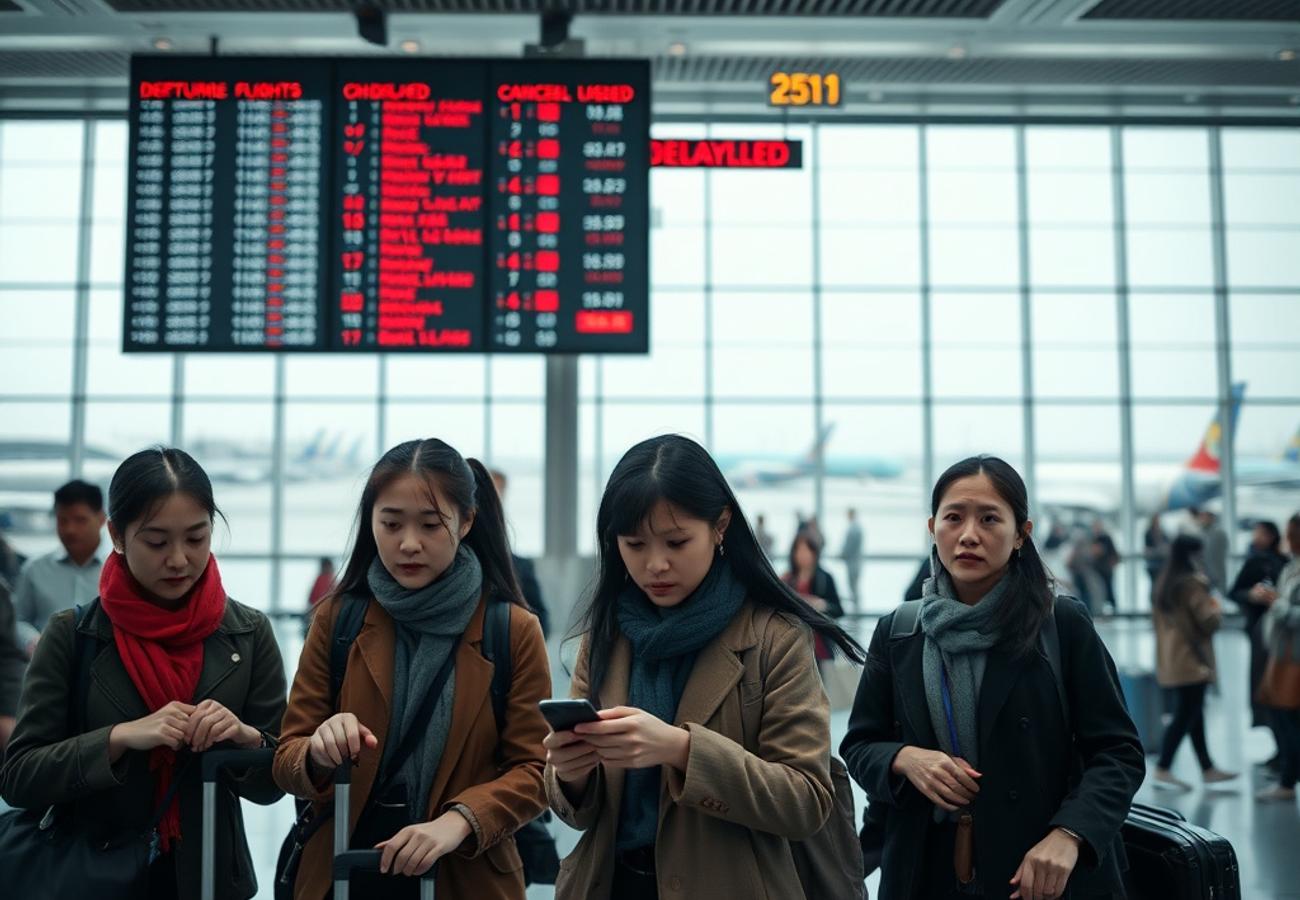
Image generated by AI
A Day of Disruption Across China's Skies
June 30, 2026 marked one of the worst days for aviation operations across China in recent months. Major carriers including Air China, Hainan Airlines, China Eastern, Sichuan Airlines, 9 Air, and multiple regional operators were forced to cancel more than 85 flights while recording over 600 delays across the country's busiest airports. The cascading disruptions rippled through nine major aviation hubs, leaving thousands of passengers scrambling to rebook connections, navigate crowded terminals, and reassess their travel plans.
What started as isolated disruptions at Beijing Capital International Airport snowballed into a nationwide crisis affecting critical domestic and international routes. Passengers bound for business meetings, family reunions, and holiday trips found themselves stranded, frustrated, and facing significant financial and logistical consequences.
Reddit: "Stuck at Beijing Daxing for 8 hours. Airlines won't even confirm if we're flying today. Zero communication." — r/China
The Full Scope of the Disruption
The operational fallout extended across China's most strategically important aviation nodes. Beijing Capital International Airport alone logged 138 combined cancellations and delays across three major carriers, with Air China accounting for 131 of those incidents (6 cancellations, 125 delays). Just across the city, Beijing Daxing International Airport recorded 114 total disruptions, led by China Eastern with 77 incidents (11 cancellations, 66 delays).
Southern hubs weren't spared either. Guangzhou Baiyun International Airport experienced 145 combined incidents across four carriers, while Haikou Meilan International Airport reported 34 disruptions driven primarily by Hainan Airlines (7 cancellations, 27 delays). Each affected airport is a critical gateway connecting China's interior to coastal regions and international destinations.
The geographic spread revealed a systemic issue, not isolated mechanical failures. Nine major airports across diverse regions simultaneously faced operational strain, suggesting weather patterns, air traffic control challenges, or broader logistical bottlenecks were at play.
Which Carriers Took the Hardest Hit
Air China emerged as the most disrupted carrier, with cancellations and delays recorded across five major airports: Beijing Capital, Beijing Daxing, Chengdu Tianfu, Guangzhou Baiyun, and Hangzhou Xiaoshan. The flagship carrier logged at least 17 cancellations and 218 delays across these hubs.
Hainan Airlines faced equally severe pressure, with disruptions at six airports including Beijing Capital, Chengdu Tianfu, Chongqing Jiangbei, Guangzhou Baiyun, Haikou Meilan, and Jieyang Chaoshan. The carrier was forced to cancel 28 flights while managing 115 delays, concentrated primarily at Guangzhou Baiyun and Haikou Meilan.
China Eastern recorded 43 combined cancellations and delays across seven airports, making it the third-most affected operator. The disruptions were particularly acute at Beijing Daxing, where the airline cancelled 11 flights—the single highest cancellation count for any carrier at any airport that day.
Mid-sized operators like Sichuan Airlines, China United Airlines, Tianjin Airlines, and 9 Air also faced significant pressure, though their absolute numbers were lower due to smaller fleet sizes and route networks.
Timeline: How the Crisis Unfolded
Early morning disruptions at Beijing's two major airports set a tense tone for the entire day. By midday, the effects had cascaded to secondary and tertiary hubs in central and southern China. Chengdu Tianfu International Airport, serving China's interior, began reporting delays by mid-afternoon. By evening, the disruption footprint extended from Harbin in the northeast to Haikou in the south—a geographic span covering nearly 3,000 kilometers.
Passengers who had completed check-in found themselves stuck in holding patterns. Those still preparing to depart discovered their flights had been cancelled with minimal advance notice. Ground crews worked extended shifts attempting to coordinate rebooking, while airline customer service lines became overwhelmed.
What Passengers Need to Know Right Now
Check Your Flight Status Immediately
Don't rely on assumptions. Visit FlightAware's real-time tracking system or your airline's official app and website directly. Status updates change hourly as airlines reassess capacity and routing options.
Know Your Contractual Rights
Under Chinese aviation regulations, passengers are entitled to rebooking on alternative flights at no additional cost if the cancellation is within the airline's operational control. Some carriers voluntarily offer hotel accommodation and meal vouchers for extended delays, though this varies by airline and circumstances.
Contact Customer Service Strategically
Airport service desks are overwhelmed. If you're not yet at the airport, call or use your airline's official app chat system first to avoid queues. Have your booking reference and ID ready. For international travelers, check the IATA guidance on passenger rights as protections may vary by departure and destination countries.
Document Everything
Keep receipts for any out-of-pocket expenses (meals, accommodation, ground transport) incurred due to the cancellation. Many airlines will reimburse documented costs, though you'll need proof.
Consider Alternative Transport
High-speed rail networks connect most major Chinese cities. For some routes, trains may depart sooner than rebooked flights. Budget airlines or regional carriers may have availability where major carriers are fully booked.
The Operational Reality Behind the Scenes
Airlines don't cancel flights lightly. The decision to ground aircraft or reduce schedules typically reflects one of several scenarios: severe weather systems preventing safe operations, unplanned maintenance issues affecting aircraft availability, airport congestion and air traffic control slot constraints, or coordinated operational decisions during staff shortages.
The simultaneous impact across multiple carriers and airports on June 30 suggests the primary factor was likely environmental—either thunderstorms, poor visibility, or seasonal weather patterns affecting the entire eastern China corridor. Such conditions are not uncommon during China's monsoon season and pre-typhoon periods.
Lessons for Frequent Travelers
This disruption underscores critical preparation steps:
Book direct flights when possible to eliminate connection vulnerability. A cancelled connection can cascade into multiple lost flights.
Purchase travel insurance that covers airline disruptions. Standard policies often don't cover weather-related cancellations, but premium products do.
Build buffer time between flights. A 45-minute connection in a disrupted hub is a disaster waiting to happen.
Maintain airline flexibility. Booking with carriers that have broad route networks increases rebooking options when disruptions occur.
Stay offline-ready. Download boarding passes, booking confirmations, and airport maps before departure. Phone batteries will become precious in crowded terminals.
What Airlines Are Saying
As of June 30, major carriers were issuing standard disruption advisories requesting passenger flexibility and cooperation. Most promised prioritized rebooking on next available flights and promised communication updates every 2-3 hours. However, with over 600 delays compounding across the system, rebooking queues stretched hours, leaving many passengers uncertain of their actual departure times.
The situation remained fluid throughout the day, with real-time conditions at each airport determining whether aircraft could resume normal operations or whether additional cancellations would be announced.
Stay flexible, stay informed, and never assume your flight is departing until you've confirmed directly with your airline—China's airports just proved that lesson the hard way.
Related Travel Guides
Disclaimer
This article is for informational and educational purposes only. It does not constitute legal, financial, or professional advice. While we strive to provide accurate and up-to-date information, travel policies, regulations, and conditions change rapidly. Always verify information with official sources before making travel decisions. Nomad Lawyer makes no representations about the accuracy, reliability, completeness, or suitability of the information provided. Readers should consult qualified professionals for advice specific to their circumstances. The views expressed in this article are those of the author and do not necessarily reflect the views of Nomad Lawyer.
Kunal K Choudhary
Co-Founder & Contributor
A passionate traveller and tech enthusiast. Kunal contributes to the vision and growth of Nomad Lawyer, bringing fresh perspectives and driving the community forward.
Learn more about our team →