
United States Travelers Stranded: Chicago O'Hare International Airport Travel Disruptions Erupt as SkyWest, Republic, and Envoy Air Cancel 207 Flights and Delay 1,218: New Travel Alert
Chicago O'Hare International Airport travel disruptions hit as multiple carriers cancel 207 flights and report 1,218 delays, impacting routes across the US and Europe.

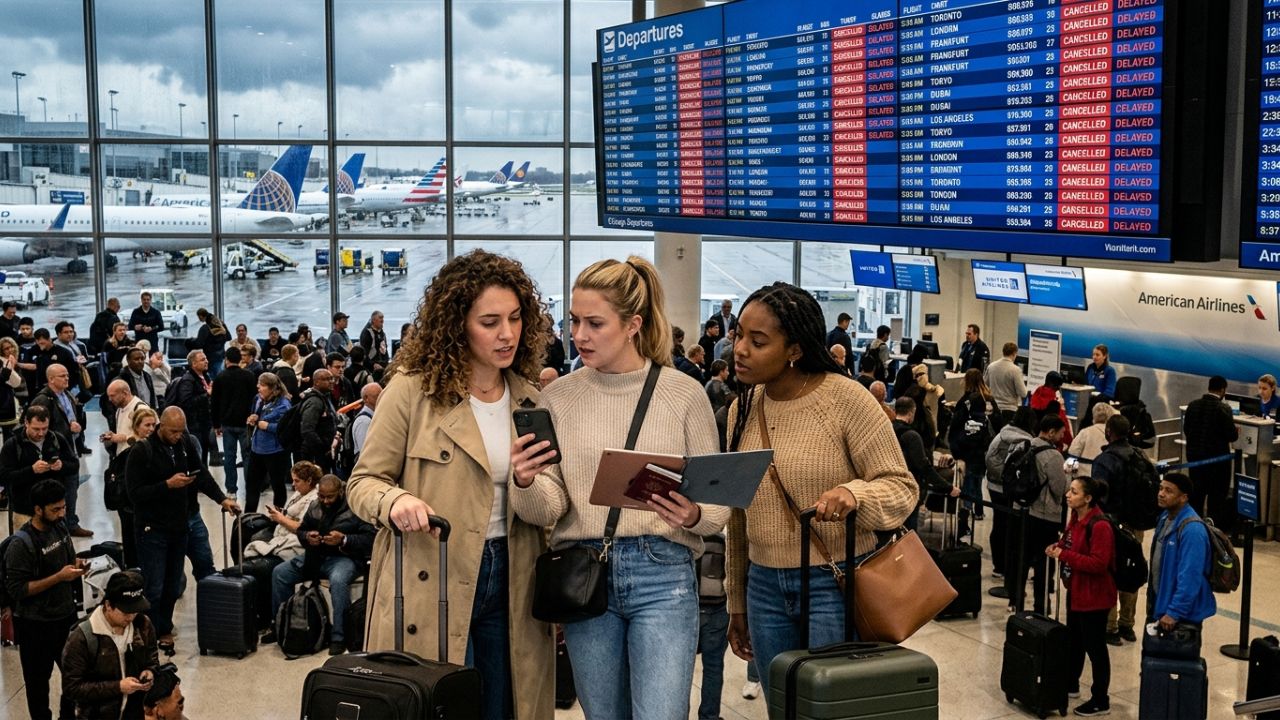
Image generated by AI
Published on June 18, 2026
Severe Chicago O'Hare International Airport travel disruptions have hit travelers as regional and national carriers cancelled 207 flights and delayed 1,218 more, triggering a travel crisis on June 18, 2026. The operational crisis at the major Illinois hub is currently stranding thousands of passengers across the United States, Canada, Europe, and Asia. Affected travelers must monitor flight status updates, check rebooking details on mobile apps, and review passenger policies before heading to the airport.
Quick Summary
- Major Aviation Meltdown: Chicago O'Hare International Airport (ORD) faced severe schedule disruption, with multiple airlines cancelling and delaying flights.
- Cancellation & Delay Volumes: In total, 207 flights were cancelled and 1,218 flights were delayed at the airport.
- Carrier Breakdown: SkyWest took the hardest hit with 87 cancellations and 216 delays, followed by Republic with 35 cancellations and Envoy Air with 34.
- Widespread Global Footprint: The operational issues rippled across major destinations in North America, Europe, the Middle East, and the Asia-Pacific region.
The massive operational issues highlight how scheduling constraints at a primary aviation nexus can instantly compromise travel networks worldwide. Flight tracking agency FlightAware recorded the flight disruptions on June 18, 2026, as airline scheduling networks adjusted to the backlog. For international and domestic passengers, these delays emphasize the critical nature of hub-and-spoke dependency during peak travel periods.
Event and Incident Details: Major Flight Cancellations and Delays at Chicago O'Hare
Operations at Chicago O'Hare International Airport (ORD) collapsed into widespread scheduling chaos on June 18, 2026, as multiple regional and national airlines cancelled 207 flights and delayed 1,218 more. Regional carrier SkyWest experienced the highest level of disruptions, grounding 87 flights and reporting 216 delays. Republic Airways recorded 35 cancellations and 63 delays, while Envoy Air registered 34 cancellations and 155 delays on its regional schedules.
Other key operators also reported significant disruptions. GoJet Airlines cancelled 24 flights and delayed 75, while Contour Airlines logged 9 cancellations and 4 delays. Major operators including American Airlines (6 cancellations, 217 delays), Delta Air Lines (5 cancellations, 44 delays), and United Airlines (1 cancellation, 366 delays) contributed heavily to the total delayed flight count. Cross-border and regional operators also registered impacts, including Air Canada (2 cancellations, 2 delays), Endeavor Air (2 cancellations, 2 delays), and Jazz (2 cancellations, 8 delays).
| Airline | Cancelled Flights | Delayed Flights |
|---|---|---|
| SkyWest Airlines | 87 | 216 |
| Republic Airways | 35 | 63 |
| Envoy Air (AAL) | 34 | 155 |
| GoJet Airlines (UAL) | 24 | 75 |
| Contour Airlines | 9 | 4 |
| American Airlines | 6 | 217 |
| Delta Air Lines | 5 | 44 |
| Air Canada | 2 | 2 |
| Endeavor Air (DAL) | 2 | 2 |
| Jazz (ACA) | 2 | 8 |
| United Airlines | 1 | 366 |
| Total | 207 | 1,218 |
Beyond Chicago itself, cancellations spread across numerous domestic destinations. Impacted routes included airports in Louisville, Indianapolis, Traverse City, Detroit, Cincinnati, St. Louis, South Bend, Fort Wayne, Dayton, Rochester, Boston, Atlanta, Jacksonville, Pittsburgh, Columbus, Nashville, Cleveland, Milwaukee, and Toronto. Some regional facilities saw elevated cancellation rates, with select locations seeing all scheduled flights cancelled.
Risk and Impact: How the Chicago O'Hare International Airport Travel Disruptions Ripple Across the Globe
The Chicago O'Hare International Airport travel disruptions present several specific risks to passengers navigating domestic and international flight networks. When O'Hare encounters operational issues, terminal congestion and passenger backlog surge quickly. Travelers should prepare for several operational challenges:
- Missed Connection Windows: Flight delays prevent connecting passengers from reaching their gates in time, leaving travelers stranded between flights.
- Extended Waiting Times: Passengers face longer queues at check-in counters, gate desks, and security checkpoints.
- Terminal Congestion: Airport terminals are highly crowded as travelers search for updated information and alternative routes.
- Itinerary Uncertainty: Business, leisure, and family travelers face schedule changes and unexpected flight alterations.
Because O'Hare acts as a primary international gateway, the disruptions extended to Canada, France, Italy, and Switzerland, affecting cross-border and long-haul connections.
What Authorities and Airlines Are Saying
Airline management teams and O'Hare airport crews are working to coordinate flight adjustments and minimize passenger inconvenience. Officials state that safety remains the paramount consideration, meaning airlines will modify schedules to maintain safe travel parameters.
To ensure safety and manage terminal congestion, airport authorities are urging passengers to remain calm. Coordinators ask travelers to maintain flexibility with their itineraries and check with their carriers before heading to the airport.
Airline representatives recommend that passengers check mobile applications for update notifications. Relying on real-time flight trackers remains the best way to safeguard travel schedules during network recovery efforts.
Practical Traveler Advice: Steps to Take During Major Flight Disruptions
Encountering flight cancellations can be frustrating, but taking structured steps can help travelers manage scheduling changes smoothly. If your flight is affected today, follow this step-by-step guide:
- Monitor Communications Regularly: Keep a close eye on email, phone notifications, and airline apps for rebooking confirmations or flight updates.
- Stay Calm and Check Updates: If your flight is cancelled, stay calm. Check the airline's website or app to review real-time announcements.
- Contact the Airline Promptly: Reach out to customer service agents at the airport service desk. If you are off-site, call the service line or use the online chat system to bypass physical queues.
- Know Your Passenger Rights: Review carrier cancellation policies. Many airlines offer free rebooking, and under specific guidelines (such as EU rules), passengers may qualify for compensation.
- Consider Alternative Flights and Transport: Inquire about the next available flights with your carrier. If options are limited, check for tickets on other airlines, or explore ground transport alternatives such as trains and buses.
Broader Context: Chicago O'Hare International Airport Travel Disruptions Highlight Global Hub Dependency
Chicago O'Hare International Airport is one of the busiest and most critical aviation hubs in the world. Because of its massive scale and high volume of daily connecting flights, any scheduling bottleneck here turns into Chicago O'Hare International Airport travel disruptions rippling across multiple countries.
The geographical reach of today's operational disruptions is extensive, affecting travelers across North America, Europe, the Middle East, and Asia. Delays and cancellations affected the following cities:
- Domestic Hubs and Regional Routes: Chicago, Traverse City, Louisville, Indianapolis, Detroit, Cincinnati, St. Louis, Atlanta, Boston, Pittsburgh, Dayton, Rochester, Columbus, Jacksonville, Nashville, Raleigh, Milwaukee, Kansas City, Charlotte, Cleveland, Houston, New York City, Providence, Buffalo, Tulsa, Green Bay, Albany, Portland, Philadelphia, Phoenix, Orlando, Miami, Minneapolis, Seattle, San Francisco, Los Angeles, Las Vegas, Denver, Dallas–Fort Worth, Washington, Salt Lake City, Tampa, San Diego, Sacramento, Charleston, Wichita, Fort Wayne, Appleton, South Bend, and Memphis.
- Canadian Cities: Toronto, Montreal, Vancouver, Calgary, Winnipeg, and Edmonton.
- European Destinations: London, Frankfurt, Munich, Amsterdam, Zurich, Dublin, Athens, Lisbon, Rome, Naples, and Reykjavik.
- Middle East and Asia-Pacific Cities: Istanbul, Belgrade, Doha, Dubai, Abu Dhabi, Tokyo, Hong Kong, and Seoul.
- Latin American and Caribbean Airports: Cancun and Guadalajara.
With regional airports like Traverse City and Fort Wayne relying heavily on connect traffic from Chicago, these locations are highly sensitive to hub scheduling bottlenecks. The broad global footprint of the delays highlights the vulnerability of the global aviation system to centralized hub disruptions.
What to Expect Next / Looking Ahead
Airline crews and airport ground operations are focusing on clearing the passenger backlog and restoring normal schedule flows. Teams are working to reposition aircraft and personnel to minimize secondary delays as operations normalize.
Flight status details will remain fluid as carriers work to stabilize their flight networks. Travelers should remain alert, check flight trackers regularly, and communicate with their carriers to protect their travel schedules.
Conclusion Paragraph
The scheduling challenges at Chicago O'Hare International Airport illustrate how centralized hub disruptions propagate across the global travel network. By remaining proactive, staying informed through official sources, and understanding passenger rights, travelers can successfully manage these operational issues. Active communication with airline representatives and constant tracking of flight statuses remain critical as normal services are restored.
Related Travel Guides
- United States Travelers Warn of Colorado Springs Municipal Airport Travel Disruptions as Southwest and SkyWest Cancel Flights and Report Delays: New Travel Alert
- United States Air Grid Strained: Dallas Love Field Airport Travel Disruptions Erupt as Southwest Airlines Cancels Flights and Logs Numerous Delays: New Travel Alert
- United States Travelers Impacted by Dallas-Fort Worth International Airport Travel Disruptions as Envoy Air and Air Canada Suspend Flights and Report Delays: New Travel Alert
FAQ
How many flights were cancelled and delayed at Chicago O'Hare Airport?
On June 18, 2026, carriers cancelled 207 flights and delayed 1,218 flights at Chicago O'Hare International Airport (ORD). SkyWest Airlines recorded the highest number of cancellations with 87 flights grounded.
Which airlines experienced the most cancellations at O'Hare?
The primary carriers affected by cancellations included SkyWest Airlines (87 cancellations), Republic Airways (35 cancellations), Envoy Air (34 cancellations), and GoJet Airlines (24 cancellations).
What international regions were affected by these flight disruptions?
The operational challenges affected destinations in Canada (Toronto, Montreal, Vancouver, Calgary, Winnipeg, Edmonton), Europe (London, Frankfurt, Munich, Amsterdam, Zurich, Dublin, Athens, Lisbon, Rome, Naples, Reykjavik), the Middle East (Doha, Dubai, Abu Dhabi), and Asia-Pacific (Tokyo, Hong Kong, Seoul).
What should travelers do if their flight from Chicago O'Hare is cancelled?
Passengers should remain calm, check their airline app, text messages, or email for rebooking updates, and contact customer service via telephone, online chat, or the airport desk. They should also review rebooking options and check alternative flights or ground transit.
Disclaimer
This article is for informational and educational purposes only. It does not constitute legal, financial, or professional advice. While we strive to provide accurate and up-to-date information, travel policies, regulations, and conditions change rapidly. Always verify information with official sources before making travel decisions. Nomad Lawyer makes no representations about the accuracy, reliability, completeness, or suitability of the information provided. Readers should consult qualified professionals for advice specific to their circumstances. The views expressed in this article are those of the author and do not necessarily reflect the views of Nomad Lawyer.
Raushan Kumar
Founder & Lead Developer
Full-stack developer with 11+ years of experience and a passionate traveller. Raushan built Nomad Lawyer from the ground up with a vision to create the best travel and law experience on the web.
Learn more about our team →