
Chengdu, Beijing and Guizhou Drive China's 2026 Cultural and Rural Tourism Expansion
China is shifting its tourism strategy toward living heritage and rural experiences, with Chengdu, Beijing, and Guizhou leading a surge in wellness, grassroots sports, and industrial tours.

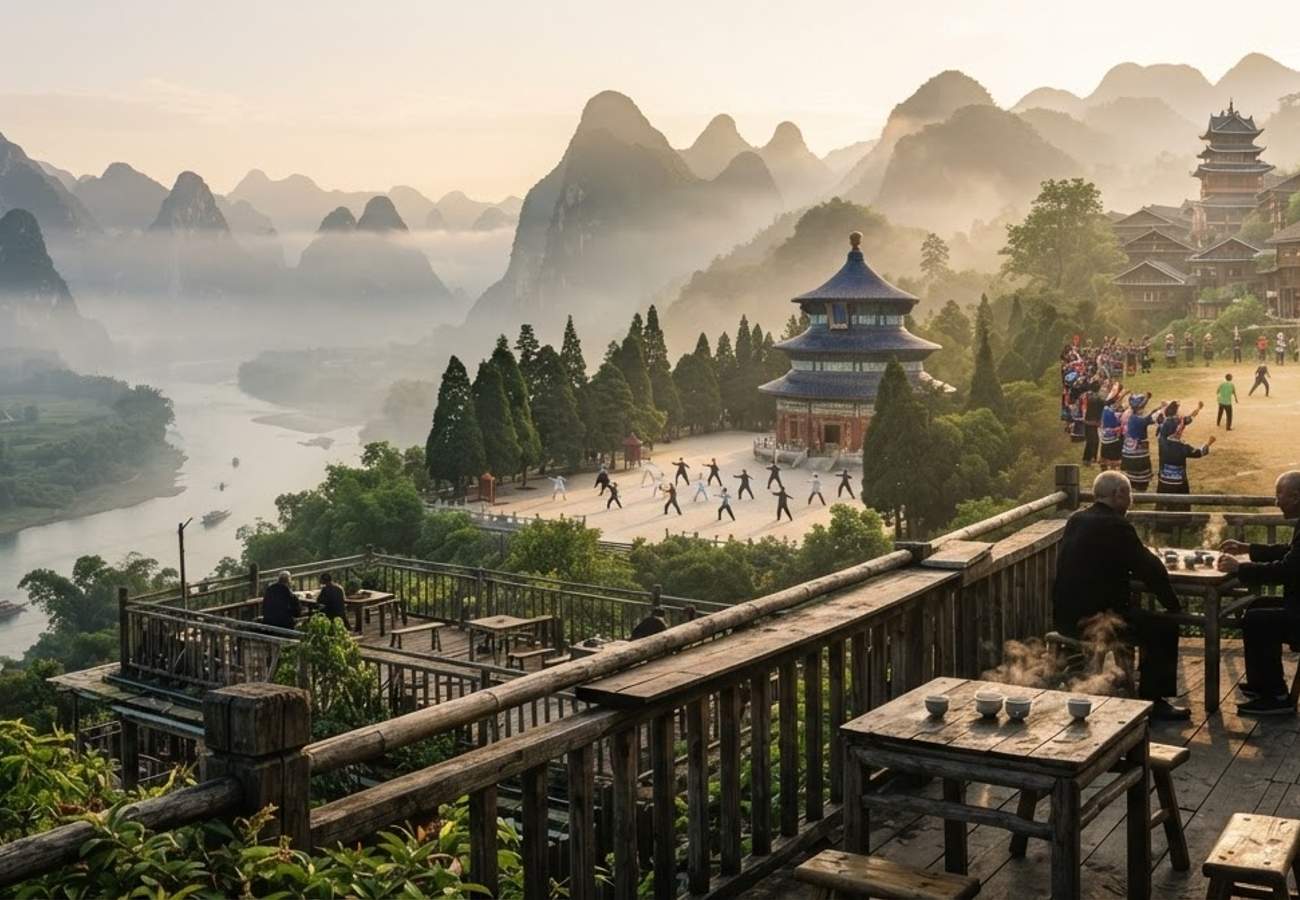
Image generated by AI
China is pivoting away from monument-centric travel toward "living heritage" experiences, integrating grassroots sports in Guizhou, traditional wellness in Beijing, and smart manufacturing tours into its 2026 tourism portfolio.
The Shift Toward Experiential and Living Heritage Tourism
China is diversifying its international tourism appeal by moving beyond the "Great Wall and Forbidden City" paradigm. The current trajectory emphasizes the integration of traditional daily life with modern industry, focusing on three primary hubs: Chengdu, Beijing, and Guizhou. This strategy allows foreign visitors to engage with the country through social customs, wellness routines, and rural community events rather than static sightseeing.
In Chengdu, the focus is on the city's historic teahouse culture. These spaces serve as social anchors where visitors can observe local customs, tea preparation, and the slower pace of urban life. This is paired with the city's culinary identity, specifically the bold flavors of Sichuan pepper, creating a localized itinerary that minimizes transit time between cultural touchpoints.
Beijing is leveraging its public green spaces to integrate traditional wellness into the urban travel experience. Public parks, including the Temple of Heaven and Beihai Park, have become primary sites for visitors to observe and participate in early-morning Tai Chi and other movement practices, blending imperial history with contemporary daily routines.
Rural and Industrial Diversification
The southwestern province of Guizhou is leading the charge in rural tourism, utilizing its mountainous terrain and ethnic minority heritage to attract travelers. The most significant driver in this region is the "Village Super League" (Cun Chao) in Rongjiang County. This grassroots football competition has evolved from a local event into a major cultural attraction, blending sport with regional food and community celebrations.
Simultaneously, China is introducing "Industrial Tourism," focusing on its dominance in the New-Energy Vehicle (NEV) sector. These tours provide a practical look at automation and robotics, offering a window into the country's technological infrastructure.
2026 Regional Tourism Specializations
| Region | Primary Tourism Focus | Key Activities | Core Appeal |
|---|---|---|---|
| Chengdu | Living Heritage & Wellness | Teahouse visits, Baduanjin exercise, Sichuan cuisine | Urban slow-living & social customs |
| Beijing | Urban Traditions | Morning Tai Chi, Temple of Heaven, Beihai Park | Blend of imperial history & daily life |
| Guizhou | Rural & Ethnic Culture | Village Super League (Cun Chao), mountain hiking | Grassroots community & ethnic heritage |
| Industrial Hubs | Smart Manufacturing | NEV factory tours, robotics demonstrations | Economic & technological development |
Traveler Logistics Guide: Navigating the New China
From a ground-level perspective, the best way to navigate this expanded tourism landscape is to move away from rigid, pre-packaged group tours and adopt a hybrid itinerary.
Booking and Connections For those combining the urban centers of Beijing and Chengdu with the rural reaches of Guizhou, the high-speed rail (HSR) network remains the most efficient option. However, reaching Rongjiang County for the Village Super League requires careful planning, as local transport from the nearest HSR station to the village can be limited during peak tournament dates.
Wellness and Cultural Etiquette When participating in Baduanjin or Tai Chi in public parks, visitors should treat these as cultural observations. These practices are integrated into the daily health routines of residents; entering these spaces with a respectful, observant posture is generally more appreciated than treating the activity as a choreographed performance.
Digital Transit and Access Travelers should ensure their digital payment systems (Alipay or WeChat Pay) are fully linked to international cards, as rural Guizhou and small teahouses in Chengdu are increasingly cashless. For industrial tours, advance registration is mandatory. These facilities are not "walk-in" attractions and require passport verification and adherence to strict safety protocols.
Infrastructure Impact Assessment
This shift toward rural and industrial tourism is redistributing tourist spending from Tier-1 cities into provincial regions. By promoting the Village Super League and NEV facilities, China is reducing the seasonal pressure on major monuments and stimulating economic growth in southwestern mountainous areas. This diversification not only enhances regional connectivity but also creates a more nuanced international perception of China as a blend of ancient tradition and futuristic manufacturing.
Moving beyond the monuments to find the heartbeat of the provinces.
Related Travel Guides
Disclaimer
This article is for informational and educational purposes only. It does not constitute legal, financial, or professional advice. While we strive to provide accurate and up-to-date information, travel policies, regulations, and conditions change rapidly. Always verify information with official sources before making travel decisions. Nomad Lawyer makes no representations about the accuracy, reliability, completeness, or suitability of the information provided. Readers should consult qualified professionals for advice specific to their circumstances. The views expressed in this article are those of the author and do not necessarily reflect the views of Nomad Lawyer.
Naina Thakur
Contributor & Travel Specialist
Travel enthusiast and legal writer covering visa regulations, responsible tourism, and cultural journeys across global destinations.
Learn more about our team →