
Prague Reveals Charles Bridge, Golden Lane, and Hidden Quarters as Cultural Tourism Unlocks Historic Heritage: 2026 Guide
Prague unlocks deep cultural travel across Charles Bridge, Golden Lane, and Josefov, as UNESCO heritage preservation balances 8 million annual visitors in 2026.

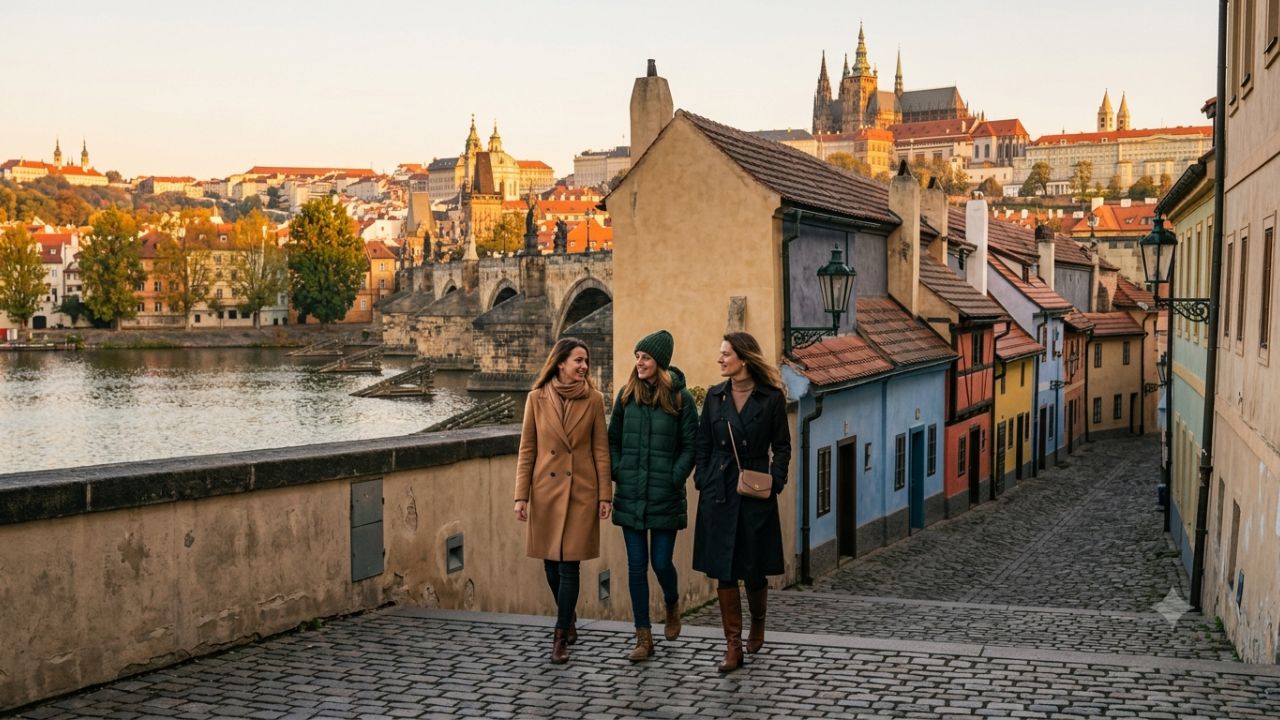
Prague's historic core—encompassing Charles Bridge, Prague Castle, and the Old Town—anchors Central Europe's cultural tourism revival.
Beneath the soaring Gothic spires and cobblestone labyrinths of the Bohemian capital, a profound transformation in international travel patterns is prompting cultural voyagers to look past postcard snapshots and embrace Prague’s extraordinary architectural, political, and literary heritage. From the 14th-century engineering marvel of Charles Bridge (Karlův most) to the colorful alchemists' cottages of Golden Lane (Zlatá ulička) within the colossal Prague Castle complex, the city is experiencing a sustained resurgence in narrative-driven, educational tourism. As international travelers increasingly trade rushed city breaks for slow, immersive exploration, municipal authorities and heritage conservators are pioneering sustainable visitor management across the city's 866-hectare UNESCO World Heritage zone.
Rather than concentrating footfall solely around famous monuments, modern travelers are venturing into the layered underground crypts of the historic Jewish Quarter, exploring the Cold War samizdat publishing routes of the Communist era, and discovering the post-industrial creative resurgence of Holešovice. Backed by rigorous preservation guidelines and expanded pedestrianized districts, Prague’s visitor economy demonstrates how an 800-year-old urban landscape can accommodate over 8 million annual guests while protecting the delicate structural integrity of its medieval fabric.
Beyond the Postcard: Prague's Transition to Depth and Slow Travel
Global leisure travel is undergoing a fundamental philosophical realignment. Across major European cultural capitals, visitors are consciously rejecting superficial checklist itineraries in favor of intellectually rich, place-based storytelling. In Prague, this behavioral shift has fueled a dramatic expansion in specialized historical excursions, architectural lectures, and neighborhood walking tours.
Official visitor audits from Prague City Tourism reveal that travelers now spend significantly longer per trip, distributing their time between world-famous Gothic towers and lesser-known residential districts. This decentralization eases physical congestion along the historic Royal Route (Královská cesta), injects tourism revenues directly into independent family tavernas and artisanal craft workshops, and fosters meaningful cross-cultural dialogue between international guests and local residents.
| Historic Quarter / Monument | Historical Epoch & Founding | Core Architectural & Cultural Highlight | Modern Heritage & Tourism Focus |
|---|---|---|---|
| Staré Město (Old Town) | Established in the 12th Century | Astronomical Clock (Orloj), Týn Church, Jan Hus Memorial | Pedestrian zone expansion & cobblestone protection |
| Nové Město (New Town) | Founded in 1348 by Charles IV | Wenceslas Square, Lucerna Passage, National Museum | 20th-century political history & Velvet Revolution walks |
| Josefov (Jewish Quarter) | Medieval Ghetto (13th–15th Century) | 6 historic synagogues, Old Jewish Cemetery (12,000 stones) | Sacred layer conservation & visitor capacity limits |
| Charles Bridge (Karlův most) | Commissioned in 1357 | 516m stone bridge, 16 arches, 30 baroque statuaries | Continuous stone restoration & dawn walking promotion |
| Pražský Hrad (Prague Castle) | Founded c. 880 (70,000 m² footprint) | St. Vitus Cathedral, Old Royal Palace, Golden Lane | Multi-courtyard dispersal & state exhibition curation |
| Holešovice Creative District | Industrial Port & Slaughterhouses (1895) | DOX Centre for Contemporary Art (6,000 m²), Vnitroblock | Adaptive architectural reuse & design-led regeneration |
| Vltava River Waterway | Historic Mill Corridor (31 km urban course) | 10+ medieval water mills, historic weirs, Charles Bridge views | €150M annual river cruise economy & ecological bank care |
Staré Město: Architectural Layers from Romanesque to Art Nouveau
The Old Town (Staré Město), firmly chartered in the 12th century, serves as the spiritual heart of the city’s architectural evolution. Within its winding cobblestone alleys, visitors encounter an intact visual timeline of European art history:
- The Astronomical Clock (Pražský orloj): Mounted on the southern wall of the Old Town City Hall since 1410, this mechanical wonder features the hourly procession of the Twelve Apostles alongside astronomical dials measuring planetary alignment and ancient Bohemian time.
- Church of Our Lady before Týn: Dominating the skyline with its 80-meter-tall twin Gothic spires, the cathedral has anchored religious and philosophical discourse since the 14th century, housing the tomb of Danish astronomer Tycho Brahe.
- Old Town Square (Staroměstské náměstí): Centered around the monumental bronze sculpture of theological reformer Jan Hus, the square displays a masterclass in architectural transitions, seamlessly juxtaposing Romanesque cellars, Gothic portals, Baroque stucco facades, and pastel Art Nouveau frontages.
Conservation programs supervised by the National Heritage Institute of the Czech Republic (NPÚ) have implemented strict vehicular bans throughout Staré Město, shielding historic building facades from exhaust erosion and preserving tranquil pedestrian thoroughfares for heritage walkers.
Nové Město and Wenceslas Square: Epicenters of European Revolution
Directly adjoining the medieval core lies the New Town (Nové Město), established in 1348 by Holy Roman Emperor Charles IV as a visionary urban expansion. Far from a contemporary development, Nové Město's sweeping boulevards were intentionally planned around grand public markets, crowned by the expansive 750-meter-long Wenceslas Square (Václavské náměstí).
Throughout the 20th century, Wenceslas Square served as the dramatic stage for the pivotal socio-political turning points of Central European modern history:
- The 1968 Prague Spring: Peaceful demonstrations advocating "socialism with a human face" met with Soviet-led Warsaw Pact tanks, etching memorials to student martyr Jan Palach into the paving stones before the National Museum.
- The 1989 Velvet Revolution: Hundreds of thousands of citizens gathered nightly, jingling keys to peacefully bring an end to over four decades of authoritarian communist rule and ushering in democratic governance led by playwright-dissident Václav Havel.
Today, political heritage walking tours through Nové Město provide international travelers with essential context regarding totalitarianism, resistance movements, and civil courage, making Wenceslas Square a premier site for educational tourism.
Josefov: The Sacred Layers and Synagogues of the Historic Jewish Quarter
Occupying a small enclave north of the Old Town Square, Josefov preserves one of the most poignant and archaeologically complex heritage landscapes in Europe. Named in honor of Holy Roman Emperor Joseph II, who enacted the 1781 Edict of Toleration, the district miraculously survived the destruction of World War II to stand as an enduring memorial to Jewish scholarship and survival.
Key heritage assets across the quarter include:
- The Old Jewish Cemetery (Starý židovský hřbitov): Established in the early 15th century, the cemetery contains roughly 12,000 tightly packed, weathered tombstones. Due to strict medieval restrictions prohibiting the expansion of the Jewish ghetto, burials were conducted across multiple overlapping strata—accumulating more than 100,000 burials across up to twelve distinct subterranean layers over 300 years of continuous use.
- Six Historic Synagogues: Including the Old-New Synagogue (Staronová synagoga)—Europe’s oldest active synagogue, completed around 1270 in early Gothic style and steeped in the folklore of the legendary Golem of Prague—alongside the Spanish Synagogue, renowned for its dazzling Moorish-Revival gilded arabesques.
To protect these delicate sacred grounds from physical wear, municipal authorities and the Jewish Museum in Prague enforce strict ticketing time-slots and respectful silence zones, ensuring a contemplative and educational environment.
Engineering the Charles Bridge: 16 Arches and 30 Statuary Masterpieces
Connecting the Old Town with the picturesque Malá Strana (Lesser Town), Charles Bridge (Karlův most) remains one of the world's most iconic civil engineering achievements. Commissioned by King Charles IV on 9 July 1357 to replace the flood-damaged Judith Bridge, the sandstone structure was completed in the early 15th century under the guidance of master architect Peter Parler.
The structural brilliance of the bridge is defined by its impressive technical dimensions:
- Engineering Geometry: The bridge spans 516 meters in length and measures nearly 10 meters in width, anchored by 16 robust stone arches constructed with Bohemian sandstone blocks bound with mortar traditionally said to have been mixed with egg yolks for tensile strength.
- Open-Air Baroque Sculpture Gallery: Between 1683 and 1714, the bridge deck was transformed into a sacred ceremonial way with the addition of 30 stone statues and sculptural groups depicting patron saints, crafted by master sculptors like Matthias Braun and Ferdinand Brokoff. (To safeguard the original sculptures from freeze-thaw weathering, several originals have been relocated to the National Museum's Lapidarium and replaced with exact sandstone replicas.)
To manage the dense pedestrian flow that crosses the bridge daily, tourism boards actively promote off-peak dawn and late-night visits. Exploring the bridge in the early morning mist not only provides photographers with undisturbed golden-hour light across Prague Castle, but also minimizes physical abrasion on the historic sandstone paving.
Pražský Hrad and Golden Lane: Inside the 70,000-Square-Meter Castle Stronghold
Perched atop a commanding hill overlooking the Vltava River, the Prague Castle complex (Pražský hrad) holds the official Guinness World Record as the largest ancient castle complex on earth, sprawling across nearly 70,000 square meters (roughly 7 hectares).
Founded around the year 880 by Prince Bořivoj of the Premyslid dynasty, this colossal fortress has served as the continuous seat of power for Bohemian dukes, Czech kings, Holy Roman Emperors, and modern presidents:
- St. Vitus Cathedral (Katedrála sv. Víta): The spiritual pantheon of the Czech nation, taking nearly six centuries to complete from its 1344 groundbreaking to its formal consecration in 1929, housing the Gothic Chapel of St. Wenceslas and the Bohemian Crown Jewels.
- The Old Royal Palace and Vladislav Hall: Featuring dramatic 15th-century late-Gothic rib-vaulting so expansive that knights on horseback could enter directly via the Riders' Staircase for indoor jousting tournaments.
- Golden Lane (Zlatá ulička): A row of miniature, vividly painted 16th-century cottages built into the castle’s northern defensive wall. Originally housing castle marksmen and later gold goldsmiths and alchemists under Emperor Rudolf II, house No. 22 famously served as a quiet writing retreat for author Franz Kafka between 1916 and 1917.
Because of the castle's immense multi-courtyard footprint, visitor management systems effectively disperse large tour groups across royal gardens, medieval armories, and state art galleries, maintaining high visitor satisfaction.
Literary Cafés and Bohemian Intellectual Currents: Kafka to Kundera
Beyond monumental stone, Prague’s modern allure is deeply tied to its rich intellectual history. During the interwar period of the 1920s and 1930s, the city nurtured a thriving café culture with more than 50 prominent intellectual salons where Czech, German, and Jewish writers debated existential philosophy, modernism, and political reform:
- Café Slavia: Situated directly across from the National Theatre along the riverbank, its Art Deco dining rooms hosted Franz Kafka, Rainer Maria Rilke, and later dissident writers including Václav Havel during the 1970s.
- Café Imperial: Celebrated for its opulent ceramic mosaic walls and ceilings, functioning as a vibrant meeting point for Central European journalists and philosophers.
In today’s travel market, literary-themed walking tours exploring the surrealist haunts of Franz Kafka and the philosophical reflections of Milan Kundera have expanded by over 25% annually, catering to travelers seeking an intellectual pilgrimage through Central European literature.
Industrial Rebirth in Holešovice: Modern Art at the DOX Centre
Prague’s commitment to sustainable tourism is nowhere more evident than in Holešovice, an expansive former industrial and meatpacking district tucked into a sweeping bend of the Vltava River north of the center.
Dating back to 1895, former municipal slaughterhouses, railway warehouses, and river barge ports have been systematically transformed into a cutting-edge creative incubator:
- DOX Centre for Contemporary Art: Spanning over 6,000 square meters of repurposed industrial brick and glass, this premier private arts institution draws more than 200,000 design-focused visitors annually. Its iconic rooftop installation—the Gulliver Airship, a 42-meter-long architectural timber zeppelin—serves as a celebrated venue for global literature and public debate.
- Vnitroblock and Holešovická Tržnica: Abandoned factory halls now house independent fashion boutiques, third-wave specialty roasteries, and experimental digital arts studios.
By marketing Holešovice as an avant-garde cultural destination, city planners successfully draw hundreds of thousands of travelers away from congested historic monuments, spreading tourism spending directly into independent neighborhood businesses.
Cold War Subterranea: Samizdat Networks and Secret Nuclear Bunkers
For travelers interested in 20th-century geopolitical history, Prague’s communist period (1948–1989) offers deeply evocative subterranean exploration. During 41 years of hardline regime control, secret dissident networks courageously printed and distributed more than 15,000 banned samizdat literary and political titles using hidden carbon-paper presses and basement duplicators.
Today, historical organizations provide curated access to:
- Preserved Nuclear Bunkers: Deep civilian shelters excavated beneath Parukářka and Folimanka parks, engineered to protect political elites and citizens from NATO atomic strikes.
- Secret Surveillance Posts: Former State Security (StB) observation hideouts tucked inside church bell towers—such as the hidden listening post in St. Nicholas Church in Malá Strana—where operatives monitored Western diplomatic compounds.
Drawing upwards of 1.5 million educational heritage visitors each year, these sites transform painful chapters of 20th-century oppression into powerful educational warnings on the fragility of democratic freedom.
The Vltava Waterway and UNESCO 866-Hectare Heritage Stewardship
Winding for 31 kilometers directly through the urban core of Prague, the Vltava River has served as the city's economic lifeblood since antiquity. Historically powering over 10 medieval water mills—such as the picturesque Grand Priory Mill (Velkopřevorský mlýn) in Kampa Island's Devil’s Stream (Čertovka)—the river today supports an eco-modernized fleet of electric ferries and cruise boats that generate over €150 million in regional economic impact annually. River transit offers passengers panoramic vistas of Prague Castle and Charles Bridge while reducing pedestrian gridlock on narrow historic bridges.
These maritime and terrestrial visitor flows operate within an overarching conservation framework. Since its formal inscription on the UNESCO World Heritage List in 1992, Prague’s 866-hectare protected historic core has been governed by rigorous municipal preservation guidelines:
- Cobblestone and Facade Subsidies: Dedicated municipal preservation grants assist historic homeowners in maintaining traditional lime plaster facades and repairing historic hand-laid granite cobblestone roadways.
- Pedestrian-First Corridors: Continuous expansion of car-free zones across Malá Strana, Josefov, and the Old Town ensures unhindered mobility for pedestrians.
- Decentralized Night-Time Tourism Regulations: Dynamic municipal regulations limit disruptive bar-crawl noise in residential conservation quarters, preserving the peaceful residential character of the historic center.
By honoring the multifaceted depths of its history—from medieval masonry and imperial castles to literary salons and velvet revolutions—Prague offers twenty-first-century travelers a deeply enriching cultural journey that stands as an enduring model for European heritage stewardship.
Frequently Asked Questions
What are the main historic districts to explore in Prague?
Prague’s primary cultural quarters include Staré Město (Old Town), Nové Město (New Town), Josefov (the historic Jewish Quarter), Malá Strana (Lesser Town), and Hradčany (the Castle District).
What makes Charles Bridge architecturally unique?
Commissioned in 1357 by Charles IV and completed in the early 15th century, the 516-meter-long sandstone bridge is supported by 16 arches and decorated with 30 baroque stone statuaries added between 1683 and 1914.
Why is Josefov historically significant for cultural travelers?
Josefov preserves six historic synagogues and the 15th-century Old Jewish Cemetery, where approximately 12,000 weathered tombstones mark over 100,000 burials layered up to 12 deep across 300 years.
How does Prague manage overtourism across its UNESCO historic center?
Covering 866 protected hectares, Prague regulates over 8 million annual visitors through pedestrianized corridors, strict architectural restoration subsidies, timed ticketing at sacred sites, and promoting secondary cultural hubs like Holešovice.
Related Travel Guides
- Prague Launches Exclusive Literary Tours: Dan Brown Mystery Routes Revealed
- Europe's Historic Cities Rethink Tourism Growth Through Visitor Value, Biometric Borders, and Urban Resilience: 2026 Strategic Analysis
- The Great European Rail Revival 2026: Sweden's Arctic Sleeper, Alpine Nightjets, and Cross-Border High-Speed Travel Guide
Disclaimer
This article is for informational and educational purposes only. It does not constitute legal, financial, or professional advice. While we strive to provide accurate and up-to-date information, travel policies, regulations, and conditions change rapidly. Always verify information with official sources before making travel decisions. Nomad Lawyer makes no representations about the accuracy, reliability, completeness, or suitability of the information provided. Readers should consult qualified professionals for advice specific to their circumstances. The views expressed in this article are those of the author and do not necessarily reflect the views of Nomad Lawyer.
Kunal K Choudhary
Co-Founder & Contributor
A passionate traveller and tech enthusiast. Kunal contributes to the vision and growth of Nomad Lawyer, bringing fresh perspectives and driving the community forward.
Learn more about our team →