Century Cruises Enters European Market with Century Star Debut on Danube and Rhine Routes

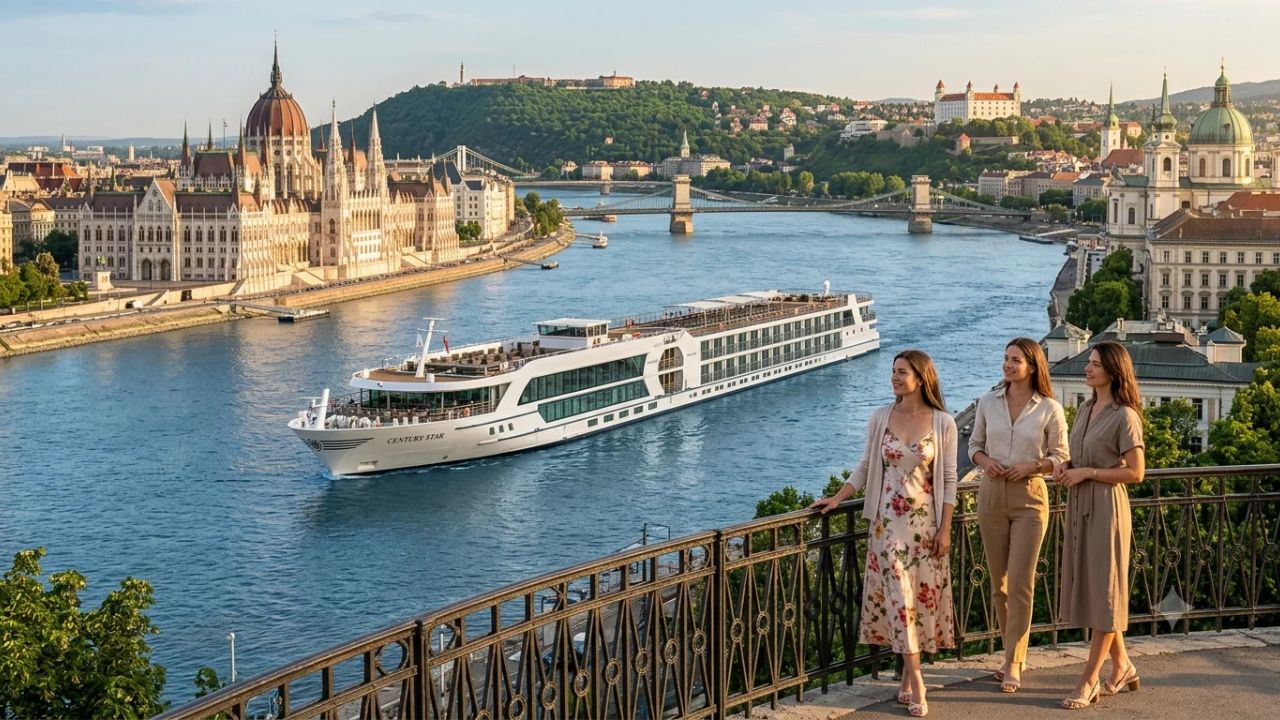
Century Cruises has officially deployed its first purpose-built European vessel, Century Star, connecting Budapest, Bratislava, Vienna, and Passau along the Danube.
BUDAPEST, November 3, 2026 — Century Cruises has formally commenced operations on Central Europe's inland waterways with the deployment of Century Star, its newly built 174-guest luxury river vessel purpose-designed for European waterways, inaugurating an eight-day Danube itinerary connecting Budapest in Hungary with Passau in Germany. Marking a decisive expansion from its historic operating stronghold on China's Yangtze River, the luxury river cruise line is navigating a four-nation trans-European corridor through Hungary, Slovakia, Austria, and Germany, linking three sovereign capitals—Budapest, Bratislava, and Vienna—while navigating complex Schengen border check notifications, dynamic river depth thresholds, and scheduled late-autumn deployments along the Rhine between Amsterdam and Basel.
[!NOTE] Key Operational Takeaways for Danube and Rhine Voyagers: Century Star represents Century Cruises' first purpose-built European passenger vessel following earlier charter sailings in 2024. Passengers embarking on the eight-day Budapest-to-Passau circuit traverse four Schengen nations, but must maintain immediate access to identification due to Austria's temporary internal border controls with Slovakia notified through March 15, 2027. Additionally, summer and autumn navigation requires close monitoring of Austrian transport ministry depth bulletins and viadonau 72-hour forecasts, which govern ship swaps, coach bridges, and docking relocations between Passau's Lindau, Racklau, and Old Town quays.
CENTURY STAR EUROPEAN WATERWAY ROUTE TOPOLOGY
| Column 1 |
|---|
| [ DANUBE CIRCUIT: 8 DAYS / 4 COUNTRIES / 3 CAPITALS ] |
| Budapest (Hungary) ---> Esztergom ---> Bratislava (Slovakia) ---> Vienna (Austria) |
| v v |
| [ UNESCO World Heritage ] [ Schengen Border Notice ] |
| Buda Castle & Parliament Austria checks active to Mar 2027 |
| +--------------------> Wachau Valley / Linz (Austria) --------+ |
| v |
| Passau Terminal (Germany: Lindau L3 / Racklau) |
| [ RHINE EXTENSION: 8 DAYS / AMSTERDAM TO BASEL ] |
| Amsterdam (Ruijterkade West 6 / Westerdoksdijk) ---> Middle Rhine Gorge ---> Basel (Switzerland) |
The Century Star Debut: Transferring Yangtze River Cruise Expertise to European Waterways
The arrival of Century Star on European inland waterways represents a major milestone in global river cruising, marking the international diversification of Chongqing-based Century Cruises. For more than two decades, Century Cruises established its commercial reputation as a premier operator on China's Yangtze River, operating high-tonnage eco-hybrid vessels through the Three Gorges. The strategic initiative to expand into Europe began taking shape through exploratory charter operations along the Danube River in 2024, enabling the operator to evaluate Western passenger logistics, European port interfaces, and river management structures.
The tangible foundation for this long-term European presence was established on June 16, 2026, with the official delivery and commercial handover of Century Star. Engineered and constructed specifically for European inland waterways by a prominent Dutch shipyard, the vessel was tailored to comply with the stringent dimensional constraints of continental locks, low bridge clearances, and variable draft requirements of the Rhine-Main-Danube river system. To guarantee seamless compliance with regional maritime regulations, Century Cruises entered into a strategic collaboration with an experienced European operating partner tasked with managing technical nautical crewing, maritime safety certifications, and river navigation protocols.
Following the June handover, the operational deployment proceeded across coordinated phases. On July 1, Century Cruises officially announced a series of early positioning sailings starting August 11, setting September 18 as the formal inaugural voyage for the Blue Danube programme. On August 24, the municipal government of Chongqing publicly confirmed that Century Star had completed technical trials and successfully entered commercial service in Europe. Berth management logs maintained by the municipal port authority of Passau in Germany documented Century Star moored at Lindau berth L3 on September 11 and September 25, reflecting the steady cadence of late-summer operations. This multi-tiered launch demonstrated how an established Asian river line could assimilate European shipyard craftsmanship and local operational management into an independent hospitality platform.
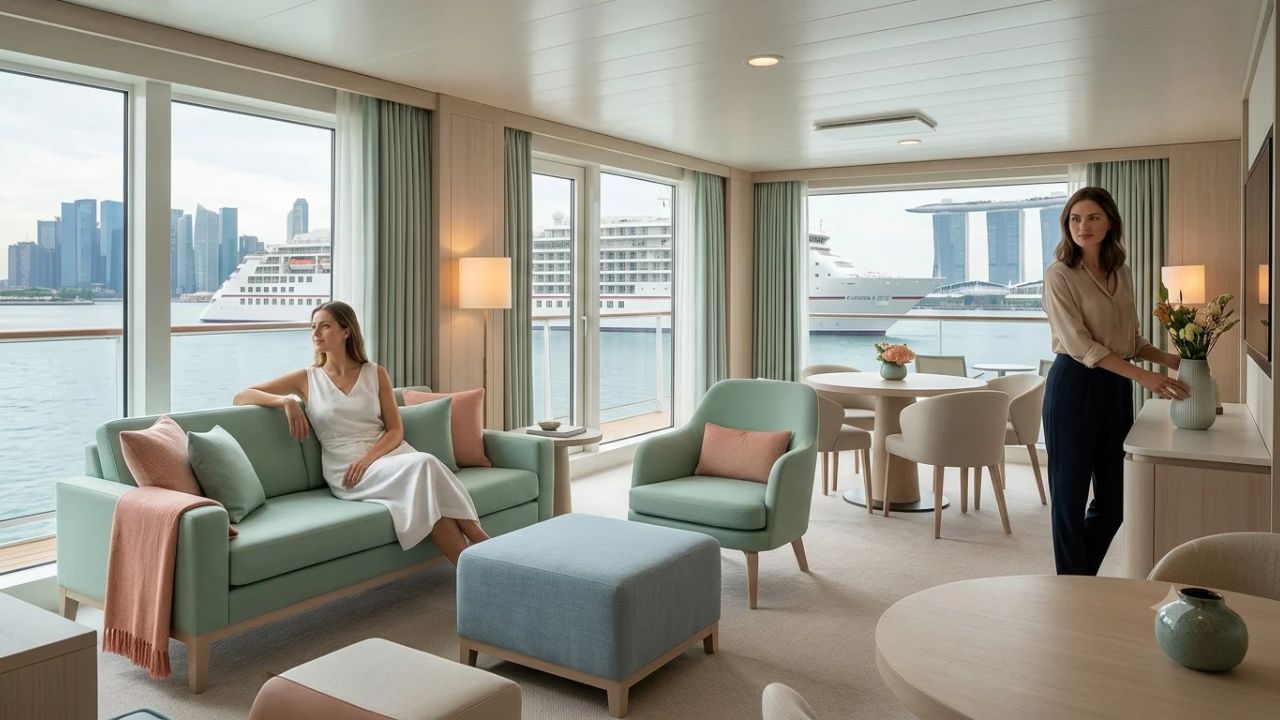
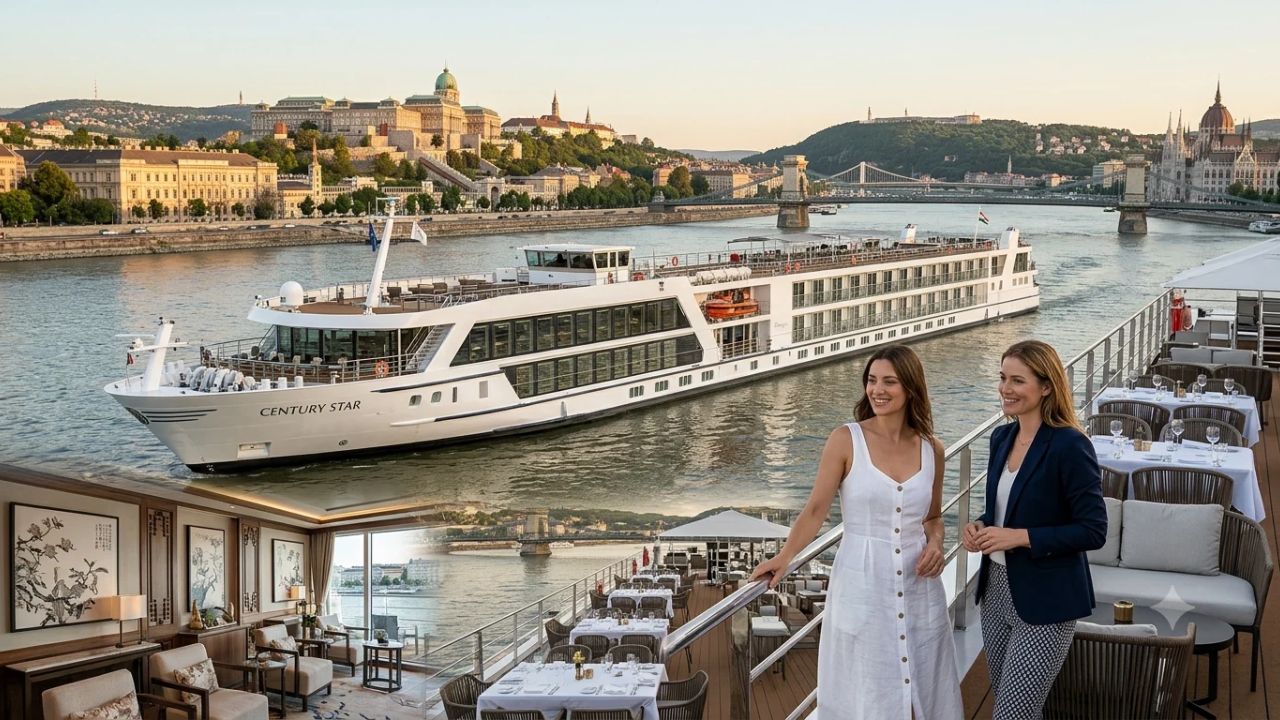
With a passenger capacity limited to 174 guests, Century Star offers an intimate vessel atmosphere compared to the mammoth 650-passenger vessels operating along the Yangtze. The ship's internal layout combines European contemporary marine architecture with bespoke interior design touches that subtly reference Chinese design traditions. Accommodations feature private French or exterior walk-out balconies, high-specification climate control systems, and premium bedding. The vessel's social spaces encompass an expansive observation lounge, a panoramic restaurant delivering multi-course dining, a wellness spa, and an unobstructed top-deck viewing area equipped with collapsible navigational masts and canopies designed for low-bridge transits along the Upper Danube and Main-Danube Canal.
The Four-Country Danube Corridor: Cultural Heritage from Budapest to Passau
The signature itinerary undertaken by Century Star spans eight days and traverses a 700-kilometer aquatic corridor connecting four sovereign Central European nations. The voyage links Hungary, Slovakia, Austria, and Germany, providing passengers with an uninterrupted base from which to explore three distinct national capitals alongside celebrated provincial trading towns and UNESCO World Heritage landscapes.
The journey commences in Budapest, where the Danube dissects the Hungarian capital into the historic hilly enclave of Buda and the commercial plains of Pest. Sailing past the Hungarian Parliament Building, whose neo-Gothic spires reflect across the water, passengers observe the Castle Hill district, encompassing the Royal Palace and Matthias Church. Departing Budapest, the vessel navigates the scenic Danube Bend toward Esztergom, the spiritual seat of the Roman Catholic Church in Hungary. Here, the neoclassical Esztergom Basilica dominates the river bluffs, presenting visitors with a profound look into Hungary's millennium of sovereign statehood before the river marks the national border with Slovakia.
Crossing into Slovakia, Century Star docks along the embankment of Bratislava, positioning guests within immediate walking distance of the historic core. Bratislava offers a distinctive historical heritage through its preserved Coronation Route, where small gilded bronze crowns embedded in the cobblestones trace the path followed by Hungarian monarchs between 1563 and 1830 on their way to St. Martin's Cathedral. The route ascends past Gothic townhouses and Baroque palaces toward the four-towered silhouette of Bratislava Castle, overlooking the meeting point of Slovakian, Austrian, and Hungarian territories.
Continuing westward into Austria, the itinerary calls at Vienna, the former imperial capital of the Habsburg dynasty. Vienna provides an abundance of architectural grandeur, from the Baroque palaces of Schönbrunn and Belvedere to the Gothic masterpiece of St. Stephen's Cathedral and the Ringstraße boulevard. Upstream from Vienna, the vessel navigates the Wachau Valley, a 36-kilometer stretch of terraced vineyards, forested hills, and medieval ruins recognized as a UNESCO World Cultural Landscape. The valley is anchored by the imposing Benedictine Abbey of Melk, whose golden Baroque facade perches high above the water. Further west, the itinerary calls at Linz, Austria's third-largest city, where the Danube waterfront highlights an intriguing juxtaposition of historic trade and modern creativity: the Lentos Museum of Modern Art faces the cutting-edge Ars Electronica Center across the water, framing a vibrant cultural interface.
The eight-day voyage culminates in the Bavarian three-river city of Passau, situated at the confluence of the Danube, Inn, and Ilz rivers. Dominated by the hilltop fortress of Veste Oberhaus and the Italianate Baroque towers of St. Stephen's Cathedral—home to the world's largest Catholic church organ—Passau functions as both a historic terminus and an essential logistical hub for Central European passenger transport.
Navigational Realities: Managing Danube Low-Water Dynamics and viadonau 72-Hour Forecasts
While European river cruising offers an idyllic travel experience, its execution is inextricably linked to the physical realities of inland hydrology. Unlike oceanic cruising, where ships adjust headings across vast open waters to avoid adverse conditions, river vessels operate within narrow, channelized waterways subject to seasonal droughts, heavy rainfall, and alpine snowmelt fluctuations.
The operational sensitivities of Danube navigation were clearly underscored on August 4, 2026, when Austria's Federal Ministry for Climate Action, Environment, Energy, Mobility, Innovation and Technology issued an official hydrological bulletin detailing severe low-water conditions. Navigable channel depths had fallen to 1.8 meters in the critical free-flowing sector east of Vienna and 2.0 meters along the rocky stretches of the Wachau Valley. Under these shallow conditions, modern river cruise vessels operating with standard operational drafts between 1.6 and 1.8 meters face strict navigational restrictions. Operating near the riverbed increases the hazard of grounding, impedes steering responsiveness, and forces vessels to discharge ballast or operate at substantially reduced speeds.
To navigate these environmental realities, European river operators rely on real-time data provided by viadonau, the Austrian waterway management agency. viadonau operates an advanced network of hydrological sensing stations, providing commercial navigators with authoritative shallow-section depth forecasts projecting conditions up to 72 hours ahead. These predictive models enable captains and fleet operations teams to anticipate bottlenecks well before vessels approach critical shoals, such as those near Pfelling and Straubing in Bavaria or the un-dammed sectors below Vienna.
When shallow water prevents safe vessel transit, cruise lines activate well-rehearsed logistical contingency plans. On September 16, Century Cruises issued a transparent passenger travel advisory setting out the operational protocols deployed during severe water fluctuations. If a specific river sector becomes impassable, the operator can alter the sequence of port calls, berth the vessel at a navigable upstream or downstream port while utilizing luxury touring coaches to transport guests to advertised sightseeing destinations, or execute a ship swap. In a ship-swap operation, two sister or partner vessels approach an impassable bottleneck from opposite directions; passengers disembark, trade ships alongside their luggage via a brief coach transfer, and continue their scheduled itineraries in identical cabin assignments without missing prepaid excursions. Understanding these potential mitigations enables travelers to maintain realistic expectations regarding inland waterway journeys.
Comparative Analysis: Century Star Specifications and European River Market Positioning
Century Star enters a highly competitive European river cruising marketplace populated by long-standing Western brands. The vessel's operational footprint reflects a deliberate balance between passenger capacity, spatial comfort, and navigational agility across continental waterways.
| Feature / Metric | Century Star Specifications | Standard European Longship Average | Yangtze River Mega-Vessel Average |
|---|---|---|---|
| Operational Launch Date | June 16, 2026 (Delivered); August 2026 (In Service) | Established standard fleets (2012–2024 builds) | Multi-year generational builds (2018–2023) |
| Passenger Capacity | 174 guests | 190 guests | 600 to 650 guests |
| Length Overall (LOA) | 135 meters (European lock maximum) | 135 meters | 149.99 meters |
| Beam (Width) | 11.45 meters (Continental canal constraint) | 11.45 meters | 21.0 to 24.0 meters |
| Draft (Operating Depth) | 1.6 to 1.8 meters (Low-water optimized) | 1.7 to 2.0 meters | 2.8 to 3.2 meters |
| Key Waterways Served | Danube (Budapest–Passau), Rhine (Amsterdam–Basel) | Rhine, Main, Danube, Rhône, Seine | Yangtze River (Chongqing to Yichang) |
| Primary Cultural Markets | Multilingual: European, North American, Asian | English-speaking: US, UK, Australia, Canada | Domestic Chinese and international tour groups |
| Key Regional Ports | Budapest, Bratislava, Vienna, Linz, Passau, Amsterdam | Standard European river cruise calling ports | Chongqing, Fengdu, Three Gorges, Yichang |
Cross-Border Regulatory Protocols: Schengen Short-Stay Rules and Austria's River Border Inspections
Traversing four Central European nations aboard Century Star presents unique regulatory dynamics for international tourists. Although Hungary, Slovakia, Austria, and Germany are all member states of the European Union and the border-free Schengen Area, international passengers must navigate specific immigration policies that govern cross-border maritime movement.
For citizens from non-EU countries, including travelers originating from the United States, Canada, Australia, the United Kingdom, and China, travel throughout the Danube corridor is governed by the uniform Schengen short-stay regulation. Under this framework, foreign nationals are permitted to stay within the Schengen Area for a maximum of 90 days within any rolling 180-day period. Because the entire cruise transits internal Schengen waters, embarking in Budapest and disembarking in Passau does not consume separate national visa allowances; the entire duration of the cruise counts as a continuous stay against the passenger's cumulative 90-day allotment. Travelers must ensure their passports carry a validity period extending at least three months beyond their planned departure date from the Schengen zone and were issued within the preceding ten years. Non-EU travelers requiring a consular visa must hold a valid, multiple-entry Uniform Schengen Short-Stay Visa covering all destination countries.
Significantly, travelers cannot assume that Schengen membership means an absolute absence of border checks. Citing national security assessments, irregular migration mitigation, and cross-border security monitoring, the Austrian Federal Ministry of the Interior has formally notified the European Commission of temporary re-introductions of internal border controls. These temporary measures encompass the river and land frontiers between Austria and Slovakia and remain formally active through March 15, 2027.
Consequently, as Century Star navigates upstream from Bratislava toward Vienna, Austrian federal police and customs officers maintain the legal authority to board vessels or conduct spot-check inspections at lock facilities or arrival quays. International passengers must keep their original passports, visas, and cruise boarding credentials accessible at all times rather than packed away in checked luggage. Additionally, should low-water conditions require passengers to transfer between Bratislava and Vienna via executive motor coach, these cross-border highway routes pass through designated stationary checkpoints where identification checks are routinely performed. Ensuring compliance with these documentation standards prevents unnecessary delays and ensures seamless transit across the Danube corridor.
European Inland Navigation Market Dynamics: The Post-2025 Cruise Surge
The entry of Century Star into the European river fleet coincides with a period of remarkable resilience and expansion across the continent's inland waterway tourism economy. The European Inland Navigation Market Report, published on October 28, 2026, provides extensive statistical context regarding passenger volumes, route popularity, and economic contributions across regional waterways.
According to verified market findings, the European river cruise sector recorded approximately 1.5 million overnight cruise passengers throughout 2025, representing an eight percent expansion over 2024 performance levels. The Central European waterway network—dominated by the Rhine, the Danube, and their connected tributaries—accounted for nearly eighty percent of all passenger volume choices across the continent, consolidating their position as the twin pillars of European river cruising.
On the Austrian stretch of the Danube alone, passenger transport statistics compiled by viadonau recorded roughly 1.21 million total river travelers in 2025. Of this comprehensive volume, hotel cruise vessels accounted for approximately 530,000 passengers, while the remaining 680,000 travelers used scheduled local passenger ferries, scheduled day-trip catamarans, and regional sightseeing boats. This establishes that overnight cruise passengers represent approximately 44 out of every 100 travelers utilizing the Austrian Danube, underscoring the enormous economic weight of multi-day river cruise tourism on riverside communities, historic landmarks, and hospitality suppliers.
For municipalities such as Budapest, Bratislava, Vienna, and Passau, overnight cruise traffic delivers high-yield economic returns. River cruise guests participate in guided shore excursions, dine in regional culinary establishments, frequent cultural institutions, and purchase luxury local artisanal products. By adding a newly constructed 174-guest ship to this thriving sector, Century Cruises is capturing market share in an established, high-demand vacation corridor.
Operational Logistics: Passau Berth Allocation and Passenger Transfer Contingencies
The logistical culmination of the Danube voyage at Passau demonstrates the operational precision required to manage commercial river traffic. Known as the Three Rivers City, Passau handles hundreds of passenger vessel calls each month during peak cruising seasons, requiring sophisticated harbor management and clear passenger communication.
A frequent source of confusion for international travelers disembarking in Passau involves berth allocation. While casual travel literature often implies that ships tie up directly alongside the historic Old Town promenade beneath St. Stephen's Cathedral, the municipal infrastructure of Passau is distributed across three distinct harbor zones. Old Town quays offer convenient pedestrian access, but larger vessels or peak-day congestion require port authorities to assign ships to outlying docking facilities.
Passau's official municipal cruise landing registry designates two primary deep-water satellite facilities: Lindau, located approximately three kilometers downstream from the city center, and Racklau, situated roughly two kilometers upstream along the Danube bank. During the late-summer operating period, municipal berth records confirmed Century Star moored at Lindau berth L3 on September 11 and September 25. For an embarking or disembarking passenger connecting with Deutsche Bahn intercity train services at Passau Hauptbahnhof, the difference between an Old Town berth and Lindau L3 is substantial, requiring a pre-arranged taxi or municipal bus transfer rather than a short stroll.
These geographical distinctions become particularly vital for travelers with restricted mobility or those traveling with heavy luggage. Walking distances from coach drop-off areas across floating gangways to vessel reception desks vary significantly depending on whether a ship is tied directly to the quay or double-berthed alongside another vessel. Century Cruises advises passengers to review their final voyage joining instructions—issued 48 to 72 hours prior to embarkation—to verify the exact quay address before booking private station transfers or airport shuttles.
The Rhine Expansion: Amsterdam Berth Schedules and the Basel Corridor Launch
Following its initial deployment on the Danube, Century Cruises is executing the next phase of its European expansion by introducing Century Star to the Rhine River. On November 6, the operator announced the planned launch of an eight-day Rhine program connecting the Dutch port city of Amsterdam with the Swiss cultural gateway of Basel.
The Rhine itinerary offers a stark geographical and historical contrast to the Danube, leading travelers through the Netherlands, Germany, France, and Switzerland. The route navigates the UNESCO-inscribed Middle Rhine Gorge, flanked by dramatic slate cliffs, terraced Riesling vineyards, and the legendary Lorelei rock, while calling at iconic historic cities including Cologne, Koblenz, Strasbourg, and Speyer.
Official port logistics published by Cruise Port Amsterdam confirm scheduled autumn berthing allocations for Century Star. Amsterdam's municipal river cruise terminal records designate calls at Ruijterkade West 6 (IJRW-6) between November 12 and November 14, followed by subsequent operations at the Westerdoksdijk terminal from November 26 to November 28. These prime central berths, situated along the southern bank of the IJ waterway behind Amsterdam Centraal station, provide incoming passengers with exceptional rail connectivity and direct access to the Dutch capital's canal district.
The Amsterdam-to-Basel corridor represents one of the most commercially competitive river routes in the world. Operating on the Rhine requires precise mastery of strong river currents, extensive commercial container traffic, and water level fluctuations at critical gauge points like Kaub near the Lorelei. By expanding Century Star across both the Danube and Rhine corridors within its maiden operating year, Century Cruises demonstrates a commitment to establishing a comprehensive multi-river brand presence across Western Europe.
Culinary and Hospitality Philosophy: Blending Chinese Heritage with European Regionalism
A defining characteristic of Century Cruises' European operations is its distinctive onboard hospitality model, which synthesizes the company's Chinese service traditions with European culinary practices. Rather than duplicating existing Western cruise products, Century Star curates a dual-heritage experience tailored to a diverse international clientele.
In the ship's main panoramic dining room, daily breakfast and lunch menus feature extensive selections of traditional Chinese breakfast items—including freshly prepared dim sum, rice congee with savory condiments, hand-pulled noodles, and specialty teas—alongside traditional European morning fare such as freshly baked Austrian pastries, artisan cheeses, cured Bavarian meats, and custom egg preparations. Evening multi-course dinners emphasize regional European culinary heritage paired with local wines, highlighting Hungarian goulash, Slovak dumplings, Viennese Tafelspitz and schnitzel, and Bavarian roast pork, while maintaining authentic Chinese hot dishes crafted by trained chefs.
This cultural synthesis extends to the vessel's guest services. Front desk staff, concierge personnel, and excursion directors provide fluent multilingual service in English, German, and Mandarin. Guided excursions in Budapest, Bratislava, Vienna, and Passau feature specialized shore guides capable of articulating European art, royal history, and architectural styles to both Western travelers and Mandarin-speaking guests. This tailored cultural model allows Century Cruises to serve a diverse passenger demographic, creating a welcoming and inclusive onboard atmosphere that bridges Eastern and Western travel traditions.
Practical Traveler Advisory: Ticketing, Mobility Considerations, and Pre-Departure Preparation
Successfully planning an eight-day Central European river voyage aboard Century Star requires careful attention to logistical, financial, and medical preparations. To ensure a seamless vacation, travelers should incorporate several practical guidelines into their pre-departure planning:
- Review Final Joining Documents for Berth Confirmations: Due to dynamic river traffic and berth assignments in cities like Passau, Vienna, and Amsterdam, passengers should never rely on generic city names when planning station or airport transfers. Always consult the final boarding pass issued 48 to 72 hours prior to sailing to verify the specific pier, such as Lindau L3 or Ruijterkade West 6, and share that exact address with taxi drivers.
- Verify Schengen Visa Validity and Issue Dates: Confirm that your passport was issued within the last ten years and remains valid for at least three full months beyond your scheduled departure date from the Schengen zone. Non-EU travelers must ensure that any required Schengen short-stay visa covers the entire duration of their stay across Hungary, Slovakia, Austria, and Germany, accounting for pre-cruise or post-cruise hotel nights.
- Keep Original Travel Identification Accessible During Transit: Because Austria maintains active temporary border controls along its river frontier with Slovakia through March 15, 2027, travelers should keep original passports, visas, and ship boarding cards in day bags during sailing between Bratislava and Vienna, rather than locked inside stateroom safes or packed in suitcases.
- Evaluate Personal Mobility Requirements: Central European river ports feature historic cobblestone streets, steep incline walks to hillside fortifications, and floating dock gangways that may angle sharply during water level changes. Passengers utilizing walking canes, walkers, or wheelchairs should consult the cruise operator in advance to understand gangway access parameters and identify flat, accessible walking routes at each destination.
- Select Flexible Onward Flight and Train Connections: Because inland waterway conditions can trigger unexpected operational adjustments—such as coach transfers or delayed disembarkations—travelers should avoid booking tight same-day flight connections out of Munich, Vienna, or Budapest. Booking flexible, refundable tickets with a 24-hour buffer ensures peace of mind if hydrological adjustments occur.
Frequently Asked Questions About Century Star's Danube and Rhine Voyages
What countries and capitals does the Century Star Danube cruise visit?
The eight-day Danube itinerary aboard Century Star connects Budapest in Hungary with Passau in Germany, traversing four sovereign nations: Hungary, Slovakia, Austria, and Germany. The voyage visits three national capitals—Budapest, Bratislava, and Vienna—alongside prominent cultural destinations including Esztergom, Melk, and Linz.
How does Century Cruises handle shallow water levels on the Danube?
When shallow water levels restrict navigation—such as during summer droughts when sector depths drop below 2.0 meters—Century Cruises implements proven logistical contingency plans. The operator monitors viadonau 72-hour hydrological forecasts and may adjust port sequences, transport guests to scheduled excursion sites using executive motor coaches from safe deep-water docks, or execute seamless ship swaps between sister vessels to preserve the passenger itinerary without cancellation.
Are there passport or border checks between Slovakia and Austria on the river?
Yes. Although both Slovakia and Austria are members of the Schengen Area, Austria has notified the European Commission of temporary internal border control measures covering its borders with Slovakia through March 15, 2027. Austrian federal authorities may board vessels or conduct random documentation checks at river locks and docking points. Passengers must have original passports and valid travel visas readily accessible while cruising between Bratislava and Vienna.
Where does Century Star dock in Passau?
Century Star docks at designated municipal passenger berths in Passau, which may include the central Old Town quays, the Lindau facility located approximately three kilometers downstream, or the Racklau terminal situated two kilometers upstream. Passau port records indicate Century Star utilized Lindau berth L3 during its late-summer operations. Passengers should consult their final joining documents to confirm their specific disembarkation berth before arranging taxi or rail station transfers.
What is Century Cruises' upcoming Rhine River itinerary?
Following its Danube operations, Century Cruises announced the expansion of Century Star onto the Rhine River starting in November 2026. The eight-day Rhine program operates between Amsterdam in the Netherlands and Basel in Switzerland, calling at major cultural centers including Cologne, Koblenz, Strasbourg, and Speyer, with central berthing scheduled at Amsterdam's Ruijterkade West 6 and Westerdoksdijk terminals.
Related Travel Guides
- Australia Cruise Travel Protections Under Scrutiny as Southern Hemisphere Markets Clash on Refunds and Medical Rescues
- China Eastern Airlines Expands Winter 2026–2027 Network with 180+ Global Routes and Premium Service Upgrades
- SkyAlps Launches Exclusive Groningen to Bolzano Flights for Summer 2027 Unlocking the Italian Dolomites
- Emirates Deploys Airbus A350 on Durban-Dubai Route in March 2027 with Premium Economy Debut
- Greenland Opens New Ilulissat International Airport with 2,200-Meter Runway to Revolutionize Arctic Tourism
This article is for informational purposes. Flight routes, passenger regulations, visa rules, and transit advisories are subject to change by airlines and aviation authorities. Readers are advised to verify schedules and travel documentation with relevant carriers and border agencies before departure.
Related Stories
Viking Takes Delivery of Viking Haki: 190-Guest Longship Expands Rhine, Main, and Danube Fleet
Century Cruises Launches Century Star: Concordia Damen Hybrid Ship Debuts Luxury Yangtze-European Fusion