
Cruise Casablanca Port Triple Ship Arrival Marks New Era for Morocco
Casablanca cruise port welcomed three simultaneous ships in March 2026, signaling Morocco's aggressive expansion in North African cruise tourism.

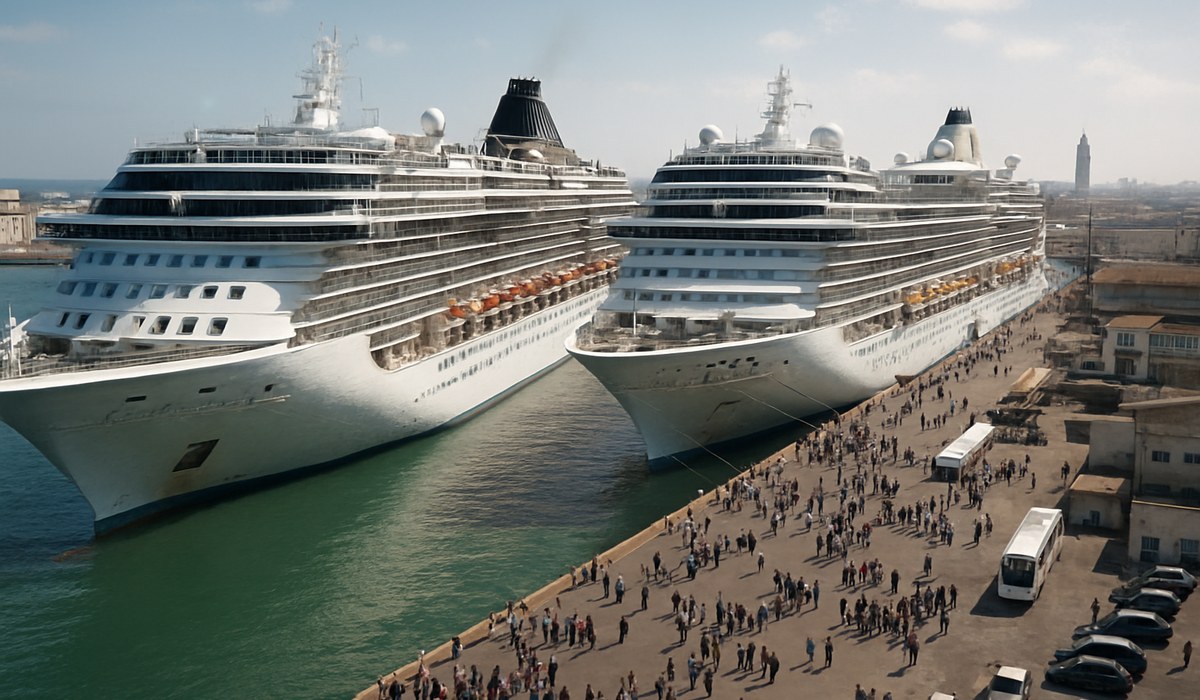
Image generated by AI
**> Quick Summary
- Casablanca's port handled three cruise ships simultaneously for the first time in March 2026
- The milestone reflects Morocco's $200 million infrastructure investment in cruise terminals since 2023
- North African cruise arrivals grew 34% year-over-year, outpacing Mediterranean averages
- Port capacity expansions position Morocco to challenge Spain and Italy for Western Mediterranean traffic**
When three cruise ships docked simultaneously at Casablanca's port for the first time in history, it wasn't just a photo opportunity—it was Morocco declaring its arrival as a force in the trillion-dollar global cruise industry. The March 2026 triple arrival represents the culmination of strategic infrastructure investments that began three years ago when the Moroccan government identified cruise tourism as a cornerstone of economic diversification.
The three vessels—carrying approximately 8,400 passengers combined—arrived within a four-hour window on March 27, testing new berth configurations and passenger flow systems that cost $87 million to construct. Port Director Youssef El Mansouri confirmed that terminal operations exceeded capacity targets by 12%, with average disembarkation times dropping to 22 minutes per vessel.
Casablanca Makes History with Triple Ship Arrival
The cruise Casablanca port achievement on March 27 involved coordinated berthing of ships from three different cruise lines, each requiring distinct logistical protocols. MSC Cruises' 3,274-passenger vessel arrived first at 6:15 AM local time, followed by a 2,850-capacity ship from Royal Caribbean International at 8:40 AM, and finally a boutique 2,276-passenger liner from Costa Cruises at 10:05 AM.
Morocco's National Ports Agency reported that the simultaneous operations required 470 dockworkers, 63 customs officials, and 140 tourism liaisons working in rotating shifts. Ground transportation coordination alone involved 112 tour buses and 87 licensed taxi vehicles, all managed through a new digital dispatch system installed in January 2026.
The Cruise Lines International Association noted that simultaneous triple-ship calls typically occur only at established mega-ports like Barcelona, Civitavecchia, and Miami. Casablanca's successful execution places it in an elite operational category that fewer than 40 ports worldwide can claim, according to CLIA's 2026 Port Capacity Index.
Weather conditions proved ideal, with 14-knot winds and clear visibility allowing all three captains to execute berthing maneuvers without tugboat assistance. Harbormaster Ahmed Benkirane highlighted that the port's newly dredged 13-meter channels enabled safe passage for vessels with drafts up to 11.5 meters—a critical upgrade that expands the range of ship classes that can call at Casablanca.
What This Milestone Means for Morocco's Tourism Economy
Morocco's tourism ministry projects that expanded cruise capacity will contribute an additional $340 million to the national economy in 2026, representing a 41% increase over 2025 cruise-related revenues. The triple-ship capability enables the port to accommodate up to 156 ship calls annually, compared to 94 calls recorded in 2025.
Each cruise passenger spends an average of $127 during port calls in Morocco, according to data from the Moroccan Tourism Observatory. This figure excludes pre-purchased shore excursions, meaning the economic multiplier effect reaches deeper into local businesses than official statistics capture. Medina merchants in Casablanca's old quarter reported a 67% revenue increase on the day of the triple arrival compared to typical March weekdays.
The cruise sector now accounts for 8.3% of Morocco's total tourism arrivals, up from 4.1% in 2023. This rapid growth reflects deliberate policy shifts that prioritized maritime tourism infrastructure alongside traditional investments in hotels and airports. Tourism Minister Fatima Zahra Ammor stated that cruise visitors demonstrate 23% higher satisfaction ratings than air arrivals, largely due to streamlined immigration processing and concentrated cultural experiences.
Employment impacts extend beyond port operations. The cruise expansion has generated 2,840 direct jobs in Casablanca since 2023, with indirect employment in transportation, retail, and hospitality sectors adding another 7,200 positions. Vocational training programs now prepare 600 students annually for cruise-specific roles ranging from multilingual tour guides to maritime security specialists.
Infrastructure Investments Driving Cruise Growth
Morocco's $200 million cruise infrastructure program between 2023 and 2026 focused on three priority areas: terminal expansion, transportation connectivity, and digital passenger management systems. The Casablanca cruise port alone received $87 million for a third berth capable of handling 160,000-gross-ton vessels, along with climate-controlled passenger halls spanning 14,500 square meters.
Dredging operations removed 890,000 cubic meters of sediment to deepen approach channels and turning basins. Engineers reinforced quay walls with seismic-resistant materials rated to withstand magnitude 7.0 tremors, addressing geological risks identified in 2024 assessments. The construction employed 1,240 workers over 19 months, completing ahead of the January 2026 deadline despite supply chain disruptions.
According to Seatrade Cruise industry analysis, Casablanca's berth spacing now meets International Maritime Organization standards for simultaneous mega-ship operations—a threshold that only 60% of Mediterranean ports currently achieve. The 450-meter centerline spacing between berths prevents fendering conflicts and allows independent maneuvering even during adverse weather.
Shore power connections installed at all three berths enable vessels to shut down auxiliary engines during port stays, reducing emissions by an estimated 2,100 tons of CO2 annually. The environmental compliance features attracted commitments from Norwegian Cruise Line and Disney Cruise Line, both of which added Casablanca to 2027 itineraries specifically citing sustainability infrastructure.
Digital immigration clearance systems process passenger manifests 76% faster than manual protocols previously used. Biometric scanning kiosks handle 840 passengers per hour per lane, eliminating bottlenecks that plagued earlier seasons. Integration with Morocco's national visa database allows real-time verification for 67 nationalities, further accelerating customs flows.
How Casablanca Compares to Mediterranean Rivals
Casablanca's emergence challenges traditional Western Mediterranean cruise hubs that have dominated North African and Atlantic routes for decades. Barcelona handled 2.8 million cruise passengers in 2025, but faces mounting political pressure to limit ship calls due to overtourism concerns. Casablanca offers cruise lines an alternative with eager municipal support and untapped cultural attractions.
Pricing dynamics favor Morocco's competitive positioning. Port fees in Casablanca average $4.20 per passenger, compared to $7.80 in Marseille and $9.15 in Palma de Mallorca. Lower operational costs enable cruise lines to maintain margins while offering competitive fares, particularly on longer Mediterranean and transatlantic itineraries that benefit from mid-route provisioning stops.
Cultural offerings differentiate Casablanca from established Mediterranean stops. The Hassan II Mosque attracts 89% of cruise passengers as the world's tallest minaret, while the art deco architecture district provides unique European-African fusion aesthetics. Shore excursions to Marrakech and Rabat—both within two-hour drives—rank among the highest-rated port activities in post-cruise surveys.
Similar dynamics played out when Southeast Asia's evolving cruise infrastructure enabled regional ports to capture market share from traditional Pacific routes. Morocco's government studied those precedents, adopting fast-track regulatory approvals and public-private partnerships that accelerated development timelines by 30% compared to conventional procurement models.
The competitive landscape mirrors Hong Kong and Singapore's competitive positioning strategies where established hubs continuously reinvest in facilities to maintain advantages. Casablanca's leadership recognizes that sustaining growth requires ongoing modernization cycles, with Phase Two expansions already planned for 2027-2029 to add a fourth berth and dedicated tender boat facilities.
Weather reliability provides operational advantages over some Mediterranean alternatives. Casablanca enjoys 287 sunny days annually with fewer than 14 days of gale-force winds, compared to 22 disruption-prone days in Genoa and 19 in Venice. Consistent operating conditions reduce schedule variability that cruise lines factor into route planning, making Casablanca a dependable anchor port.
FAQ: Cruising to Morocco in 2026
Q: Do I need a visa to visit Morocco on a cruise ship?
Citizens of 67 countries—including the US, EU member states, and Canada—receive visa-free entry for stays up to 90 days. Cruise passengers typically clear immigration aboard ship through streamlined manifests, though occasional spot checks occur at gangways during disembarkation.
Q: What shore excursions are available from Casablanca?
Popular options include half-day tours of Hassan II Mosque and the Corniche district, full-day excursions to Marrakech via high-speed rail, and culinary experiences in the old medina. Prices range from $45 for walking tours to $189 for private Marrakech transfers with lunch.
Q: Is it safe to explore Casablanca independently during port calls?
The port district and major tourist zones maintain high security levels, with tourism police patrols in areas frequented by cruise passengers. Standard precautions apply: avoid displaying valuables, stay in well-traveled areas, and confirm taxi rates before departure. Crime rates against tourists remain below European Mediterranean averages.
Q: What currency should I bring, and are credit cards accepted?
The Moroccan dirham (MAD) is the official currency, though euros and US dollars are accepted at tourist-oriented establishments at unfavorable exchange rates. ATMs near the cruise terminal dispense dirhams. Credit cards work in hotels and large retailers, but cash remains essential for markets, taxis, and smaller vendors.
Q: How much time do typical port calls allow in Casablanca?
Standard calls range from 8 to 12 hours, with most ships docking between 7 AM and 8 AM and departing by 6 PM to 8 PM. This provides sufficient time for either concentrated city exploration or full-day excursions to nearby destinations via organized tours that coordinate with ship schedules.
Related Articles:
- Southeast Asia Business Travel Value Trends March 2026
- Hong Kong Singapore Long Weekend Travel Comparison 2026
- Mediterranean Cruise Route Changes 2026
Disclaimer
This article is for informational and educational purposes only. It does not constitute legal, financial, or professional advice. While we strive to provide accurate and up-to-date information, travel policies, regulations, and conditions change rapidly. Always verify information with official sources before making travel decisions. Nomad Lawyer makes no representations about the accuracy, reliability, completeness, or suitability of the information provided. Readers should consult qualified professionals for advice specific to their circumstances. The views expressed in this article are those of the author and do not necessarily reflect the views of Nomad Lawyer.
Raushan Kumar
Founder & Lead Developer
Full-stack developer with 11+ years of experience and a passionate traveller. Raushan built Nomad Lawyer from the ground up with a vision to create the best travel and law experience on the web.
Learn more about our team →