
Ponant Exploration DNA: New CEO Reveals Strategy for Luxury Expedition Cruising
Ponant's newly appointed Global CEO identifies exploration as the core DNA driving the luxury expedition cruise company's differentiation. The strategic shift emphasizes end-to-end experiences and destination access in 2026.

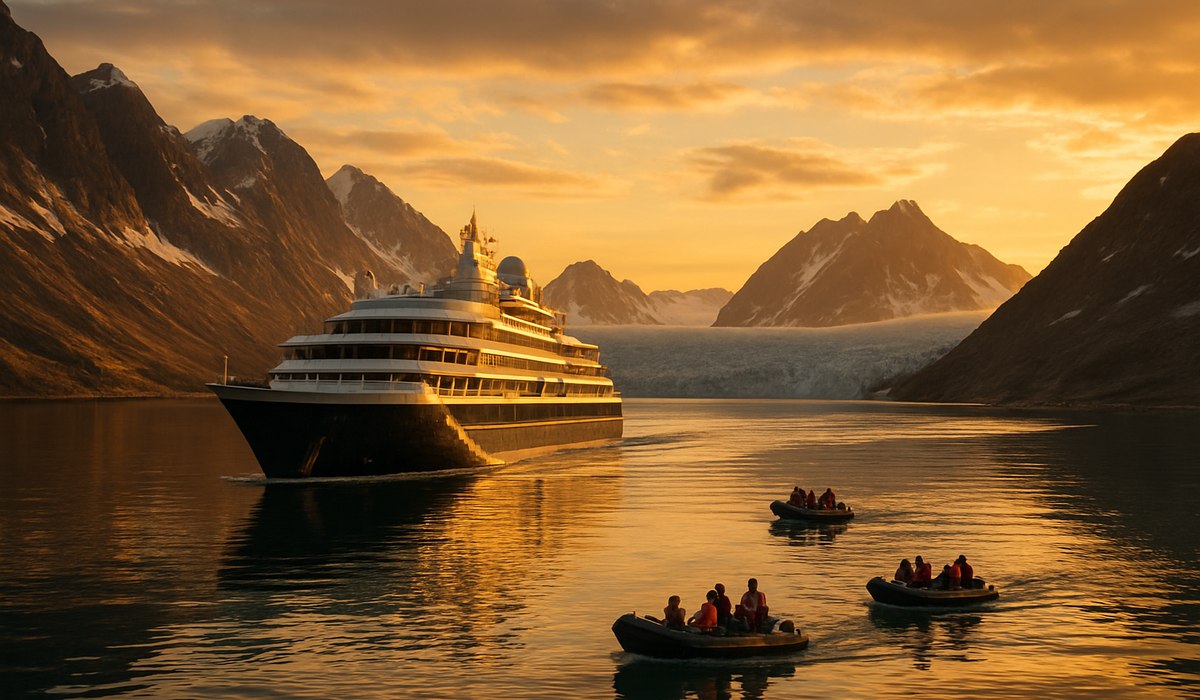
Image generated by AI
Ponant's Exploration DNA Becomes Central Strategic Pillar
Ponant, the French luxury expedition cruise operator, has officially positioned exploration as its defining corporate DNA following strategic revelations from newly appointed Global CEO Benoît-Étienne Domenget. During his inaugural visit to Australia in March 2026, Domenget disclosed that "exploration" emerged as the single unifying concept from comprehensive internal and external stakeholder consultations. This philosophical commitment extends far beyond traditional cruising—it fundamentally reshapes how Ponant designs itineraries, trains teams, and delivers guest experiences across all voyage categories and global regions.
The exploration-centric approach addresses a critical shift in modern luxury travel. Affluent travelers increasingly seek authentic destination immersion over conventional port-of-call experiences. Ponant's strategic repositioning directly counters this market demand by embedding exploration principles into every operational element, from onboard naturalist programming to carefully curated small-group shore excursions. This differentiation proves particularly valuable in competitive expedition cruising markets where larger vessels cannot access remote, sensitive destinations.
Exploration: The Core DNA of Ponant
Domenget articulated the exploration philosophy with precision: "Exploration at Ponant is making sure that we do exploration everywhere, for everyone, every time." This commitment transcends marketing language—it mandates organizational transformation across all departments. The exploration DNA encompasses destination selection (emphasizing virgin territories and limited-access regions), vessel design (favoring agile, smaller ships capable of navigating shallow waters and narrow passages), and human capital development (recruiting naturalists, historians, and regional experts as expedition leaders).
The CEO emphasized that exploration represents "the backbone" rather than merely a departmental initiative. This distinction matters substantially. Rather than isolating expedition features within a dedicated product line, Ponant integrates exploration principles into mainstream operations. Every voyage—whether Antarctic crossing or Baltic heritage tour—maintains exploration as the organizing framework. This integration creates consistency in brand promise while allowing flexibility across diverse geographic markets. The approach also builds organizational resilience, as exploration philosophy attracts mission-driven professionals who remain engaged regardless of commercial pressures or cyclical market downturns.
Domingo notably observed remarkable team authenticity during his inaugural sailing experience. He attributed Ponant's competitive advantage partly to "the way the team on board welcomed us, the authenticity, the simplicity, the eye contact, the attention to detail." These interpersonal qualities prove difficult for competitors to replicate through training programs alone—they emerge from hiring individuals genuinely passionate about exploration and discovery.
End-to-End Experience: From Onshore to Onboard
Ponant's exploration DNA mandates seamless integration between pre-voyage preparation, onboard programming, and post-voyage engagement. This end-to-end philosophy fundamentally differs from conventional cruise line models where destination experiences remain tangential to onboard amenities. Instead, exploration extends throughout the entire guest journey. Pre-departure materials establish expedition context; onboard specialists deepen understanding through daily presentations; post-voyage resources enable continued learning and community engagement.
The onboard experience specifically reflects exploration priorities. Rather than maximizing dining venues or entertainment theaters, Ponant allocates substantial space to naturalist cabins, lecture halls, and outdoor observation decks. This design philosophy acknowledges that guests enrolled in expedition voyages prioritize discovery over conventional luxury amenities. The company further differentiates through specialized equipment—zodiac fleets for landing operations, ROV technology for underwater exploration, and enhanced stabilization systems enabling navigation during challenging weather conditions that prevent competitor vessels from operating.
Onshore expeditions receive equivalent strategic attention. Ponant partners with local communities, academic institutions, and conservation organizations to develop programming that extends beyond tourist attractions. Guests participate in genuine research initiatives, engage with indigenous peoples on their terms, and contribute to environmental monitoring projects. These substantive interactions create lasting memories while advancing global conservation objectives—reinforcing purpose-driven travel expectations that Domenget identified as critical to contemporary luxury consumer motivations.
Team Authenticity as Competitive Advantage
Ponant differentiates itself through deliberate cultivation of expedition team authenticity. This strategic focus addresses a paradox in luxury hospitality: premium pricing often correlates with formal service protocols that inhibit genuine human connection. Ponant inverts this dynamic by emphasizing sincere engagement, cultural curiosity, and intellectual passion over rigid hierarchies and scripted interactions. This approach proves particularly effective in expedition cruising contexts where guests seek collaborative discovery rather than subservient service relationships.
The company prioritizes hiring regional experts who possess innate familiarity with destinations. Rather than rotating generic hospitality professionals across global markets, Ponant maintains specialist teams with deep local knowledge, language fluency, and cultural understanding. A naturalist leading Antarctic expeditions, for instance, combines scientific credentials with years of polar research experience. Similarly, cultural specialists navigating Mediterranean itineraries bring academic training and personal connections to regional histories.
This authenticity extends to leadership visibility. Unlike conventional cruise lines where executive presence remains confined to formal captain's dinners, Ponant encourages senior team participation in expedition activities. Guests regularly encounter expedition leaders, historians, and naturalists during informal shipboard moments and landing operations. This accessibility humanizes the experience and validates the exploration commitment at organizational levels.
Access as the New Luxury
Ponant Asia-Pacific CEO Deb Corbett succinctly characterized contemporary luxury travel philosophy: "People are so sick of bringing goods and things home; they want to bring those stories home." This observation captures fundamental shifts in affluent consumer psychology. Access—particularly to pristine, limited-capacity destinations—has replaced conventional material acquisitions as the primary luxury marker.
Ponant's smaller vessel fleet (ships typically under 300 passengers) directly enables this access philosophy. While larger competitors operate 3,000+ passenger ships requiring deep-water ports and substantial infrastructure, Ponant's more intimate vessels navigate shallow waters, narrow passages, and environmentally sensitive zones. The Seto Inland Sea exemplifies this advantage: Japanese maritime regulations restrict vessels exceeding 200 meters from nighttime navigation through the waterway. This constraint eliminates larger cruise operators entirely, while Ponant's 120-150 meter vessels enjoy unrestricted access to less-frequented ports and small village communities.
Domenget stated bluntly: "The battle is access." The company invests substantially in relationship development with remote communities, government agencies, and conservation bodies to secure landing permissions and operational privileges. These partnerships prove invaluable as environmental sensitivity and overtourism concerns increasingly restrict expedition access globally. Ponant's conservation credentials and proven sustainable practices enhance negotiating positions for coveted destination access across polar regions, tropical archipelagos, and culturally sensitive zones.
Cruise Itinerary at a Glance
| Destination Region | Primary Season | Voyage Duration | Ship Size (Passengers) | Exploration Focus | Key Access Features |
|---|---|---|---|---|---|
| Kimberley, Australia | March-May | 7-10 days | 100-250 | Indigenous communities, remote canyons | Private land access agreements |
| Seto Inland Sea, Japan | April-May, September-October | 7-10 days | 120-180 | Small islands, heritage villages | Unrestricted nighttime navigation rights |
| Antarctica | November-March | 10-14 days | 100-200 | Penguin colonies, glaciology research | Research permit partnerships |
| West Arctic (Greenland) | July-August | 10-14 days | 100-220 | Arctic wildlife, Inuit communities | Climate-adapted navigation capabilities |
| European Rivers & Coasts | May-September | 7-14 days | 90-180 | Cultural heritage, local expertise | Expert naturalist programming |
| Okinawa & Beyond | April-May, October-November | 7 days | 120-150 | Remote island communities, marine ecosystems | Access to 10+ anchorages beyond main ports |
Australian Market Momentum: Double-Digit Growth in 2
Disclaimer
This article is for informational and educational purposes only. It does not constitute legal, financial, or professional advice. While we strive to provide accurate and up-to-date information, travel policies, regulations, and conditions change rapidly. Always verify information with official sources before making travel decisions. Nomad Lawyer makes no representations about the accuracy, reliability, completeness, or suitability of the information provided. Readers should consult qualified professionals for advice specific to their circumstances. The views expressed in this article are those of the author and do not necessarily reflect the views of Nomad Lawyer.
Kunal K Choudhary
Co-Founder & Contributor
A passionate traveller and tech enthusiast. Kunal contributes to the vision and growth of Nomad Lawyer, bringing fresh perspectives and driving the community forward.
Learn more about our team →