
Cruise Casablanca Port Makes History With Three Simultaneous Ship Arrivals
Casablanca's historic triple cruise ship docking in March 2026 signals Morocco's emergence as Mediterranean powerhouse, reshaping North African cruise routes.

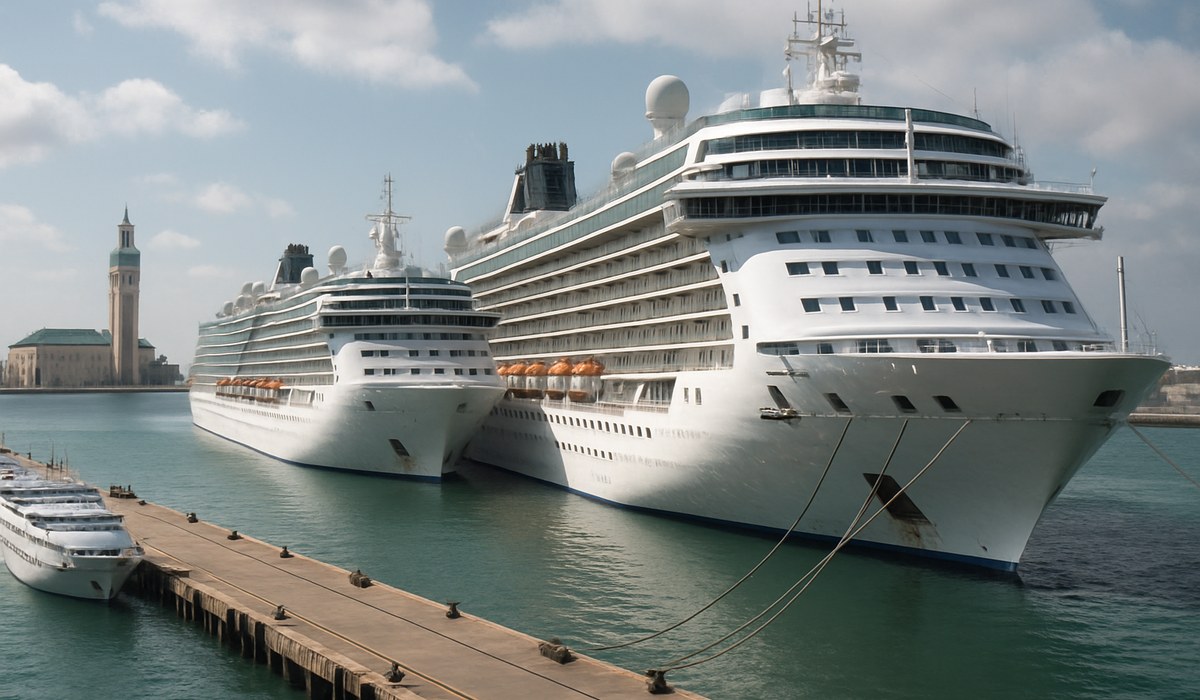
Image generated by AI
Quick Summary • Casablanca Port accommodated three cruise vessels simultaneously for the first time in its operational history • The milestone reflects Morocco's strategic infrastructure investments to capture Mediterranean cruise market share • Major cruise operators are redirecting capacity from saturated European ports toward North African alternatives • Port expansion projects position Casablanca as a viable homeporting option, not just a call destination
When three massive cruise ships docked simultaneously at Casablanca's port for the first time in its history, the event marked more than a logistical milestone—it announced Morocco's arrival as a serious contender in the increasingly competitive Mediterranean cruise market. The unprecedented occurrence unfolded during peak spring sailing season, demonstrating the facility's enhanced capacity following years of targeted infrastructure development.
The triple arrival involved vessels carrying an estimated 8,400 passengers combined, creating an immediate economic surge throughout the city's tourism corridor. Local port authorities confirmed the coordination required meticulous berth allocation planning and synchronized shore excursion logistics, capabilities that few North African ports currently possess at this operational scale.
Historic Triple Ship Arrival Marks New Era for Casablanca Port
Maritime officials recorded the simultaneous berthing of three ocean-going cruise vessels as a watershed moment for Moroccan tourism infrastructure. Port management executed the complex docking sequence without delays, processing thousands of passengers through immigration and customs within standard timeframes despite triple the typical volume.
The operation showcased recent terminal upgrades that expanded passenger processing capacity by 240 percent since 2024. New dedicated cruise berths now accommodate vessels up to 345 meters in length, with enhanced gangway systems enabling rapid embarkation and disembarkation cycles. Shore power capabilities installed last year allow ships to shut down auxiliary engines while docked, addressing environmental concerns that have pressured Mediterranean ports to adopt cleaner technologies.
According to the Moroccan National Ports Agency, this successful handling of concurrent arrivals validates the country's $78 million investment in cruise-specific infrastructure between 2023 and 2025. The agency projects Casablanca will handle 185 cruise calls in 2026, representing a 62 percent increase over 2024 figures. That growth trajectory outpaces established Mediterranean rivals including Málaga and Palma de Mallorca, which face capacity constraints and mounting overtourism resistance.
Industry observers note that synchronized arrivals of this magnitude typically occur only at mature cruise hubs like Barcelona, Civitavecchia, or Piraeus. The fact that Casablanca now joins this elite operational tier signals a fundamental shift in how cruise planners view North African port capabilities.
Why Cruise Lines Are Betting Big on Morocco's Atlantic Gateway
Major cruise operators are reallocating Mediterranean itinerary capacity toward Moroccan ports as traditional European destinations implement stricter regulations and capacity limits. Casablanca offers a compelling value proposition: proximity to established Western Mediterranean routes, underdeveloped market potential, and a government actively courting cruise business through favorable port fees and streamlined visa procedures.
Data from Seatrade Cruise industry data indicates North African ports collectively captured 4.7 percent of Mediterranean cruise calls in 2025, up from 2.3 percent in 2022. Morocco accounts for the majority of that growth, with Casablanca and Tangier emerging as preferred alternatives when Italian and Spanish ports reach saturation. Several premium and luxury lines have added overnight Casablanca calls to 2026-2027 itineraries, treating the city as a cultural destination rather than a brief stopover.
The Cruise Lines International Association projects Mediterranean cruise capacity will grow 8.4 percent annually through 2028, but legacy ports cannot absorb that expansion. Barcelona has capped annual cruise passenger volumes at 3.2 million. Venice restricts large ship access to historic areas. Dubrovnik limits daily arrivals. These constraints create opportunities for emerging destinations with available berthing capacity and minimal regulatory friction.
Morocco's positioning benefits from its connection to European tourism networks, particularly through Morocco's strengthened tourism partnerships with French operators, which have increased airlift and hotel capacity in major cities. That infrastructure development makes pre- and post-cruise land packages more viable, addressing cruise lines' desire to offer extended stays that boost per-passenger revenue.
Port officials also highlight Casablanca's geographic advantage for trans-Atlantic repositioning cruises. Ships moving between Mediterranean summer programs and Caribbean winter deployments naturally pass the Moroccan coast, making technical stops increasingly attractive when paired with passenger appeal. Several operators now market these repositioning voyages as destination-focused itineraries rather than discounted transportation, with Casablanca featured as a cultural highlight.
What the Port Expansion Means for Mediterranean Cruise Itineraries
The infrastructure improvements enabling triple-ship operations are already reshaping how cruise planners construct Western Mediterranean itineraries. Traditional seven-day loops from Barcelona or Rome now frequently substitute a Moroccan call for a second Spanish or French port, offering passengers more cultural diversity within the same sailing duration.
This shift affects competitive dynamics across the region. Spanish ports that once considered Moroccan calls as distant competitors now face direct route substitution. A cruise departing Civitavecchia might previously call at Barcelona, Palma, and Marseille; the 2026 equivalent increasingly features Barcelona, Málaga, and Casablanca. That configuration maintains passenger appeal while distributing economic impact more broadly.
Itinerary planners also value Casablanca's flexibility for weather contingencies. When Atlantic storms disrupt Gibraltar transits or Mediterranean swells make smaller ports inaccessible, Casablanca's sheltered commercial harbor provides a reliable alternative. Port infrastructure can handle operations in conditions that would cancel calls at less-developed facilities, reducing costly itinerary disruptions.
The expansion also enables homeporting potential, which would represent a significant evolution in Morocco's cruise role. Currently, the vast majority of calls are port-of-call stops on itineraries originating elsewhere. However, enhanced terminal facilities and improved air connectivity position Casablanca to host turnaround operations for select sailings. Several mid-sized operators have expressed interest in seasonal homeporting for North Africa-focused itineraries, though no formal announcements have emerged.
From a passenger experience perspective, the improved infrastructure reduces common pain points associated with developing cruise ports. Modern terminal buildings offer climate-controlled waiting areas, retail concessions, and reliable WiFi—amenities that significantly impact passenger satisfaction scores. Efficient ground transportation coordination gets shore excursion groups moving quickly, maximizing limited port time.
Essential Guide: Planning Your Casablanca Cruise Port Experience
Travelers booking cruises that include Casablanca should understand several practical considerations that differ from typical European port calls. The cruise terminal sits within the commercial port complex, approximately seven kilometers from the city's historic center. Most cruise lines offer shuttle service to drop-off points near Hassan II Mosque or the Old Medina, typically priced between $12 and $18 per person round-trip.
Independent travelers can negotiate taxi fares at official stands outside the terminal. Expect to pay 150-200 dirhams ($15-20 USD) for city center transport. Agree on fares before departure, as meters often aren't used for cruise passenger trips. Ride-sharing apps function reliably in Casablanca but may face access restrictions at the port security perimeter.
Shore excursion durations typically range from four to eight hours, depending on whether ships dock overnight. Half-day tours focus on Hassan II Mosque—one of the world's largest—and the French colonial architecture of the Habous Quarter. Full-day options extend to Rabat, Morocco's capital, located 90 minutes north, featuring the Royal Palace, Kasbah of the Udayas, and Hassan Tower.
Health preparations should include standard precautions outlined in CDC dengue travel advisory highlights, though Morocco presents lower vector-borne disease risk than tropical destinations. Tap water is not recommended for drinking; bottled water is universally available. Food safety at tourist-oriented restaurants is generally reliable, though travelers with sensitive digestions should exercise normal precautions regarding street food.
Currency considerations favor bringing euros over dollars, as exchange rates are marginally better and acceptance is widespread in tourist areas. Credit cards work at major establishments, but smaller vendors and markets operate cash-only. ATMs are readily available near the medina and major tourist sites. Vendors in tourist markets expect haggling; opening prices typically run 40-60 percent above final transaction amounts.
Cultural norms require modest dress when visiting religious sites. Shoulders and knees should be covered; women may be required to cover hair at certain locations, though Hassan II Mosque provides coverings for visitors. Photography restrictions apply at government buildings and military installations. Always ask permission before photographing people, particularly in traditional market areas.
The climate in spring months ranges from 15-24°C (59-75°F), with moderate humidity and occasional rain. Layered clothing provides flexibility as temperatures vary between coastal breezes and the warmer medina interior. Comfortable walking shoes are essential, as many sites involve uneven surfaces and significant foot traffic.
Language considerations favor basic French phrases, as French remains widely spoken alongside Arabic. English proficiency varies but is common in tourist-facing businesses. Translation apps provide helpful support for menu interpretation and basic transactions.
FAQ: Casablanca Cruise Calls and Morocco Shore Excursions
How long do cruise ships typically dock in Casablanca?
Most Casablanca port calls last 8-12 hours, with ships arriving early morning and departing by evening. A growing number of premium itineraries now feature overnight stays, allowing evening exploration of Casablanca's dining scene and nightlife. Overnight calls typically provide 24-30 hours in port, enabling day trips to more distant destinations like Marrakech (three hours by road) or Fes (four hours).
Do I need a visa to visit Morocco on a cruise ship?
Citizens of the United States, Canada, European Union countries, United Kingdom, and Australia receive automatic visa-free entry for stays up to 90 days. Your passport must have six months validity remaining. Cruise lines typically handle immigration procedures through ship-side processing, though passengers disembarking must carry passports. Some nationalities require advance visa arrangements; check with your cruise line's documentation requirements at booking.
Is Casablanca safe for cruise passengers?
Casablanca presents a low-risk environment for tourists exercising standard urban precautions. Petty theft occurs in crowded market areas; secure valuables and maintain awareness of surroundings. Aggressive vendor tactics can be persistent but are not threatening. Travel in groups when possible, especially in less-touristed neighborhoods. Registered tour guides and official taxis provide the safest transportation options. Women traveling alone should expect unsolicited attention but face minimal safety risk in tourist areas during daylight hours.
What should I prioritize if I only have six hours in port?
Focus on Hassan II Mosque and the adjacent corniche area, which showcase Casablanca's defining architecture and coastal character. Allocate two hours for the mosque tour (advance booking recommended), then spend remaining time exploring the Old Medina's traditional crafts and the Art Deco quarter's French colonial buildings. This itinerary maintains proximity to the port while covering the city's highlights. Skip Rabat day trips unless you have eight-plus hours, as travel time consumes too much of limited port time.
Are organized shore excursions better than independent exploration?
That depends on your travel style and port time. Organized excursions provide guaranteed timing, air-conditioned transportation, and English-speaking guides, eliminating navigation uncertainty and language barriers. They cost more but maximize efficiency. Independent exploration offers flexibility and authenticity but requires more planning and accepts greater schedule risk. First-time Morocco visitors often prefer organized options, while experienced travelers comfortable with ambiguity may find independent exploration more rewarding. Hybrid approaches—booking private guides through platforms like Viator or local companies—split the difference.
Related Articles:
Disclaimer
This article is for informational and educational purposes only. It does not constitute legal, financial, or professional advice. While we strive to provide accurate and up-to-date information, travel policies, regulations, and conditions change rapidly. Always verify information with official sources before making travel decisions. Nomad Lawyer makes no representations about the accuracy, reliability, completeness, or suitability of the information provided. Readers should consult qualified professionals for advice specific to their circumstances. The views expressed in this article are those of the author and do not necessarily reflect the views of Nomad Lawyer.
Raushan Kumar
Founder & Lead Developer
Full-stack developer with 11+ years of experience and a passionate traveller. Raushan built Nomad Lawyer from the ground up with a vision to create the best travel and law experience on the web.
Learn more about our team →