
Cartagena Colombia Ranks 7th Globally in Sustainable Heritage City Index Amid 2026 Tourism Surge
Cartagena has secured a top-ten global ranking for sustainability among UNESCO heritage cities, balancing a massive influx of 5.5 million visitors with aggressive cultural preservation.

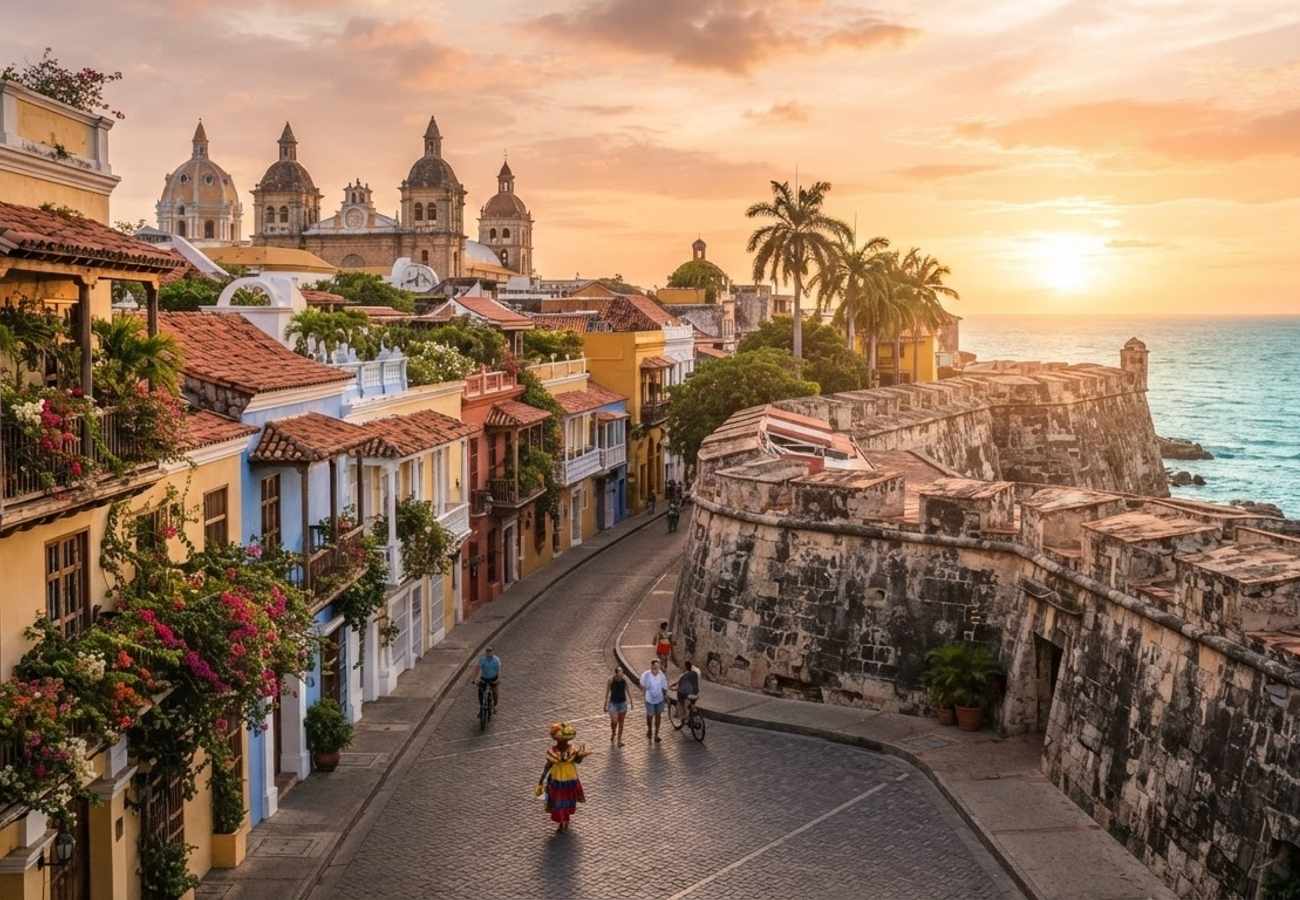
Image generated by AI
Cartagena has secured a prestigious 7th place ranking among 105 global UNESCO heritage cities for its sustainability efficiency, managing a surge of 5.5 million arrivals through November 2025 while preserving its colonial identity.
The Colombian Caribbean hub is currently redefining the balance between aggressive tourism growth and urban preservation. By integrating social, economic, and environmental metrics, the city is attempting to avoid the "overtourism" traps that have plagued other historic European and Latin American destinations. This shift toward a sustainable heritage model is designed to ensure that the economic windfall from millions of visitors directly benefits local residents and the maintenance of the city's architectural legacy.
Global Sustainability Benchmarks and Efficiency Scores
A comprehensive study conducted by the National University of Colombia analyzed 105 UNESCO-recognized heritage cities across Europe and Latin America to determine their sustainability performance. The research, which utilized data from 2021 through 2023, evaluated cities based on four primary dimensions: environmental impact, social equity, economic viability, and cultural preservation.
Cartagena emerged as a leader in this study, ranking 7th overall with an efficiency score of 0.96 out of 1.
The data reveals a fascinating contrast between regional averages. While Latin American cities generally outperformed European cities in cultural sustainability (0.658 vs 0.598), European cities maintained a slight lead in social sustainability (0.816 vs 0.720). In terms of economic sustainability, the gap was narrower, with Europe averaging 0.927 and Latin America 0.909. Cartagena’s near-perfect score suggests a highly integrated approach to managing its historic core.
Comprehensive Tourism Data and Sustainability Indicators
The following data outlines the specific metrics used to evaluate Cartagena's standing and the current scale of its tourism industry.
| Indicator | Cartagena Data | Period/Source |
|---|---|---|
| Total Heritage Cities Assessed | 105 | 2021–2023 |
| European Cities Evaluated | 73 | Study |
| Latin American Cities Evaluated | 32 | Study |
| Global Sustainability Rank | 7th | Study |
| Overall Efficiency Score | 0.96/1 | Study |
| Latin America Cultural Average | 0.658 | Study |
| Europe Cultural Average | 0.598 | Study |
| Latin America Social Average | 0.720 | Study |
| Europe Social Average | 0.816 | Study |
| Latin America Economic Average | 0.909 | Study |
| Europe Economic Average | 0.927 | Study |
| Total Passenger Arrivals | 5.5 million | Through Nov 2025 |
| Foreign Non-Resident Visitors | ~856,000 | 2024 |
| Domestic Air Passenger Share | 81% | Recent data |
| City Homicide Rate | 40.5 per 100,000 | Recent city data |
Analyzing the International Visitor Trajectory
The recovery of Cartagena's international market has been exponential since the pandemic. Data from Migración Colombia and ProColombia indicates that foreign non-resident arrivals jumped from 190,737 in 2021 to 532,385 in 2022—a staggering 179.1% increase. This momentum continued into 2023 with 636,550 arrivals.
By 2024, the District Planning Secretariat reported approximately 856,000 foreign visitors, marking a 332% increase compared to 2021 levels. The United States remains the primary source market, contributing 276,000 visitors, followed by Peru (64,000), Mexico (56,000), and Ecuador (46,000). The gender split among these international arrivals is nearly equal, with women representing 49% (422,000) and men 51% (434,000).
Shift Toward Multi-Modal and Domestic Tourism in 2025
The 2025 data indicates that Cartagena is no longer solely dependent on international arrivals. By November 2025, Corpoturismo recorded 5.5 million passengers entering via air, land, and cruise ports. This massive volume is distributed across eight specialized tourism segments:
- Cultural and Gastronomic
- Cruise and Marine-Coastal
- Romantic and Religious
- Sports and MICE (Meetings, Incentives, Conferences, and Exhibitions)
Air connectivity has seen a similar spike. In 2024, the city handled 7.5 million air passengers, a 16.5% increase over 2023. By August 2025, this figure had already climbed to 5.1 million, including 559,917 international passengers.
Seasonal Peaks and Economic Impacts
The city experiences intense seasonality, particularly during school breaks and year-end holidays. During a ten-day window from October 7 to 16, 2023, Cartagena welcomed 145,034 visitors. Notably, 81% of the air arrivals during this period were domestic, highlighting the critical role of the Colombian internal market.
The peak holiday window between December 2024 and January 2025 saw approximately 930,000 to 950,000 tourists. Cruise tourism played a pivotal role during this period, with 32 calls bringing in 76,425 people (53,693 passengers and 22,732 crew), generating an estimated economic impact of US$8.1 million.
Why This Matters: The Traveler's Perspective
For the modern traveler, Cartagena's high sustainability ranking is more than just a statistic—it is a roadmap for responsible exploration. When a city ranks 7th globally in sustainability despite having millions of visitors, it indicates that the local government is actively fighting the "museumification" of its center.
From a logistical and ethical standpoint, this means travelers can engage with the city without feeling they are contributing to the displacement of locals. The focus on "living heritage" in districts like Getsemaní, San Diego, and Centro means that the culture is still active, not staged. To support this model, visitors are encouraged to pivot away from all-inclusive resorts and instead utilize community-led tours and locally owned businesses.
The challenge for Cartagena remains the tension between growth and safety, as evidenced by the homicide rate of 40.5 per 100,000. However, the city's ability to maintain a 0.96 efficiency score suggests that its structural management of tourism is world-class, providing a blueprint for other Caribbean destinations facing similar pressures.
Cartagena is proving that a city can be both a global tourism powerhouse and a protected sanctuary of history.
Related Travel Guides
Disclaimer
This article is for informational and educational purposes only. It does not constitute legal, financial, or professional advice. While we strive to provide accurate and up-to-date information, travel policies, regulations, and conditions change rapidly. Always verify information with official sources before making travel decisions. Nomad Lawyer makes no representations about the accuracy, reliability, completeness, or suitability of the information provided. Readers should consult qualified professionals for advice specific to their circumstances. The views expressed in this article are those of the author and do not necessarily reflect the views of Nomad Lawyer.
Preeti Gunjan
Contributor & Community Manager
A passionate traveller and community builder. Preeti helps grow the Nomad Lawyer community, fostering engagement and bringing the reader experience to life.
Learn more about our team →