
Beyond the Gilded Cabana: How Caribbean Resorts Are Redefining Luxury for the Discerning Traveler
With the Caribbean welcoming 34.2 million stay-overs and the Bahamas reaching 12.5 million visitors, explore how luxury resorts across seven island destinations are elevating traveler experiences.

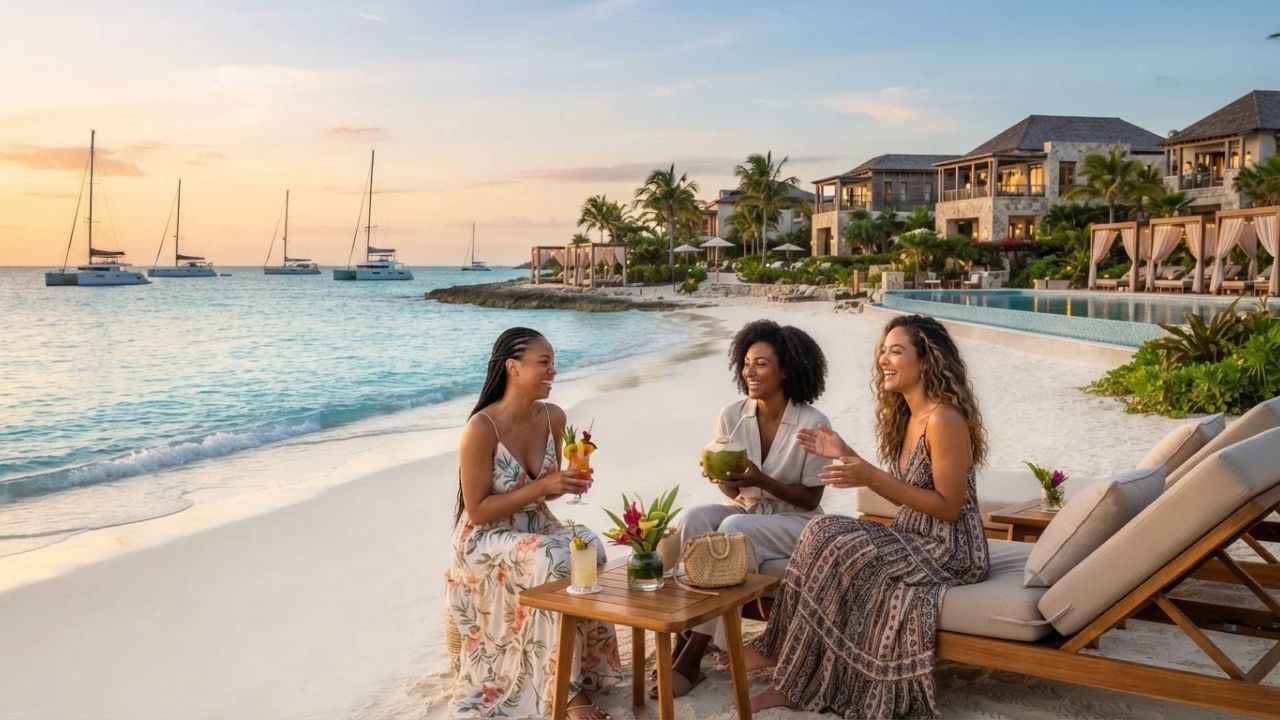
Image generated by AI
While mega-resorts and cruise terminals drove the Bahamas to an all-time record of 12.5 million visitors in 2025—with over 10.6 million travelers arriving by sea alone—the real revolution transforming Caribbean luxury is occurring far beyond gated compound walls, where travelers increasingly trade sterile all-inclusive enclaves for historic rum distilleries, private-island anchorages, and authentic village cookouts. According to regional benchmarks released by the Caribbean Tourism Organization, the wider Caribbean welcomed 34.2 million international stay-over arrivals in 2024, expanding 6.1% over 2023 and 6.9% above pre-pandemic 2019 levels. Concurrently, regional cruise visits reached 33.7 million, with hotel occupancy climbing to 66.6% and average daily rates surging to US$437.02 across the basin, building upon a 2023 performance where occupancy reached 65.6% (rising from 61% in 2022) with an average daily rate of US$329.37 and RevPAR of US$215.97. From the marina berths of Puerto Cancun—where the newly debuted Grand Hyatt Cancun Beach Resort offers 41-square-metre standard rooms, 85-square-metre suites, a 156-square-metre Presidential Suite with a 74-square-metre terrace, and private-plunge-pool Sanctuary accommodations—to the secluded Out Islands of the Bahamas, travelers are demanding sophisticated cultural immersion alongside sun-drenched shores.
The New Luxury Paradigm: How Seven Caribbean Island Hubs Compete for Global Travelers
The modern luxury traveler is no longer content with an interchangeable beachfront hotel. Today’s travelers seek geographic specificity, culinary depth, and seamless access to untamed nature. Across the region, source markets reflect this sustained appetite: the United States led arrivals in 2024 with approximately 16.8 million visitors, up 3.5% from 2023, while Canada contributed 3.3 million, Europe supplied about 5.3 million, and South America generated roughly 2.0 million dynamic travelers alongside 1.6 million intra-Caribbean trips.
Nowhere is this evolution clearer than in the Bahamas. Rebounding from 7,000,706 total visitors in 2022 (including 1,470,244 air arrivals and 5,530,462 sea passengers) to 9,654,838 in 2023 (1,719,980 air arrivals and 7,934,858 sea visitors), the country reached 11.22 million arrivals in 2024 before setting its 12.5 million high-water mark in 2025. While Atlantis Paradise Island anchors family entertainment with 3,400 rooms across six hotels, a 141-acre waterpark, 21 restaurants, 19 bars, and 67 shops, high-end voyagers are charting courses toward the archipelago's 700 islands and cays, using private planes and catamarans to reach Eleuthera, Harbour Island, Bimini, Andros, and the Exumas.
The Dominican Republic leads the Caribbean in stay-over scale, recording approximately 8.5 million arrivals in 2024, with massive resort developments across Punta Cana expanding into ecological havens in Samaná and Puerto Plata. Jamaica ranks as the region's second-largest stay-over market with roughly 2.9 million visitors in 2024, funneling travelers through Sangster International Airport in Montego Bay toward the cliffs of Negril and rainforest waterfalls of Ocho Rios. Meanwhile, Barbados offers a boutique alternative: stay-overs rose from 144,833 in 2021 to 539,746 in 2022 and 636,603 in 2023, accompanied by an accommodation expansion from 138 properties and 6,052 bedrooms in 2021 to 156 establishments and 6,954 rooms in 2023.
Antigua and Barbuda rebuilt its visitor economy from 56% of 2019 levels in 2021 to 88% in 2022 and 95% by mid-2023, surpassing pre-pandemic records in 2024 with over 330,281 stay-over guests and over 823,955 cruise passengers. In the southern Caribbean, Curaçao logged 582,409 stay-overs in 2023, jumping 20% to 700,249 in 2024, and rising 13% to 788,427 in 2025 (reaching 1,714,335 total arrivals including 881,665 cruise visitors). With guests averaging 8.4 nights and 56% selecting resort properties like Sandals Royal Curaçao, the island exemplifies how heritage architecture and marine sports converge.
What Makes Caribbean Luxury Different: From Out Island Cays to Dutch Gables
The Caribbean is not a monoculture; it is a mosaic of distinct histories, musical rhythms, and geological wonders. In the Bahamas, luxury is defined by pure aquatic scale. The turquoise waters surrounding the Exumas are so pale and clear that yachts appear suspended in mid-air above coral heads and sandbars.
Jamaica counters with raw natural energy and sonic culture. The island invites travelers to wake up to Blue Mountain coffee, swim along Seven Mile Beach in Negril, watch cliff divers at Rick's Café, and hike up Dunn's River Falls in Ocho Rios. The Dominican Republic pairs sweeping palm-fringed sands in Punta Cana with Spanish colonial palaces and humpback whale sanctuaries in Samaná Bay.
Barbados presents an atmosphere of refined Anglo-Caribbean heritage. Its platinum west coast harbors discreet boutique estates, while inland coral-stone chattel houses and historic sugarcane distilleries showcase centuries of rum craft. In Antigua, sailing reigns supreme: the island offers 365 distinct beaches alongside the Georgian naval bastions of English Harbour, while sister isle Barbuda provides deserted pink-shell shorelines and a protected frigate-bird sanctuary.
Curaçao delivers an entirely different aesthetic outside the Atlantic hurricane belt. The capital, Willemstad, charms visitors with 17th-century Dutch colonial gables painted in mango, papaya, and cobalt hues, while its western coves shelter world-class shore-accessible coral drop-offs.
Visitor Insider Tips: Timing, Culinary Heritage, and Itinerary Strategies
Mastering high-end Caribbean travel requires moving beyond standard resort concierge desks:
- Book Domestic Island Hoppers in the Bahamas: Rather than remaining confined to New Providence, use regional aviation services promoted by The Bahamas Ministry of Tourism to fly into North Eleuthera or George Town. A twenty-minute hop delivers you to pink-sand beaches and family-run marinas where bonefish guides navigate empty tidal channels.
- Savor Indigenous Island Dishes: Skip standard international room service and seek out regional specialties. In the Bahamas, order fresh conch salad prepared with lime juice, scotch bonnet peppers, and sweet peppers at Arawak Cay, or try grilled spiny lobster. In Jamaica, stop at roadside pimento-wood shacks for smoked jerk chicken and Jamaican morning ackee with saltfish. Barbados demands steaming flying fish served with savory cornmeal cou-cou and aged Bajan rum punch, while Antigua is celebrated for its remarkably sweet Antigua Black Pineapples. In Curaçao, sample keshi yena, spiced shredded meat baked inside a gouda cheese wheel.
- Strategically Structure Multi-Destination Journeys: For travelers with two weeks, design a multi-hub journey. Spend four nights exploring Mayan ruins like Chichén Itzá from Puerto Cancun, fly to the Bahamas for three nights of marine excursions across the Out Islands, continue to Jamaica for three nights of culture in Montego Bay and Negril, and conclude with four nights diving and wandering Willemstad in Curaçao.
- Time Island Visits to Avoid Mega-Ship Crowds: In ports like Nassau, Bridgetown, and St. John's, research cruise arrival schedules before planning historic city tours. Explore historic town centers, forts, and markets before 9:00 AM or after 5:00 PM, when cruise passengers return to their ships and city streets return to peaceful local cadences.
- Hire Catamarans for Secluded Beach Access: In Antigua, charter a private day-sailer from Falmouth Harbour to reach hidden anchorages like Rendezvous Bay, which remain inaccessible by conventional rental vehicles.
Cultural and Environmental Context: Marine Preservation and Heritage Stewardship
The surge in Caribbean arrivals places profound responsibility on luxury resorts and discerning visitors to safeguard the delicate ecosystems that define the region. High-volume sea tourism—exemplified by 10.6 million cruise arrivals in the Bahamas and over 823,955 in Antigua—demands vigilant coral reef protection, sewage treatment standards, and mangrove preservation.
Heritage conservation is equally vital. Several landmarks across these islands hold global significance through the UNESCO World Heritage Centre, including Nelson's Dockyard in Antigua, Historic Bridgetown and its Garrison in Barbados, and the Historic Area of Willemstad in Curaçao. Protecting these sites requires sustainable tourism revenues that directly benefit local preservation trusts rather than leaking out to foreign holding companies.
Discerning travelers play an active role by supporting community-based initiatives. Choosing accommodations that enforce single-use plastic bans, patronizing independent fishing cooperatives, applying mineral-based reef-safe sunscreens, and tipping local culinary artisans directly ensure that the economic benefits of luxury travel strengthen the resident families who have nurtured these Caribbean shores for generations.
FAQ: Navigating Caribbean Luxury Travel in 2026
What makes the Bahamas different from other Caribbean resort destinations? The Bahamas features over 700 islands and cays, pairing major entertainment resorts like Atlantis on Paradise Island with remote, unspoiled Out Island retreats in the Exumas and Eleuthera.
How do travelers reach the quiet Out Islands of the Bahamas? Travelers take short domestic hopper flights or private charter sea planes from Nassau's Lynden Pindling International Airport, landing directly on Out Island airstrips in under an hour.
Which Caribbean island offers the strongest combination of beaches and European architecture? Curaçao combines colorful 17th-century Dutch colonial buildings in UNESCO-listed Willemstad with protected marine parks, exceptional shore diving, and secluded southwest coast cove beaches.
Is Antigua suitable for travelers who prefer sailing and boutique accommodations? Yes. Antigua is world-renowned for its 365 beaches, historic English Harbour sailing facilities, annual regattas, and private coastal villas that prioritize privacy over high-density resorts.
True Caribbean luxury is never measured by the thread count of your bedsheet, but by the quiet moment when the trade winds carry the scent of salt, woodsmoke, and island freedom across an empty shore.
Related Travel Guides
Disclaimer
This article is for informational and educational purposes only. It does not constitute legal, financial, or professional advice. While we strive to provide accurate and up-to-date information, travel policies, regulations, and conditions change rapidly. Always verify information with official sources before making travel decisions. Nomad Lawyer makes no representations about the accuracy, reliability, completeness, or suitability of the information provided. Readers should consult qualified professionals for advice specific to their circumstances. The views expressed in this article are those of the author and do not necessarily reflect the views of Nomad Lawyer.
Raushan Kumar
Founder & Lead Developer
Full-stack developer with 11+ years of experience and a passionate traveller. Raushan built Nomad Lawyer from the ground up with a vision to create the best travel and law experience on the web.
Learn more about our team →